


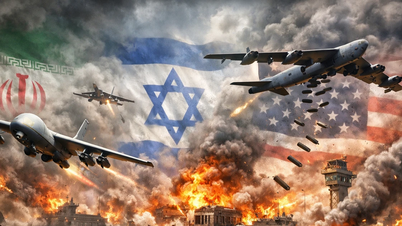
In fact, though few people notice, besides causing civilian casualties, the conflicts in the Middle East have displaced many communities, destroyed infrastructure, and simultaneously caused widespread environmental damage, as concluded by the United Nations Environment Programme (UNEP).
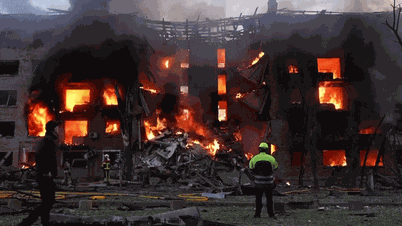
1. During the intense fighting preceding the ceasefire, there were repeated attacks on oil infrastructure, including attacks near (and even within) urban areas such as Tehran.
The thick smoke rising from the fires at the petrochemical facilities contains numerous hazardous compounds that directly affect the respiratory systems of Iranians (including young children), raising serious concerns about the long-term impact on human health and the environment.
2. Experience from other conflicts shows that large fires and oil spills can cause widespread environmental pollution, as well as pose significant health risks due to exposure to smoke, fine dust, and toxic emissions.
According to UNEP scientists , pollution from uncontrolled fires may also have infiltrated the soil and water, seeping into groundwater, where it is then absorbed by plants, contaminating the food supply. Oil spills have also been reported in marine areas, further impacting the health of coastal communities.
Before the Iran-Israel conflict began, the Middle East was already facing severe environmental pressures, particularly regarding water resources. Attacks on desalination plants in several countries risked catastrophic consequences for communities dependent on them, as water was essential, even their only, source. The armed conflict also placed significant pressure on natural resources, damaging marine and terrestrial ecosystems, hindering efforts to improve resilience to climate change and water resources, and impacting food supply chains and food security.
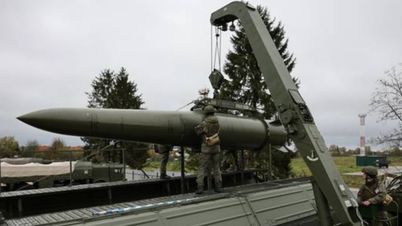
Meanwhile, the widespread use of ammunition can also lead to the release of heavy metals and toxic chemicals into the environment. Although not yet verifiable in the field, theoretically, ammunition in modern warfare typically contains heavy metals and explosive chemicals, all of which are toxic, even in the smallest amounts.

3. More broadly, high-intensity conflicts always require and consume large amounts of fuel, generating enormous CO2 emissions and contributing to accelerated climate change. For example, the first three years of the Russia-Ukraine conflict generated 230 million tons of CO2 – equivalent to the combined annual emissions of Austria, Hungary, the Czech Republic, and Slovakia. And it's important to emphasize: This is only the first time humanity has attempted to calculate the emissions of a war.
Returning to the Middle East, environmental risks are the main reason why UNEP agrees with UN Secretary-General Antonio Guterres' call for an "immediate ceasefire," in order to end the destruction and allow people and the environment in the region to quickly begin the recovery process.
With the current temporary ceasefire, that wish has been fulfilled. However, given the ongoing tense diplomatic developments, that ceasefire remains a very fragile guarantee.
( According to nhandan.vn )
Source: https://baodongthap.vn/xung-dot-trung-ong-tu-mot-goc-nhin-khac-a240900.html


![[Image] Close-up view of the interchange connecting the two expressways and Long Thanh Airport.](https://vphoto.vietnam.vn/thumb/1200x675/vietnam/resource/IMAGE/2026/05/25/1779703378210_ndo_br_z7863716673926-224453a31600126cce10622af6290afd-4549-jpg.webp)
![[Image] Hanoi's urban life under the challenge of a "scorching hot" environment](https://vphoto.vietnam.vn/thumb/1200x675/vietnam/resource/IMAGE/2026/05/25/1779706979265_nang-nong-t5-2026-minh-duy-7-4636-jpg.webp)






















































































Comment (0)