
|
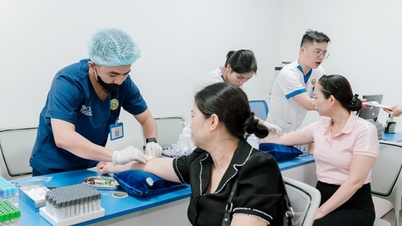
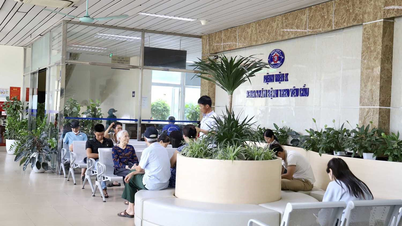
People aged 18 and above in Ho Chi Minh City will undergo a general health check-up including medical history taking, body index measurement, specialist examination, and some laboratory tests. (Illustrative photo: Phuong Lam) |
On May 25th, Ho Chi Minh City leaders held a working session with the Ho Chi Minh City Department of Health regarding the universal health check-up program and the plan for investing in and developing the healthcare system in the city.
At the meeting, the Ho Chi Minh City Department of Health presented a draft plan for organizing periodic health check-ups and screenings for citizens in the period 2026-2030, with a vision to 2045. The plan aims to ensure that all citizens receive at least one health check-up per year, while also managing health throughout their lifecycle using digital data.
According to the draft, Ho Chi Minh City currently has approximately 16 million inhabitants with a high rate of urbanization and rapidly changing disease patterns. The city has a healthcare network comprising 12 hospitals under ministries and agencies, 170 hospitals and medical centers with inpatient beds, 168 health stations, over 12,000 private clinics, along with the 115 Emergency Center and 66 satellite emergency stations. This is considered the foundation for implementing a large-scale periodic health check-up program.
The goal is for 100% of people in the managed groups to receive health check-ups.
According to the Ho Chi Minh City Department of Health, the city has implemented many community health care activities in recent years, but these are fragmented, lack coordination, and do not have a stable financial mechanism. For children under 24 months old, health check-ups are mainly integrated into immunization and nutrition programs, so the coverage rate is only about 20-30%.
Among schoolchildren, Ho Chi Minh City has managed over 2.33 million health data records on its community health management platform, achieving 90.3%. The city has also implemented the "School-Health Station" model for oral health care for primary school students, initially helping to reduce tooth decay and gingivitis. However, children aged 24 months to under 18 who are not attending school still lack a mechanism for regular health check-ups.

|
Ho Chi Minh City simultaneously held a ceremony to launch a nationwide health check-up campaign, aiming for nearly 15 million people to receive free health check-ups in 2026. Photo: Duy Hieu. |
For workers, approximately 89% of production facilities with more than 50 employees have conducted workplace environmental monitoring, and about 34% of facilities with risk factors have organized occupational disease screenings. However, in 2025, only over 2.16 million out of a total of over 4.9 million workers will receive regular health check-ups organized by their employers, equivalent to about 44%.
Informal workers continue to face difficulties accessing healthcare services due to a lack of systematic health management, unsafe working conditions, and unstable incomes.
For the elderly, Ho Chi Minh City began implementing health check-ups and early detection of non-communicable diseases from the end of 2023. The results showed that 63.6% of the elderly had hypertension, 26.2% had or suspected diabetes, 18.3% were pre-mortality, and 1.3% were morbidly frail.
In 2025 alone, the city detected over 31,000 new cases of hypertension and 18,600 suspected cases of diabetes through routine health checkups. After three years of implementation, Ho Chi Minh City has managed health data for over 629,000 elderly people, reaching approximately 47%.
Based on the above reality, Ho Chi Minh City is developing a plan for universal health check-ups to standardize routine health check-ups and screenings across the city; detect diseases and risk factors early; standardize health data; and create a foundation for transforming the healthcare model towards a proactive, preventive, and data-driven approach.

|
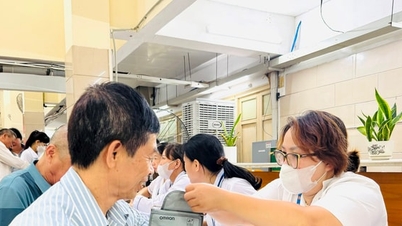
The elderly are among the priority group. Photo: Duy Hieu. |
The project is implemented on a "non-geographical" principle, allowing people to receive medical examinations at qualified facilities within the network announced by the Department of Health, regardless of their place of residence, while still being managed uniformly on a shared data platform.
Ho Chi Minh City aims to achieve the following targets by the end of 2026: 100% of children under 2 years old will receive two annual health check-ups; 100% of children under 6 years old, students, workers, informal workers, and the elderly will receive annual health check-ups. All health data will be connected to the national population database and updated into electronic health records for lifecycle management.
Risk group screening
Regarding the examination content, for children under 6 years old , the examination includes monitoring growth, assessing nutrition, vaccinations, psychomotor development, a general physical examination, and screening for autism risk for children aged 16-30 months.
Children aged 6 to under 18 will receive screenings to detect early signs of school-related illnesses, refractive errors, scoliosis, dental problems, and mental health issues. They will also receive nutritional counseling, sex education , and adolescent reproductive health guidance.
Individuals aged 18 and older will undergo a general examination including medical history taking, body composition measurement, specialist examination, and tests such as complete blood count, blood glucose, liver and kidney function tests, urinalysis, and chest X-ray.
Female workers are also screened for breast and cervical cancer as regulated by the Ministry of Health . The plan also specifies separate health check-up requirements for specific occupational groups such as officials, soldiers, police officers, drivers, airline staff, sailors, and railway operators.
In addition to routine health checkups, Ho Chi Minh City will implement screening packages based on risk groups. Specifically, women aged 25-65 who have been sexually active will undergo cervical cancer screening every three years; women aged 25-70 will be screened for breast cancer using ultrasound or mammography.

|
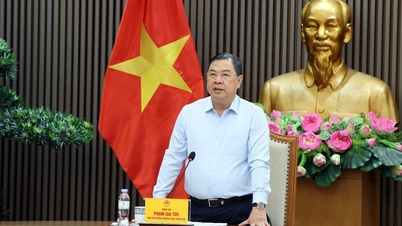
Mr. Nguyen Phuoc Loc, Deputy Secretary of the Ho Chi Minh City Party Committee, chaired the working session with the Ho Chi Minh City Department of Health. Photo: Nguyen Thuan. |
Individuals over 45 or at risk will be screened for colorectal cancer using fecal occult blood tests, CEA tests, and colonoscopy. Men over 50 or in high-risk groups will be screened for prostate cancer using PSA testing. Individuals with chronic hepatitis B or C or cirrhosis will be screened for liver cancer using abdominal ultrasound combined with cancer biomarkers.
According to the plan, the entire screening process must be integrated, from list creation, invitation to participation, examination, risk classification, counseling, referral to post-screening follow-up. Abnormal cases will be referred to appropriate facilities for definitive diagnosis, treatment, or long-term management.
Community health centers and continuous health care teams will serve as the central point for monitoring, reminding patients of follow-up appointments, supervising treatment adherence, and updating data in electronic health records.
Regarding funding, the draft states that Ho Chi Minh City will implement six periodic health check-up packages for its residents. Of these, five groups will have their costs covered by the city budget: children under 6 years old, children from 6 to under 18 years old, students, informal workers, and the elderly. For workers in the formal employment sector, the cost of periodic health check-ups will be covered by their employers in accordance with the law on occupational safety and health.
Speaking at the meeting, Mr. Nguyen Phuoc Loc, Deputy Secretary of the Ho Chi Minh City Party Committee, stated that the universal health care project is not only a health program but also linked to the strategy of investing in and developing the city's health system, developing medical human resources, and implementing action programs of the City Party Committee and the People's Committee of Ho Chi Minh City to implement Resolution 31 and the policies and directions of the Central Government.
According to Mr. Loc, the implementation of the project must be based on specific data, figures, and parameters. At the same time, it is necessary to clearly define the resources, operating mechanisms, progress, and responsibilities of each unit according to the principle of "clear responsibilities, clear tasks, clear timelines, clear results, and clear accountability."
Source: https://znews.vn/16-trieu-dan-tphcm-duoc-kham-suc-khoe-mien-phi-ra-sao-post1654010.html




![[Photo] General Secretary and President To Lam presides over the meeting to approve the draft report on the results of the second inspection by the Politburo of the Standing Committee of the Hanoi City Party Committee.](https://vphoto.vietnam.vn/thumb/1200x675/vietnam/resource/IMAGE/2026/05/26/1779789811432_a2-bnd-4430-9620-jpg.webp)
























































































Comment (0)