

However, as kidney function begins to decline, the body may signal this through very subtle signs, especially in the morning. Early recognition of these symptoms can help detect and treat kidney damage promptly, before the disease progresses to a more severe stage.
According to experts from the Garnet Health hospital system in the US, there are five common morning symptoms that may be related to kidney damage.
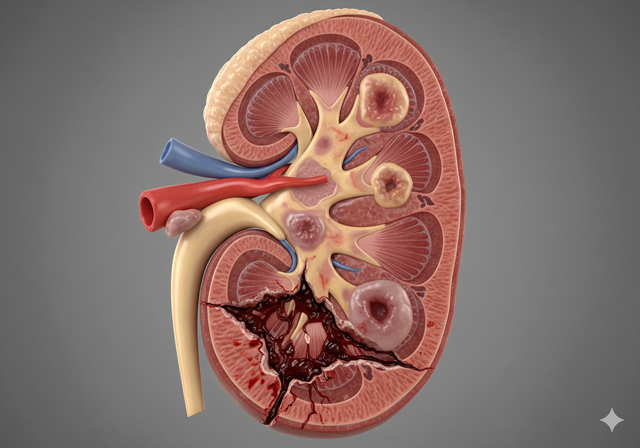
There are several morning signs that warn of underlying kidney damage.
Illustration: AI
Facial swelling in the morning
Swelling around the eyes or face immediately after waking up is a typical sign of kidney-related edema. When the kidneys are damaged, they can leak albumin into the urine, causing a decrease in blood protein levels, making it easier for fluid to escape from the bloodstream and accumulate in soft tissues. If swelling around the eyes is accompanied by foamy urine, rapid weight gain, or high blood pressure, kidney function should be checked, according to Garnet Health .
Foamy urine
Foamy urine that doesn't dissipate quickly can be a sign that your body is producing too much protein—a condition known as proteinuria. This is one of the earliest signs of damage to the glomeruli—the blood-filtering parts of the kidneys. While some causes like dehydration or frequent urination can also cause temporary foam, if this persists, a urine and kidney function test is necessary.
Dry, itchy skin due to decreased kidney function.
When kidney function declines, the body accumulates toxins, and mineral balances, such as phosphorus and parathyroid hormone, become imbalanced, leading to dry skin and intense itching, especially at night. Unlike normal dry skin, itching caused by kidney disease is usually symmetrical on both sides and does not improve with moisturizers. Persistent itching requires careful evaluation through blood tests and kidney function tests.
Fatigue, poor concentration, forgetfulness
"Brain fog" can be a consequence of the kidneys failing to remove toxins, anemia due to low erythropoietin (a hormone produced by the kidneys that plays a key role in red blood cell production), or sleep disorders. Patients often feel tired, sluggish, and have reduced concentration. Checking glomerular filtration rate (eGFR), hemoglobin, and other indicators can help determine the cause.
Breath smells like ammonia.
Breath that smells like urine or ammonia may be due to high levels of urea in the blood – a clear sign of severe kidney failure. If accompanied by nausea, fatigue, and itching, the patient should be checked immediately, according to Garnet Health .
Thus, early-stage kidney damage often does not cause noticeable symptoms. However, by carefully observing changes in the morning, from urine, skin, and breath to alertness levels, you can recognize early warning signs from your body. Early detection and timely intervention are key to protecting long-term kidney health.
Source: https://thanhnien.vn/5-dau-hieu-buoi-sang-canh-bao-than-dang-am-tham-ton-thuong-18525082823042554.htm
![[Photo] Secretary of the National Assembly Party Committee, Chairman of the National Assembly presides over the meeting of the Standing Committee and Executive Committee of the National Assembly Party Committee.](https://vphoto.vietnam.vn/thumb/1200x675/vietnam/resource/IMAGE/2026/06/03/1780480353201_ndo_br_bnd-2585-jpg.webp)

![[Photo] General Secretary and President To Lam presides over a meeting with the Central Organizing Committee.](https://vphoto.vietnam.vn/thumb/1200x675/vietnam/resource/IMAGE/2026/06/03/1780482764658_a1-bnd-4741-3342-jpg.webp)



























![[Photo] First session of the 14th Congress of the Vietnam Trade Union](https://vphoto.vietnam.vn/thumb/1200x675/vietnam/resource/IMAGE/2026/06/03/1780465947883_ndo_br_img-3852-jpg.webp)






















![[Video] Sunset at Lap An Lagoon – Where the sun sets over the fishing nets](https://vphoto.vietnam.vn/thumb/1200x675/vietnam/resource/IMAGE/2026/05/31/1780192137701_beach-landscape-sea-water-nature-grass-745871-pxhere-com.jpeg)































Comment (0)