

Puberty is a period when boys experience significant physical and psychological changes, marking the transition from childhood to adulthood.
At what age do boys start puberty?
Puberty is a period of significant physical and psychological changes in children under the influence of sex hormones. Boys usually begin puberty between 11 and 13 years old, but it can start as early as 9 or as late as 14 years old and still be normal. This process is primarily governed by the hormone testosterone, which helps develop the reproductive organs, muscles, skeletal system, voice, and masculine characteristics.
Signs of puberty in boys
Understanding puberty, its signs, and how to support your child will help parents foster healthy and confident development in their children.
Changes in body shape and physique
One of the most noticeable signs of puberty in boys is rapid growth in height. During this period, boys can grow 20-30 cm or more, depending on their physique. Along with this, the musculoskeletal system develops strongly, the skeletal structure becomes more robust, and muscle mass increases significantly, especially towards the end of puberty.
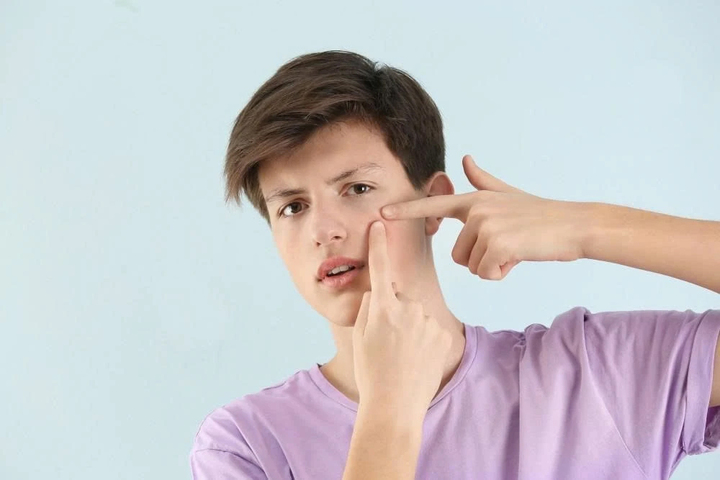
Puberty is a period when a child's body and psychology undergo significant changes under the influence of sex hormones.
However, each child's growth rate is different, as it depends on genetic factors, nutrition, sleep, and daily physical activity levels.
Testicles and penis develop
An increase in testicular size is one of the first signs that a boy is entering puberty, usually occurring between the ages of 9 and 14. During this period, the testicles may develop unevenly, with one being lower than the other; this is a normal physiological phenomenon.
Along with this, the penis grows in size, the body produces more testosterone, leading to changes such as increased muscle mass, hair growth, and voice changes. Many boys may also experience spontaneous erections or nocturnal emissions – signs that their reproductive system is gradually maturing.
Hair growth on the body and face
After the genitals begin to develop, pubic hair usually appears first. Initially, the hair is thin and light in color, then gradually becomes darker and spreads to the thighs and lower abdomen.
After a few years, hair begins to grow in other areas such as the armpits, arms, legs, upper lip, chin, and chest. This is a result of increased male sex hormones in the body. Over time, the density of body hair becomes thicker, reflecting physiological maturation.
Voice changes
Under the influence of sex hormones, the larynx and vocal cords develop, causing boys' voices to become deeper. During this period, many children experience "voice breaking," with their voices changing erratically or becoming slightly hoarse. This is completely normal and will gradually stabilize once puberty is complete.
Temporary breast tissue appearance
During puberty, some boys may experience slight breast or nipple protrusion due to hormonal changes. This is a common condition, especially in overweight children, and usually resolves on its own once hormones stabilize. Along with physical changes, children also become more sensitive psychologically, desiring independence, and paying more attention to their appearance and social relationships as they gradually develop their own sense of self.
What should parents do when their children enter puberty?
When boys enter puberty, parents need to be supportive and have open discussions about sexuality, reproductive health, and bodily changes. Listening to and respecting their feelings will help them become more confident during this turbulent period.
In addition, families and schools need to cooperate in sex education , guiding children towards correct knowledge about friendship, relationships, and self-responsibility. Parents should also pay attention to nutrition, sleep, and exercise to support children's holistic physical and mental development.
Source: https://vtcnews.vn/7-dau-hieu-cho-thay-con-trai-ban-bat-dau-day-thi-ar1021548.html
![[Photo] First session of the 14th Congress of the Vietnam Trade Union](https://vphoto.vietnam.vn/thumb/1200x675/vietnam/resource/IMAGE/2026/06/03/1780465947883_ndo_br_img-3852-jpg.webp)





















![[Photo] Delegation attending the 14th Congress of the Vietnam Trade Union visits the Mausoleum of President Ho Chi Minh.](https://vphoto.vietnam.vn/thumb/1200x675/vietnam/resource/IMAGE/2026/06/03/1780451842301_ndo_br_img-3824-jpg.webp)

















































Comment (0)