

 |
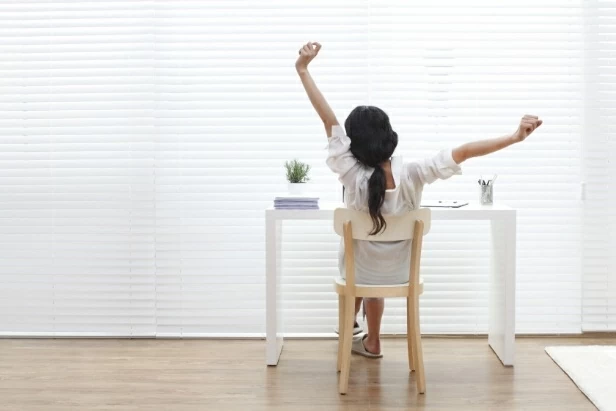
| Breathing exercises and stretching while studying are simple yet effective ways to reduce stress during exam preparation. (Source: Health) |
Many students study more as exams approach, but their effectiveness decreases due to accumulated stress. How can you maintain a stable mindset and improve your memory? Here are 7 simple, scientifically proven , and easy-to-apply stress-reduction methods for exam preparation:
1. Practice breathing and stretching while studying to effectively reduce stress.
Breathing techniques are one of the quickest and easiest ways to reduce stress in the body and calm the mind. By breathing deeply and slowly, the body undergoes a relaxation response, the heart rate slows, muscles relax, and blood pressure decreases. This technique can also be applied to stay calm during exams.
Breathing techniques that can be practiced during the first 5 minutes of the session include abdominal breathing (focusing on filling the abdominal area with air) or 7:7:7 breathing (inhale for seven seconds, hold your breath for seven seconds, exhale for seven seconds).
Stretching will also help reduce muscle tension, improve blood circulation, and help the brain focus better. Students can participate in a gentle yoga class to receive guidance on stretching, then practice these techniques at home or download apps on their phones with exercise and stretching routines.
This not only helps students avoid sitting glued to their desks but also helps their bodies relax, become more alert, get better sleep, improve learning efficiency, and achieve better exam results.
2. Manage your time well.
Good time management will make studying much more effective. To make the most of study time and minimize stress, creating a study schedule is essential. Planning your studies a week or a month in advance is best so that students know exactly what they need to do and have enough time to complete everything necessary.
However, the schedule should also take into account rest time and relaxation activities, and you shouldn't spend the whole day cramming into the same subject to avoid boredom.
3. Eliminate distractions.
Phones and surrounding people and things can distract students from their studies. Social media sites like Facebook and Twitter not only cause significant distractions when concentration is needed, but studies have shown that they can also cause stress or lead to "FOMO" (fear of missing out) if too much time is spent browsing.
Therefore, completely staying away from social media, even for just a few hours, will help students focus better and prevent negative thoughts.
4. Exercise
Regular exercise not only helps reduce stress but also improves concentration and mental awareness, two crucial factors for achieving high academic results. Physical activity also improves sleep, thereby reducing stress.
However, there's no need to overexert yourself, as psychologists have shown that just a 10-minute walk is equivalent to 45 minutes of high-intensity exercise. In addition, cardio exercises or a yoga session can help relax the body and mind for the next study session.
5. Share your feelings.
When feeling stressed and anxious about studying and exams, the pressure can become overwhelming. An effective way to deal with the situation is to talk to friends about what you're going through to share your difficulties and lessen the burden.
6. Prioritize bedtime.
Good sleep habits are crucial for effective learning. It may not be easy, but going to bed at around the same time each night is a sure way to improve sleep quality.
To establish this habit, students should turn off all electronic devices at least half an hour before bedtime and avoid studying in bed, as the body will begin to associate it with negative emotions such as stress.
7. Choose the right snacks when studying.
Healthy eating is crucial for students' minds and bodies while preparing for exams. Studies have shown that certain foods can help reduce stress and anxiety.
Therefore, if you feel overwhelmed when looking at your study notes, you should avoid sugary or caffeinated foods and drinks, and instead ensure you consume healthy foods to help your body stay calm and enhance your thinking ability.
Some of the best (and tastiest) mood-boosting snacks include blueberries, dark chocolate, and pistachios. Pumpkin seeds and sunflower seeds are high in magnesium, which is known to help regulate emotions. However, the key is to eat in moderation to avoid feeling sluggish and unfocused after meals.
Source: https://baoquocte.vn/7-phuong-phap-hieu-qua-giup-giam-cang-thang-khi-on-thi-391461.html

![[Image] Hanoi's urban life under the challenge of a "scorching hot" environment](https://vphoto.vietnam.vn/thumb/1200x675/vietnam/resource/IMAGE/2026/05/25/1779706979265_nang-nong-t5-2026-minh-duy-7-4636-jpg.webp)

![[Image] Close-up view of the interchange connecting the two expressways and Long Thanh Airport.](https://vphoto.vietnam.vn/thumb/1200x675/vietnam/resource/IMAGE/2026/05/25/1779703378210_ndo_br_z7863716673926-224453a31600126cce10622af6290afd-4549-jpg.webp)































































































Comment (0)