

Many types of fish contain omega-3 fatty acids, but the amount varies between species due to their diet. Check out some of the fish highest in omega-3s.
Deep-water fish such as swordfish and tuna are higher in omega-3 fatty acids. Many farmed fish also contain omega-3 fatty acids.
The amount will depend on the feed used to feed the fish. For example, Atlantic salmon is high in omega-3 fatty acids while silver perch (freshwater) has lower levels.
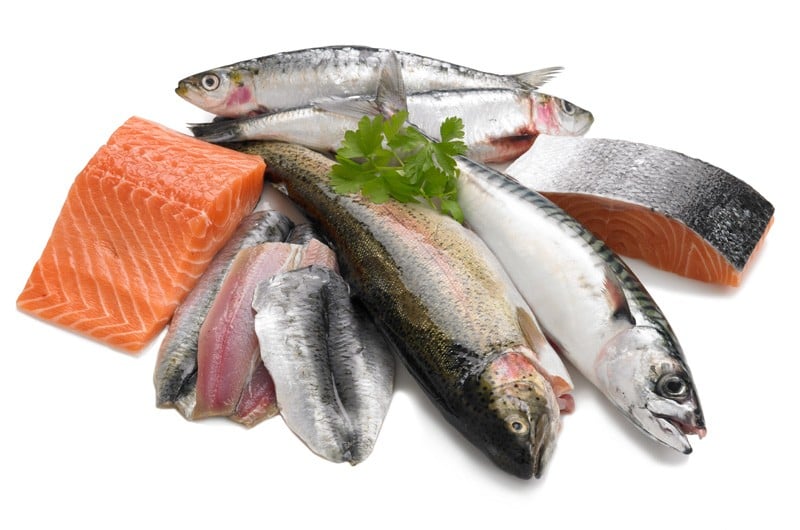
Many deep-water fish are high in omega-3 fatty acids.
1. What are the benefits of omega-3 fatty acids?
Omega-3 fatty acids are essential dietary fats that have many health benefits, especially for the brain. Large amounts of omega-3 fats come from fatty fish, algae, and some fatty plant foods. Fatty fish are high in two main types of omega-3s, eicosapentaenoic acid (EPA) and docosahexaenoic acid (DHA). Alpha-linolenic acid, or ALA, is a plant-based omega-3. Adequate intake is 1,600 mg for men and 1,100 mg for women, according to the National Institutes of Health .
Regular consumption of fish to supplement omega-3 is associated with a significantly lower rate of heart disease. According to the National Institute of Nutrition, nutritional components extracted from catfish include natural compounds such as omega 3, 6, 9, vitamins A, E, trace minerals, which have the effect of reducing cholesterol, triglycerides, and preventing thrombosis.
Many mainstream health organizations recommend that healthy adults consume 250–500 milligrams (mg) of eicosapentaenoic acid (EPA) and docosahexaenoic acid (DHA) daily. The American Heart Association recommends eating at least two servings of fish per week. One serving is equivalent to 100 g of cooked fish, so eating two servings of fatty fish per week is enough to reach that goal. Remember, choosing from a variety of fish can help reduce your exposure to environmental pollutants such as mercury.
2. Some fish are high in omega-3 fatty acids.
Here is a list of some fish that are high in omega-3 fatty acids:
Mackerel: This small, fatty fish is delicious and high in omega-3 fatty acids. Mackerel is extremely nutritious, with a 100g serving containing 500% of the Daily Value (DV) for vitamin B12 and 130% for selenium.
Omega-3 content: 4,580 mg EPA and DHA (combined) per 100 g.
Salmon: Is one of the foods that contain high quality protein and many different nutrients such as large amounts of vitamin D, selenium and B vitamins.
Studies show that people who regularly eat fatty fish like salmon have a lower risk of diseases like heart disease, dementia and depression.
Omega-3 content: 2,150 mg EPA and DHA (combined) per 100 g.
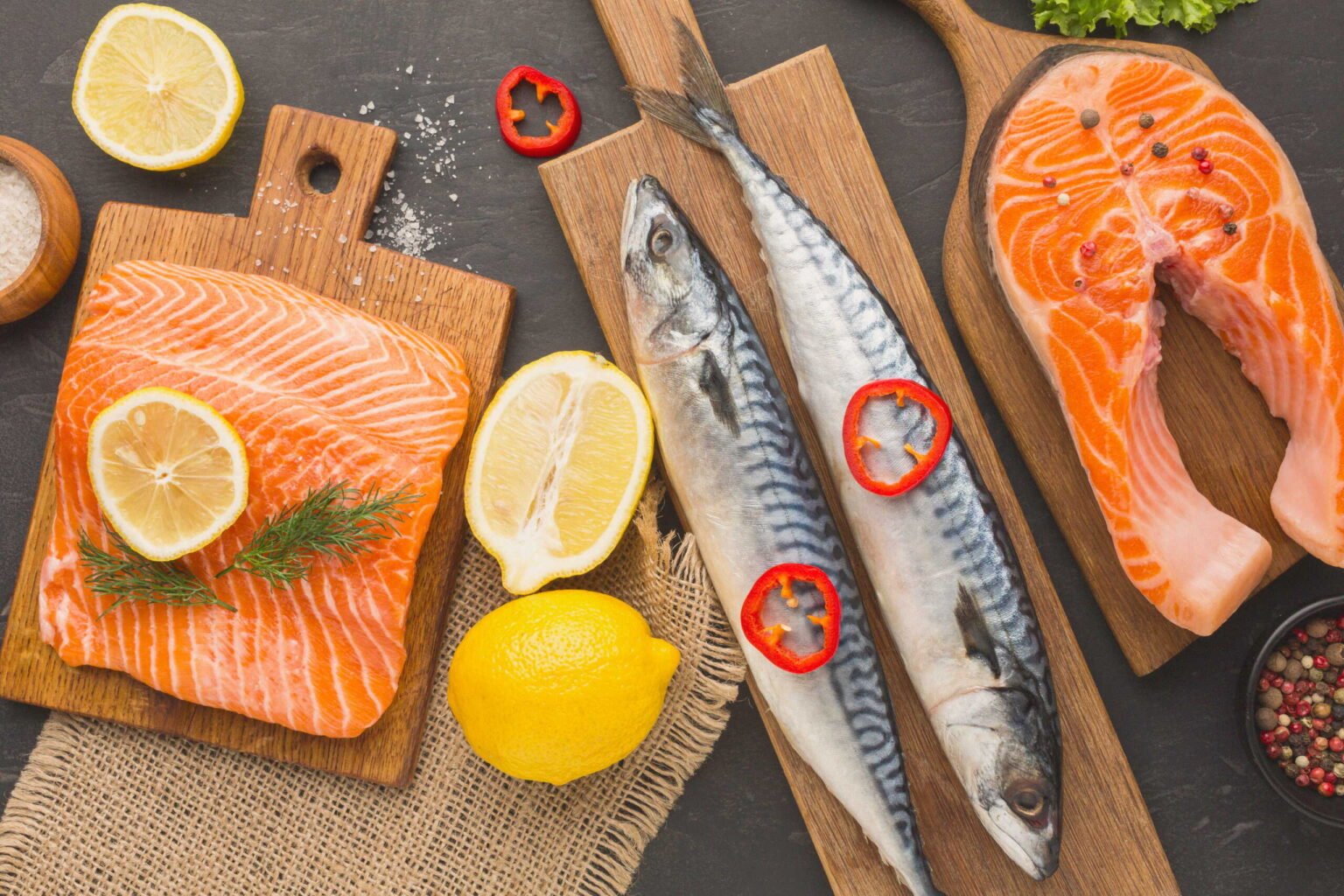
Salmon is a fatty fish rich in omega-3s.
Herring: This is a medium-sized oily fish that is often cold-smoked, pickled, or pre-cooked and sold as a canned snack.
A 100g serving of herring contains almost 100% DV of selenium and 779% DV of vitamin B12. Omega-3 content: 2,150 mg EPA and DHA (combined) per 100g.
Sardines: A small, oily fish, often used as an appetizer, snack, or delicacy. They are very nutritious, especially when eaten whole. Sardines contain many nutrients that your body needs.
A 100g serving of drained sardines provides over 370% of the DV for vitamin B12, 24% for vitamin D, and 96% for selenium. Omega-3 content: 1,463 mg EPA and DHA (combined) per cup (149g) of canned Atlantic sardines.
Anchovies: Anchovies are small, oily fish that are often sold dried or canned. Anchovies are an excellent source of niacin and selenium, and boned anchovies are a good source of calcium.
Omega-3 content: 411 mg EPA and DHA (combined) per 5 anchovies (20 g), or 2,053 mg per 100 g.
Flounder: Flounder is a good alternative for those who don’t like the strong flavor of most oily ocean fish. This mild white fish is still rich in omega-3 fatty acids. It’s also a good source of protein, potassium, and niacin.
A 100g serving of Alaskan halibut contains only 90 calories and provides 19 grams of protein. Halibut is also high in potassium, with 435 milligrams per serving.
Rainbow Trout: This is a great fish for those who don’t like the fishy taste of salmon or tuna. Besides being one of the best fish for omega-3 fatty acids, rainbow trout is also a good source of protein, calcium, magnesium, and niacin.
A 100g serving of wild rainbow trout contains 119 calories with 20g of protein and some B vitamins.
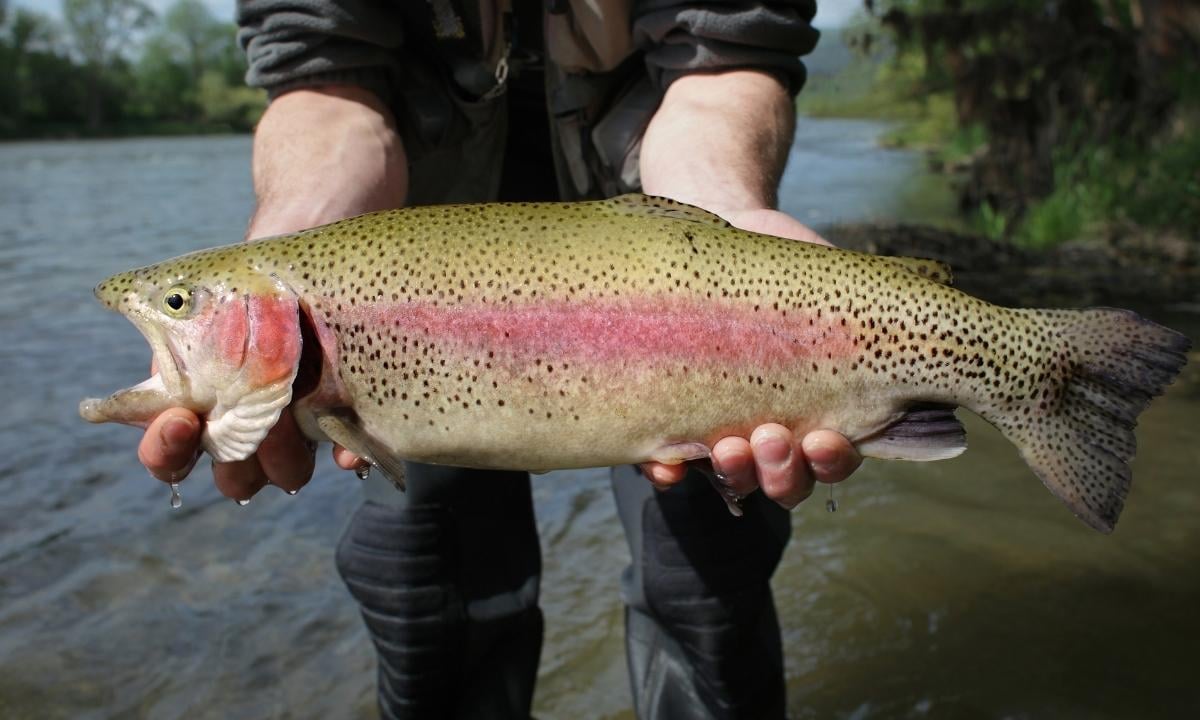
Rainbow trout.
Tuna: This is an excellent source of omega-3 fatty acids, protein, magnesium, potassium, vitamin B-12, and niacin. A 100-gram piece of canned white tuna in water has 130 calories, 28 grams of protein, and 2 to 3 grams of heart-healthy fat.
3. Refer to some species with high omega-3 acid content
Species | Marketing name | Scientific name | Oil (%) | Total Omega-3 LC PUFA (mg/150g) |
Tuna | Slim tuna | Allothunnus fallai | 16.5 | 5640 |
Swordfish | Swordfish | Xiphias is happy | 7.7 | 1530 |
King of Dreams | Striped Morwong | Cheilodactylus spectabilis | 3.2 | 1230 |
Red grouper | Alfonsino | Beryx Splendor | 5.2 | 1195 |
White anchovies | White anchovies | Lovettia sealii | 2.6 | 1100 |
Grouper | Big-eyed grouper | Caranx sexfasciatus | 4.7 | 1065 |
White anchovies | White anchovies | Galaxias maculatus | 3.3 | 1030 |
Mackerel | Bluefin tuna | Scomberomorus astralasicus | 3.8 | 760 |
Australian tuna | Australian tuna | Australian sardines | 1.5 | 650 |
Gemstone fish | Gemstone fish | Rexea solandri | 2.6 | 640 |
Ray | Ray | Black Centrolophus | 14.4 | 620 |
Mackerel | Spanish mackerel | Scomberomorus commerson | 3 | 575 |
Sweep | Sweep | Scorpis lineolatus | 1.3 | 555 |
Australian herring | Australian herring | Arripus georgianus | 1.3 | 540 |
Grouper | Western Blue Grouper | Achoerodus goouldii | 3.6 | 540 |
Wild dolphins | Bigspine dolphin | Pentaceros decaanthus (marigold) | 1.5 | 530 |
Australian salmon | Australian salmon | Arripi trutta | 1.1 | 505 |
Mackerel | Spotted mackerel | Scomberomorus munroi | 1.2 | 500 |
Mackerel | School mackerel | Scomberomorus queenslandicus | 1.1 | 490 |
Mackerel | Grey mackerel | Scomberomorus semi-fasciatus | 1.1 | 490 |
Tailor | Tailor | Bluebell plant | 1.3 | 490 |
Emperor | Emperor Threadfin | Lethrinus genivittatus | 2.6 | 490 |
Red grouper | Bight Red Grouper | Centroberyx gerrardi | 0.5 | 485 |
Australian sardines | Australian sardines | Neopilchardus sardine | 1.2 | 470 |
Grouper | Blue-eyed grouper | Schedophilus labyrinthica | 1.3 | 470 |
Source: https://giadinh.suckhoedoisong.vn/8-loai-ca-co-ham-luong-omega-3-cao-nhat-172241105112118069.htm
![[Photo] Parade to celebrate the 50th anniversary of Laos' National Day](/_next/image?url=https%3A%2F%2Fvphoto.vietnam.vn%2Fthumb%2F1200x675%2Fvietnam%2Fresource%2FIMAGE%2F2025%2F12%2F02%2F1764691918289_ndo_br_0-jpg.webp&w=3840&q=75)


![[Photo] Worshiping the Tuyet Son statue - a nearly 400-year-old treasure at Keo Pagoda](/_next/image?url=https%3A%2F%2Fvphoto.vietnam.vn%2Fthumb%2F1200x675%2Fvietnam%2Fresource%2FIMAGE%2F2025%2F12%2F02%2F1764679323086_ndo_br_tempimageomw0hi-4884-jpg.webp&w=3840&q=75)

















































































Comment (0)