

Five years ago, a couple with two young children in Dong Nai faced a marital crisis that seemed beyond repair. But after moving into a house designed by architect Nguyen Kava, their relationship gradually improved, and the family atmosphere became warmer and more welcoming.
That story further reinforced his belief in the philosophy that living spaces can heal. VietNamNet had a conversation with Nguyen Kava, an architect born in 1984, in his small office in Ho Chi Minh City. He shared things that, at first glance, seem strange and illogical to everyone.
'Cramming' nature into concrete blocks.
How do you design a healing home?
Architect Nguyen Kava: I apply the philosophy of egolessness to architecture. Egolessness means that no ego is allowed to impose itself on the design. I spent three years listening to and reading Buddhist scriptures to gain enlightenment about architecture and decided to follow this philosophy.
It's understandable that both homeowners and architects have their own egos and personalities. Conflicts in architectural and aesthetic viewpoints between the two can make this inherently creative work exhausting. This frustration can easily lead architects to leave the profession.
In fact, many of my friends have switched to construction or real estate brokerage because they couldn't handle the pressure and struggled to deal with clients' egos. Or, they chose to comply and follow the homeowner's wishes exactly to complete the design drawings.

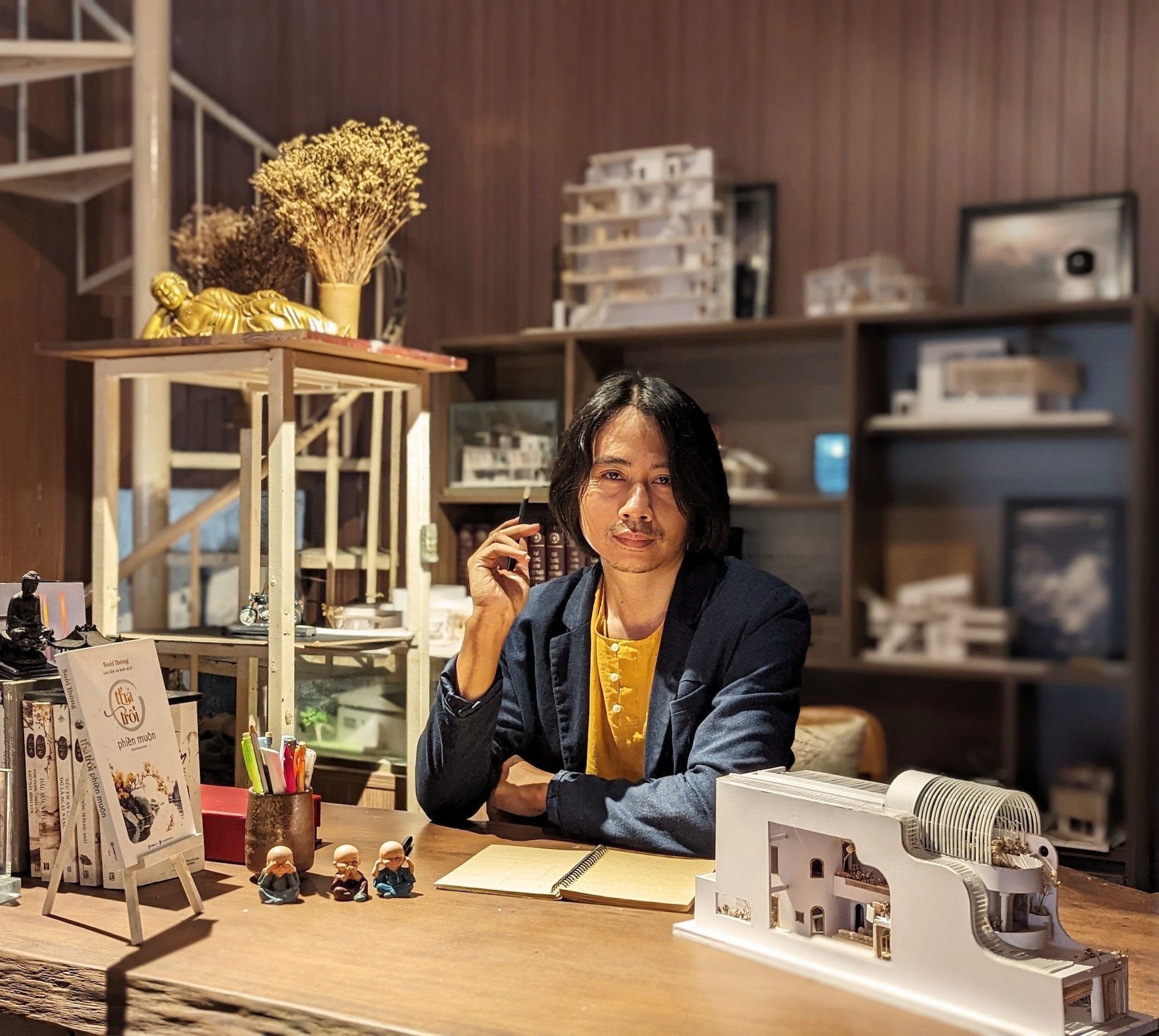
Architect Nguyen Kava. Photo: Provided by the artist.
Upon realizing this contradiction, I decided to set aside my ego and prioritize architecture. Architectural solutions must be contemporary, not based on my own personal style. Design ideas must be based on the needs of the occupants. A building with aesthetic appeal and practical functionality will speak for itself and convince the homeowner.
Thus, when architectural value is prioritized above other egos, the work process becomes easier. The philosophy of egolessness also makes each project uniquely interesting. No house is the most outstanding.
Furthermore, it's worth noting that I've observed the contemporary social landscape and see too much stress. High-pressure jobs, shrinking public spaces, air pollution, and noise all contribute to people forgetting the need for relaxation within their homes. Many people feel stifled upon returning home and instead go to cafes or bars to meet friends and unwind. Thus, the home isn't fulfilling its intended purpose as an architectural structure.
A home is not just a place to sleep, a place to shelter from the rain and sun. It also serves to relieve stress, restore health, and become a place for family connection. Therefore, I prioritize incorporating light, space, and greenery into the home to help people feel less confined and stressed in life.
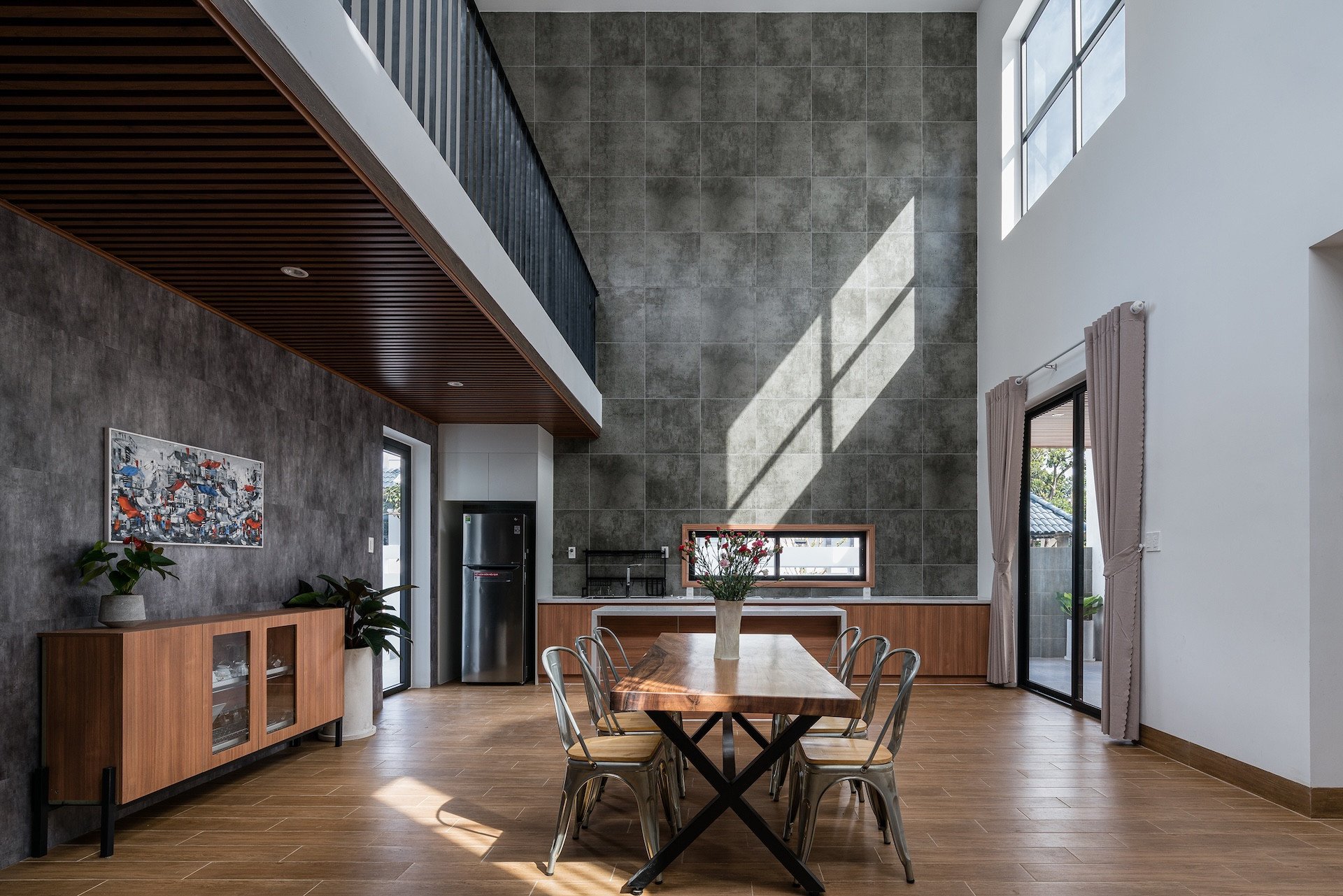
Mother's Apron House (Dong Nai). Photo: Provided by the interviewee.
- Even though architecture is your top priority, do you still have to defend your design ideas in front of the homeowner?
That's understandable. During construction, 101 things can happen. The house might be halfway built when neighbors offer suggestions, the homeowner might be tempted to make changes; the construction company might be hesitant to handle complex details; or the interior design company might want to increase costs by adding extra items.
Nevertheless, the architect must defend their own viewpoint, then find solutions to address the problems, and always remember that the value of the house must be prioritized.
The project in Dong Nai is a case in point. The interior design contractor added wall-mounted kitchen cabinets for the family, but they weren't included in my design. Their presence detracted from the aesthetics of the space. I spent an entire week trying to convince the homeowner to take the cabinets down. However, removing and discarding them would be wasteful. That's when I thought of adding two pairs of legs, creating a side table that would still look practical. Ultimately, the homeowner accepted that solution.
To achieve the above, as soon as I receive a design request, I ask the client very carefully whether they understand architecture. I design houses based on the homeowner's real needs, not following trends. Creativity is something architects are trained in and must practice. Therefore, a project needs to find inspiration from many different sources, from the homeowner, for example. Each homeowner has their own unique beauty and interest. This requires the architect to be open-minded to understand, listen to, and carefully observe them.
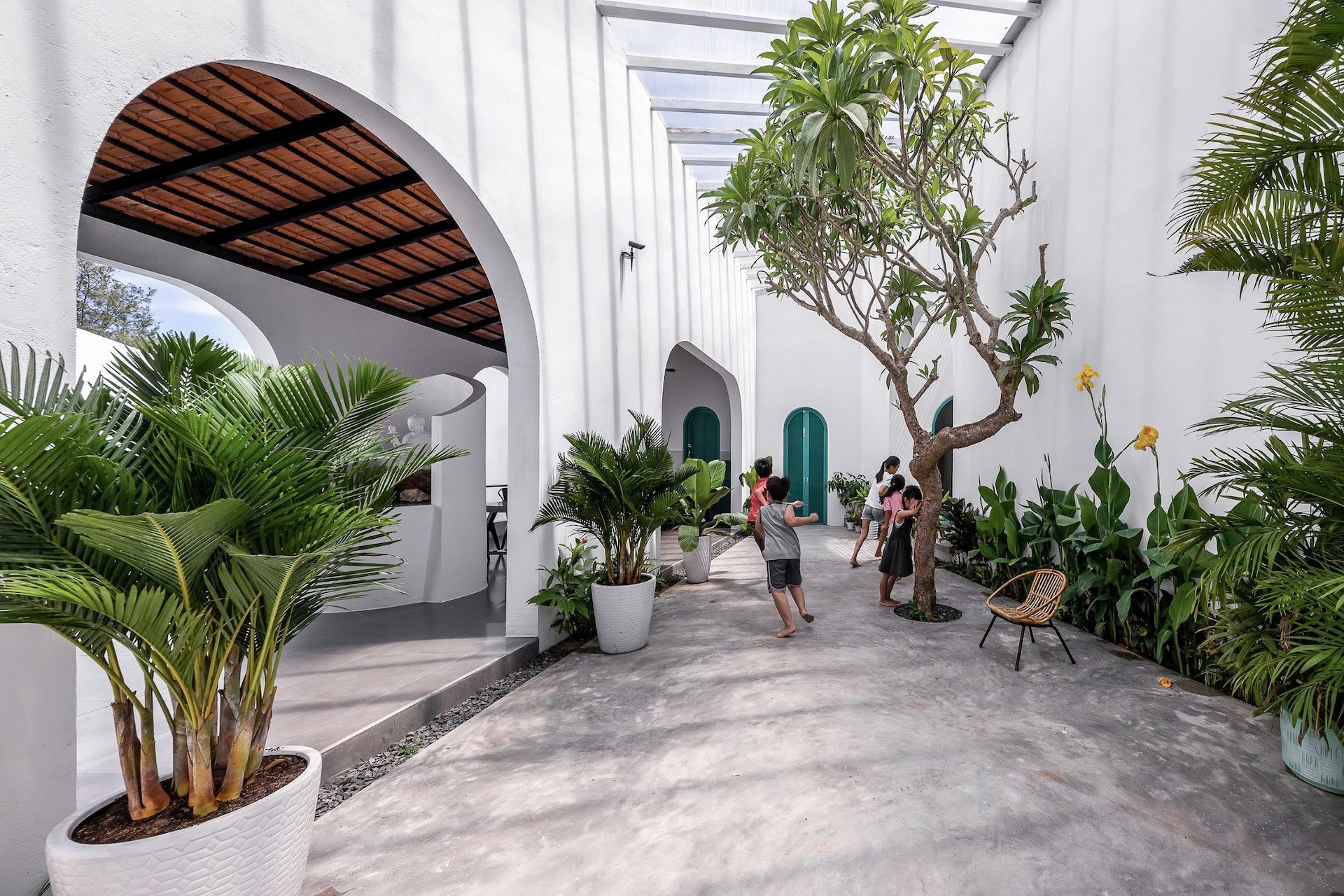
A house in Phu Yen (formerly). Photo: Provided by the owner.
The renowned architect Frank Lloyd Wright once spent a month living next to a homeowner or even staying in their home for a few days to understand their habits and create the right design. An architect must know how the homeowner walks, stands, sits, and lies down, understanding their daily biological rhythms; they cannot simply apply their own standards to the design. For example, if someone in the house has mobility issues, the staircase height must be reduced, and the distance between steps needs adjustment.
Even though many homeowners don't dare say they're out of money, we need to know that. It would be terrible if they had to borrow money after finishing their house. In that situation, architects should choose alternative, cheaper but still beautiful materials. Or, instead of drawing ten lines to finish, architects should try to reduce it to five, or even three lines, while still maintaining a beautiful result, to save money for the homeowner. Fewer lines mean less labor, less paper, and less resources needed.
Besides the factors mentioned above, even the legal regulations of the land plot and setback requirements can be transformed into opportunities for architects to develop their ideas.
Choose to live an ascetic life.
Are you being too picky when choosing a building design?
I'm not a picky person. I'm meticulous. That's why I only allow my office to take on fewer than 10 projects a year, so I have time to feel the connection with the space and enjoy each project. If I take on more projects and expand the office, it means my main job will be meeting clients and signing contracts. This is management work, not the job of an architect.
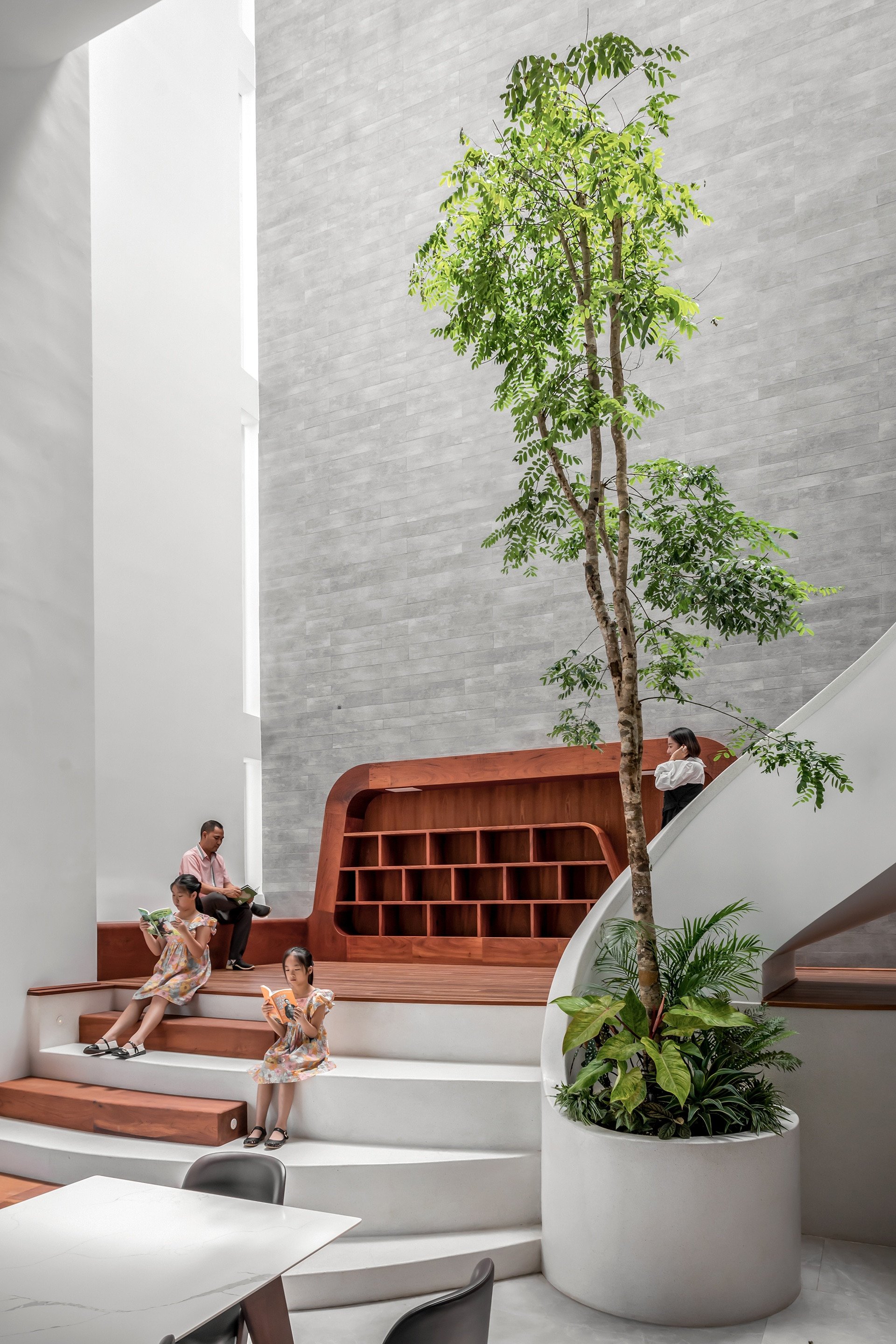
Light, wind, and greenery are always present in Nguyen Kava's designs. Photo: Provided by the author.
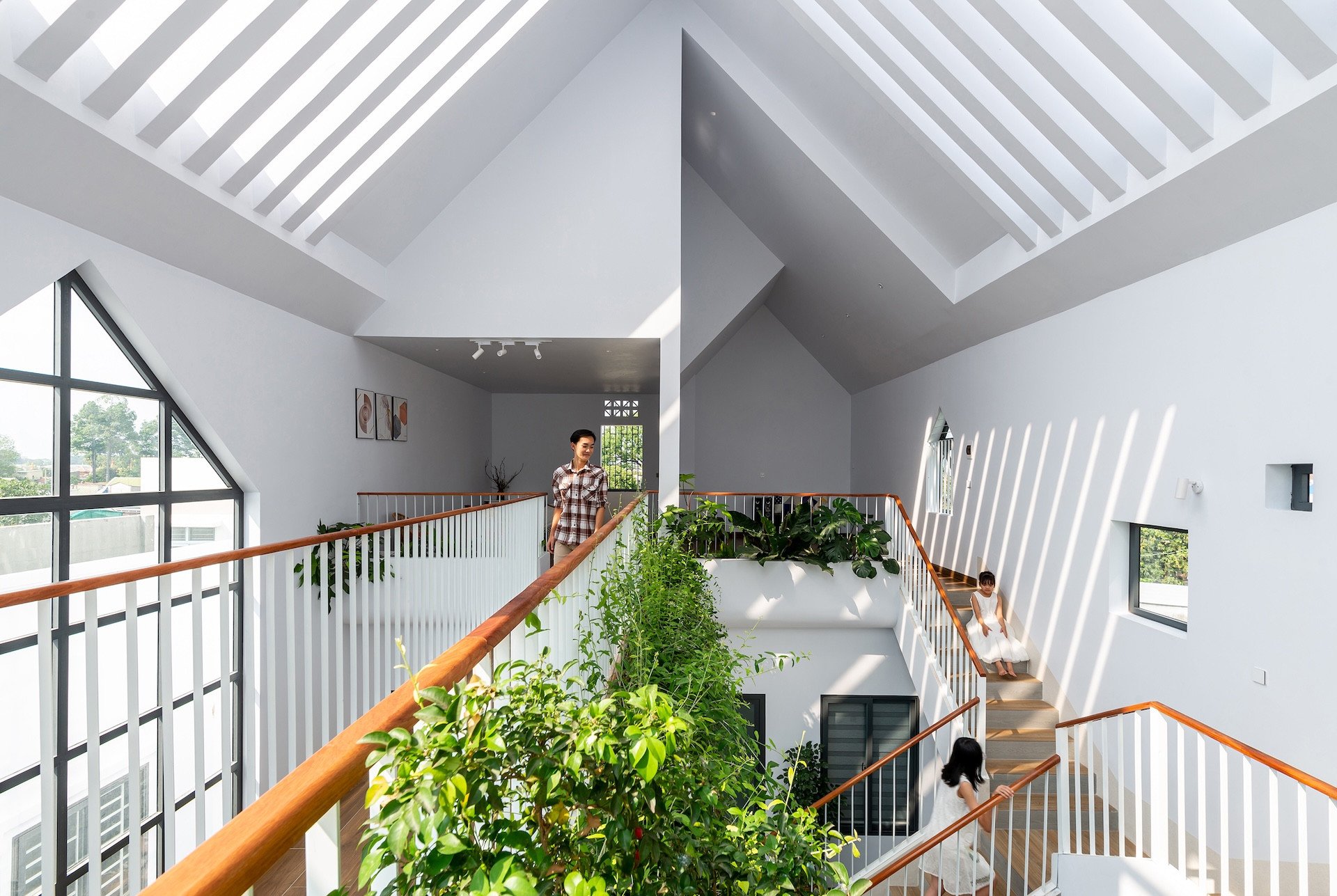
In terms of work style, I'm different from others because I don't like socializing much. When I started my career, I cut off all relationships and didn't attend parties. I don't care about what people say or criticize me, because I built my career according to the rules.
Career success isn't based on relationships. People are so anxious about losing relationships that they fear they won't be able to ask for help later. But I don't need those kinds of relationships. If I have the ability to provide a service, clients will come to me.
I've also come to realize that when you indulge too much, you can't create well. No one who's flashy and enjoys drinking and partying can work in this field. The architect's profession requires hardship; hardship is what fosters creativity. It's during difficult times that people are most creative. Therefore, I try to maintain that lifestyle, sometimes even if it's a bit ascetic.
- By proactively taking on fewer projects, don't you want to earn more money?
Happiness isn't synonymous with having a lot of money. Wouldn't it be better to create works that can heal emotions?
As a child, seeing my family members work so hard, I only wanted to grow up and earn a lot of money to escape poverty. But when I started working and interacted with many rich, even extremely rich, people, I realized they weren't happy. They still had to work hard and often argued. Despite their clean appearance and less hardship, they were still as miserable as people in the countryside. Therefore, earning money to alleviate suffering in life is not my path. Earning enough to live on from work, without being dependent on money, is sufficient for me.
To find a truly fulfilling path in my profession, for the past 10 years, I have applied the philosophy of selflessness to design. Once I reach the stage of selflessness, I will want to complete only 1-2 projects per year, and I will need to dedicate time to passing on my experience to younger architects. When I'm no longer an architect, perhaps I will become a Zen master.
Source: https://vietnamnet.vn/ga-lap-di-trong-the-gioi-kien-truc-tao-ra-nhung-ngoi-nha-chua-lanh-2418537.html
![[Image] Leaked images ahead of the 2025 Community Action Awards gala.](/_next/image?url=https%3A%2F%2Fvphoto.vietnam.vn%2Fthumb%2F1200x675%2Fvietnam%2Fresource%2FIMAGE%2F2025%2F12%2F16%2F1765882828720_ndo_br_thiet-ke-chua-co-ten-45-png.webp&w=3840&q=75)
![[Live] 2025 Community Action Awards Gala](/_next/image?url=https%3A%2F%2Fvphoto.vietnam.vn%2Fthumb%2F1200x675%2Fvietnam%2Fresource%2FIMAGE%2F2025%2F12%2F16%2F1765899631650_ndo_tr_z7334013144784-9f9fe10a6d63584c85aff40f2957c250-jpg.webp&w=3840&q=75)
![[Photo] Prime Minister Pham Minh Chinh receives the Governor of Tochigi Province (Japan)](/_next/image?url=https%3A%2F%2Fvphoto.vietnam.vn%2Fthumb%2F1200x675%2Fvietnam%2Fresource%2FIMAGE%2F2025%2F12%2F16%2F1765892133176_dsc-8082-6425-jpg.webp&w=3840&q=75)

![[Photo] Prime Minister Pham Minh Chinh receives Lao Minister of Education and Sports Thongsalith Mangnormek](/_next/image?url=https%3A%2F%2Fvphoto.vietnam.vn%2Fthumb%2F1200x675%2Fvietnam%2Fresource%2FIMAGE%2F2025%2F12%2F16%2F1765876834721_dsc-7519-jpg.webp&w=3840&q=75)













































































Comment (0)