

 |
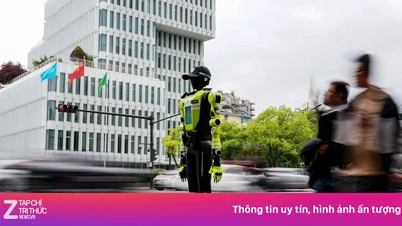
AI cameras are being used by traffic police to regulate traffic and detect violations. Photo: Khuong Nguyen . |
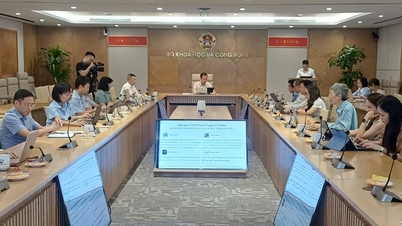
On May 21st, a workshop on the application of artificial intelligence to the transportation sector in Vietnam was held in Hanoi, jointly organized by the Vietnam Economic Science Association, VnEconomy Magazine, and the Institute for Technology for the Community, with expert participation from the Institute for Policy and Strategy Studies (IPSS).
Professor Hoang Van Cuong, Vice President of the Vietnam Economic Science Association, emphasized that transportation is not only technical infrastructure but also the lifeblood of the economy. He argued that AI, big data, and the Internet of Things are opening up great opportunities to restructure the transportation system, gradually forming smart cities and a digital society.
According to Mr. Nguyen Anh Duong, Head of the General Research and International Integration Department of IPSS, AI is no longer just a supporting tool, but is creating profound changes in how people move and how the entire transportation and logistics ecosystem operates.
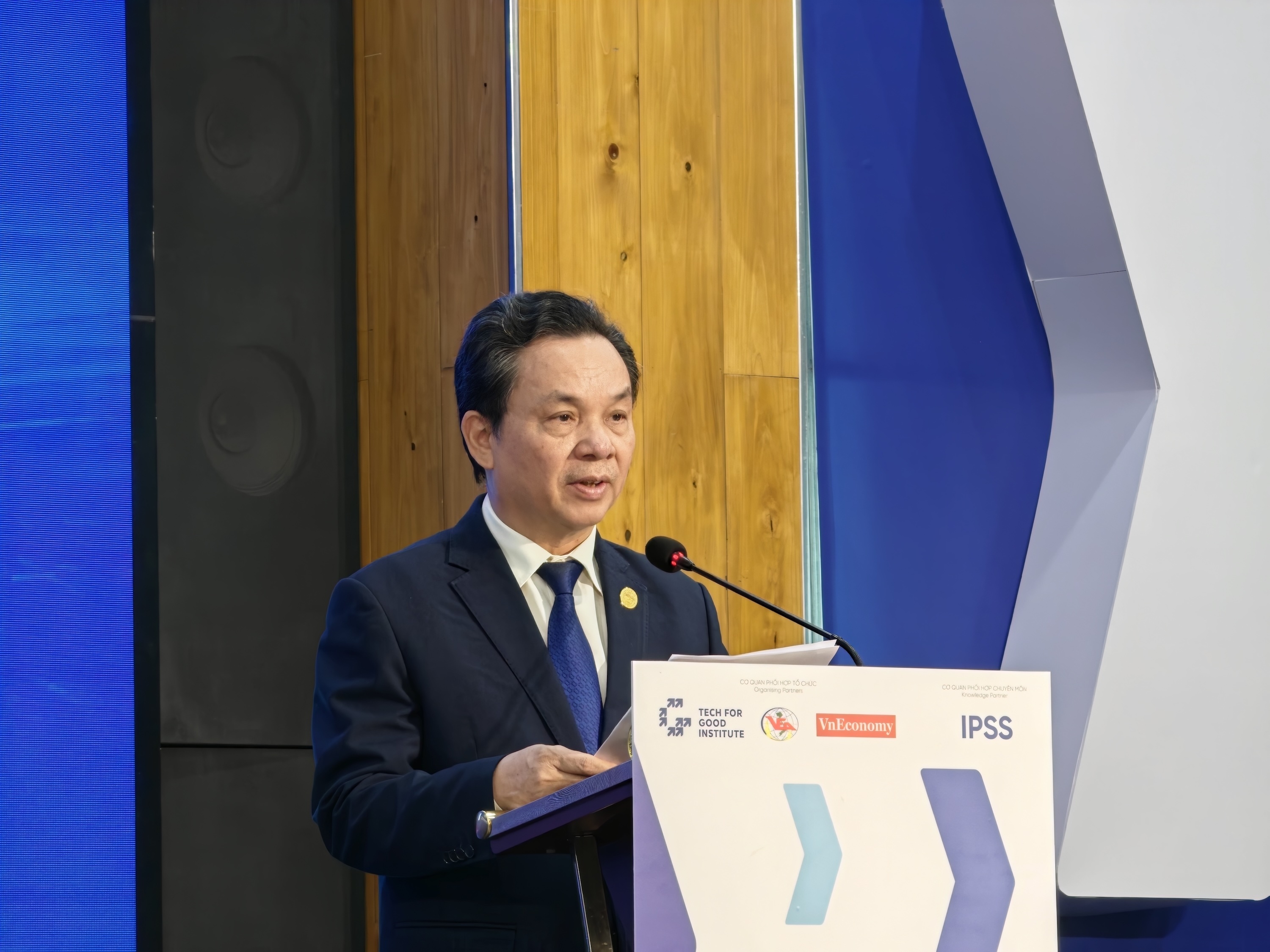 |
Professor Hoang Van Cuong, Vice President of the Vietnam Economic Science Association, shared his opening remarks at the event. Photo: Minh Khoi . |
In Hanoi alone, the city has installed over 1,800 AI cameras for traffic and security purposes. This number is expected to increase by more than 2,100 cameras this year. On some routes where AI traffic control is implemented, travel time has decreased by up to 30%, while traffic volume has increased by approximately 13%. In just the first month of implementation, the number of traffic violations eligible for penalties in Hanoi exceeded 6,300 cases; in Ho Chi Minh City, it reached over 3,000 cases.
However, many challenges remain. Mr. Duong believes that the core element for developing intelligent transportation is data. "The problem of data interoperability is still a huge challenge. Without sufficiently large, clean, and interconnected data, it is very difficult to develop effective AI systems," he said.
Furthermore, the gap in AI deployment capacity between localities is also concerning. Hanoi and Ho Chi Minh City are progressing the fastest, while many other cities lack the necessary funding, infrastructure, and human resources. Investment costs are also a major barrier, especially for small and medium-sized enterprises (SMEs) that need to simultaneously change processes and integrate data.
In the context of Vietnam's commitment at COP26 to achieve net-zero emissions by 2050, AI is expected to play a central role in promoting green transportation and reducing emissions. The government has issued several related policies, including Decision No. 2692/QD-TTg of 2025 on the application of the Internet of Things in intelligent transportation and Decision No. 456/QD-TTg of 2026 on building a data center and traffic management system for the period 2026-2030.
Based on this reality, IPSS proposes four key solution groups: building an integrated mobility data platform; supporting small cities in accessing AI for transportation; developing AI-based logistics corridors; and perfecting the legal framework for new transportation models such as driverless delivery and autonomous vehicles.
During the roundtable discussion, experts shared diverse perspectives on the application of AI in transportation.
From a state management perspective, Mr. Luong Duc Thang, Deputy Head of the Traffic Infrastructure Management Department, Hanoi Department of Construction, emphasized that different traffic needs require different approaches and should not be dependent on a single solution.
Mr. Thang questioned Vietnam's position on the global AI map and argued that big data processing is an urgent requirement for urban traffic management. "Every policy introduced must answer the question: what benefits will the people receive?", he said.
Associate Professor Dr. Nguyen Duc Vinh, former Director of the Institute of Sociology, Vietnam Academy of Social Sciences, emphasized that AI needs to be considered within a social context, not just as a technical problem. The transformation to smart transportation must ensure that no one is left behind, especially those with limited access to technology.
Mr. Nguyen Duy Hong, Operations Director of YCH Vietnam, shared from a logistics business perspective: AI is helping to optimize supply chains and reduce operating costs, but the prerequisite remains a sufficiently robust data infrastructure and connectivity between all parties in the ecosystem.
Source: https://znews.vn/ai-co-the-mo-loi-cho-giao-thong-thong-minh-post1653110.html



![[Image] Hanoi's urban life under the challenge of a "scorching hot" environment](https://vphoto.vietnam.vn/thumb/1200x675/vietnam/resource/IMAGE/2026/05/25/1779706979265_nang-nong-t5-2026-minh-duy-7-4636-jpg.webp)

![[Image] Close-up view of the interchange connecting the two expressways and Long Thanh Airport.](https://vphoto.vietnam.vn/thumb/1200x675/vietnam/resource/IMAGE/2026/05/25/1779703378210_ndo_br_z7863716673926-224453a31600126cce10622af6290afd-4549-jpg.webp)














































































Comment (0)