

That "best friend" has now appeared in the form of artificial intelligence. Last year, Meta CEO Mark Zuckerberg suggested that AI could help alleviate feelings of loneliness and social isolation. This is a serious problem: in 2023, the World Health Organization made loneliness a global health priority, while the US Surgeon General called it a "national epidemic." Research also shows that socially isolated individuals have a 32% higher risk of premature death.
In CNN's "Kara Swisher Wants to Live Forever," journalist Kara Swisher explored the impact of loneliness on longevity and tested both methods: conversing with AI and building real-life connections. The results showed that AI has a certain appeal, but cannot replace human presence. As Sherry Turkle of MIT observed, humans have become accustomed to seeking connection through screens.
The illusion of a friend
Lonely, isolated, or disconnected individuals are easily attracted to AI chatbots because this technology is trained to interact like humans. According to Dr. Rose Guingrich, the most vulnerable groups are often also the most likely to engage with AI.
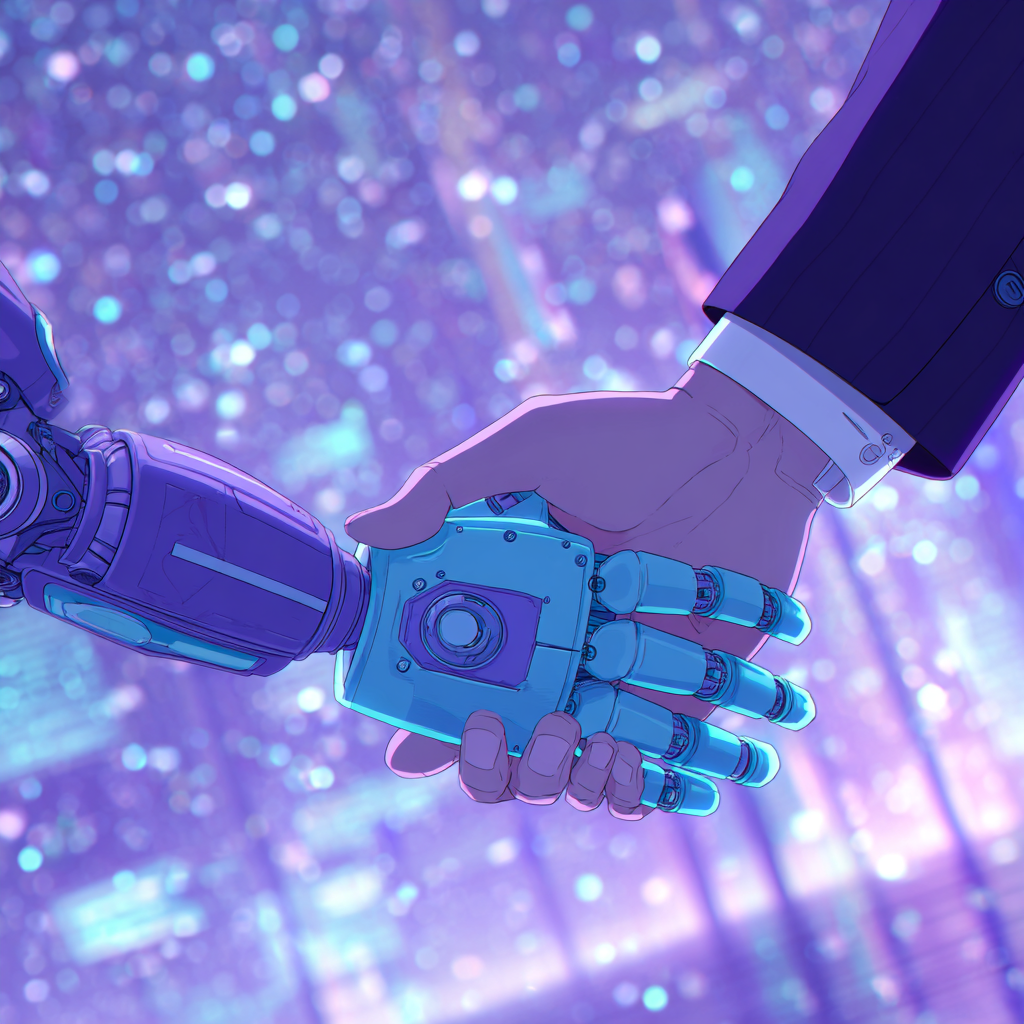
AI can accompany, converse with, and understand emotions… but is that truly friendship? Photo: Midjourney
For those already content in their relationships, chatbots are simply a tool to be used or not. But for those yearning for deeper emotional connection, AI can become a psychological refuge. In real relationships, every conversation carries risks: opposition, judgment, hurt feelings, or rejection. With chatbots, those risks almost disappear, creating a sense of being heard and understood without facing social anxieties.
However, that's just a simulation of the connection. Humans may feel they love the AI, but the AI doesn't love them back.
When AI makes humans forget how to build real relationships.
Conversations with AI may feel alive, but they still lack many core elements of human connection. According to Dr. Melissa Perry, head of the Public Health Department at George Mason University, humans need face-to-face interaction to form deep bonds. Voice, facial expressions, eye contact, gestures, and body language are all crucial signals that help us perceive the presence and emotions of others. Chatbots can show concern, empathy, and acknowledge emotions, but they cannot replace those sensory signals.
MIT's Dr. Sherry Turkle emphasizes: "Intimacy requires vulnerability." AI, however, offers a form of connection that doesn't require vulnerability, doesn't involve the risk of rejection or disagreement. This may provide users with immediate comfort, but it doesn't foster the capacity to build genuine relationships in the long term.
The danger lies in the fact that many AI platforms are designed to readily agree with and please users, even when it's not truly beneficial. AI can inadvertently reinforce harmful thoughts or behaviors. At the same time, these frictionless interactions with chatbots can lead people to become accustomed to "frictionless" relationships, while real relationships always involve differences, conflict, opposing needs, and vulnerability.
According to experts, learning to live with differences, handle disagreements, and interact with people who are not exactly like oneself is an essential part of the human experience. When that is sacrificed for a comfortable, artificial relationship, the price to pay can be enormous.
Back to basics
However, experts do not completely deny the possibility that AI could support lonely people in the future. According to Guingrich, if designed correctly, AI could help people practice social skills, identify areas for improvement, and build a specific path to developing friendships or real-life relationships.
In some contexts, AI can also serve as a primary source of information, helping users find suitable support resources, such as counseling services, community groups, or social activities near where they live.
However, the ultimate goal should not be to replace humans with AI, but rather to use technology to encourage and enrich real-life relationships. This can start with very small steps: participating in a new activity to meet new people, initiating a short conversation with someone in the community, or maintaining a regular appointment with friends, colleagues, or relatives.
AI can converse anytime. But it is humans—with their imperfections, differences, vulnerabilities, and the capacity for genuine emotional response—that create meaningful connections.
(According to CNN)
Source: https://vietnamnet.vn/ai-co-the-tro-thanh-ban-than-cua-con-nguoi-2519128.html

![[Image] Hanoi's urban life under the challenge of a "scorching hot" environment](https://vphoto.vietnam.vn/thumb/1200x675/vietnam/resource/IMAGE/2026/05/25/1779706979265_nang-nong-t5-2026-minh-duy-7-4636-jpg.webp)



![[Image] Close-up view of the interchange connecting the two expressways and Long Thanh Airport.](https://vphoto.vietnam.vn/thumb/1200x675/vietnam/resource/IMAGE/2026/05/25/1779703378210_ndo_br_z7863716673926-224453a31600126cce10622af6290afd-4549-jpg.webp)
































































































Comment (0)