

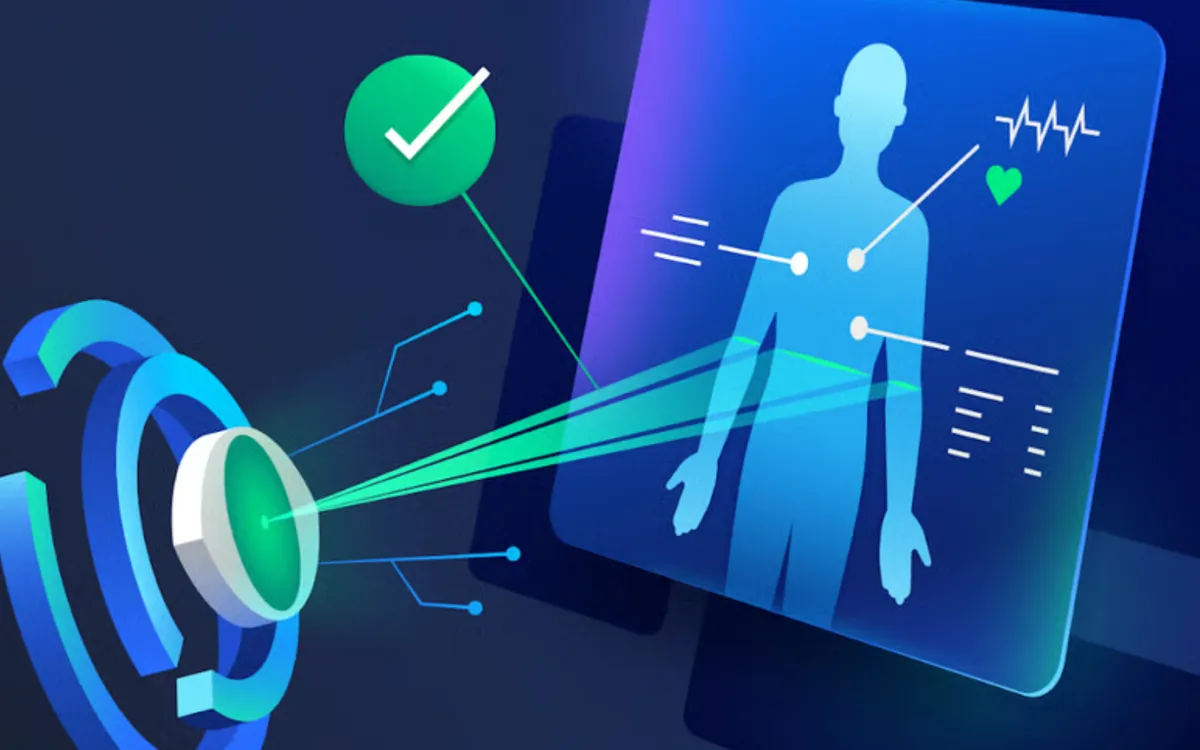
(Photo: Toptal)
Cancer detection using "microscopic" biosignals.
Scientists from the Massachusetts Institute of Technology (MIT) and Microsoft recently published research on an AI-powered biosensor system capable of detecting cancer at a very early stage through a simple urine test. The study, published in Nature Communications, opens up a new approach to at-home cancer screening with significantly higher sensitivity than traditional methods.
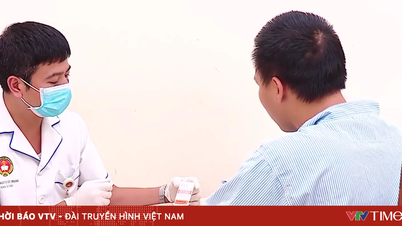
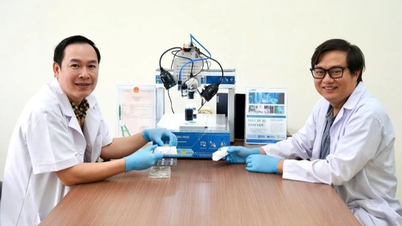
According to the research team, AI was used to design peptides—short protein chains—capable of recognizing the activity of proteases, a group of enzymes often overactive in cancer cells. These peptides are coated onto the surface of nanoparticles to form microscopic biosensors. When introduced into the body, if they encounter cancer-related proteases, the peptides are broken down and release specific signals. These signals are then excreted in urine and can be detected using test strips similar to pregnancy tests.
Previously, the research team demonstrated that protease sensing technology could detect various types of cancer, such as lung, ovarian, and colorectal cancer. However, the peptide design process was primarily based on traditional methods, resulting in limited accuracy. To overcome this, the scientists developed an AI system called CleaveNet to automatically design peptides capable of accurately identifying each target enzyme.

(Photo: ITN)
Professor Bhatia's lab is currently participating in a project funded by the US Advanced Biomedical Research and Development Authority (ARPA-H) to develop a home test capable of detecting and differentiating approximately 30 different types of cancer at an early stage. Beyond its diagnostic role, AI-engineered peptide technology also has potential applications in cancer treatment. These peptides can be attached to drugs or antibodies to release the active ingredient precisely within the tumor environment, increasing effectiveness and reducing side effects.
According to experts, combining AI with nanotechnology and molecular biology is creating a new direction in precision medicine, where diseases can be detected and treated before serious damage occurs.
AI predicts cancer risk before doctors detect it.
Along with new biosensors, AI is also demonstrating superior capabilities in analyzing medical images to predict cancer risk at a very early stage. One of the most notable studies today is the Sybil AI model, developed by scientists at the Mass General Brigham Cancer Center and Harvard Medical School in the US, to predict lung cancer risk.
According to Dr. Lecia Sequist of the Mass General Cancer Center, the research team trained the Sybil model using thousands of low-dose CT scans of patients participating in clinical trials. The data used included information about those later diagnosed with cancer, the timing of disease onset, health characteristics, and treatment outcomes. After training, Sybil could predict lung cancer risk based solely on CT scans, without requiring additional patient data. Trial results showed the model achieved an accuracy of approximately 80-95% in predicting lung cancer risk, even before radiologists detected clear abnormalities.
Along with Sybil, another AI system called MIRAI is also being used to predict breast cancer risk. Developed by a research team led by Professor Regina Barzilay at MIT, MIRAI uses data from approximately 128,000 mammograms, including 3,800 cases that were later diagnosed with cancer within 5 years. The system can predict future breast cancer risk with an accuracy of about 75-84%.

(Photo: AP)
Some major challenges today include the security of medical data, the transparency of algorithms, the risk of data inaccuracies, and the accessibility of technology across countries. In addition, training healthcare personnel capable of using and monitoring AI systems is also considered crucial to ensuring safe and effective treatment. Nevertheless, with the current pace of development, many experts believe that AI will become a central tool in future cancer prevention strategies. According to researchers, the long-term goal is not only more effective treatment but also early detection so that cancer can be controlled before it poses a serious threat to human health.
Experts believe that the application of AI in cancer diagnosis is ushering in a new era of preventive medicine, where disease risk can be predicted years in advance instead of waiting until symptoms appear. However, scientists also note that AI technology still needs more extensive testing before widespread deployment in the healthcare system.
Source: https://vtv.vn/ai-dinh-hinh-tuong-lai-tam-soat-ung-thu-som-100260603183614169.htm

![[Photo] First session of the 14th Congress of the Vietnam Trade Union](https://vphoto.vietnam.vn/thumb/1200x675/vietnam/resource/IMAGE/2026/06/03/1780465947883_ndo_br_img-3852-jpg.webp)

![[Photo] General Secretary and President To Lam presides over a meeting with the Central Organizing Committee.](https://vphoto.vietnam.vn/thumb/1200x675/vietnam/resource/IMAGE/2026/06/03/1780482764658_a1-bnd-4741-3342-jpg.webp)

![[Photo] Secretary of the National Assembly Party Committee, Chairman of the National Assembly presides over the meeting of the Standing Committee and Executive Committee of the National Assembly Party Committee.](https://vphoto.vietnam.vn/thumb/1200x675/vietnam/resource/IMAGE/2026/06/03/1780480353201_ndo_br_bnd-2585-jpg.webp)




















































![[Video] Sunset at Lap An Lagoon – Where the sun sets over the fishing nets](https://vphoto.vietnam.vn/thumb/1200x675/vietnam/resource/IMAGE/2026/05/31/1780192137701_beach-landscape-sea-water-nature-grass-745871-pxhere-com.jpeg)




































Comment (0)