

Drifting along with the flow of 1,300 years of history, the ancient town of Fenghuang (Hunan, China) boasts an extremely rich culinary tradition.
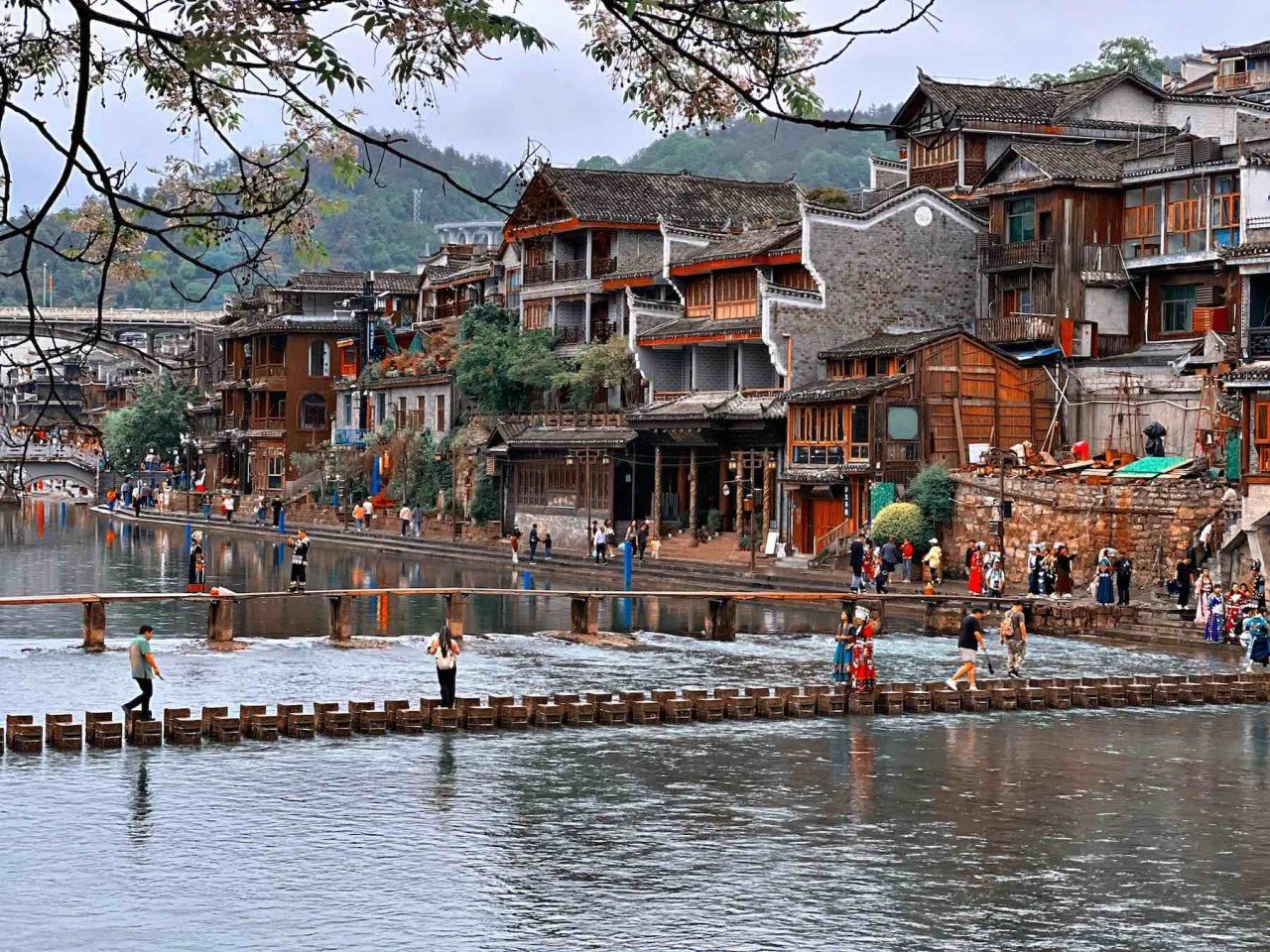 |
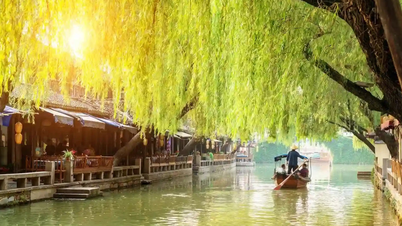
| Located in western Hunan Province, Fenghuang Ancient Town is a popular tourist destination known for its rich culture and history. |
It is often said that if you want to understand a place, there is nothing better than exploring its cuisine. During my travels in Hunan, China, I had the opportunity to visit the ancient town of Fenghuang – a place especially blessed by nature, nestled beneath mist-shrouded mountains and surrounded by the verdant Tuojiang River.
Flowing along with the current of 1,300 years of history, the ancient town of Fenghuang not only boasts impressive cultural and architectural heritage but also possesses an extremely rich culinary tradition. Home to many ethnic minorities, combined with a harmonious landscape of mountains and water, the cuisine here is a culmination and fusion of many cultures.
The weather in this ancient town reflects the characteristics of the Tujia-Miao region of Xiangxi: humid and mild during the day, cold at night. Therefore, the dishes tend to be spicy and warming, using fresh local ingredients.
Spicy fish hot pot
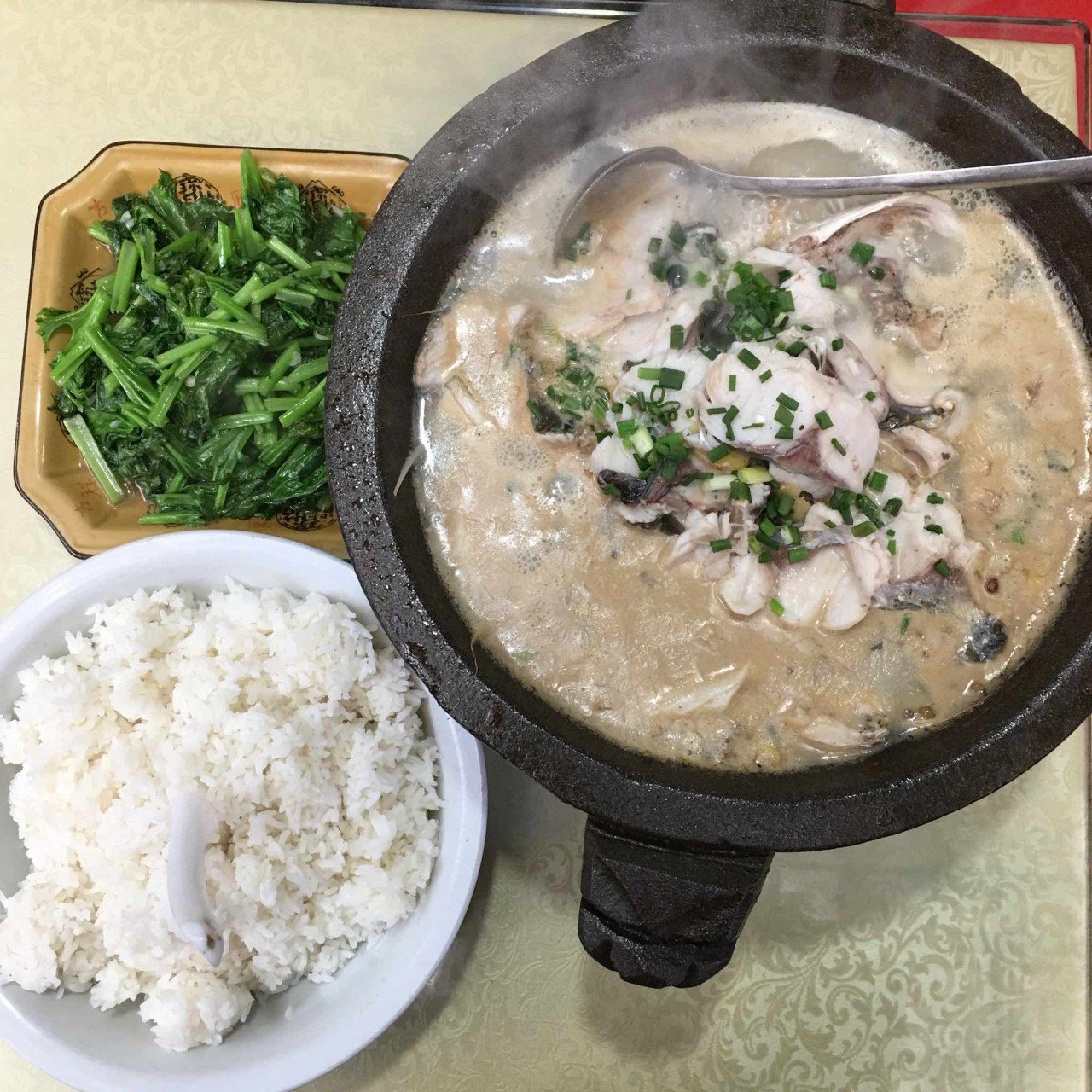 |
| The famous spicy fish hot pot dish of Fenghuang Town. |
In the cool weather of Fenghuang town, nothing beats enjoying a steaming hot pot of spicy fish hotpot with family and friends. The fish is caught directly from the Da Jiang River, so it has a fragrant aroma, white, firm, and rich flesh.
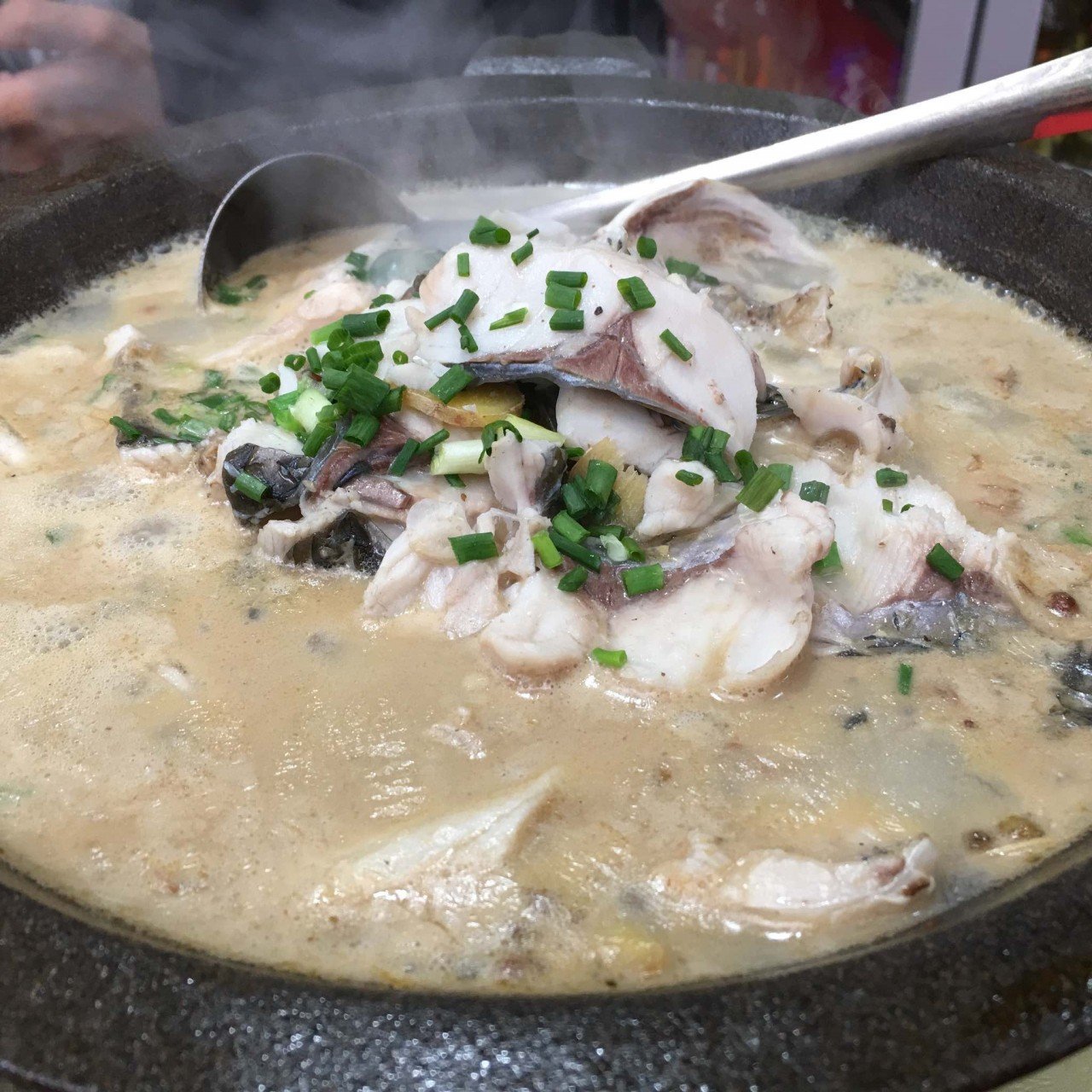 |
| Spicy fish hot pot is perfect for enjoying with friends and family during cold weather. |
Besides the spiciness from chili peppers, the hot pot broth is seasoned with local ingredients to create a pungent, spicy flavor, including Sichuan peppercorns. This spice has a numbing, burning sensation, completely different from the spiciness of chili peppers. Alongside the spicy fish hot pot, a plate of stir-fried vegetables made from local produce is also served.
The unique thing about this hot pot dish is that it's served with rice, not with noodles or vermicelli like in Vietnam.
Stinky Tofu from the Fire Palace
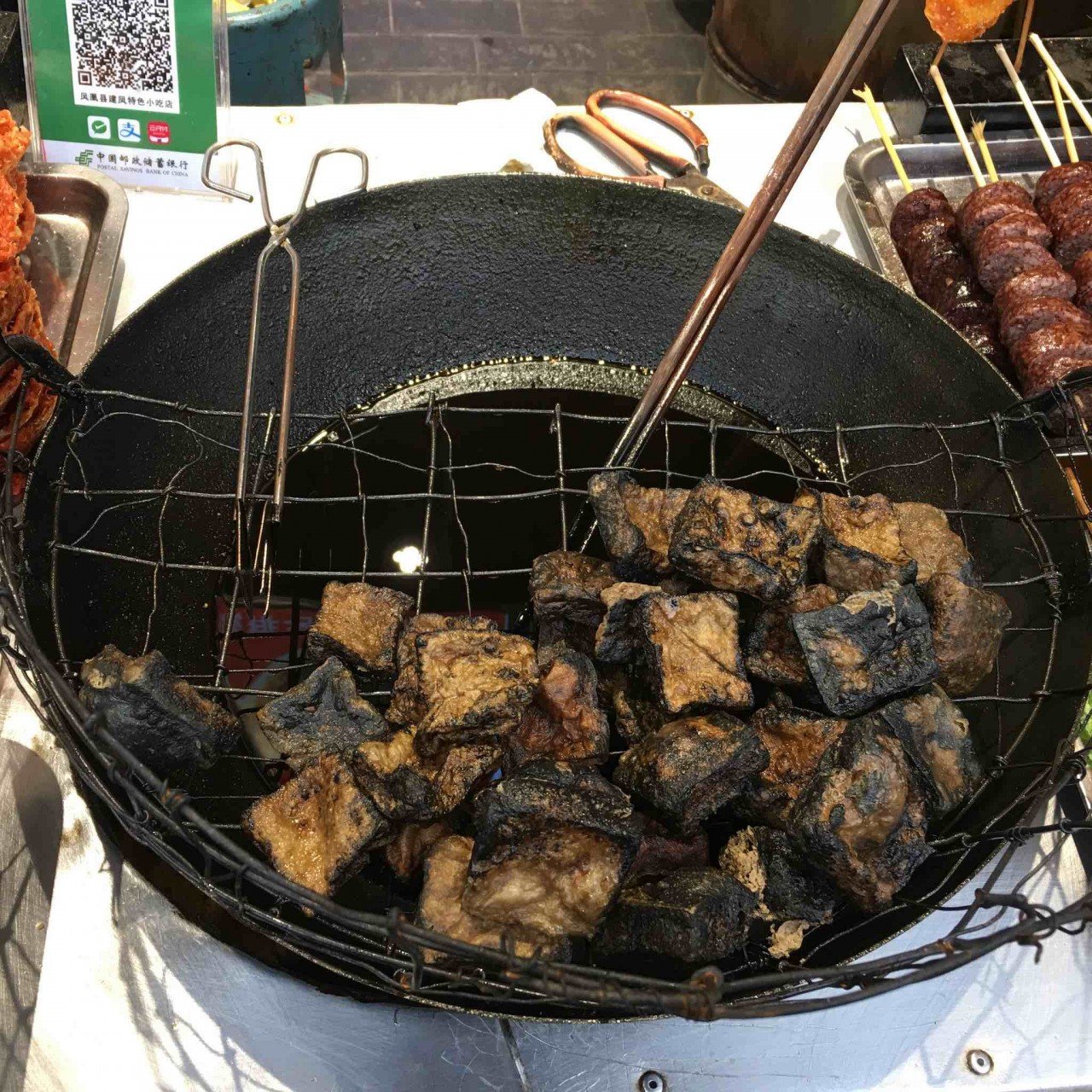 |
| Hunan-style stinky tofu is jet black in color. |
Unlike the common white stinky tofu found in traditional China, Hunan stinky tofu is uniquely deep black. Through a fermentation process using traditional ingredients such as bamboo shoots, soybeans, shiitake mushrooms, and white wine, Hunan stinky tofu has a more distinctive flavor than regular tofu due to the extended fermentation time and the ancient recipe of the local people.
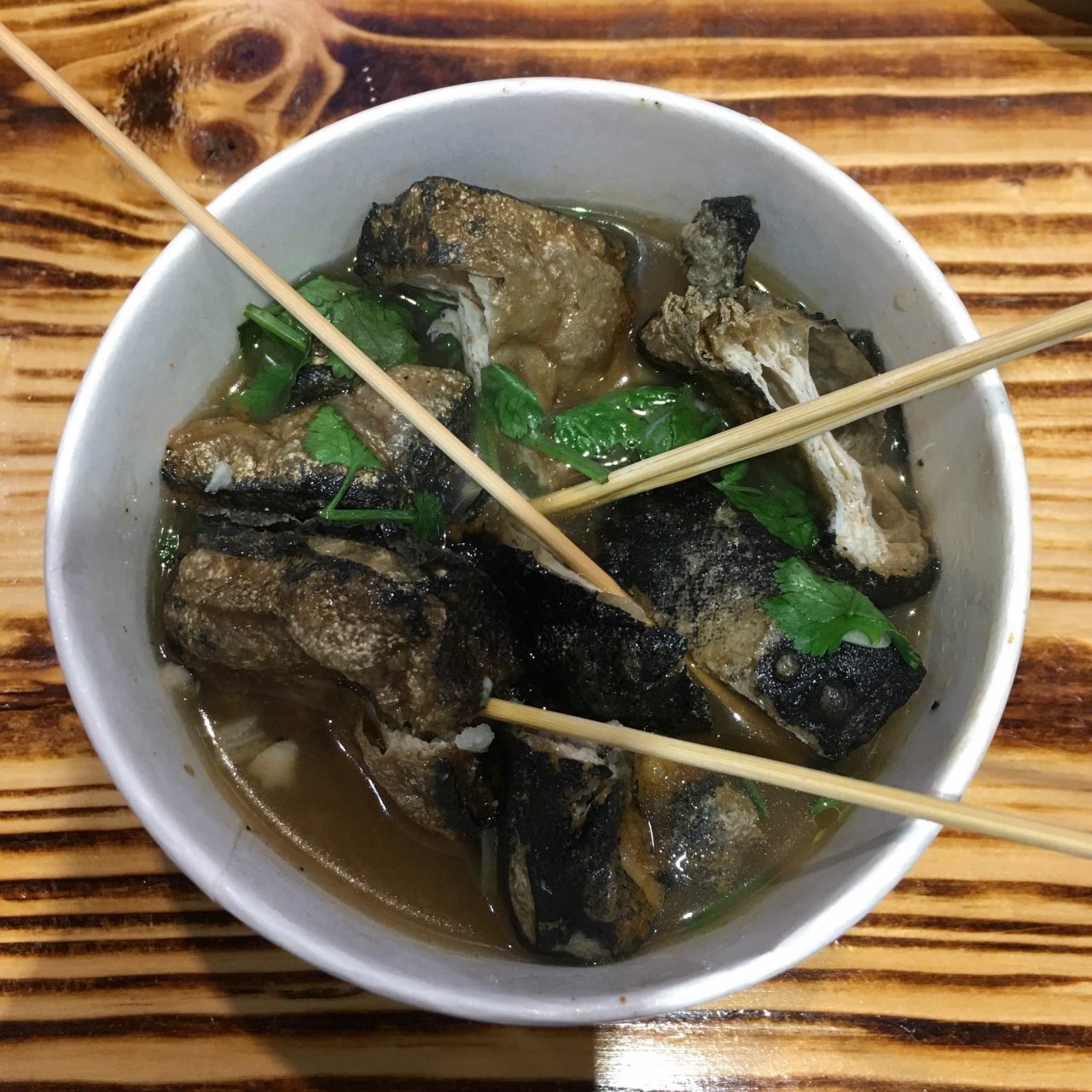 |
| Hunan-style stinky tofu is a dish that combines sesame oil, cilantro, and chili sauce. |
Described as "black as ink, tender as cheese, soft as velvet," this dish might deter tourists with its distinctive aroma. Once diners overcome the pungent smell, the reward is the rich, creamy texture of the tofu combined with the intoxicating fragrance emanating from its crispy crust. Blended with sesame oil, cilantro, and chili sauce, this dish is not as difficult to eat as one might imagine and promises an unforgettable experience.
Dong Diep cake
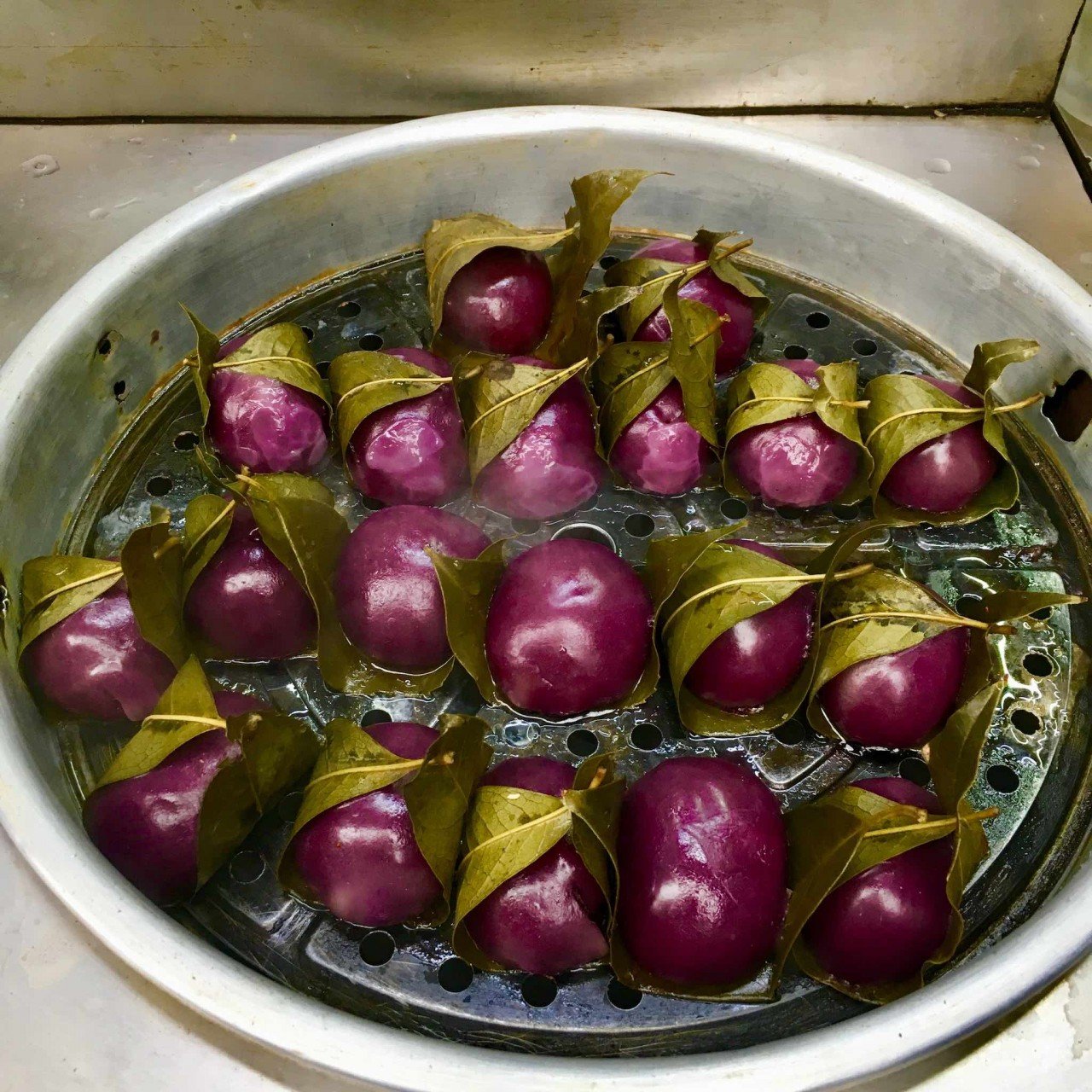 |
| This is a unique and delicious rice cake. |
Miao rice cakes are an important part of Miao ethnic culture. Miao people often give rice cakes as gifts to each other during important festivals and holidays.
The cake is made from glutinous rice, with sweet or savory fillings, wrapped in leaves, and steamed. Its fragrant sweetness and soft texture make it a favorite snack while strolling through the narrow streets of the ancient town.
Shrimp cakes from the Da Giang River
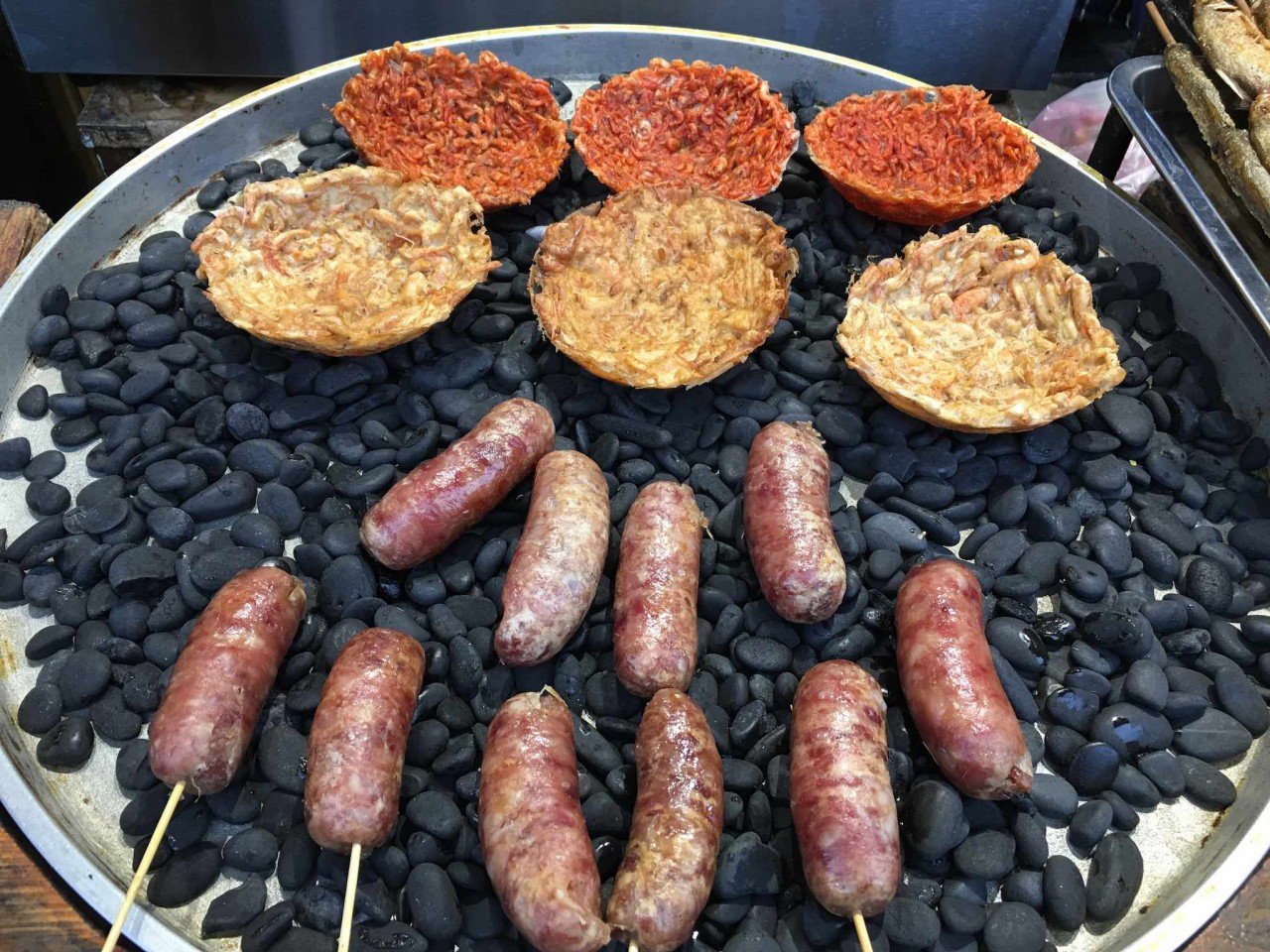 |
| The shrimp cakes are grilled on hot, roasted pebbles. |
This dish is considered a culinary icon of Fenghuang Ancient Town and is sought after by most tourists visiting the area. Similar to the ingredients in spicy fish hotpot, the shrimp are caught directly from the Da Jiang River, ensuring their freshness. Locals prepare them into hot, fragrant fried shrimp cakes with a distinctive sweet flavor from the fresh shrimp.
Shaokao skewers
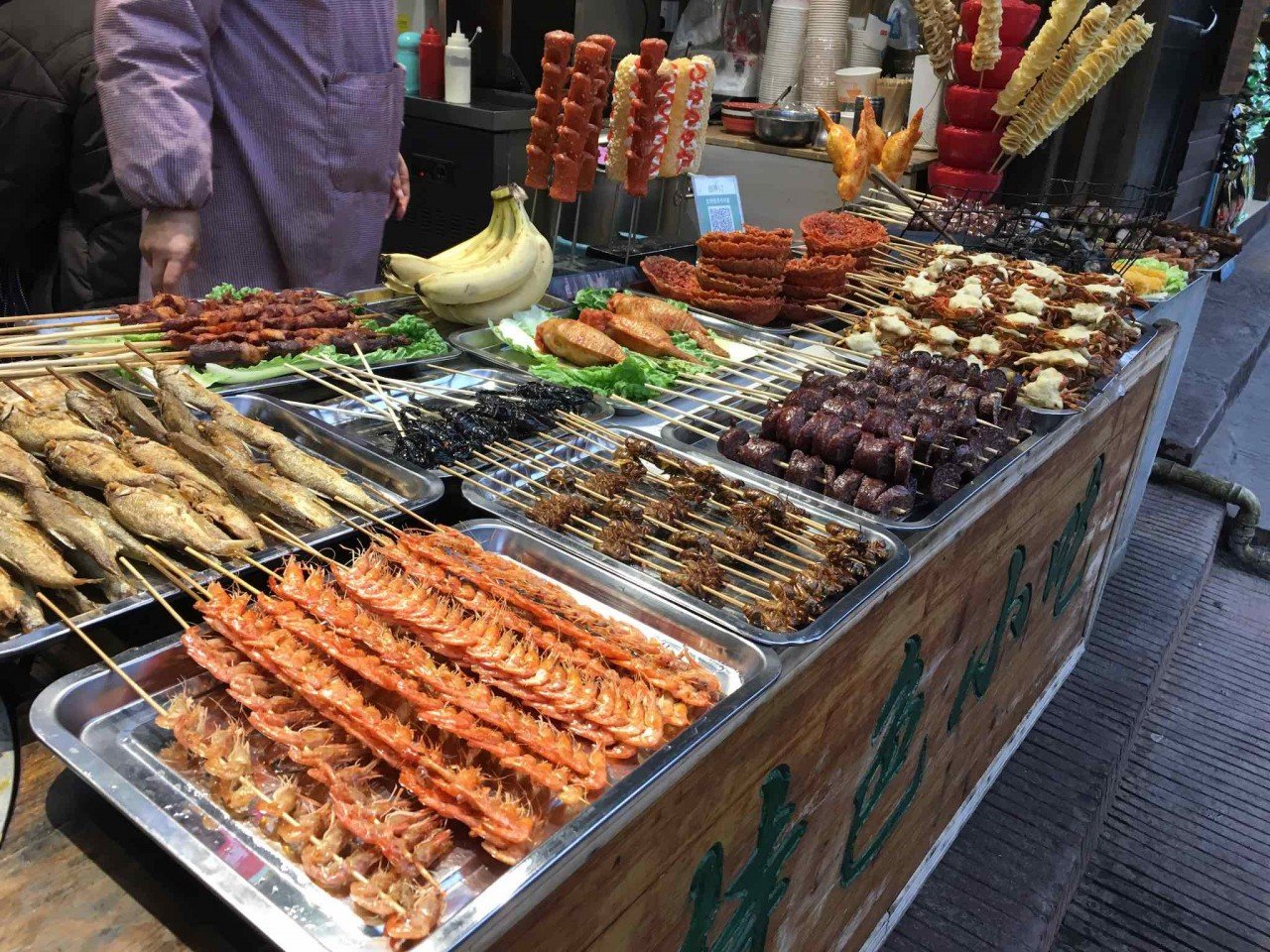 |
| Various types of grilled skewers are sold in Fenghuang town. |
Grilled skewers are a culinary tradition in China in general. However, in Fenghuang Ancient Town, the skewers are marinated with traditional Hunan spices, creating a uniquely delicious and spicy flavor. These grilled skewers are perfect for cold weather or for exploring along the Tuojiang River.
Ginger candy - Peanut candy
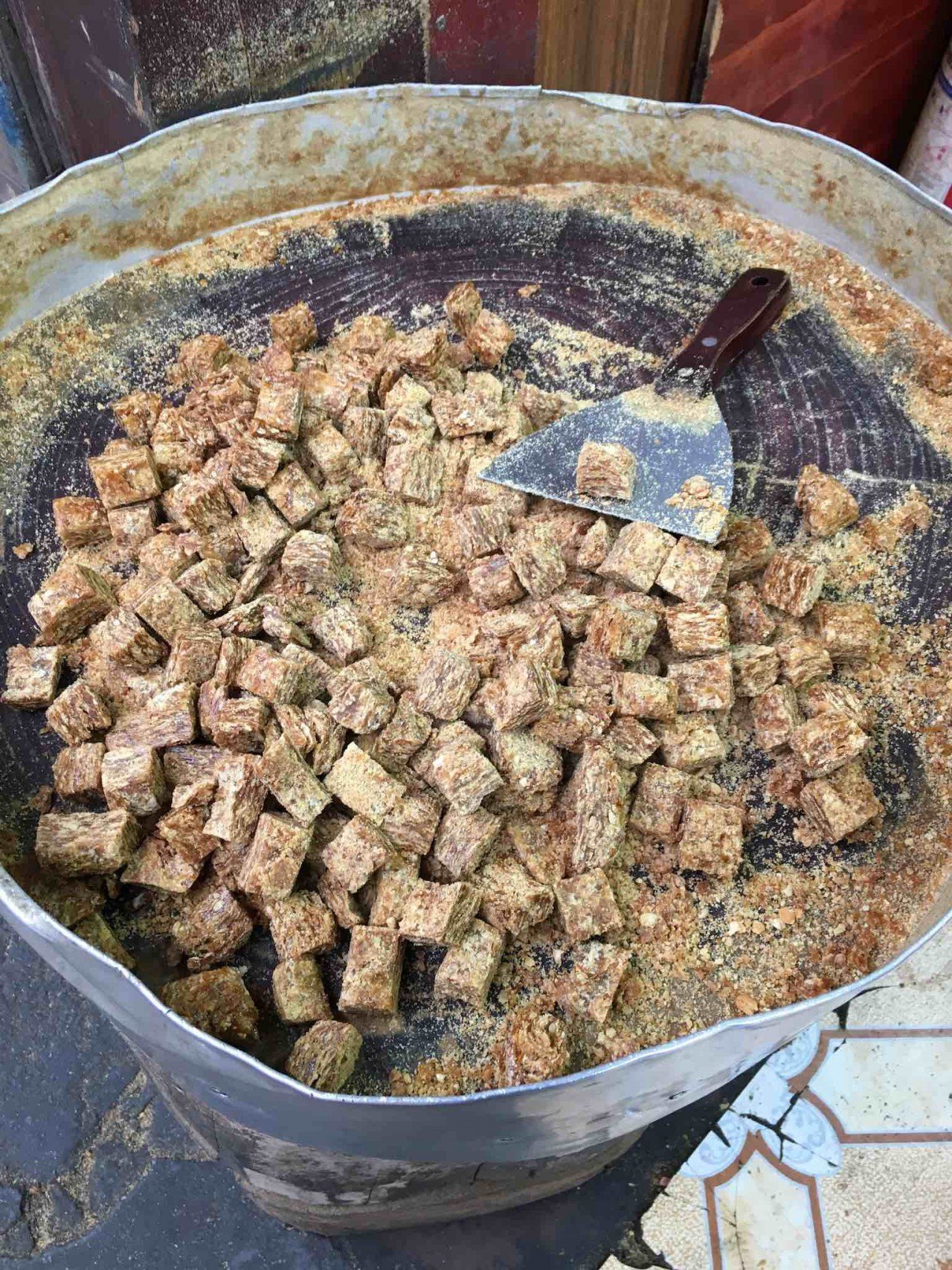 |
| A traditional candy from Fenghuang Ancient Town. |
Fenghuang Ancient Town has a tradition of making candy that dates back over 100 years. All the candies are handcrafted in front of tourists using simple ingredients. The aroma of ginger and the mild sweetness of the candy are perfect for warming you up during your trip.
Xiangxi smoked meat
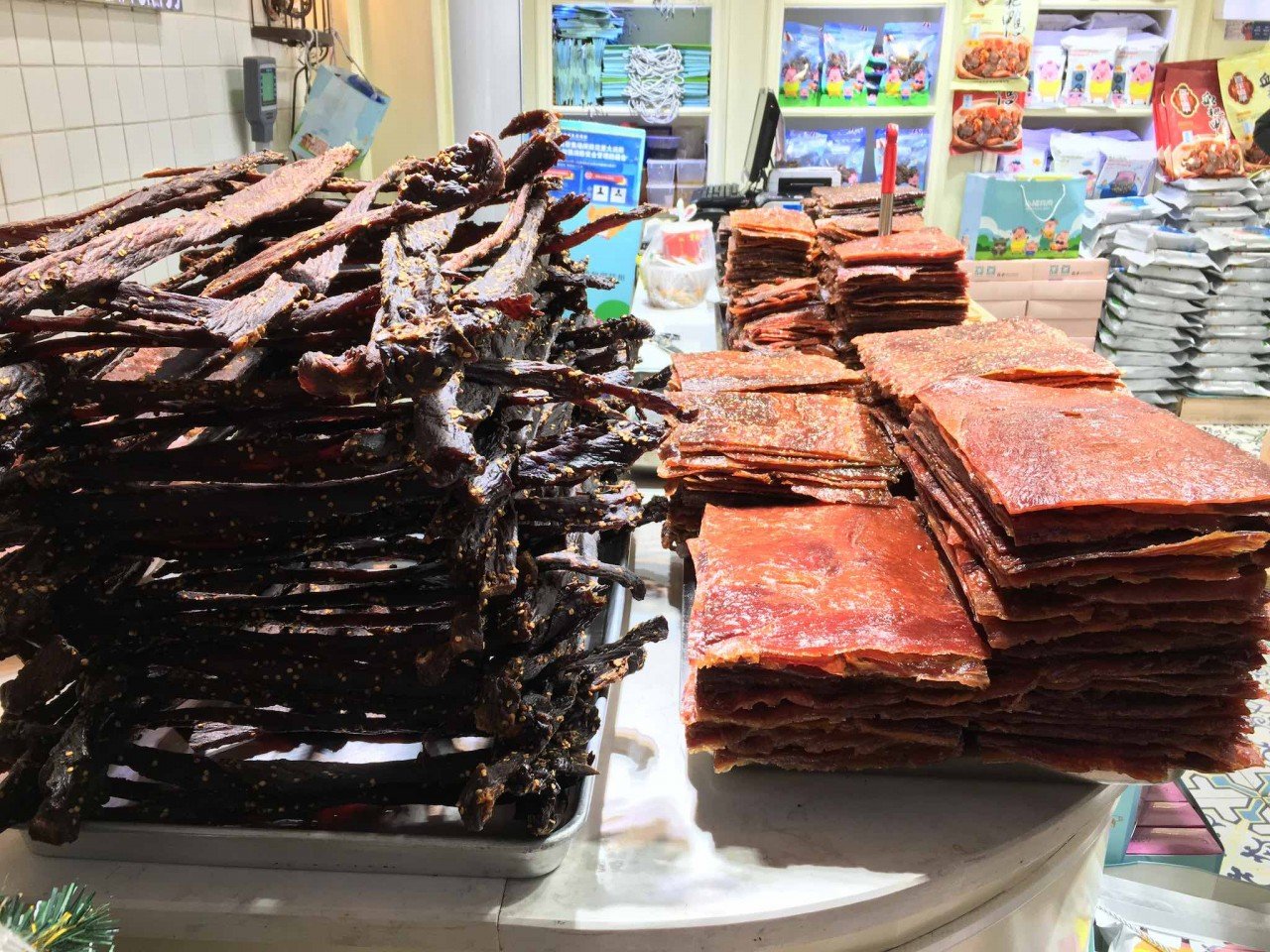 |
| This smoked meat dish is similar to Vietnamese smoked meat. |
With its mountainous and forested terrain, smoked meat is also one of the must-try specialties when visiting Fenghuang. The meat is meticulously marinated with traditional ingredients, then smoked using fresh cedar wood.
The essential oils from the cedar wood, carried by the smoke, infuse into the meat, creating a uniquely sweet and aromatic dish. Smoked meats can be used to make many delicious dishes, but the most popular is stir-fried smoked meat. This dish has a distinctive smoky aroma, is rich and fatty, and is incredibly appetizing with rice.
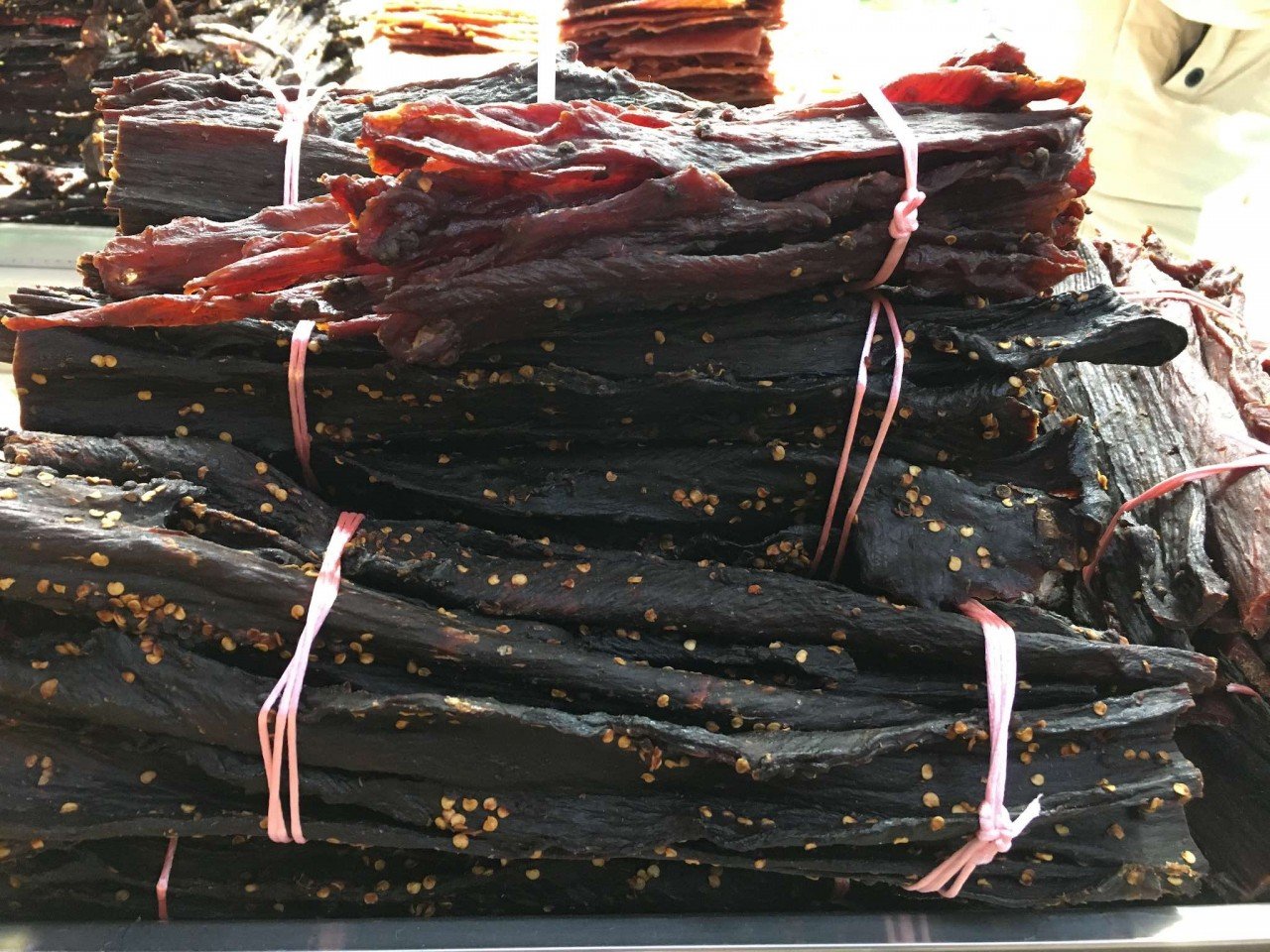 |
| The essential oils from the cedar wood blend into every fiber of the meat as the smoke wafts through. |
Although my stay in Fenghuang Ancient Town wasn't long, it was enough for me to enjoy the architecture steeped in ethnic character, as well as the ancient and poetic natural scenery. The unique and incredibly appealing cuisine here promises to be something that will keep visitors coming back to this region.
The ancient town of Fenghuang in China is located in Fenghuang County, Xiangxi Tujia and Miao Autonomous Prefecture, in western Hunan Province. This small town is about 53 km from Jishou, about 92 km from Huaihua City, and about 280 km from Zhangjiajie City. Fenghuang Ancient Town, dating back to the Spring and Autumn and Warring States periods (770-476 BC), is a popular tourist destination and was recognized as a World Heritage Site by the United Nations Educational, Scientific and Cultural Organization (UNESCO) in 2008. |
Source





















![[Photo] Reception to welcome General Secretary and President To Lam and his wife on their State visit to the Philippines](https://vphoto.vietnam.vn/thumb/1200x675/vietnam/resource/IMAGE/2026/06/01/1780295488620_vna-potal-chieu-dai-chao-mung-tong-bi-thu-chu-tich-nuoc-to-lam-va-phu-nhan-tham-cap-nha-nuoc-toi-philippines-8798060-7855-jpg.webp)






















































Comment (0)