

 |
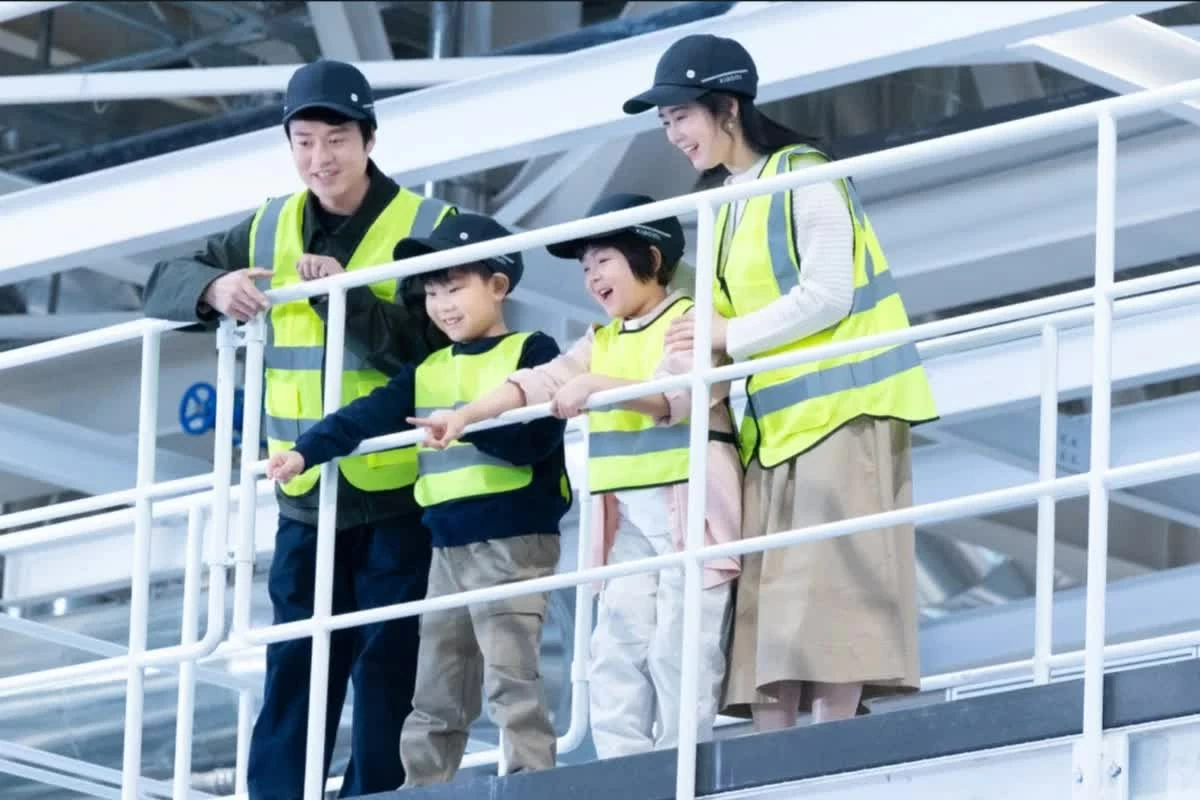
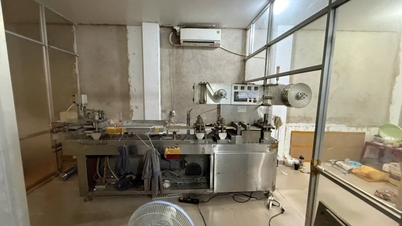
| Factory tours of electric vehicles or drones are becoming increasingly popular tourist attractions in China. (Source: Handout) |
After a field trip to an aircraft manufacturing plant, where he witnessed firsthand aircraft taking off and landing vertically using electric navigation and real-time obstacle avoidance, the 8-year-old son of businessman Terry Fang in Guangzhou was truly excited and fascinated. His impression wasn't formed in the classroom or online, but through repeated exposure to a real-world industrial environment.
Increased demand
For China's urban middle class, high-tech industrial demonstration tours are rapidly becoming an attractive alternative to traditional tourism. Coupled with the tech boom in the world's second-largest economy , tech tourism is becoming particularly appealing to families through low-cost yet highly effective marketing channels.
A typical one-day “industrial study tour” – including factory entrance fees – costs around 400 RMB (US$58.50), while longer programs can cost thousands of RMB.
Demand remains strong despite the cost, with tours organized by leading electric vehicle (EV) manufacturers and drone (UAV) companies often selling out within minutes of going on sale on social media or booking platforms.
From university tours and business seminars to high-end production lines, "technology education " activities in China's Greater Bay Area have boomed in recent years, gradually shaping an ecosystem targeting tech-savvy young families.
China's industrial centers are also being reshaped into educational playgrounds, what analysts call "the commercialization of new quality productive forces," where advanced manufacturing is transformed into experiential learning products.
According to Peng Peng, executive chairman of the Guangdong Reform Association, a research institute affiliated with the provincial government, this trend reflects concerns among middle-class parents that their children will fall behind technologically in the digital economy and AI era.
Parents hope that through "visual technology," they can help their children gain a deeper understanding of AI, thereby enabling them to better respond to rapid technological changes.
Unique sales strategy
Seizing this trend, Chinese tech companies like Xiaomi have decided to sell tickets through a lottery system, turning factory tours into exclusive events, thereby gradually forming a secondary market in the future.
Industry insiders view this as a shrewd customer screening strategy, building a brand community within affluent families while securing a pool of potential customers early on. "This is a cycle where study trips can directly lead to future sales," Peng Peng predicted.
"Now my sons believe that Chinese tech products truly have a significant advantage," Mr. Fang said, adding that early exposure to technology has helped shape preferences and bring brands closer to younger consumers.
Universities across China have expanded enrollment in majors related to AI, robotics, and advanced manufacturing, reinforcing families' belief that skills in science, technology, engineering, and mathematics offer greater career security.
Jade Zheng, a middle-class parent living in Shenzhen, also observed a similar phenomenon: “My husband and son often talk about self-driving cars. He suggests our next car should have the most advanced intelligent driving system in the country – that’s his definition of ‘cool’.”
By opening their factories to the public for tours, manufacturers are transforming production sites into "brand assets" and consumer-centric experiences.
Educational tours that integrate AI and virtual reality are increasingly linking consumer behavior to broader development goals.
Zheng Qunming, Vice President of the School of Tourism at Hunan Normal University, stated: “In the future, AI and digital awareness will become fundamental skills for the next generation. Factory tours will serve as a testing ground for young people entering a more digitized society.”
In 2025, according to data from travel platform Trip.com , technology-based experiential tourism was one of the top travel trends during China's National Day holiday, with visits to aerospace, automotive, and space factories accounting for over 20% of related searches.
Market research firm ChinaIRN forecasts that the sector could grow at an average annual rate of 18% over the next few years, exceeding 300 billion RMB (US$42.2 billion) by 2029.
Beijing welcomed approximately 15 million technology-based tourism visitors in 2024, generating 1.7 billion yuan (US$248 million) in revenue, and aims to reach 20 million visitors and 3 billion yuan in annual revenue by 2027, according to the Beijing Daily .
Source: https://baoquocte.vn/trung-quoc-bung-no-du-lich-trai-nghiem-cong-nghe-389097.html
![[Image] Pleasant weather helps students enter the 10th grade entrance exam with confidence.](https://vphoto.vietnam.vn/thumb/1200x675/vietnam/resource/IMAGE/2026/05/29/1780034401612_ngay-1-thi-lop-10-minh-duy-8-5009-jpg.webp)

![[Photo] Ba Lang An Lighthouse - the "eye of the sea" amidst the "rock museum" of Quang Ngai province.](https://vphoto.vietnam.vn/thumb/1200x675/vietnam/resource/IMAGE/2026/05/29/1780038698840_anh-man-hinh-2026-05-29-luc-14-10-42.png)




































































Comment (0)