


Take advantage of nature
The ethnic minority and mountainous regions of Quang Nam province are rich in culinary cultural resources, meeting the demands of green food and green tourism trends. Blessed by nature, the mountainous areas of Quang Nam boast many unique products, which, through the skillful hands of the local people, are transformed into specialties such as wild vegetables, bamboo-cooked rice, Ta Vac wine, stream fish, and smoked meat…
For a long time, the people of the mountainous regions have known how to utilize readily available natural materials and creatively make containers for food and drinks to serve and present during family meals or community festivals.
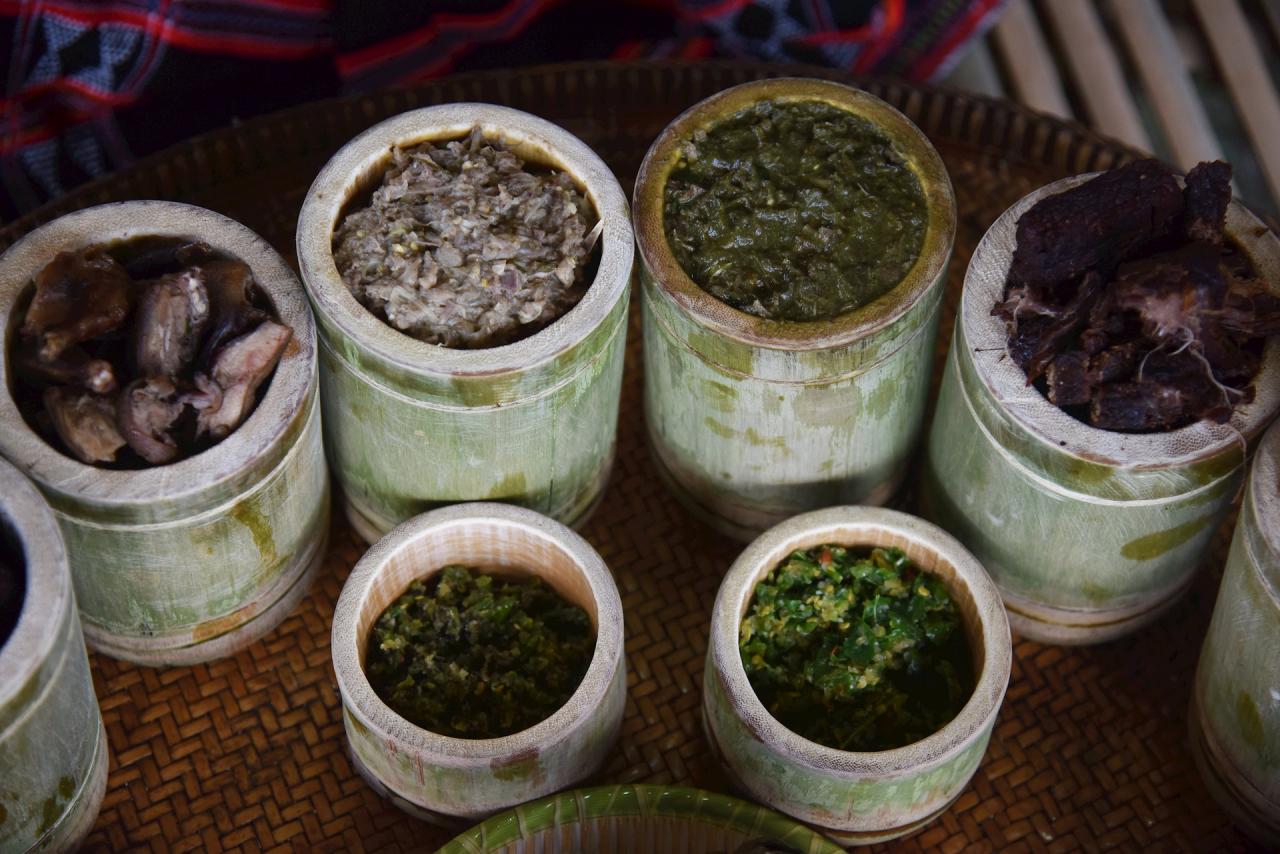
Rice cooked in bamboo tubes (com lam), meat, fish, and vegetables are also cooked by the locals in bamboo tubes, a typical example being the "canh thut" soup. They cook mixed foods in bamboo tubes and then use bamboo sticks or rattan stalks to mash them into a thick soup, called "canh dai ngun" (great forest soup). This soup is a specialty of many ethnic groups, reserved for honored guests and served as an accompaniment to rice wine or other local liquors.

Bamboo and reed tubes are common utensils used to hold and display food and drinks by most ethnic groups in mountainous regions. They are also a relic of a bygone era, before the invention of bowls and chopsticks.
Large bamboo tubes are split in half; one part is used to hold soup, meat, or rice, while the smaller part serves as a lid to preserve food. Smaller bamboo tubes, cut crosswise or diagonally, become cups or glasses for drinking water, rice wine, or other types of liquor.
Food wrapped in forest leaves...
Banana leaves, both the dong leaf and the banana leaf, are an inexhaustible resource in the culinary life of the Vietnamese people. Wild banana leaves have many applications because they are large, flexible, waterproof, and have decorative value due to their forest green color.
For the Co Tu people, wild banana leaves are used for cooking, grilling, wrapping, and preparing food. Some festivals require nearly 20 baskets of wild banana leaves to hold food.
Many dishes of the local people are wrapped in banana leaves and grilled over charcoal, a dish called Dha'jam. Wild banana leaves are also used by the people to wrap sticky rice, cassava, and food for going to the fields. In particular, they use banana leaves to "divide portions" among households or individuals depending on the size of the animal they catch. This is a unique and humane cultural tradition of the mountain people.
During traditional festivals such as the harvest festival, the celebration of a new communal house, weddings, and the annual thanksgiving ceremony for the forest, the Co Tu people often place a feast in the center of the house for honored guests and respected village elders. This feast is usually covered with banana leaves, and only after a successful and harmonious exchange of verses and songs is the leaf removed and the feast enjoyed.
Even pumpkins, not only as an ingredient in dishes, can be transformed into attractive trays to hold cassava soup, meat soup, or other specialties.

Moreover, besides being used as food in salads, boiled dishes, and stir-fries, the local people also use the older flower stalks to hold food.
The decorative elements made from readily available materials create an aesthetic appeal, allowing diners to enjoy the feast "visually," leaving a lasting impression. This requires creativity and skill from the chefs and culinary artisans, while also contributing to the preservation of the cultural values of the highland ethnic groups.
In mountainous regions, community-based tourism focusing on ethnic cuisine is highly valued. The culinary specialties and the use of tools and utensils from the vast forests reflect the eating habits and flavors of the cuisine – elements that contribute to the attractiveness of cultural heritage in general, and the culinary culture in particular, of these ethnic groups.
Source: https://baoquangnam.vn/am-thuc-xanh-tu-mien-nui-3138293.html
![[Photo] National Assembly Chairman Tran Thanh Man attends the policy seminar to promote Vietnam-Türkiye cooperation.](https://vphoto.vietnam.vn/thumb/1200x675/vietnam/resource/IMAGE/2026/04/16/1776351415367_vna-potal-chu-tich-quoc-hoi-tran-thanh-man-du-toa-dam-chinh-sach-thuc-day-hop-tac-viet-nam-tho-nhi-ky-8705791-jpg.webp)

















































Comment (0)