

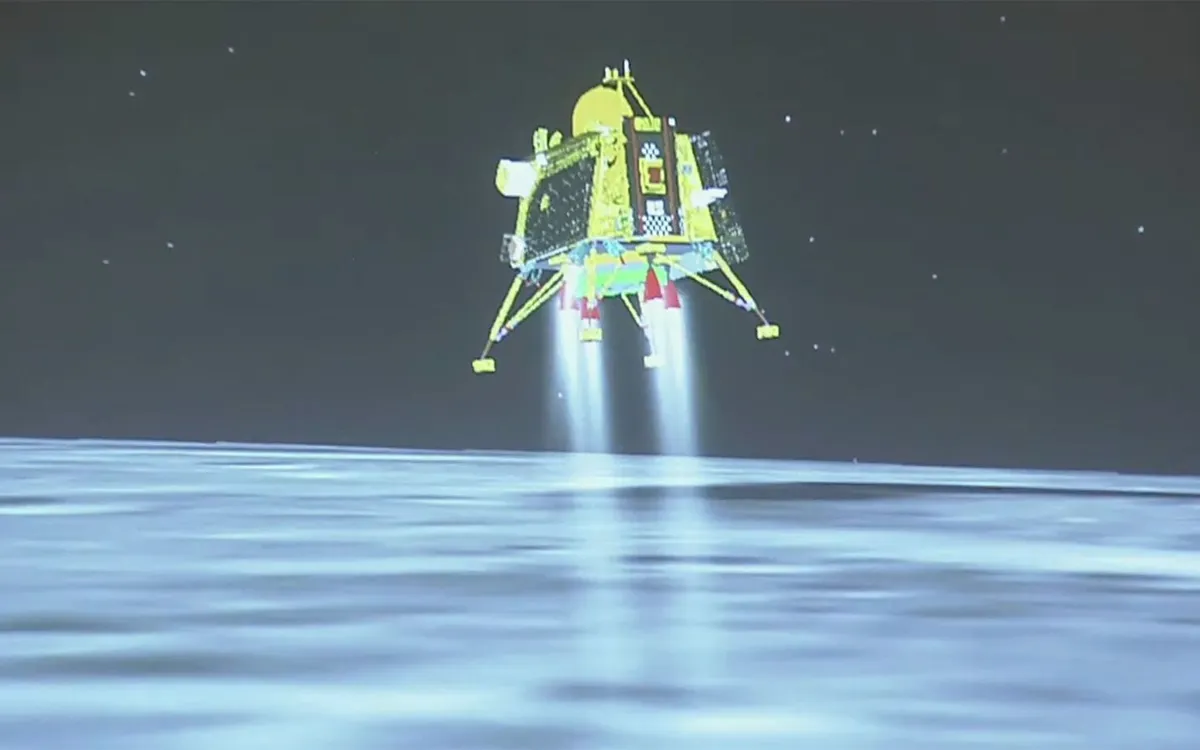
(Illustrative image: CNN)
This discovery is considered to be of significant importance for future space exploration missions as well as plans to return humans to Earth's natural satellite.
Specifically, according to Indian media, a research team from the Indian Space Research Organization (ISRO) and the Laboratory for Physical Research analyzed data collected from the Chandrayaan-2 mission and detected radar signals consistent with the presence of subsurface water ice at four craters in the Moon's South Pole region.
These craters are known as "double-shadowed craters," located in areas that almost never receive direct sunlight. Due to the extremely low temperatures and stable environment, they are considered ideal locations for preserving water ice for extended periods.
Scientists say temperatures in these areas can drop to around 25 Kelvin, equivalent to minus 248.15 degrees Celsius. These extreme conditions help limit evaporation and water loss, allowing ice layers to remain beneath the surface.
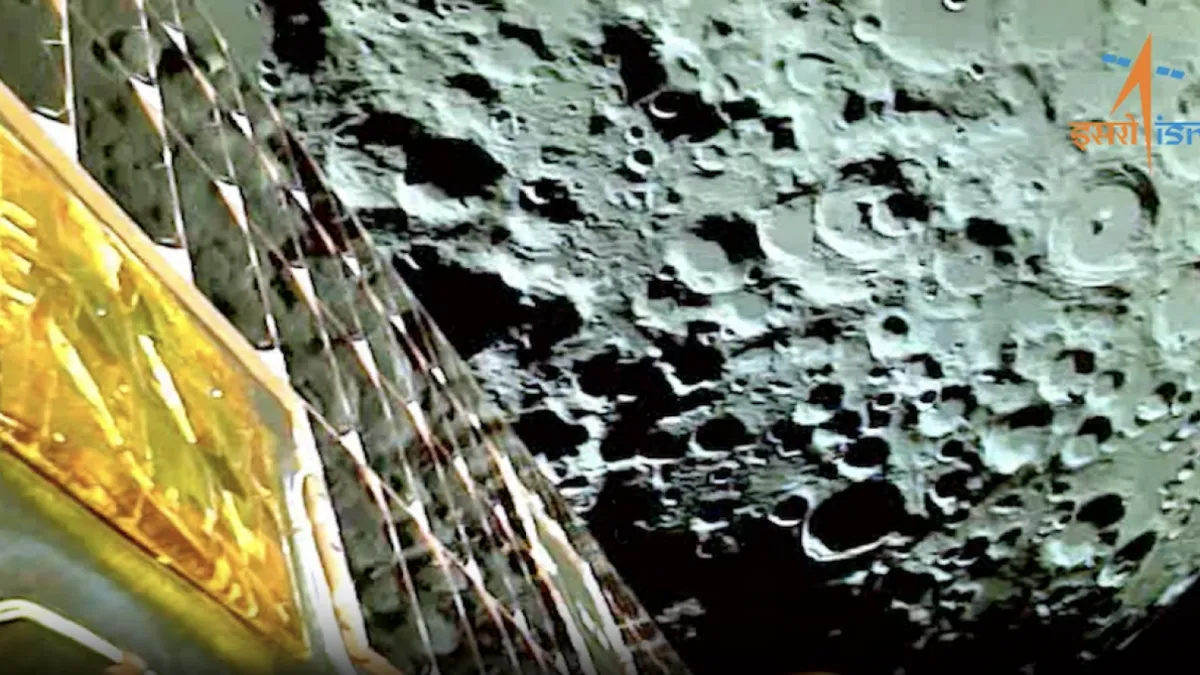
A close-up view of the Moon through India's Chandrayaan-3 robotic spacecraft. (Photo: ISRO)
The research results were based on data from the lunar surface imaging and surveying instrument mounted on the Chandrayaan-2 orbiter. Using advanced radar polarization analysis, the research team identified signal reflection characteristics believed to be consistent with the presence of water ice deep beneath the surface rock layers.
Identifying areas likely to contain water ice will be crucial for future lunar exploration programs. This resource is considered one of the key factors supporting long-duration manned missions.
According to scientists, water ice on the Moon could be processed to produce drinking water, oxygen for respiration, and hydrogen for rocket fuel. This could significantly reduce the cost of transporting supplies from Earth and lay the groundwork for building permanent bases on the Moon.
The new discovery is also expected to boost research and exploration activities in the Moon's South Pole region – an area attracting the attention of many space agencies worldwide due to its potential to contain water and other valuable resources.
Against this backdrop, India is continuing to push forward with its space capability development plans. ISRO has been approved to launch a program to develop a new generation of launch vehicles called the Next Generation Launch Vehicle (NGLV), which is expected to play a crucial role in future lunar missions.
Experts believe that if the presence of subsurface water ice is confirmed in further studies, it would be a significant step forward not only for India's space program but also for the international community's efforts to explore and exploit the Moon.
Source: https://vtv.vn/an-do-phat-hien-dau-hieu-bang-nuoc-duoi-be-mat-mat-trang-100260602145331572.htm
![[Photo] General Secretary and President To Lam presides over a meeting on preparations for the review of one year of operation of the three-tiered government system.](https://vphoto.vietnam.vn/thumb/1200x675/vietnam/resource/IMAGE/2026/06/02/1780391821195_a1-bnd-4595-9717-jpg.webp)















































































Comment (0)