

According to Associate Professor Dr. Nguyen Duy Thinh, former staff member of the Institute of Biotechnology and Food, Hanoi University of Science and Technology, only the liver of geese raised using specialized processes and in a specific region of France is valuable and expensive. Otherwise, ordinary goose liver is just like other poultry livers; in fact, in Vietnam, goose liver is not used as much as chicken or duck liver because goose is not a common food in Vietnamese cuisine .
Geese raised in France are bred solely for their foie gras, using a special breeding process. In addition to selecting specific types of food, breeders force-feed the geese to ensure their foie gras are as large and fatty as possible.
In Vietnam, geese are primarily raised in a natural environment, primarily for their eggs and meat, not their livers. Furthermore, both goose meat and liver are not as tasty as chicken livers raised under normal conditions like those in Vietnam.
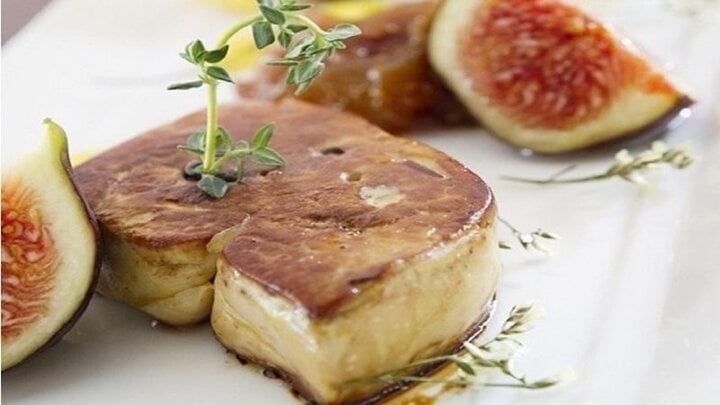
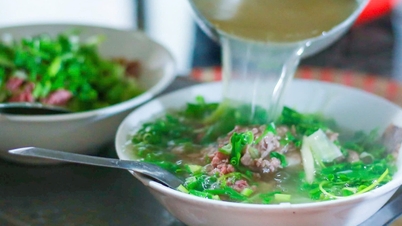
When it comes to foie gras, many people immediately think of it as an expensive dish. (Illustrative image)
With a special breeding process, after the goose's liver is harvested, the meat is completely discarded. The large, fatty livers are then processed into various dishes. Because geese raised for their livers are given special care, a high concentration of fat accumulates in the liver, which is why French foie gras has a distinctive aroma and rich, buttery flavor. Since it's not raised everywhere, this type of liver is very expensive.
In terms of nutritional value, goose liver contains vitamins A, B6, B12, and C, as well as minerals such as iron, calcium, magnesium, sodium, and potassium, similar to chicken liver. If consumed in moderation and from a clean source, goose liver is good for the eyes and blood due to its relatively high vitamin A and iron content.
Experts acknowledge that while the nutritional value of animal liver in general is undeniable, it is a detoxification organ, so it will inevitably contain some harmful substances. Therefore, it should not be consumed in large quantities. This is especially true for chicken and goose livers raised for shorter periods with growth hormones, which pose a higher risk of harmful substances.
In general, you should eat animal liver in moderation and choose liver from healthy animals, purchased from reputable sources.
Source
![[Photo] Admire the coral "masterpiece" amidst the million-year-old heritage of Dak Lak province.](https://vphoto.vietnam.vn/thumb/1200x675/vietnam/resource/IMAGE/2026/05/31/1780221235105_anh-man-hinh-2026-05-31-luc-16-53-27.png)

![[Image] Hanoi Police officially crowned champions of V-League 2025/2026](https://vphoto.vietnam.vn/thumb/1200x675/vietnam/resource/IMAGE/2026/05/31/1780244769054_ndo_br_039d561b692be875b13a-jpg.webp)
![[Photo] Solemn bathing ceremony and Buddha procession in Hue](https://vphoto.vietnam.vn/thumb/1200x675/vietnam/resource/IMAGE/2026/05/31/1780228263543_1-jpg.webp)

![[Photo] The General Secretary, President and his wife begin their state visit to the Philippines.](https://vphoto.vietnam.vn/thumb/1200x675/vietnam/resource/IMAGE/2026/05/31/1780230559452_anh-man-hinh-2026-05-31-luc-19-28-11.png)


















![[Video] Sunset at Lap An Lagoon – Where the sun sets over the fishing nets](https://vphoto.vietnam.vn/thumb/340x192/vietnam/resource/IMAGE/2026/05/31/1780192137701_beach-landscape-sea-water-nature-grass-745871-pxhere-com.jpeg)






































![[Photo] Admire the coral "masterpiece" amidst the million-year-old heritage of Dak Lak province.](https://vphoto.vietnam.vn/thumb/402x226/vietnam/resource/IMAGE/2026/05/31/1780221235105_anh-man-hinh-2026-05-31-luc-16-53-27.png)



































Comment (0)