

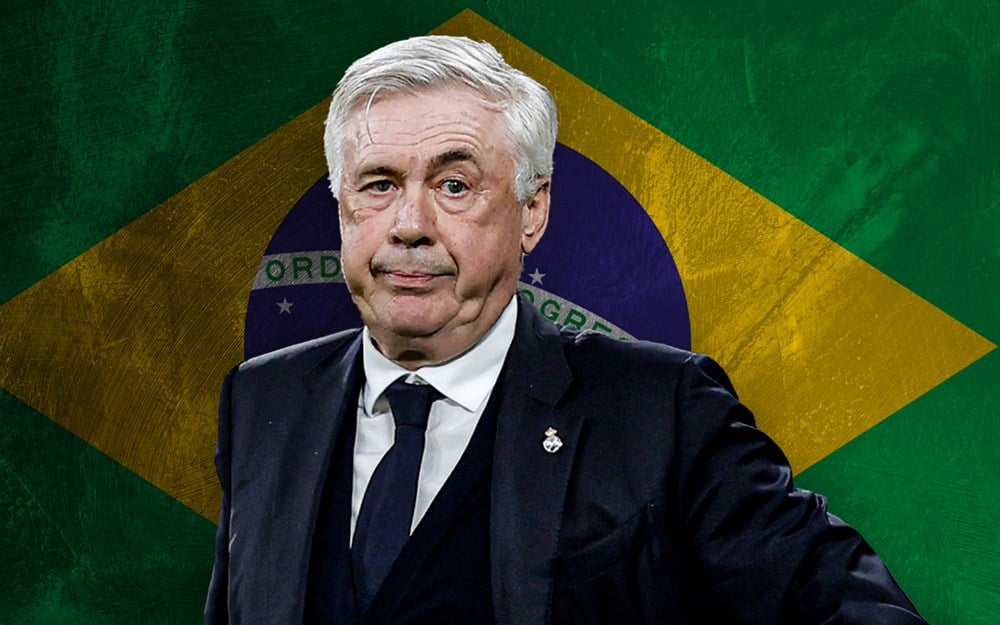
Start with each language
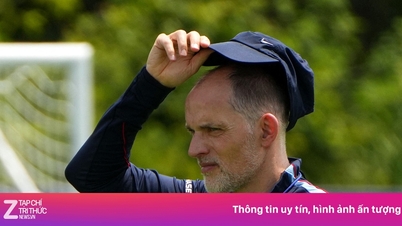
Despite having worked with many Brazilian players throughout his coaching career, Ancelotti didn't have much practical connection to the South American country. He had only visited Brazil once, in the early 2000s, on a scouting trip. Therefore, immediately after reaching an agreement to coach the Selecao in May 2025, the Italian coach understood that he had to adapt quickly.
During one of his first meetings in Rio de Janeiro, when he saw many Brazilian Football Confederation (CBF) staff members trying to speak Spanish, and even Italian, for his convenience, Ancelotti smiled and declined. He said that he was the one who needed to learn Portuguese. It wasn't just a polite gesture. It was the first message Ancelotti sent to Brazilian football: He wasn't there to impose his will, but to integrate.
For Ancelotti, mastering a language is not simply about communication. It's about bridging the gap with players, fans, and the football culture he's tasked with leading. In top-level football, tactics can help a coach organize a team. But to build trust, sometimes you have to start with much smaller things – like a simple greeting in the right language.
The recent 6-2 victory against Panama, in the penultimate match before the 2026 World Cup, gave Ancelotti and Brazil many positive signs. Players like Rayan and Igor Thiago made their mark, while key players Vinicius Jr., Casemiro, Lucas Paqueta, and Danilo also scored at the right moments. However, what Brazil gained from that match was not just the number of goals. More importantly, it was the feeling of a team gradually finding its rhythm, a team beginning to find connection after a long period of instability.
Before Ancelotti arrived, Brazil had gone through a turbulent period: constant changes on the coaching bench, a shake-up in the football leadership, and a disappointing World Cup qualifying campaign. In this context, Ancelotti's task was not only to lead Brazil to the World Cup, but also to restore confidence in the Selecao – a team that had won the World Cup five times, but whose last victory was in 2002. If they failed to win this summer, Brazil would set an unwanted milestone: six consecutive World Cups without a title, something unprecedented in the history of the yellow-and-green team.
Why is Ancelotti so highly anticipated ?
In Brazil, every national team head coach faces immense pressure. But for Ancelotti, that pressure is amplified because he is an outsider entering the heart of Brazilian football pride. However, this very "exception" gives him a significant advantage.
According to former football legend Walter Casagrande, one of the things Brazil needs most right now is a coach with a stature greater than that of the players. In this respect, Ancelotti is virtually unrivaled. Five Champions League titles along with domestic titles in all five of Europe's top leagues have given him a prestige that few coaches possess.
This is especially important in a dressing room that brings together many strong personalities like Neymar, Vinicius Jr, Raphinha, and Casemiro. With a star-studded team, technical ability alone isn't enough; the coach also needs the composure and calmness to get everyone to put their ego aside for the collective good. Ancelotti achieves this with his familiar, understated style, which is quiet and unassuming, yet always inspires confidence.
The CBF's appointment of Ancelotti also meant breaking one of the almost taboo practices in Brazilian football: appointing a foreign coach to lead the national team. Therefore, it's not surprising that this decision was controversial. Many argued that a nation that has won the World Cup five times has ample resources to choose a domestic strategist. Statements of opposition from some former Brazilian players and coaches show that this cautious sentiment was genuine.
But Ancelotti's early time in Brazil has somewhat eased those doubts. While the results haven't been spectacular, the atmosphere surrounding the team has gradually stabilized. A recent survey showed a significant percentage of Brazilians supporting his work, and the CBF even quickly extended the Italian coach's contract until 2030.
" World champion " in adaptability
If we had to point out Ancelotti's most outstanding quality beyond his impressive track record, it would probably be his adaptability. Leonardo (who worked with him at AC Milan and Paris Saint-Germain) describes Ancelotti as a "chameleon," able to blend seamlessly with the environment, the people, and the characteristics of each team. This is a particularly valuable quality in a context where Brazil needs more than just a tactician.
Sources indicate that after receiving the draft contract, Ancelotti hesitated to sign immediately. The reason wasn't the personal terms, but rather his desire to secure the long-term futures of some CBF personnel (who had helped him adapt in Brazil). This behavior shows that he builds the team not only on the training ground, but also on the trust placed in the people behind the scenes.
It's no coincidence that many in Brazil quickly developed a fondness for him. In a football culture brimming with emotion, the human element is never secondary. However, affection and support won't be enough if Ancelotti doesn't solve the most crucial professional problem: How to ensure Brazilian stars perform for the national team with the same effectiveness as they do at their clubs.
Ancelotti has repeatedly emphasized that Brazil possesses two of the best players in the world today: Vinicius Jr. and Raphinha. However, getting this duo to shine together in the Selecao jersey remains an unsolved problem. In Ancelotti's attacking 4-2-4 system, the connection between the attacking players is still not entirely stable. Personnel changes affected by injuries to Rodrygo and Estevao Willian further complicate the implementation of this playing style.
However, even when things aren't perfectly smooth on the pitch, Ancelotti is doing another crucial thing well: he gets the players to listen. Casemiro once recounted a memorable moment during the match against Paraguay, when the team needed a win to qualify for the World Cup. In the locker room during halftime, too many people were talking at once. Ancelotti simply told his players to wait five minutes while he went outside to smoke, then he would return to speak. When he finished, everyone understood that this man carried a very special weight. No need for loud commands. No need for lengthy speeches. With just his calmness and very "Ancelotti" demeanor, he naturally brought the locker room to a standstill.
There's an interesting detail that clearly reflects Ancelotti's personality. During a Portuguese lesson, when the teacher was about to teach him how to use imperative sentences, he refused to accept it in that way. He said that he doesn't communicate using commands; it's not his style.
That small detail, in a way, is also a complete portrait of Carlo Ancelotti. He is not the type of coach who builds authority through distance. He creates influence through trust, experience, and the ability to make the team feel respected.
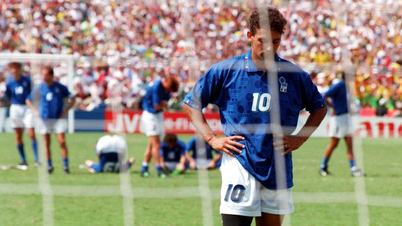
In 1994, Ancelotti served as an assistant coach for the Italian national team when Brazil won the World Cup in the United States. More than three decades later, he returns to that same team, tasked with leading the Selecao back to the top.
Brazil remains a team rich in talent, tradition, and expectation. But to transform that potential into a gold trophy, the team needs a hand mature enough to heal, flexible enough to adapt, and of the stature to lead the way. Ancelotti is trying to do just that, in his own unique way: starting with the language, moving through the people, and aiming for a revival that Brazilian football has waited far too long for.
Source: https://baovanhoa.vn/the-thao/ancelotti-va-no-luc-hoi-sinh-doi-tuyen-brazil-233792.html

![[Photo] General Secretary and President To Lam presides over a meeting with the Central Organizing Committee.](https://vphoto.vietnam.vn/thumb/1200x675/vietnam/resource/IMAGE/2026/06/03/1780482764658_a1-bnd-4741-3342-jpg.webp)


![[Photo] Secretary of the National Assembly Party Committee, Chairman of the National Assembly presides over the meeting of the Standing Committee and Executive Committee of the National Assembly Party Committee.](https://vphoto.vietnam.vn/thumb/1200x675/vietnam/resource/IMAGE/2026/06/03/1780480353201_ndo_br_bnd-2585-jpg.webp)
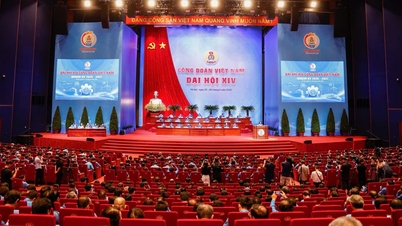
![[Photo] First session of the 14th Congress of the Vietnam Trade Union](https://vphoto.vietnam.vn/thumb/1200x675/vietnam/resource/IMAGE/2026/06/03/1780465947883_ndo_br_img-3852-jpg.webp)


































![[Video] Sunset at Lap An Lagoon – Where the sun sets over the fishing nets](https://vphoto.vietnam.vn/thumb/1200x675/vietnam/resource/IMAGE/2026/05/31/1780192137701_beach-landscape-sea-water-nature-grass-745871-pxhere-com.jpeg)
























Comment (0)