

Many foreign scholars and historians, when studying Ho Chi Minh, pay particular attention to how the Vietnamese people refer to their leader as "Uncle Ho" - a familial, blood-related form of address rarely seen in the relationship between a leader and the people in other countries.
Among them, American historian William J. Duiker, author of " Ho Chi Minh: A Life," once wrote: The image of "Uncle Ho" has become a special political and cultural symbol of Vietnam. William J. Duiker emphasized: "To millions of Vietnamese, he was simply 'Uncle Ho'."
Scholar Sophie Quinn-Judge also argues that the people's use of the term "Uncle" for Ho Chi Minh reflects the image of Ho Chi Minh as a close, fatherly figure, rather than a distant, Western-style head of state.
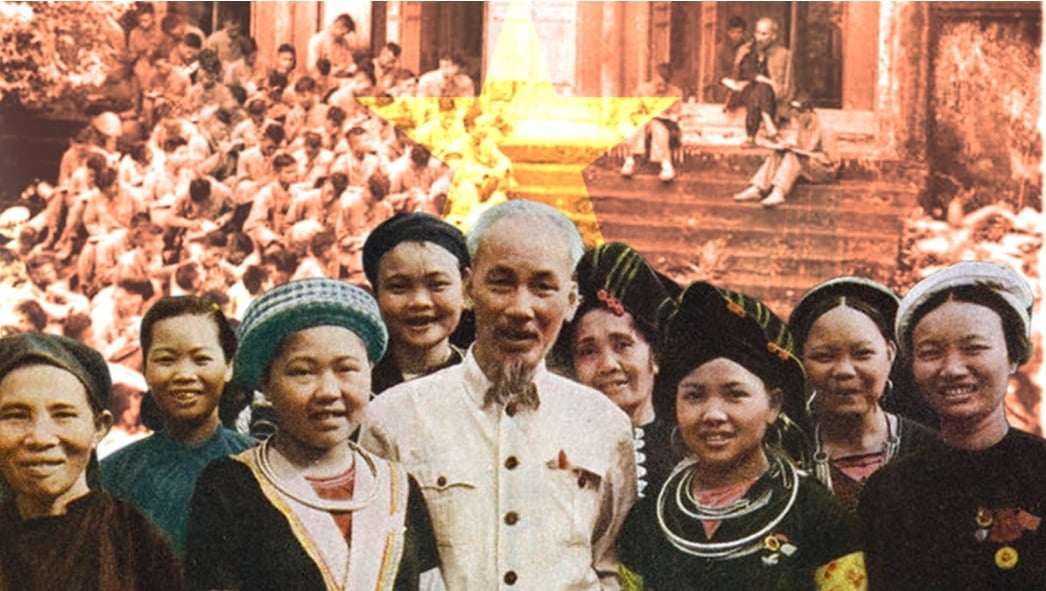
Uncle Ho - a boundless love. Graphics by artist Quang Huy.
In the history of modern Vietnam, perhaps no name is as sacred, familiar, historically significant, and deeply imbued with national sentiment as Ho Chi Minh. More than half a century after his passing, and 136 years since his birth, the Vietnamese people still call him by the simple, affectionate title: Uncle Ho. This way of addressing him is not part of the political system of titles. It is the only, most unique way in the world to address a leader, found only in Vietnam, the first person to be called by this special title by the entire people – President Ho Chi Minh. This is a unique cultural phenomenon of the Vietnamese nation in the 20th century and will forever be remembered.
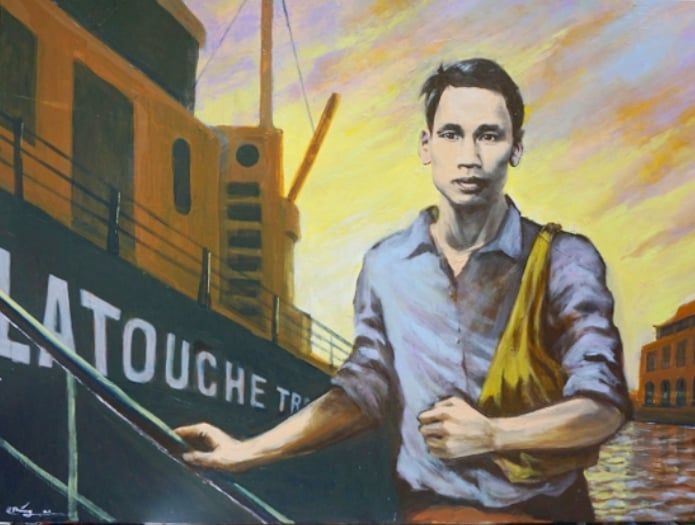
The patriotic young man Nguyen Tat Thanh left his homeland from Nha Rong Wharf to find a way to save the country.
Painting by artist Nguyen Quoc Thang.
Few leaders in the world have a name that carries as many layers of historical significance as Ho Chi Minh. Born Nguyen Sinh Cung, he later adopted the name Nguyen Tat Thanh, then Nguyen Ai Quoc – a name that shook international forums in the early 20th century when he represented the voice of an enslaved nation demanding the right to life, freedom, and independence. Finally, history recorded him under the name Ho Chi Minh. This name is associated with the August Revolution, the Declaration of Independence, the Democratic Republic of Vietnam, and the entire long struggle for national liberation of the Vietnamese people.
Questions have been raised: Why did Nguyen Tat Thanh not take the name Nguyen Chi Minh but instead Ho Chi Minh? Why did he not use the surname Nguyen – the surname of his father, Nguyen Sinh Sac? From these curiosities, sometimes even speculative and distorted theories about his ancestry have emerged. However, if we approach the issue with a scientific historical perspective and within the cultural and political context of that era, we will see that the choice of name for a revolutionary activist cannot be reduced to a mere matter of bloodline.
In the history of the communist and national liberation movements of the 20th century, the use of pseudonyms was common. Vladimir Lenin did not use his real surname, Ulyanov; nor did Joseph Stalin keep his birth name, Dzhugashvili. Pseudonyms were not only used to maintain secrecy in revolutionary activities but also served as symbolic choices, reflecting the ideals, ideologies, and political image that revolutionaries wished to cultivate. "Ho Chi Minh" was one such choice.
In Sino-Vietnamese, "Chi Minh" signifies a clear and enlightened will, an aspiration to guide the way with intellect and ideals. The word "Ho," considered in the context of his long activities in China and the East Asian cultural environment, is a surname that easily integrates, facilitating clandestine operations, while also creating the resonance of a concise, dignified, and intellectually profound Eastern designation.
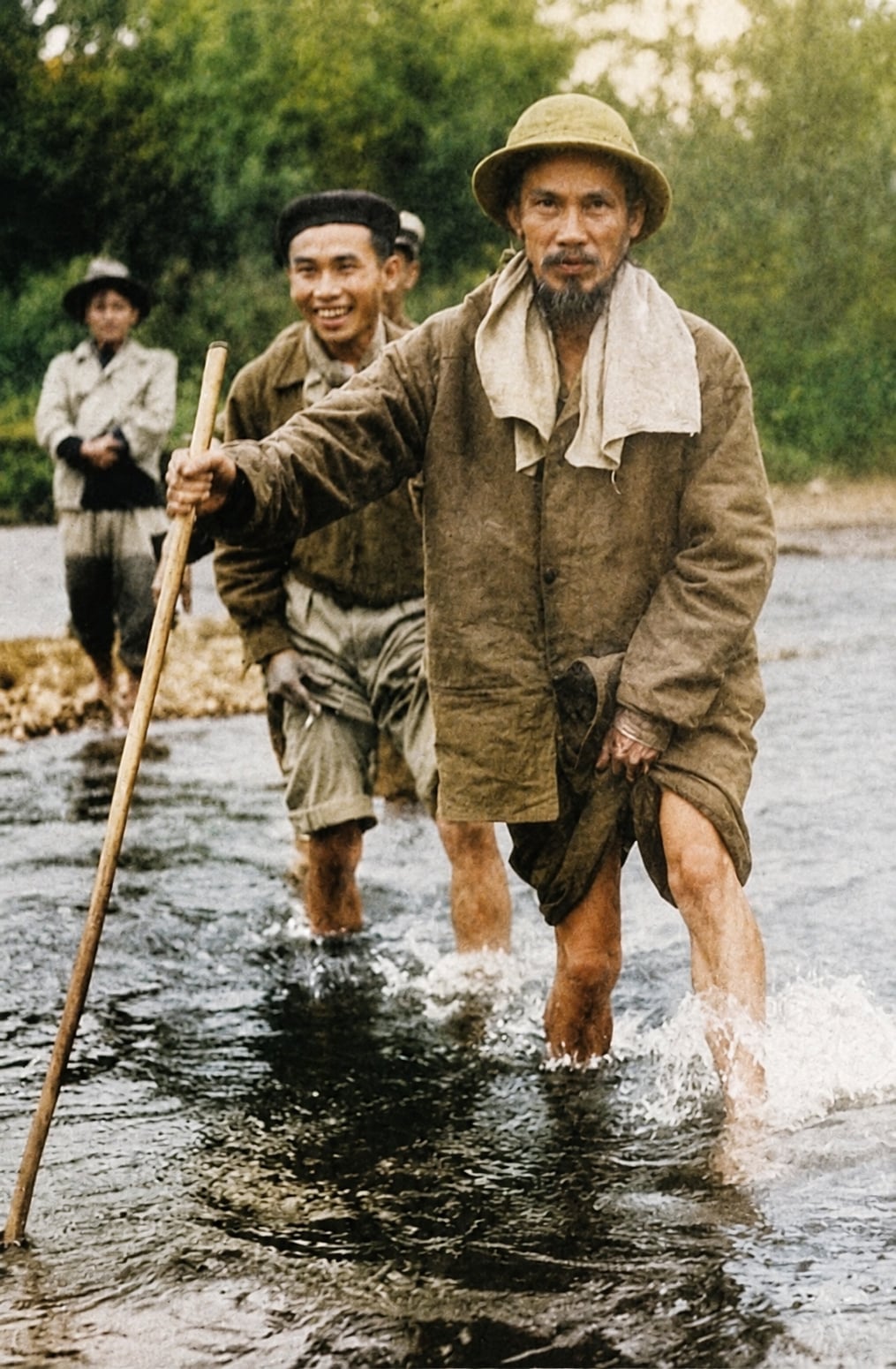
Uncle Ho rolled up his trousers, leaned on a walking stick, and waded through water during his visit to the Viet Bac Tuyen Quang war zone in 1951.
Photo: Ho Chi Minh Presidential Memorial Site. (Photo has been color-restored).
More importantly, history doesn't remember Ho Chi Minh because of his surname, but because of how he lived under that name. A man who dedicated his youth to traveling the world in search of a way to save his country; a man who endured imprisonment, hunger, cold, exile, and international persecution, yet still maintained his aspiration for national independence; a man who, even at the height of power, chose a life of simplicity, even to the point of austerity. In a century where many leaders built magnificent palaces to assert their authority, Ho Chi Minh lived in a small stilt house within the Presidential Palace. In an era where power often came with privilege, he maintained a simple lifestyle with rubber sandals, faded khaki clothes, frugal meals, and the demeanor of a humble revolutionary cadre.
It is precisely because of this way of life that the Vietnamese people do not address him by titles that convey a sense of power distance such as "His Excellency," "President," or "Supreme Leader," but rather call him "Uncle." In Vietnamese culture, "Uncle" is a familial relationship – a respected yet close and familiar elder, possessing both solemnity and warmth. This way of addressing him clearly reflects the characteristics of Vietnamese culture: politics is inseparable from morality and community sentiment; the ideal leader is not someone who stands above the people, but someone who lives among the people, embodies the people, and sacrifices for the people.
Perhaps that is why the image of Ho Chi Minh transcends the boundaries of an ordinary head of state to become a moral symbol of the modern Vietnamese nation. In him, the people see the embodiment of the finest qualities in Vietnamese tradition: profound patriotism, self-sacrifice, altruism, humility, a pure lifestyle, and unwavering faith in humanity. Ho Chi Minh did not conquer the people with the mystique of power, but with the transformative power of his personality. He earned the people's respect for his great intellect, but their love and admiration for his great soul.
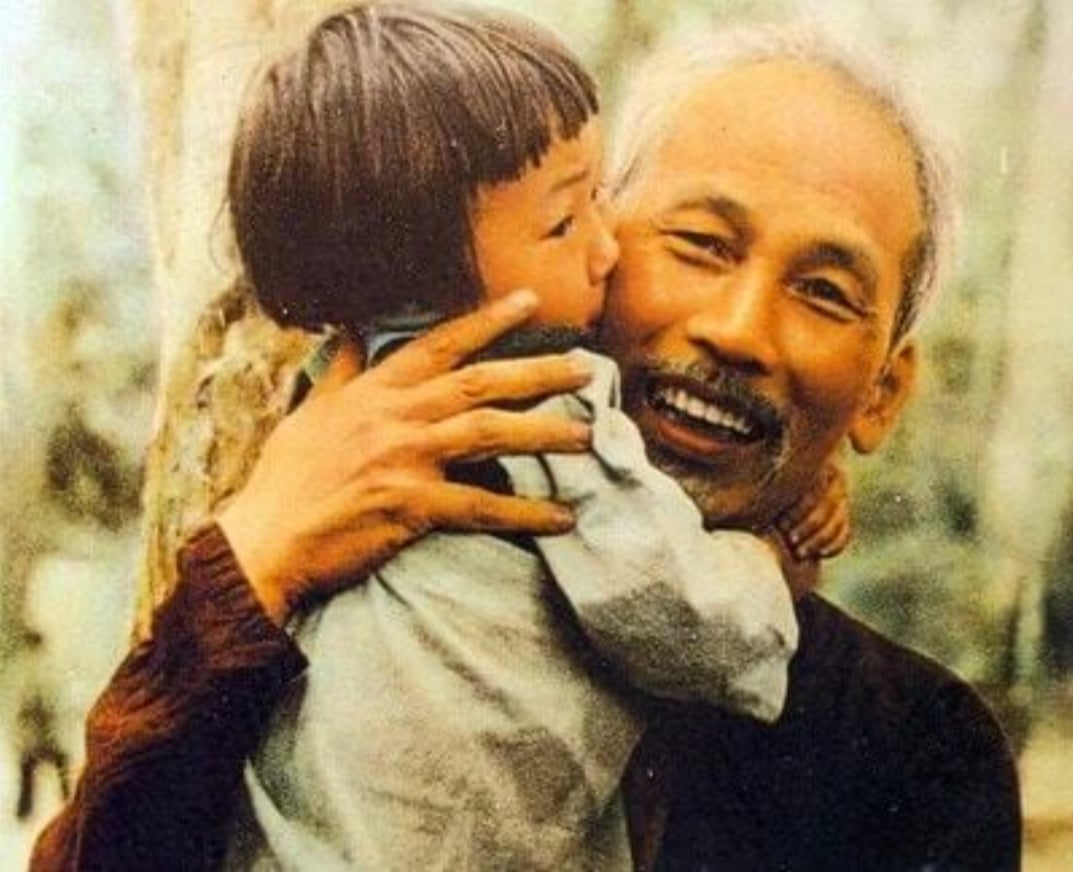
Uncle Ho holding baby Nguyen Minh Phuong during his visit to a kindergarten in the Viet Bac War Zone - May 19, 1953. Photo: Photographer Dinh Dang Dinh (Photo has been color-restored).
Thirteen years have passed since his birth, and today the country has entered a new stage of development with aspirations for strength, prosperity, and global integration. But in this era of significant upheaval, material pressures, and challenges to life's values, people increasingly realize that Ho Chi Minh's greatest legacy is not only national independence, but also a system of spiritual values for the Vietnamese people. It serves as a reminder that a nation wishing to go far must preserve its moral character; a ruling party wishing to endure must always maintain a close, inseparable bond with the people; and a person wishing to achieve greatness must first and foremost live a decent life, live for others, and live for things greater than themselves.
Some names exist only in administrative documents. Some names are only mentioned in history books. But there are also names that live on in the national consciousness as a part of the country's land and rivers. Ho Chi Minh is one such name. And perhaps, his greatest greatness lies in the fact that, after all the upheavals of history, the Vietnamese people still call him by the simplest and most sacred name - Uncle Ho.
Source: https://nongnghiepmoitruong.vn/bac-ho--hai-tieng-thieng-lieng-d811228.html
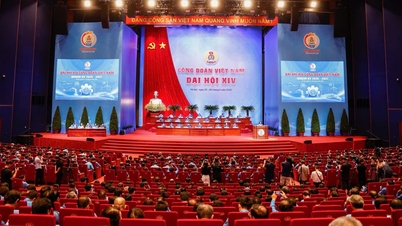
![[Photo] First session of the 14th Congress of the Vietnam Trade Union](https://vphoto.vietnam.vn/thumb/1200x675/vietnam/resource/IMAGE/2026/06/03/1780465947883_ndo_br_img-3852-jpg.webp)
![[Photo] General Secretary and President To Lam presides over a meeting with the Central Organizing Committee.](https://vphoto.vietnam.vn/thumb/1200x675/vietnam/resource/IMAGE/2026/06/03/1780482764658_a1-bnd-4741-3342-jpg.webp)
![[Photo] Secretary of the National Assembly Party Committee, Chairman of the National Assembly presides over the meeting of the Standing Committee and Executive Committee of the National Assembly Party Committee.](https://vphoto.vietnam.vn/thumb/1200x675/vietnam/resource/IMAGE/2026/06/03/1780480353201_ndo_br_bnd-2585-jpg.webp)

























![[Video] Sunset at Lap An Lagoon – Where the sun sets over the fishing nets](https://vphoto.vietnam.vn/thumb/1200x675/vietnam/resource/IMAGE/2026/05/31/1780192137701_beach-landscape-sea-water-nature-grass-745871-pxhere-com.jpeg)
















Comment (0)