

Mr. DTĐ (56 years old, Ho Chi Minh City) was diagnosed with end-stage right kidney cancer, with a high risk of death, and doctors at Binh Dan Hospital made every effort to treat him.
On February 19th, Dr. Nguyen Phuc Nguyen (Head of the Oncology Department, Binh Dan Hospital), a specialist in Oncology, stated that the patient, identified as D., had a very large tumor occupying almost the entire right kidney parenchyma, invading the liver parenchyma, and metastasizing to the lungs. Surgery at this stage was deemed impossible to achieve radical cancer. Therefore, the patient was treated with a combined targeted therapy and immunotherapy protocol aimed at reducing tumor size, increasing the likelihood of surgical removal of the primary tumor, and controlling metastatic lesions.
"Kidney cancer often doesn't respond to conventional chemotherapy. Fortunately, the combined targeted therapy and immunotherapy regimen, applied at Binh Dan Hospital since 2023, is now yielding very promising treatment results for kidney cancer patients," said Dr. Nguyen.
After four months, Mr. D.'s kidney tumor had significantly decreased in size. Through follow-up MSCT scans of the chest and abdomen every three months, doctors observed that the tumor diameter had decreased from nearly 12 cm to 8 cm and then 7 cm. In addition, the lesions in the lungs and some adjacent organs of the kidney had completely disappeared. At this point, the patient was advised to undergo surgery to completely remove the tumor. With the collaboration of doctors from the Oncology and Urology departments at Binh Dan Hospital, Mr. D.'s kidney tumor was completely surgically removed.
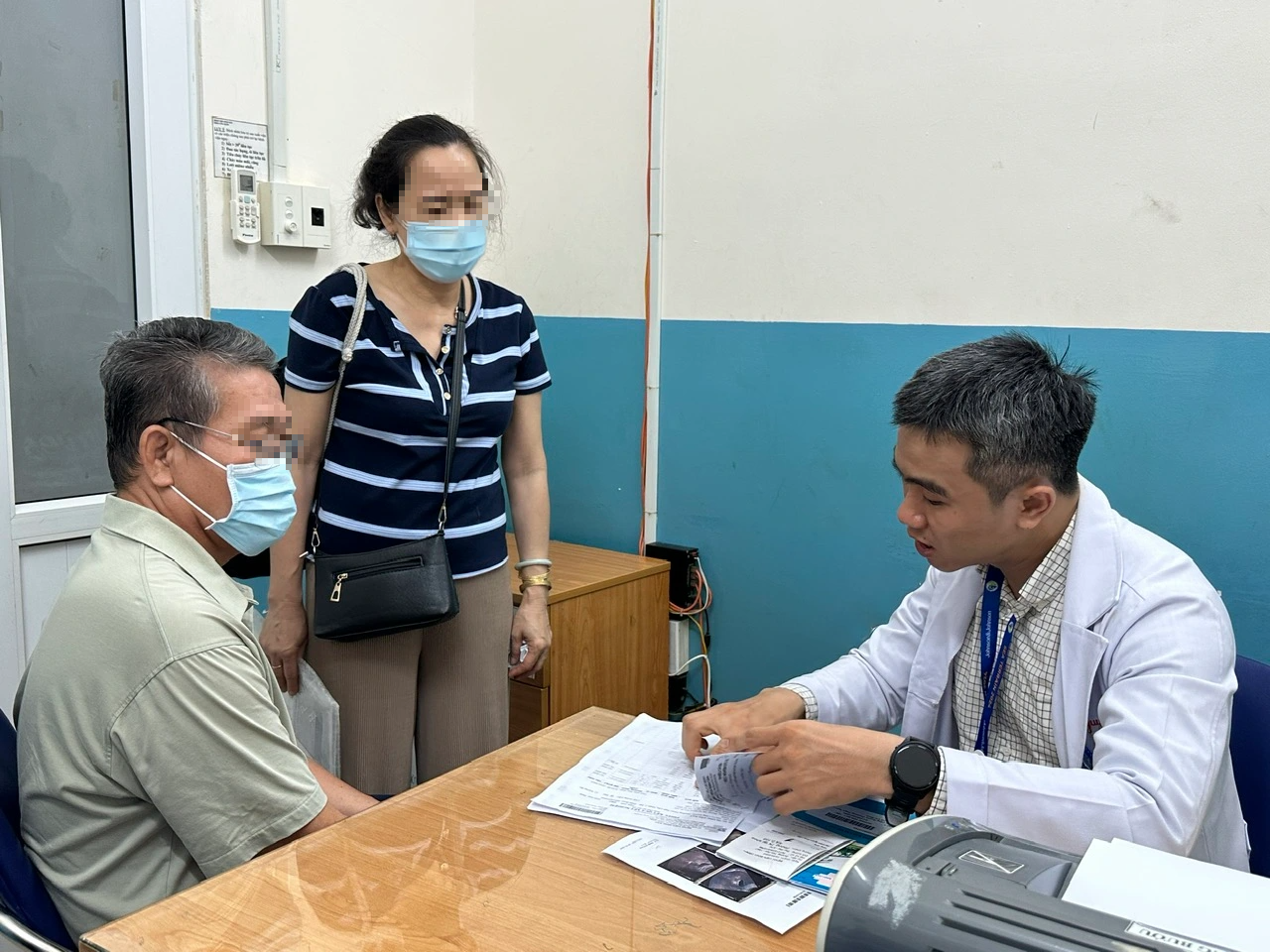
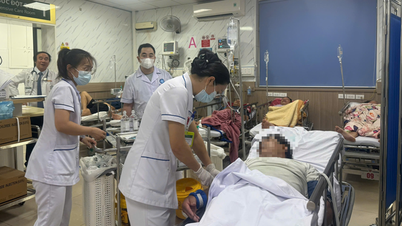
Patients during a follow-up appointment with their doctor.
Treatment with the new therapy helped reduce the size of the tumor.
Dr. Pham Phu Phat (Head of Urology Department A, Binh Dan Hospital) said that patient D.'s kidney tumor had shrunk to almost half its size compared to before treatment with immunotherapy and targeted therapy, and the lung metastases had also disappeared. If we only looked at the imaging data right before surgery without knowing the patient's medical history, we might have assessed it as a stage T1 tumor (early-stage kidney cancer), and might even have considered partial resection to preserve kidney function.
Thanks to the combined treatment protocol, Mr. D.'s cancer "downgraded" from late-stage to early-stage, creating favorable conditions for surgery. During the nearly 4-hour surgery, the patient did not require blood transfusions and recovered quickly afterward. Mr. D. had the drainage tube removed on the 3rd day and was discharged on the 5th postoperative day.
Notably, during the nearly two years of treatment, the patient experienced no significant side effects. Mr. D. stated that he only had peeling skin, which cleared up after applying a moisturizer. He did not experience hair loss, mouth sores, restlessness, or insomnia. The patient ate well and continued his regular exercise and daily activities.
According to Dr. Nguyen, the combination of targeted therapy and immunotherapy in the treatment of kidney cancer has a high disease control rate, up to nearly 90%. Therefore, patients often eat well, sleep well, and even gain weight during treatment.
Early detection and prevention of kidney cancer.
To detect and prevent kidney cancer early, Dr. Nguyen recommends that people with high risk factors for kidney tumors should have a health screening at least once a year.
- People with a family history of kidney cancer.
- People with genetic syndromes associated with kidney cancer, such as Von Hippel-Lindau disease, Birt-Hogg-Dubé syndrome, and hereditary papillary renal cell carcinoma.
- People with end-stage kidney disease or those undergoing long-term dialysis.
- Those who have previously been diagnosed with kidney cancer or certain types of cancer such as bladder cancer, especially smokers.
- People who have been exposed to toxins such as trichloroethylene or cadmium for a long time, and heavy smokers.
- Symptoms include blood in the urine, persistent lower back pain, unexplained weight loss, fatigue, anemia, or a palpable hard mass in the abdomen.
For high-risk individuals, screening may include abdominal ultrasound, abdominal CT or MRI scans if indicated, urine tests to look for blood cells or abnormal cells, and genetic testing if there is a family history of kidney cancer.
Source: https://thanhnien.vn/bac-si-dung-lieu-phap-dieu-tri-moi-cuu-benh-nhan-ung-thu-than-giai-doan-cuoi-18525021916301311.htm

![[Photo] Prime Minister Pham Minh Chinh attends the Conference on the Implementation of Tasks for 2026 of the Industry and Trade Sector](/_next/image?url=https%3A%2F%2Fvphoto.vietnam.vn%2Fthumb%2F1200x675%2Fvietnam%2Fresource%2FIMAGE%2F2025%2F12%2F19%2F1766159500458_ndo_br_shared31-jpg.webp&w=3840&q=75)




























































































Comment (0)