

At the same time, he thought chemotherapy would destroy cells, only weakening his health. Mr. M returned home to treat his cancer using folk remedies, taking herbal medicine he learned from acquaintances for six months, combined with avoiding chicken and beef... Every morning, noon, and evening, he brewed the medicine with three cups of water, boiling it down to one cup to drink. However, his constipation worsened, he lost 15 kg, couldn't eat or drink properly; his abdominal pain was sometimes intense, sometimes dull. He had difficulty defecating for a month, his stomach was bloated, and his health deteriorated significantly.
Mr. M's family took him back to Tam Anh General Hospital in Ho Chi Minh City for examination. A CT scan of the abdomen revealed a malignant tumor causing complete narrowing of the bowel lumen, leading to fecal impaction and invasion, resulting in thickened bladder wall. Notably, the liver had two lesions due to metastatic colon cancer.
On December 10th, Dr. Nguyen Tran Anh Thu, a specialist in Oncology at Tam Anh General Hospital in Ho Chi Minh City, stated that during a follow-up examination, Mr. M. was diagnosed with stage 4 sigmoid colon cancer (the last section of the intestine, shaped like an S before connecting to the rectum), which had invaded the bladder and metastasized to the liver.
The patient underwent laparoscopic surgery to create an artificial anus, allowing for bowel movements. The doctor prescribed targeted therapy combined with chemotherapy according to the FOLFOX regimen (a combination of three drugs).
"If treatment had been started earlier, Mr. M. would only need surgery, and possibly supportive chemotherapy with an appropriate dose to stabilize his health," said Dr. Anh Thu.
Mr. M's treatment was challenging due to his weakened health and poor immune system. Prior to treatment, he had a urinary tract infection caused by E. coli bacteria, which led to sepsis, requiring 10 days of antibiotic treatment. After the antibiotic treatment, blood cultures were negative for the bacteria, and he was fitted with a subcutaneous injection port in preparation for chemotherapy.
After the first cycle, Mr. M. experienced a recurrent urinary tract infection. He was examined by a nephrologist and continued taking antibiotics. Once the infection stabilized, the patient continued with chemotherapy cycles 2, 3, and 4. Mr. M. maintained a nutritious diet, no longer restricting his food intake as before, and drank 2 liters of water daily.
After 3 months of chemotherapy, CT scans showed the tumor had decreased in size. Currently, Mr. M. is healthy, able to eat and drink, has no abdominal pain, his colostomy is functioning well, and there is no bleeding from his natural anus.
"I regret not seeking cancer treatment as initially advised by my doctor," Mr. M shared.
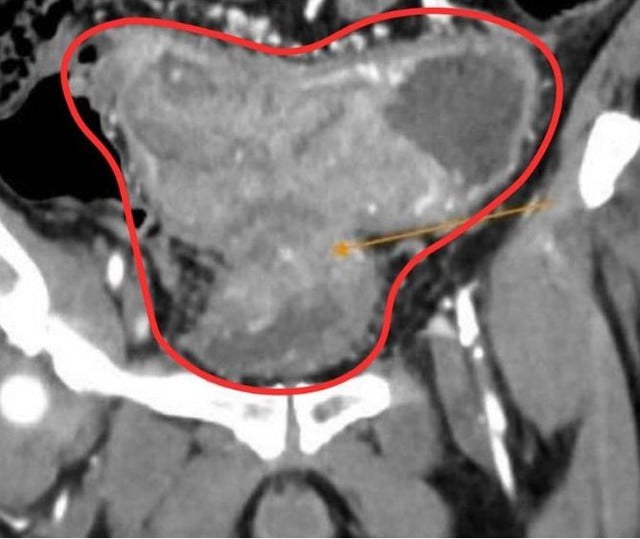
Malignant tumors can cause complete narrowing of the bowel lumen, leading to fecal impaction and dilation, and invasion causing thickening of the bladder wall.
PHOTO: TA
Traditional Vietnamese medicine can be used in combination with, but not as a replacement for, conventional cancer treatments.
According to Doctor Anh Thu, herbal medicines can be used in combination with chemotherapy and radiation therapy to stabilize mental state, improve symptoms, support overall health, and reduce the impact of side effects. However, patients should consult their treating physician before using these medicines; they can also combine them with other medications as prescribed by a traditional medicine doctor.
Cancer is treated using a multimodal approach (combining multiple methods) such as surgery, chemotherapy, radiotherapy, immunotherapy, etc., to control both local and distant metastasis, minimize complications, and improve treatment effectiveness. Surgery does not cause malignant cells to spread throughout the body. Modern imaging techniques such as ultrasound, CT, and MRI assist doctors in accurately diagnosing the stage of the disease before surgery, thereby enabling precise surgery and improving treatment outcomes.
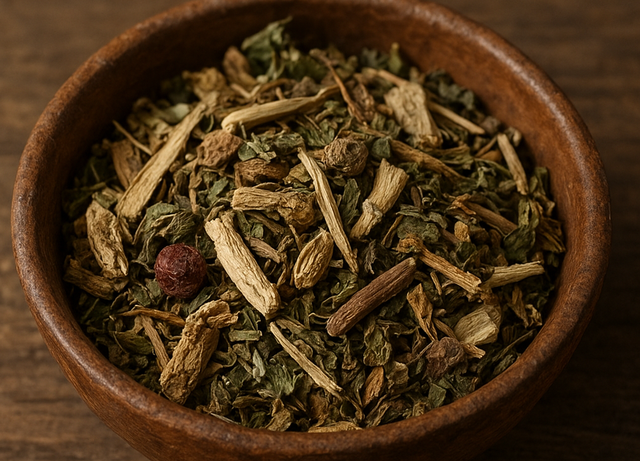
Traditional herbal remedies can be used in combination with chemotherapy and radiation therapy, but this requires a doctor's consultation and should not replace other treatment methods.
ILLUSTRATION: AI
Chemotherapy involves administering chemical drugs to the body to kill and prevent the growth of cancer cells. Since the drugs affect both malignant and healthy cells, they can cause side effects such as fatigue, weakness, nausea, hair loss, loss of taste, anemia, and bleeding. However, these symptoms can be managed with supportive medications to alleviate the side effects.
Dr. Anh Thu advises cancer patients to follow their doctor's prescribed treatment. They should not self-treat with herbal remedies or folk medicine, as this can jeopardize the chances of a cure in the early stages. When the disease progresses to a severe stage, treatment becomes more complex and expensive, impacting the patient's mental health and quality of life.
Source: https://thanhnien.vn/tu-choi-mo-tu-y-dung-thuoc-nam-benh-nhan-ung-thu-chuyen-nang-185251210100720429.htm

![[Photo] The captivating scenery of the fragrant maple forest in Quang Tri](/_next/image?url=https%3A%2F%2Fvphoto.vietnam.vn%2Fthumb%2F1200x675%2Fvietnam%2Fresource%2FIMAGE%2F2025%2F12%2F10%2F1765353233198_lan09046-jpg.webp&w=3840&q=75)

![[Photo] Explore the US Navy's USS Robert Smalls warship](/_next/image?url=https%3A%2F%2Fvphoto.vietnam.vn%2Fthumb%2F1200x675%2Fvietnam%2Fresource%2FIMAGE%2F2025%2F12%2F10%2F1765341533272_11212121-8303-jpg.webp&w=3840&q=75)


























![[Video] The craft of making Dong Ho folk paintings has been inscribed by UNESCO on the List of Crafts in Need of Urgent Safeguarding.](https://vphoto.vietnam.vn/thumb/402x226/vietnam/resource/IMAGE/2025/12/10/1765350246533_tranh-dong-ho-734-jpg.webp)























































Comment (0)