

According to Dr. Le Thi Thu Suong, Specialist Level 2, Department of General Surgery, Nam Saigon International General Hospital, breast cancer is not a disease exclusive to older adults. Although the risk of the disease increases with age, it is now showing a clear trend of affecting younger people, with many cases detected in those aged 25-35.
In fact, we have received numerous cases of young women seeking treatment after discovering breast tumors, many of which were already in the invasive or metastatic stage, requiring total mastectomy and prolonged combined chemotherapy and radiation therapy. Unfortunately, most young patients tend to be complacent and do not undergo regular screenings, thus missing the golden period for effective treatment.
Why can young women still get breast cancer?
Breast cancer develops when cells in breast tissue grow abnormally and multiply uncontrollably. Although it is more common in middle-aged women, young women are still at risk if they have certain risk factors.
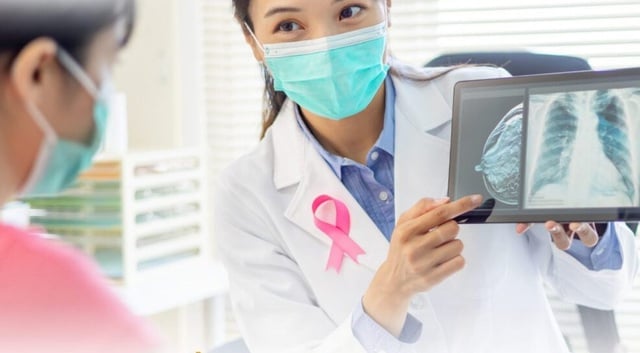
Women should get screened for breast cancer early to proactively prevent the disease.
PHOTO: BVCC
A family history of breast cancer, carrying BRCA1 or BRCA2 gene mutations, early puberty (at age 12), prolonged exposure to estrogen, and not having children, or having children late in life (after age 35) have been shown to have a higher incidence of breast cancer due to delayed hormonal changes in the body. Ovarian disorders (tumors, cysts, polycystic ovary syndrome) can increase estrogen or decrease progesterone, causing hormonal imbalance.
Use of exogenous hormones (birth control pills, assisted reproductive technologies): If used for a long time, at high doses, or without the supervision of a specialist, it can increase the risk of cancer.
Obesity and insulin resistance: Fat is a site for the production of peripheral estrogen, which increases blood estrogen levels.
Young women often have dense breast tissue, making early detection of tumors more difficult. Many cases are diagnosed when the tumor is already large or shows signs of invasion. Therefore, regular breast examinations and ultrasounds are crucial for early detection of abnormalities.
Early warning signs of breast cancer that women should pay attention to.
Women of all ages should proactively perform monthly breast self-examinations. Some early signs of breast cancer that can be detected through breast self-examination include:
A palpable lump or thickened tissue in the breast or armpit. Changes in breast shape, dimples, or unusual wrinkling of the skin. Changes in the nipple (inverted, leaking fluid, bleeding). Redness, itching, or unexplained swelling of the skin around the breast.
"Even small changes should not be taken lightly. Early detection not only makes treatment easier but also increases the chances of preserving the breast tissue, reducing the need for surgical removal," Dr. Suong advised.
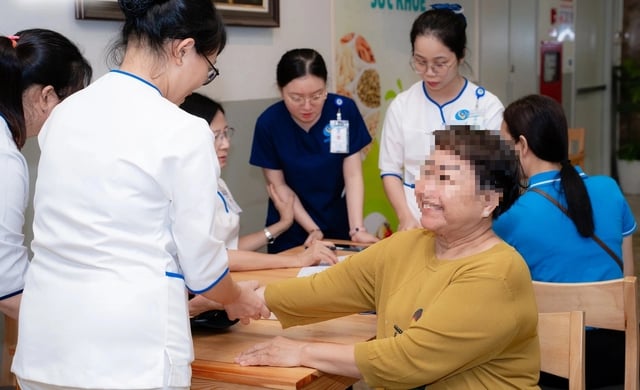
Breast cancer screening for women
PHOTO: BVCC
Ages when breast cancer screening is recommended
According to the World Health Organization (WHO), breast cancer screening should be started early and maintained regularly, depending on a woman's age.
For women aged 20 and older: Monthly breast self-examinations are recommended, ideally 5-7 days after menstruation, when breast tissue is softer and abnormalities are easier to detect.
From age 30: Regular breast ultrasounds every 6-12 months are recommended, especially for those with high risk factors or a family history of breast cancer.
For women aged 40 and older: It is recommended to combine breast ultrasound and mammography annually to detect early signs of small lesions that may be difficult to detect through self-examination at home.
Breast cancer is completely curable if detected early, with a success rate of up to 90%. It's crucial that women of all ages proactively undergo regular screenings and listen to their bodies. This is a simple yet highly effective way to protect their health and maintain a high quality of life in the long term.
Source: https://thanhnien.vn/alo-bac-si-nghe-co-phai-con-tre-thi-khong-mac-ung-thu-vu-185251210152705874.htm


























![[Video] The craft of making Dong Ho folk paintings has been inscribed by UNESCO on the List of Crafts in Need of Urgent Safeguarding.](https://vphoto.vietnam.vn/thumb/402x226/vietnam/resource/IMAGE/2025/12/10/1765350246533_tranh-dong-ho-734-jpg.webp)
















































Comment (0)