

On December 10th, Ninh Binh Provincial Obstetrics and Pediatrics Hospital announced that doctors in the Intensive Care and Toxicology Department had successfully treated a 3-year-old child who was in critical condition due to kerosene poisoning.
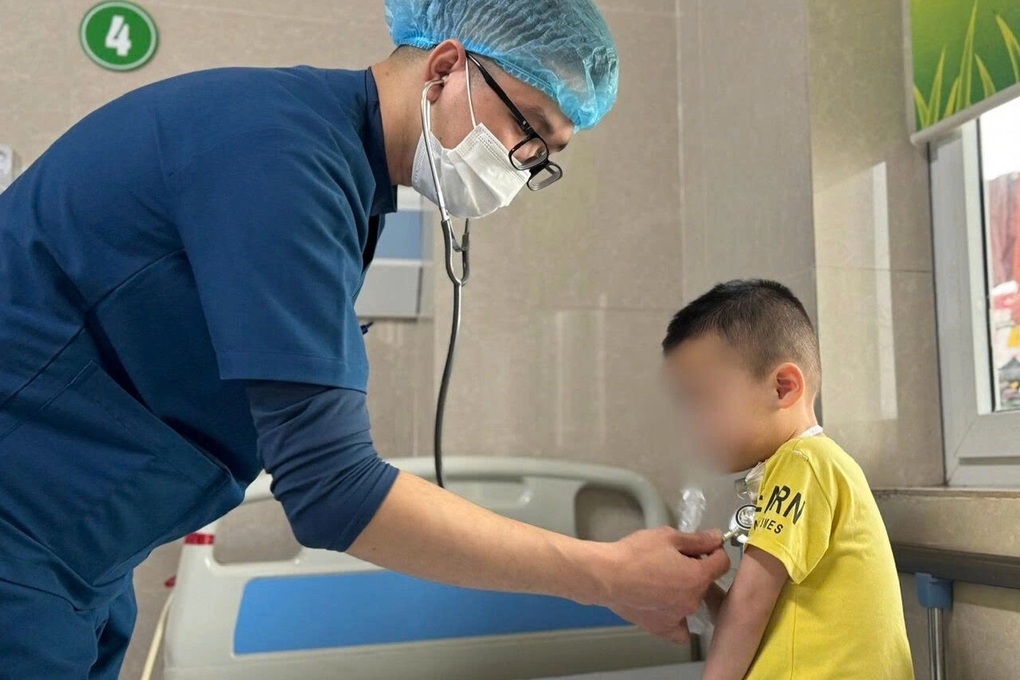
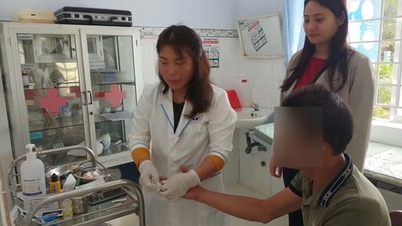
A child who suffered critical kerosene poisoning was saved by doctors after 6 months of treatment (Photo: Provided by the hospital).
According to family members, last May, the child accidentally drank kerosene while playing at home, resulting in poisoning with symptoms of difficulty breathing and cyanosis. After discovering the problem, the family took the child to the Nam Dinh Children's Hospital for emergency treatment, and from there transferred the child directly to a central hospital for further treatment.
At the central hospital, the child was diagnosed with severe respiratory failure and pneumonia due to kerosene aspiration. A cranial MRI revealed damage to the white matter and gray matter, the thalamus, cerebral hemispheres, and bilateral cerebellum, resulting in neurological sequelae.
After a month of treatment, due to the child's condition deteriorating significantly, a poor prognosis, and the family's difficult circumstances and lack of support, they requested to transfer the child to Ninh Binh Provincial Obstetrics and Pediatrics Hospital for palliative care.
According to Doctor Nguyen Van Huynh (Intensive Care and Toxicology Department), when the child was transferred from the central hospital, the child's condition was very serious: pneumonia, respiratory failure, neurological sequelae after kerosene poisoning, and the prognosis was extremely poor.
The doctors determined that "as long as there's life, there's hope," and quickly held a consultation to develop a treatment plan for the child. The child was re-intubated, treated with mechanical ventilation, antibiotics, neurosupport, nutrition, and homeostasis.
Due to neurological damage, the child experienced multiple failed weaning attempts and remained dependent on the ventilator for an extended period. Therefore, the doctor prescribed a tracheostomy and continued mechanical ventilation and rehabilitation.
After nearly six months of intensive treatment, the child was weaned off the ventilator, and neurological problems gradually improved. A bronchoscopy was performed to assess the airway and determine when to remove the tracheal cannula. However, the bronchoscopy revealed a polyp-like growth at the tracheal cannula opening, causing a 70% narrowing of the tracheal lumen, making cannula removal impossible at this time.
The child is now alert, playful, eating well orally, and does not require medication; instead, they are receiving rehabilitation. In the near future, the child will undergo another bronchoscopy to consider surgical removal of the airway polyps.
It is known that the child's circumstances are extremely special, as both parents suffer from mental illness, and the child lives with his paternal grandparents. In addition to caring for the patient, the doctors and nurses at the hospital also provide emotional and material support, and appeal to philanthropists for financial assistance and daily meals for the child and his family.
Source: https://dantri.com.vn/suc-khoe/chau-be-3-tuoi-uong-nham-dau-hoa-duoc-cuu-song-sau-6-thang-nam-vien-20251210144616725.htm

![[Photo] Closing Ceremony of the 10th Session of the 15th National Assembly](/_next/image?url=https%3A%2F%2Fvphoto.vietnam.vn%2Fthumb%2F1200x675%2Fvietnam%2Fresource%2FIMAGE%2F2025%2F12%2F11%2F1765448959967_image-1437-jpg.webp&w=3840&q=75)




































![[OFFICIAL] MISA GROUP ANNOUNCES ITS PIONEERING BRAND POSITIONING IN BUILDING AGENTIC AI FOR BUSINESSES, HOUSEHOLDS, AND THE GOVERNMENT](https://vphoto.vietnam.vn/thumb/402x226/vietnam/resource/IMAGE/2025/12/11/1765444754256_agentic-ai_postfb-scaled.png)









































Comment (0)