

Speaking at the National Scientific Conference on the topic: 'On the life and career of Physician Hoang Nguyen Cat and the valuable and highly effective remedies for the health care of King Minh Mang from the Imperial Medical Institute of the Nguyen Dynasty' organized by the Vietnam Traditional Medicine Association in Hanoi on December 11th, People's Physician, Associate Professor, Dr. Dau Xuan Canh - President of the Vietnam Traditional Medicine Association emphasized that Vietnam has a long-standing tradition of traditional medicine, associated with the philosophy of "Southern medicine for Southern people," and many famous physicians have left behind valuable books and treatment methods for posterity. In this lineage, the renowned physician Hoang Nguyen Cat – a son of Nghe An province in the 18th century – is considered a representative figure with significant contributions to folk medicine and imperial medicine.
Throughout nearly half a century of practice, he devoted his efforts to compiling the monumental work "Quy Vien Family Studies," comprising approximately 11 volumes and over 1,000 pages. This work is considered a "comprehensive medical encyclopedia," covering all fields: medical ethics, medical theory, pharmacology, prescriptions, pathology, case studies, and clinical experience… This is one of the rare medical legacies that possesses both academic value and rich practical relevance.
Not only a renowned folk physician, Hoang Nguyen Cat is also known for his contributions to the Nguyen Dynasty's imperial medicine system, particularly in caring for the health of King Minh Mang – a king famous for his policy of health preservation, strengthening the body, and improving physical fitness for governing the country.
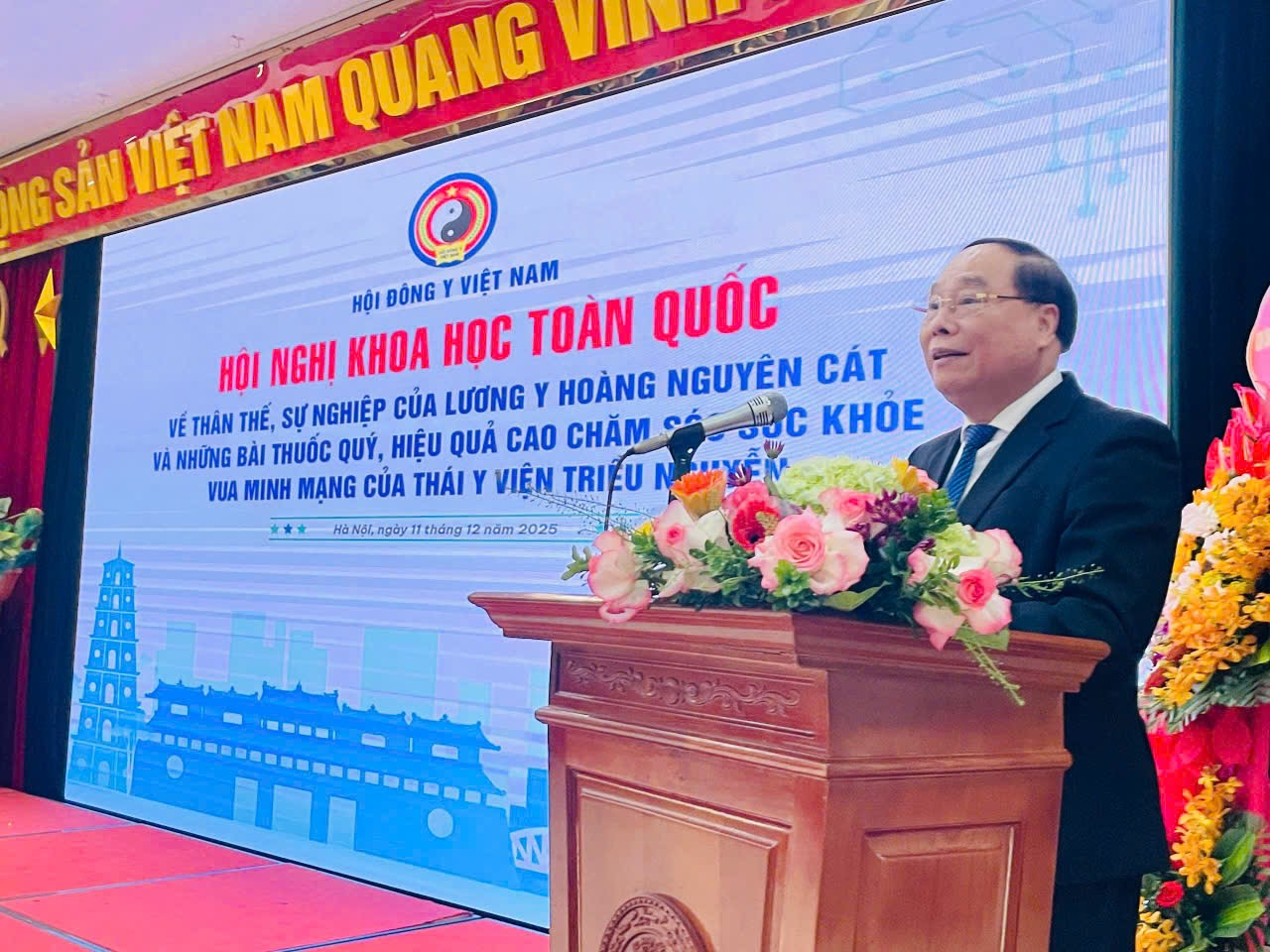
People's Physician, Associate Professor, Doctor Dau Xuan Canh - President of the Vietnam Traditional Medicine Association emphasized that Vietnam has a long-standing tradition of medicine, associated with the philosophy of "Southern medicine for Southern people," and many renowned physicians have left behind valuable books on medicine and treatment methods for future generations.
"Quy Vien Family School": A treasure trove of medical knowledge that needs to be standardized and transferred.
According to People's Physician, Associate Professor, and Doctor Dau Xuan Canh, the "Quy Vien Family Studies" series is a work of great academic and practical value. In recent years, with the attention of specialized agencies, especially Nghe An province, the series has been collected, translated, edited, and published, becoming an important resource for research, training, and treatment using traditional medicine.
The work contains the essence of health preservation, treatment, and herbal medicine, while clearly reflecting the author's humanistic medical philosophy. Many cherished remedies in the book are being further examined from the perspective of modern medicine combined with Traditional Chinese Medicine, in order to find ways to standardize them, evaluate their effectiveness, and assess their widespread application.
The restoration, preservation, and promotion of this book not only helps safeguard traditional knowledge but also opens up opportunities for developing high-quality traditional medicine products, linking research, training, treatment, and production in the current context.
Royal remedies for the health of King Minh Mạng
Besides the "Quỳ Viên Family Academy," the Nguyễn Dynasty's imperial medicine system – especially during the reign of Emperor Minh Mạng – is considered by scientists to be a treasure trove of Vietnamese court medicine. During this period, the Imperial Medical Institute was perfected and developed strongly, serving both as a place to care for the health of the royal family and officials, and as a center for research, teaching, and transmission of medical knowledge.
In historical documents such as the Imperial Medical Diary, the Woodblock Prints, and the Imperial Archives of the Nguyen Dynasty, many famous medicinal formulas are meticulously recorded, detailing their composition, functions, and purposes. Prescriptions like "Minh Mang Decoction" and "Night Five Encounters" were used to: greatly replenish qi and blood; strengthen the spleen and kidneys; enhance physical strength; nourish the heart and calm the mind; and prolong life…
The principles of military coordination reflect the characteristics of imperial medicine: strictness, careful selection, harmonious combination of ruler, minister, assistant, and envoy, and the use of many precious domestic medicinal herbs.
Re-examining these traditional remedies with the support of modern medicine – from pharmacology and phytochemistry to clinical pharmacy – is considered a crucial direction in determining their safety, mechanisms of action, and feasibility for application in contemporary public health care.
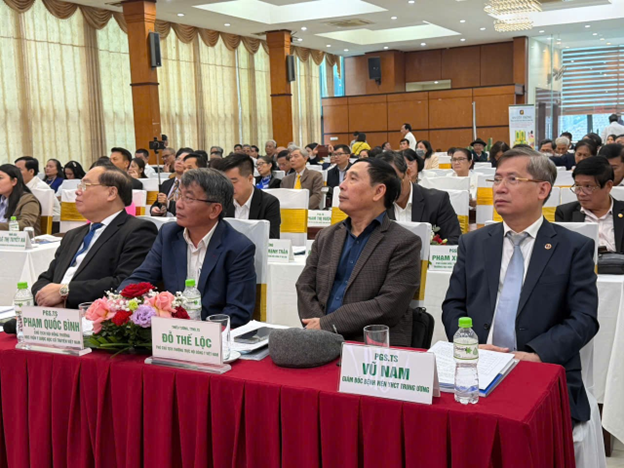
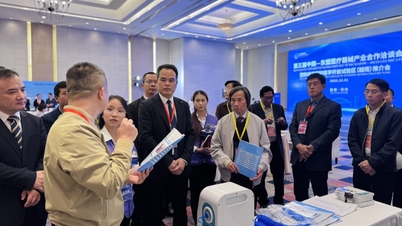
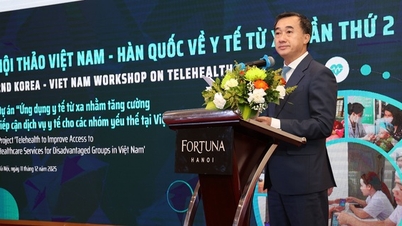
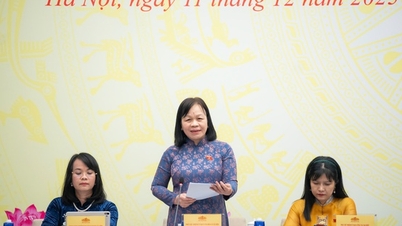
Delegates attending the workshop.
Connecting folk heritage and royal medicine.
Although originating from two different settings – the countryside and the royal court – the legacy of Hoang Nguyen Cat and the Nguyen Dynasty's royal medicine system both reflect the wisdom of Vietnamese medicine. Nam, with a people-centered approach and the highest goal: caring for and protecting the health of the people.
Based on these valuable documents, the scientific community is pursuing many research directions:
- Digitizing and standardizing manuscripts, prescriptions, and pharmaceutical preparation methods.
- Interdisciplinary research collaboration: Traditional Chinese Medicine – History – Sino-Vietnamese Studies – Pharmacognosy – Pharmaceutical Technology
- Creating models that connect training, research, and production.
- Restoring medicinal plant growing areas to support treatment according to traditional remedies.
These guidelines are expected to create a solid scientific foundation for safely and effectively integrating the values of traditional medicine into modern life.
The values left behind by physician Hoang Nguyen Cat, along with the treasure trove of imperial medicines of the Nguyen dynasty, are not only a testament to the history of Vietnamese medicine but also an important resource for contemporary Traditional Medicine. Research, standardization, and selective application of these valuable remedies will contribute to the development of the medicinal plant industry, improving the quality of treatment and healthcare for the people in the new era.
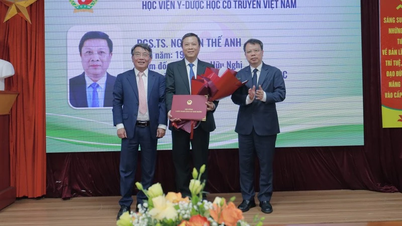
Also within the framework of the event, the Vietnam Traditional Medicine Association solemnly organized the National Award Ceremony for Outstanding Traditional Medicine Practitioners and Outstanding Traditional Medicine Clinics/Treatment Centers in 2025. This activity aims to recognize individuals and groups with outstanding achievements in preserving and developing Vietnamese Traditional Medicine, while also creating motivation for the medical profession to continue improving their expertise and professional ethics.
Readers are invited to see more:
Source: https://suckhoedoisong.vn/nghien-cuu-ung-dung-cac-bai-thuoc-quy-cua-luong-y-hoang-nguyen-cat-169251211205851423.htm



![[Photo] Closing Ceremony of the 10th Session of the 15th National Assembly](/_next/image?url=https%3A%2F%2Fvphoto.vietnam.vn%2Fthumb%2F1200x675%2Fvietnam%2Fresource%2FIMAGE%2F2025%2F12%2F11%2F1765448959967_image-1437-jpg.webp&w=3840&q=75)
![[Photo] Prime Minister Pham Minh Chinh holds a phone call with the CEO of Russia's Rosatom Corporation.](/_next/image?url=https%3A%2F%2Fvphoto.vietnam.vn%2Fthumb%2F1200x675%2Fvietnam%2Fresource%2FIMAGE%2F2025%2F12%2F11%2F1765464552365_dsc-5295-jpg.webp&w=3840&q=75)



























![[OFFICIAL] MISA GROUP ANNOUNCES ITS PIONEERING BRAND POSITIONING IN BUILDING AGENTIC AI FOR BUSINESSES, HOUSEHOLDS, AND THE GOVERNMENT](https://vphoto.vietnam.vn/thumb/402x226/vietnam/resource/IMAGE/2025/12/11/1765444754256_agentic-ai_postfb-scaled.png)






































Comment (0)