


Ms. Nguyen Thi Mai Thoa, Member of the National Assembly 's Committee on Culture and Social Affairs, said: "It is necessary to continue reviewing and perfecting legal regulations related to acts of violence against children to ensure the strict enforcement of the law." - Photo: VGP
According to Associate Professor Dr. Do Canh Thin, preventing child abuse cannot rely on a single solution but requires building a "three-legged stool" comprising family, community, and relevant authorities. More importantly, the approach must shift from dealing with the consequences to screening, detecting, and preventing abuse early on.
From the family's perspective, he believes this should be the first "shield" protecting children. Before entering a new relationship, parents need to prioritize their child's safety, proactively observing how their partner treats young children, vulnerable people, or even animals to identify signs of violence.
In addition, families need to teach children self-protection skills, how to recognize physical abuse, and how to seek support from relatives or call hotlines like 111 or 113 when necessary. At the same time, parents should not isolate themselves from the family but should maintain connections with grandparents, relatives, and friends to create a "natural monitoring network" around the child.
According to experts, the community, including neighbors, residential groups, and schools, also plays a particularly important role. The mentality of "it's someone else's family matter" needs to be eliminated, because child abuse is a violation of the law, and every citizen has a responsibility to speak out, report, and intervene when they detect any unusual signs.
Local organizations need to proactively identify high-risk families such as those living together without marriage, those with addictions, or those experiencing frequent conflict. Schools and teachers must also pay attention to unusual behaviors in children, such as fear, withdrawal, declining academic performance, or concealment of trauma, in order to coordinate and address these issues promptly.
Regarding authorities, he suggested the need to establish a rapid response mechanism to promptly isolate children from dangerous environments upon receiving reports; and to strengthen population management in boarding houses, where the risk of violence is high.
"To protect children, we must build a proactive and safe ecosystem. Only when families are vigilant, communities are not indifferent, and authorities react decisively can child abuse be effectively prevented," emphasized Associate Professor Dr. Do Canh Thin.
From the perspective of policy development and oversight, Ms. Nguyen Thi Mai Thoa, a member of the National Assembly's Committee on Culture and Social Affairs, believes that it is necessary to continue reviewing and improving legal regulations related to child violence to ensure the strict enforcement of the law. Acts of violence that are prolonged, seriously harm the physical and mental health of children, or lead to particularly severe consequences must be dealt with severely; they cannot be considered merely a matter of "parenting" or domestic violence.
"However, the issue is not just about increasing penalties, but more importantly, about building a mechanism to protect children that is strong enough, fast enough, and effective enough right from the stage of detecting risks," Ms. Thoa emphasized, suggesting that a specific legal mechanism for child abuse cases could be studied, prioritizing rapid processing; strengthening emergency protection measures for children; strictly regulating the responsibilities of guardians, childcare facilities, and related individuals; and supplementing mechanisms for long-term psychological support and rehabilitation for child victims of abuse...
At the same time, it is necessary to strengthen the capacity of the child protection system at the grassroots level, ensuring that all signs of child abuse are detected early and addressed immediately, preventing them from escalating and leading to tragic consequences.
Enhancing parenting skills
Ms. Nguyen Thi Nga, Deputy Director of the Department of Mothers and Children, emphasized that the fundamental solution to this problem is to improve the knowledge and skills of parents and family members.
"In today's modern society, motherhood and fatherhood require not only instinct but also knowledge and skills. Many recent cases involve very young mothers who lack life skills, family support, economic pressure, and even mental health issues," Ms. Nga said.
In Decision 468/QD-TTg on protecting children in cyberspace for the period 2026-2030, the Ministry of Health was tasked with researching mental health. This is considered one of the important factors influencing domestic violence.
Currently, many parenting education materials have been developed with the support of organizations such as UNICEF, Save the Children, MSD, etc., but their implementation remains limited. Therefore, in the future, a stronger involvement from the Vietnam Women's Union, state management agencies on family affairs, and socio-political and social organizations is needed to expand parenting skills training classes.
Regarding local authorities, Ms. Nga suggested focusing on replicating effective models in implementing children's rights and preventing child abuse; mobilizing the participation of all levels, sectors, organizations, and society as a whole; emphasizing prevention and protection of children from the family to the community, proactively preventing risks, and not waiting until incidents occur before focusing on handling them.
At the same time, it is necessary to focus on issuing mechanisms and policies to comprehensively implement child-related work; ensure human and financial resources; and strengthen inspection and supervision, especially of facilities providing services related to children, in order to ensure sustainability in child care and protection.
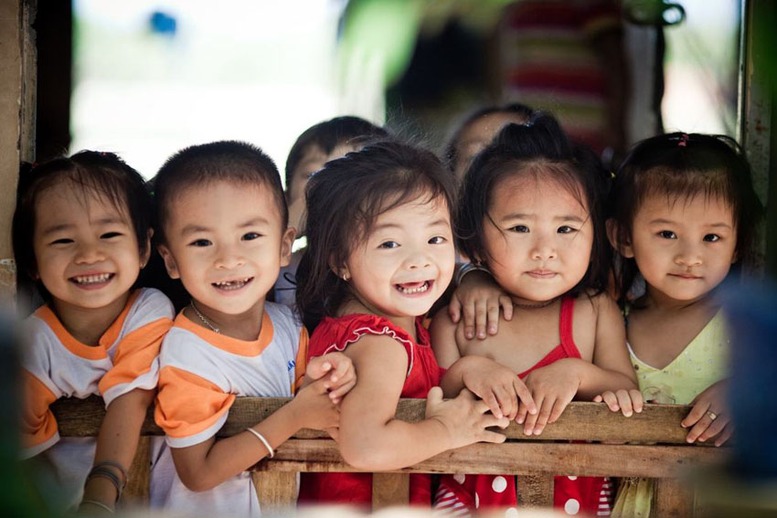
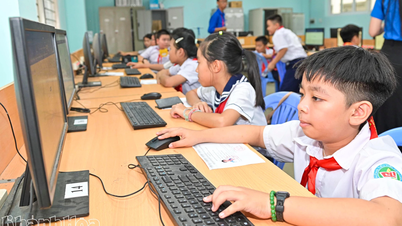
The National Assembly will continue to refine policies and laws on children to ensure children's rights and create conditions for their comprehensive development - Illustration photo
Emphasis should be placed on integrating children's issues into the law-making process.
Ms. Mai Thoa stated that the protection of children and the prevention and combating of child abuse have always been a top priority for the National Assembly and its agencies. In 2020, following supreme oversight of the implementation of policies and laws on preventing and combating child abuse, the National Assembly issued Resolution No. 121/2020/QH14 on "Continuing to strengthen the effectiveness and efficiency of implementing policies and laws on preventing and combating child abuse." By 2025, the National Assembly will continue to oversee the implementation of this resolution, requiring the Government and relevant ministries and agencies to report on the results of its implementation.
According to Ms. Mai Thoa, in order to improve the effectiveness of child protection, especially within the family environment, the National Assembly and its members will focus on several key tasks in the coming period.
This includes continuing to review and improve policies and laws on children to ensure children's rights, create conditions for children's comprehensive development, and meet the requirements for developing high-quality human resources and international integration.
At the same time, emphasis should be placed on integrating children's issues into the process of formulating laws, policies, and socio-economic development strategies.
In addition, priority will be given to improving regulations related to child protection; prevention and combating child abuse; prevention and combating domestic violence; child-friendly and juvenile-friendly justice; mechanisms for early detection, support, and timely intervention for children who have been abused or mistreated; ensuring the best interests of children in child custody disputes after divorce; and strengthening child protection in the online environment.
The National Assembly will also strengthen oversight of the implementation of policies and laws on preventing and combating child abuse and domestic violence, focusing on prevention and handling of pressing cases related to children; the responsibilities of heads of ministries, sectors, and localities; the allocation of human resources and funding for child protection; building a system for protecting children in cyberspace and in reality; and promoting inter-sectoral coordination, inspection, and supervision.
In addition, Ms. Mai Thoa stated that National Assembly delegates will strengthen supervision of child abuse prevention and control; promote contact with children or their representatives as stipulated in the Law on Children; and receive, monitor, and supervise the resolution of children's opinions and recommendations.
Anh Tho - Thuy Ha
Source: https://baochinhphu.vn/bai-3-hoan-thien-mang-luoi-bao-ve-tre-em-102260528140354722.htm


![[Image] Hanoi Police officially crowned champions of V-League 2025/2026](https://vphoto.vietnam.vn/thumb/1200x675/vietnam/resource/IMAGE/2026/05/31/1780244769054_ndo_br_039d561b692be875b13a-jpg.webp)
![[Photo] The General Secretary, President and his wife begin their state visit to the Philippines.](https://vphoto.vietnam.vn/thumb/1200x675/vietnam/resource/IMAGE/2026/05/31/1780230559452_anh-man-hinh-2026-05-31-luc-19-28-11.png)
![[Photo] Admire the coral "masterpiece" amidst the million-year-old heritage of Dak Lak province.](https://vphoto.vietnam.vn/thumb/1200x675/vietnam/resource/IMAGE/2026/05/31/1780221235105_anh-man-hinh-2026-05-31-luc-16-53-27.png)
![[Photo] Solemn bathing ceremony and Buddha procession in Hue](https://vphoto.vietnam.vn/thumb/1200x675/vietnam/resource/IMAGE/2026/05/31/1780228263543_1-jpg.webp)

















![[Video] Sunset at Lap An Lagoon – Where the sun sets over the fishing nets](https://vphoto.vietnam.vn/thumb/340x192/vietnam/resource/IMAGE/2026/05/31/1780192137701_beach-landscape-sea-water-nature-grass-745871-pxhere-com.jpeg)

































![[Photo] Admire the coral "masterpiece" amidst the million-year-old heritage of Dak Lak province.](https://vphoto.vietnam.vn/thumb/402x226/vietnam/resource/IMAGE/2026/05/31/1780221235105_anh-man-hinh-2026-05-31-luc-16-53-27.png)




























Comment (0)