

In modern medical trends, filmless diagnostic imaging refers to images that are stored, processed, and utilized digitally, rather than being printed on paper as before.
 |
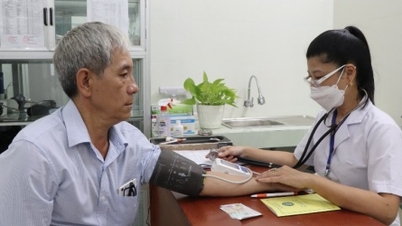
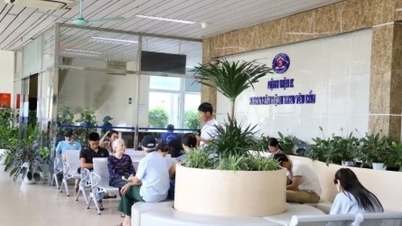
| Illustrative image. |
Patients still receive all the necessary procedures such as ultrasound, digital X-ray, CT scan, and MRI, but the results are transferred directly to the electronic image storage and medical record system. This method allows doctors to read results faster, easily compare results between scans, and facilitates consultations and long-term treatment monitoring.
For many years, diagnostic imaging has played a crucial role in healthcare, from detecting lesions to monitoring treatment. However, traditional film printing methods not only increase costs for patients but also place significant pressure on healthcare facilities in terms of supplies, personnel, and storage. The shift to a "filmless" format is not simply a change in how results are delivered, but a step forward in data-driven healthcare management, streamlining procedures and improving service quality.
According to a decision by the Ministry of Health , the price list for diagnostic imaging services using digital image storage and transmission systems has been approved. Bach Mai Hospital has developed a list of 734 technical services that can replace printed film. Patients can still receive all the necessary techniques such as digital X-ray, CT scan, MRI, ultrasound, etc., but the images are stored, retrieved, and results delivered digitally instead of being printed on film.
From a professional standpoint, digital imaging allows doctors to quickly access, magnify, measure, and compare images more easily, supporting accurate diagnosis and monitoring disease progression over time. Consultations between departments are also easier because data can be shared directly on the system, shortening waiting times and increasing the effectiveness of coordinated treatment.
One clear benefit is cost reduction. According to expert calculations, the price of image services using a digital image storage and transmission system is reduced by an average of approximately 5.9% compared to the traditional film shooting and printing model.
Several basic techniques have seen significant cost reductions, such as digital X-ray imaging (down 28.1% for 3-image films), non-contrast computed tomography (CT) scanning (down 8.7%), and non-contrast magnetic resonance imaging (MRI) scanning (down 5.4%). This cost reduction helps to utilize health insurance funds more efficiently and reduce co-payments for patients.
In reality, the volume of diagnostic imaging performed in Vietnam is enormous, resulting in annual film printing costs reaching trillions of VND. By switching to a filmless system, this cost can be significantly reduced, while also easing the burden on supplies, operations, and waste disposal.
From a management perspective, this is also a step consistent with the goal of optimizing healthcare resources, especially in the context of rapidly increasing demand for medical services, an aging population, and the growing prevalence of chronic diseases.
From the patient's perspective, filmless diagnostic imaging offers significant advantages during long-term treatment. Instead of having to keep numerous easily damaged or misplaced paper films, patients can access their results again during follow-up visits or referrals. For the elderly, patients living far away, or patients requiring frequent follow-up, reducing paperwork and associated costs is of practical significance.
However, for this model to be truly effective, the challenge lies in ensuring synchronization. The information technology system, patient support processes, and data exploitation capabilities need to be standardized.
Many patients still have the habit of "holding the film just to be sure," especially the older age group or those with limited access to technology. Therefore, along with the implementation of the technology, healthcare facilities need to provide clear instructions on how to receive results, how to look them up, and how to provide data when patients seek treatment at other facilities.
Another crucial issue is data interoperability between different levels of healthcare. When imaging results are stored on each hospital's own system, patients may still need to have scans repeated if they are transferred to another hospital or receive treatment at a facility that is not yet interconnected. If data is connected in accordance with the Ministry of Health's digital transformation guidelines, patients will benefit significantly: reduced duplication of scans, lower costs, shorter waiting times, and improved treatment efficiency.
In the long term, this policy opens up expectations for a series of deeper reforms: from standardizing clinical data and promoting electronic medical records to linking results between different levels of healthcare. As patients benefit from reduced costs and greater convenience, healthcare facilities experience less operational pressure, and the health insurance system utilizes resources more efficiently, the "film-free" model will become a substantial step forward in Vietnam's healthcare modernization journey.
According to data compiled from the Health Insurance Fund, in 2023 alone, the whole country recorded approximately 40 million diagnostic imaging scans, with the total estimated cost of printing films being around 1,500 billion VND.
Meanwhile, if a comprehensive medical image storage and transmission system (PACS) is implemented, film printing costs could be significantly reduced, with estimated savings of at least 1,000 - 1,500 billion VND per year.
This situation highlights the urgent need to shift the method of providing diagnostic imaging services from film printing to using PACS systems, coupled with the development and refinement of appropriate service pricing. Therefore, PACS is not only a technical solution but also a crucial foundation in the digital transformation of the healthcare industry.
Source: https://baodautu.vn/bao-hiem-y-te-chi-tra-chan-doan-hinh-anh-khong-phim-d513040.html



![[Image] Pleasant weather helps students enter the 10th grade entrance exam with confidence.](https://vphoto.vietnam.vn/thumb/1200x675/vietnam/resource/IMAGE/2026/05/29/1780034401612_ngay-1-thi-lop-10-minh-duy-8-5009-jpg.webp)

![[Photo] Ba Lang An Lighthouse - the "eye of the sea" amidst the "rock museum" of Quang Ngai province.](https://vphoto.vietnam.vn/thumb/1200x675/vietnam/resource/IMAGE/2026/05/29/1780038698840_anh-man-hinh-2026-05-29-luc-14-10-42.png)
























































































Comment (0)