

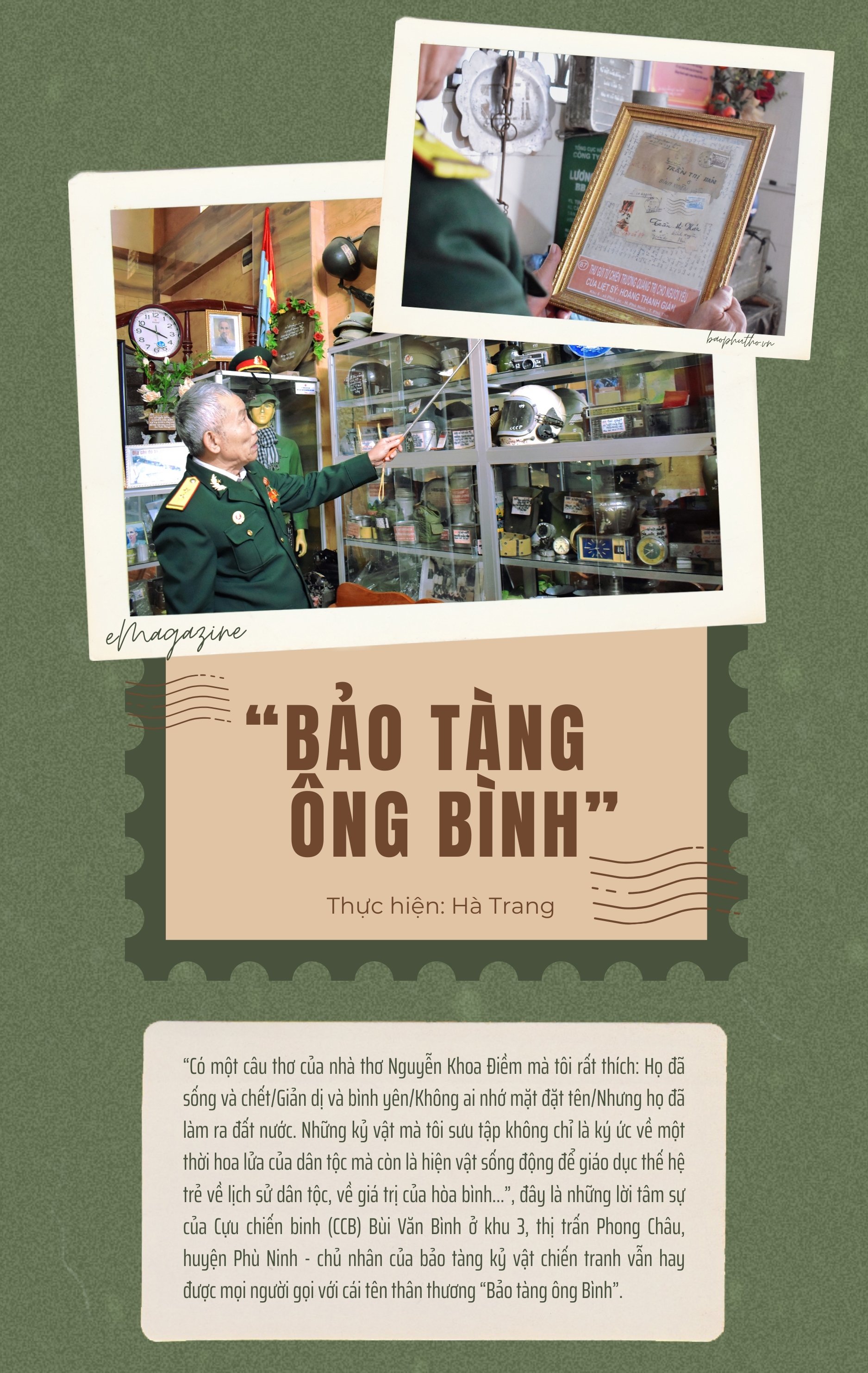

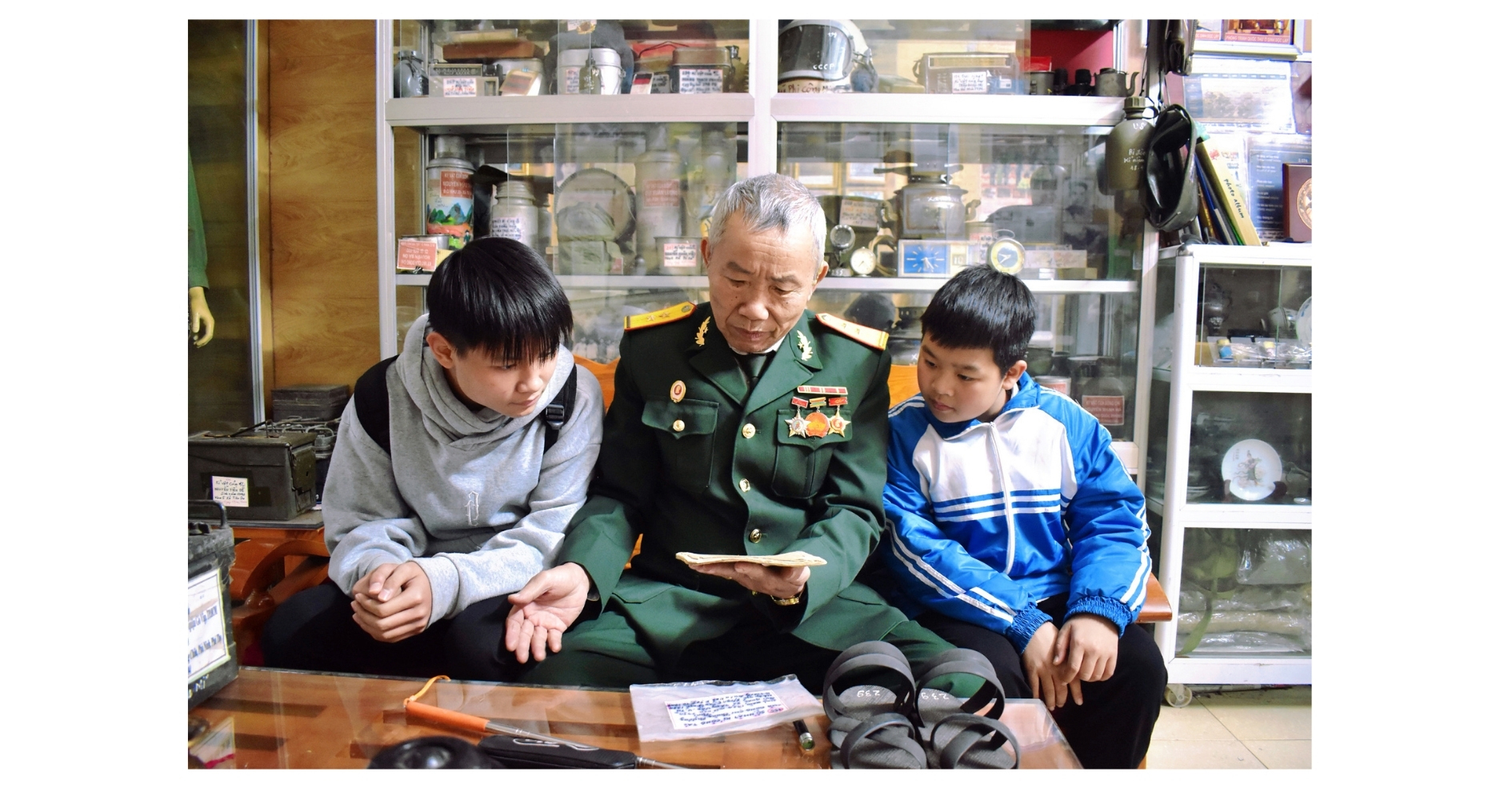
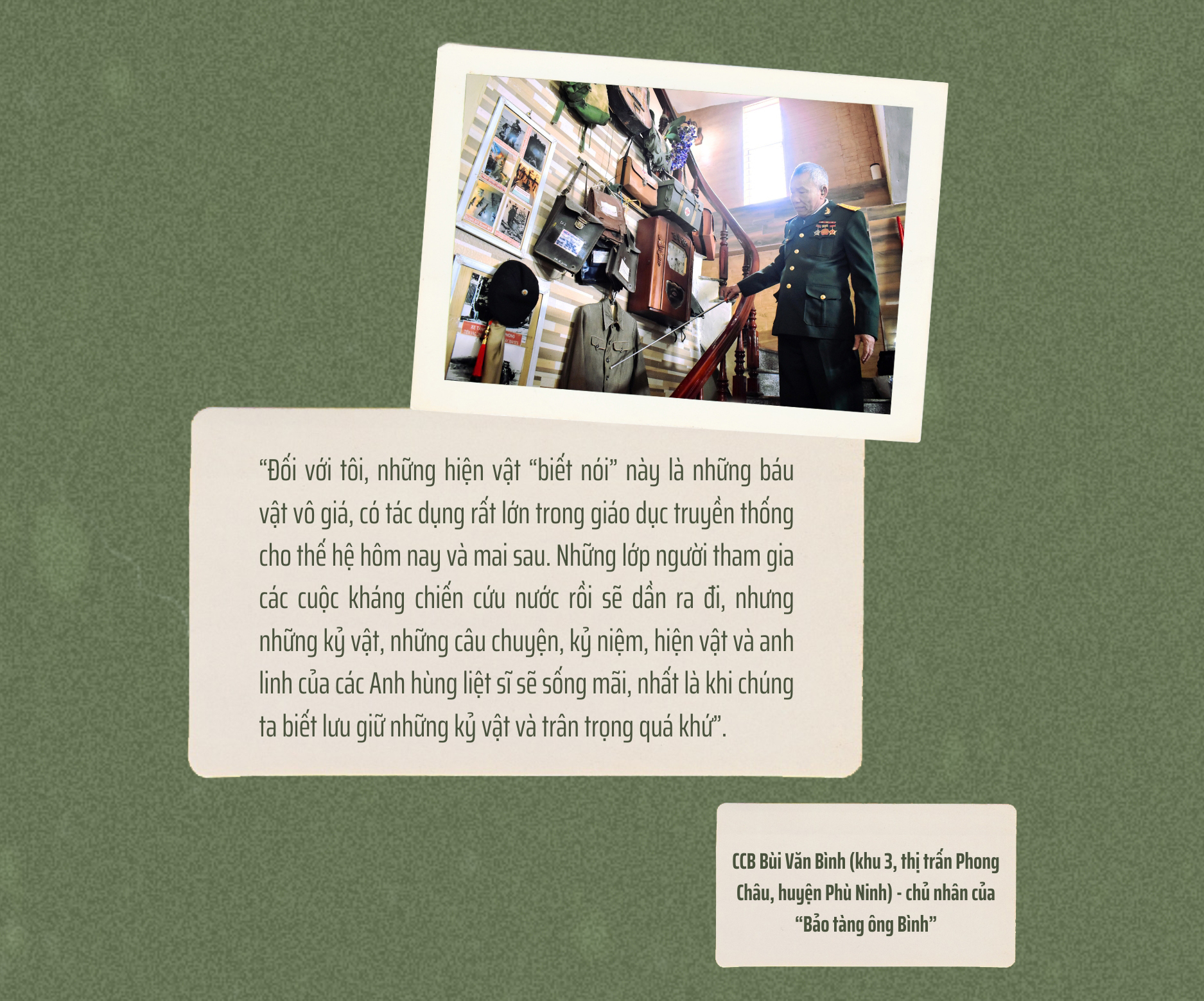
Visiting the family of veteran Bui Van Binh, I found him meticulously cleaning and arranging his mementos neatly and clearly in a glass cabinet mounted on the wall. The veteran, with his white hair and hearing impaired in one ear due to the war, still retained the agile and vigorous demeanor of a soldier of Uncle Ho. He recounted the day he will always remember in his life: December 25, 1971 – the day when 18-year-old Bui Van Binh set aside his youthful ambitions to answer the sacred call of the Fatherland.
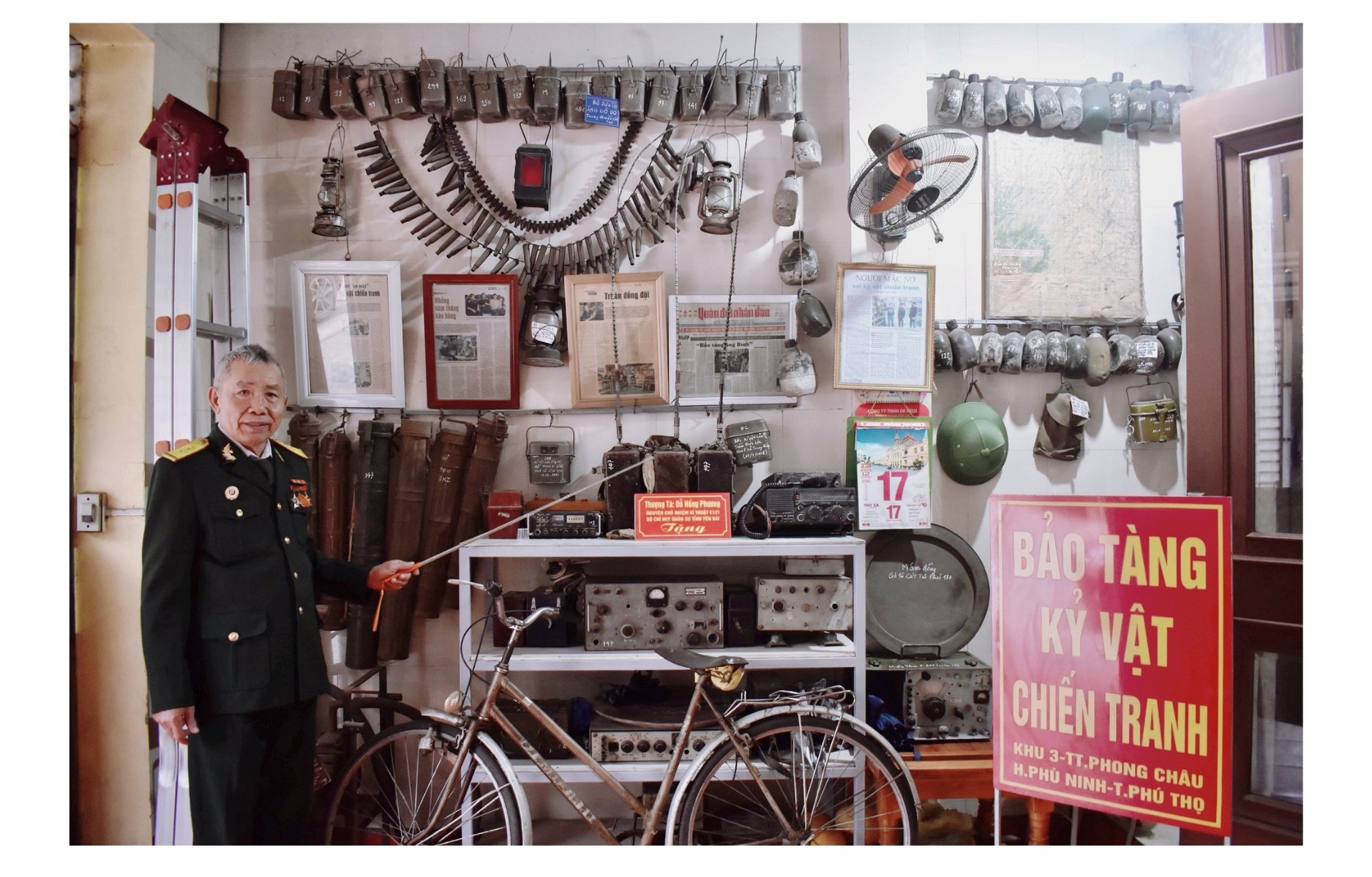
After six months of training, Bui Van Binh, then an infantry soldier, was sent to the South with the spirit: "Crossing the Truong Son Mountains to save the country / With hearts full of hope for the future." During the courageous and heroic battles at Quang Tri Citadel , he was fortunate to escape death twice, but the sight of his fallen comrades continues to haunt and torment him to this day. This very thought motivated the former soldier of Quang Tri Citadel to dedicate his time after retirement to searching for and collecting war relics throughout the province and beyond.
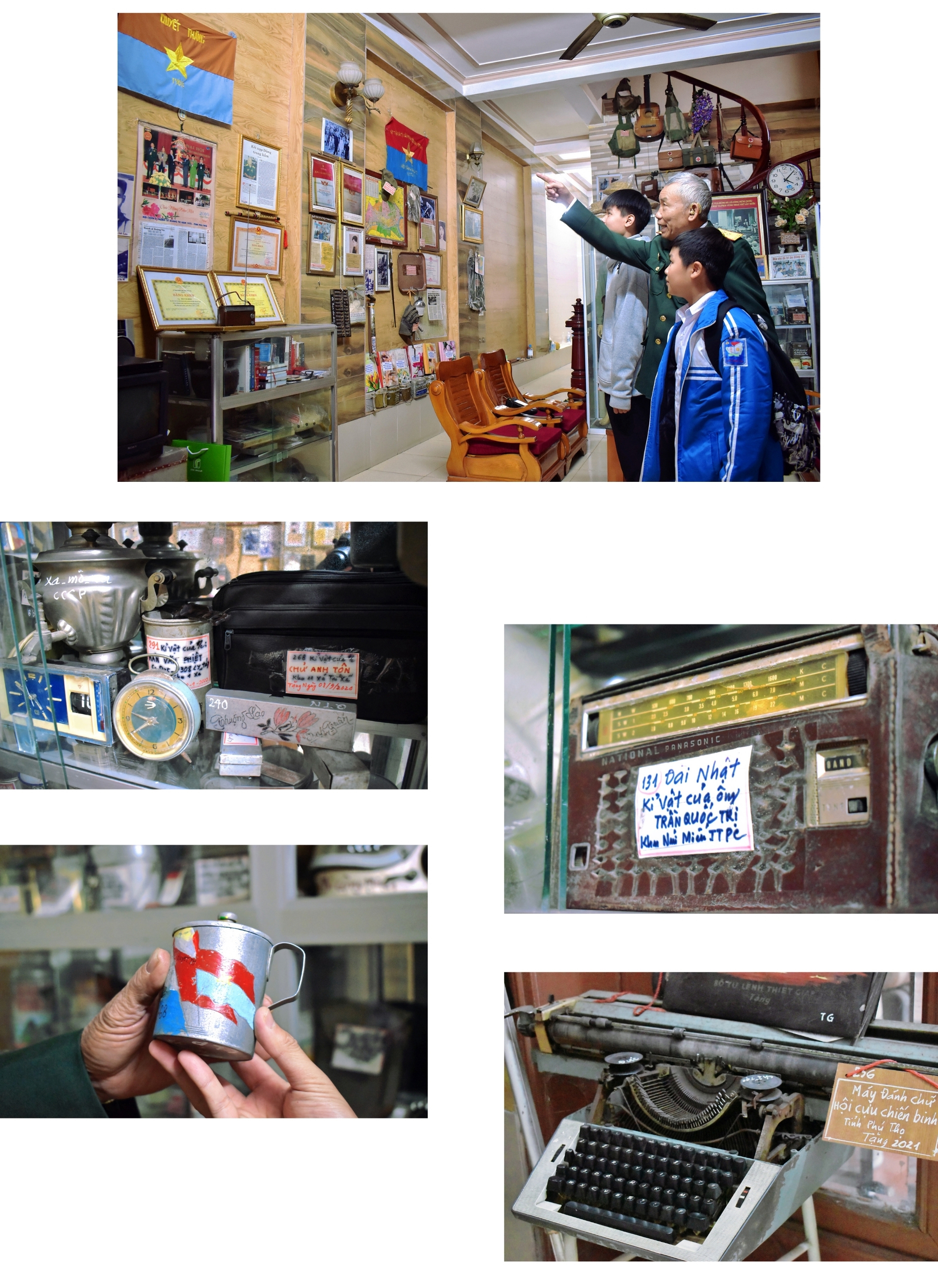
In a house measuring approximately 80 square meters, over 1,500 artifacts belonging to 233 individuals from various periods of resistance against the French, Americans, and Japanese, with 80% of them belonging to the Association of Soldiers of the Quang Tri Citadel, are displayed. These artifacts, such as clothing, hats, water bottles, cups, bullet casings, mine casings, communication equipment, and typewriters, are categorized into separate groups and respectfully stored in glass cabinets.
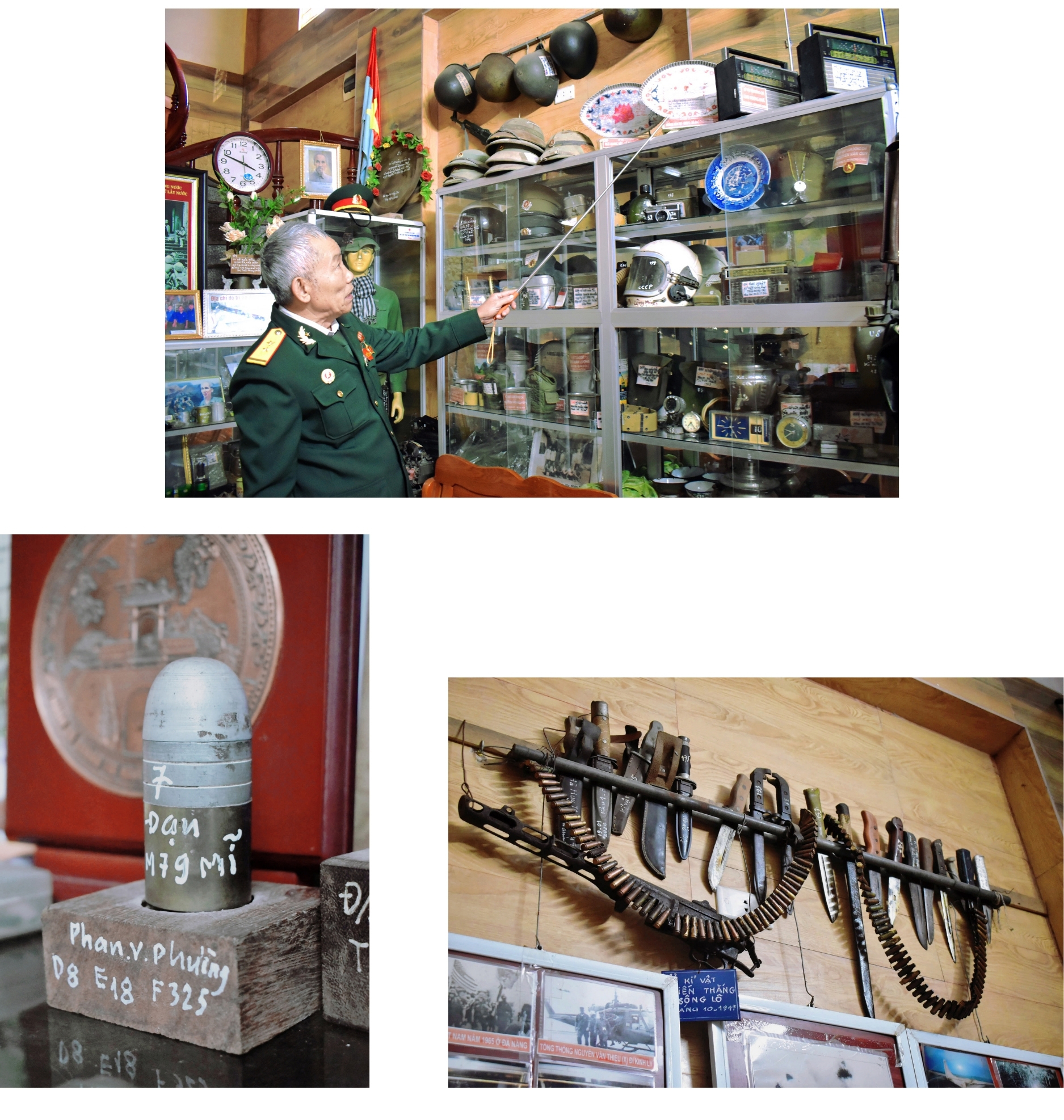
He meticulously preserves, maintains, and displays his mementos in a systematic and scientific manner, numbering them sequentially and providing clear histories. He photographs each item, noting its name and address, and carefully stores the information in notebooks. He regularly maintains metal objects by wiping them with oil and grease, and elevating them to prevent dampness and rust; while rubber and fabric items are protected from rain and sunlight to prevent the resin from melting or rotting.
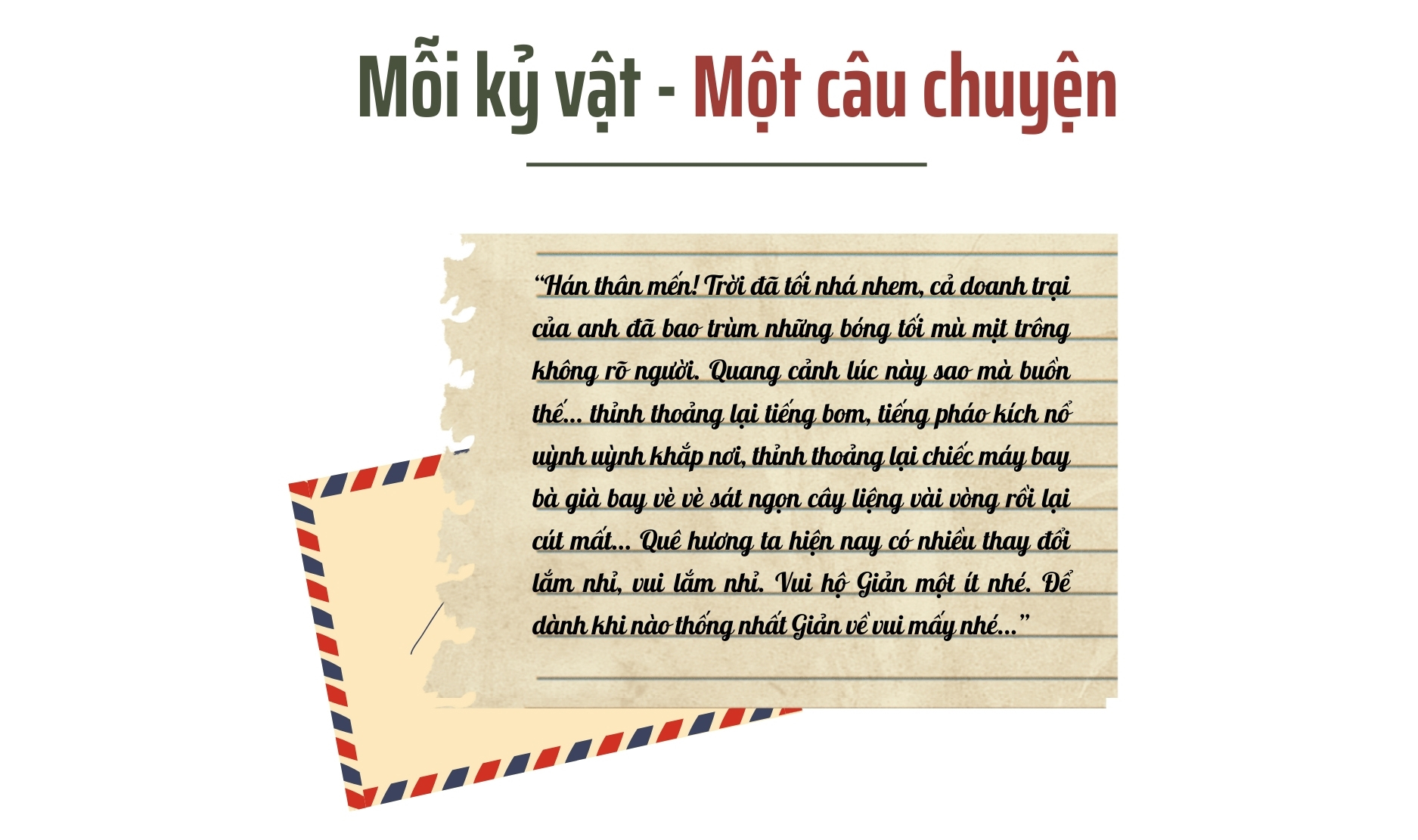
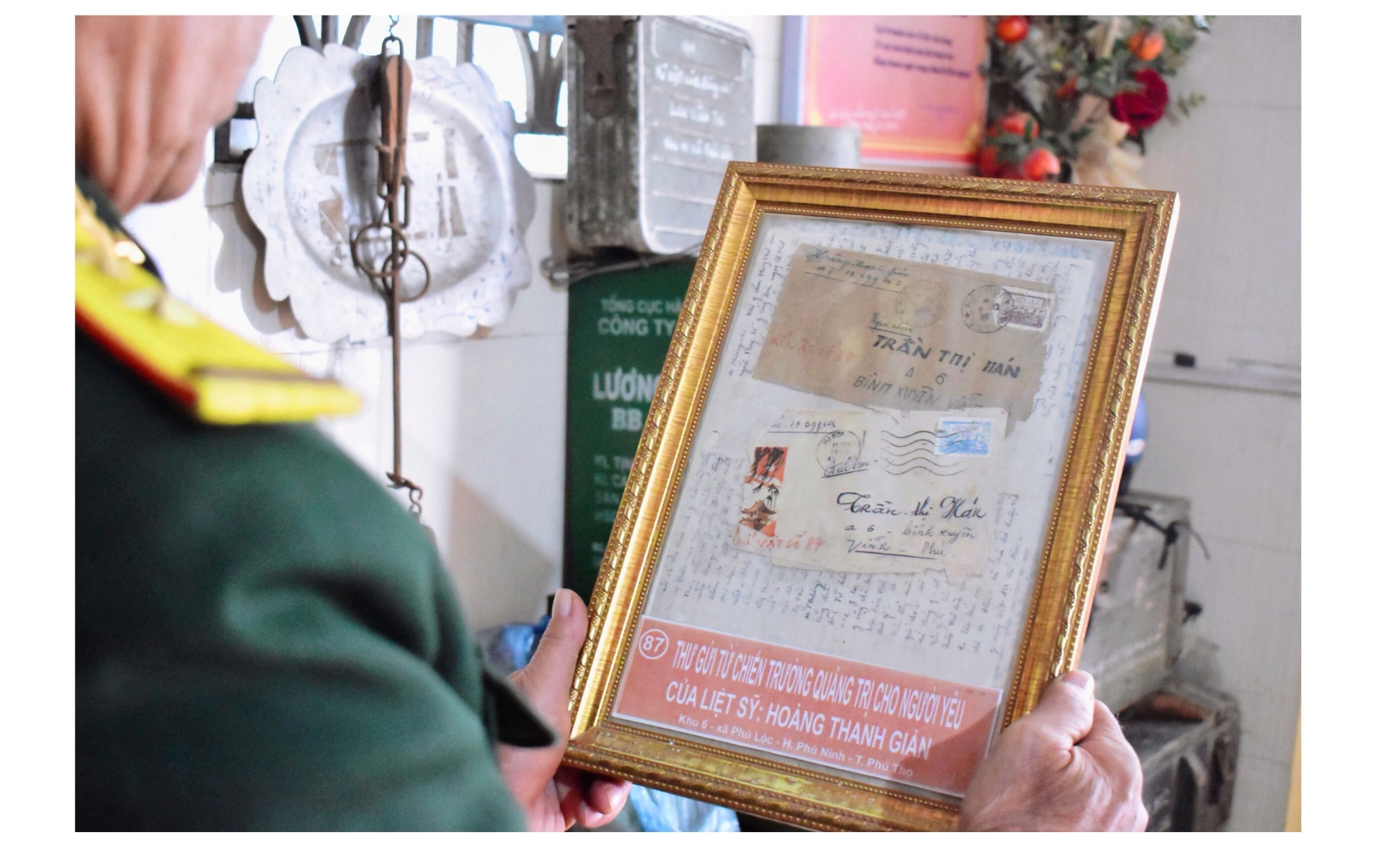
These are the words that martyr Hoang Thanh Gian sent to his girlfriend back home during the fierce bombing and shelling – relic number 87 preserved at the "Mr. Binh Museum". The letter recounts the experiences of the young soldier on his march. Love helped the soldier forget all the difficulties and hardships... to fight, hope, and believe. Amidst the brutal colors of war, they still reserved a corner in their hearts to love, to remember, to yearn for peace, for a beautiful tomorrow – a future they were willing to sacrifice their lives for.
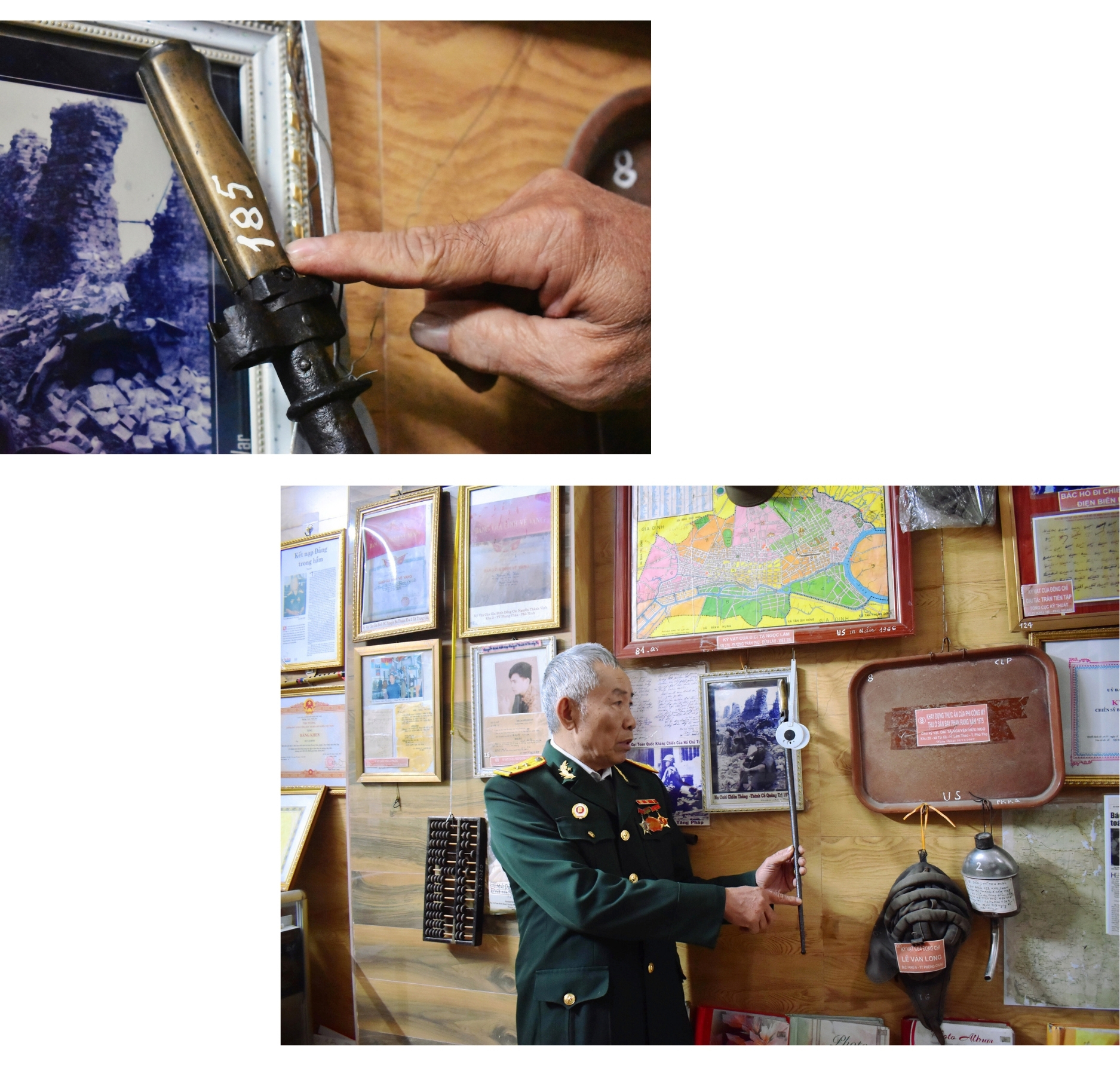
Putting away the letter from the fallen soldier Hoang Thanh Gian, Mr. Binh showed us artifact number 185 – a Japanese-made bayonet used in the resistance against the Japanese, nearly 100 years old and the oldest artifact in his museum. The four-edged bayonet, approximately 30cm long, is made of black steel with a brass handle and was used to attach to the barrel of a rifle for close-quarters combat. This artifact was donated by the family of Mr. Nguyen Van De in Zone 6, Tu Xa Commune, Lam Thao District. Mr. Binh regularly cleans and lubricates the bayonet, so it remains almost in pristine condition.
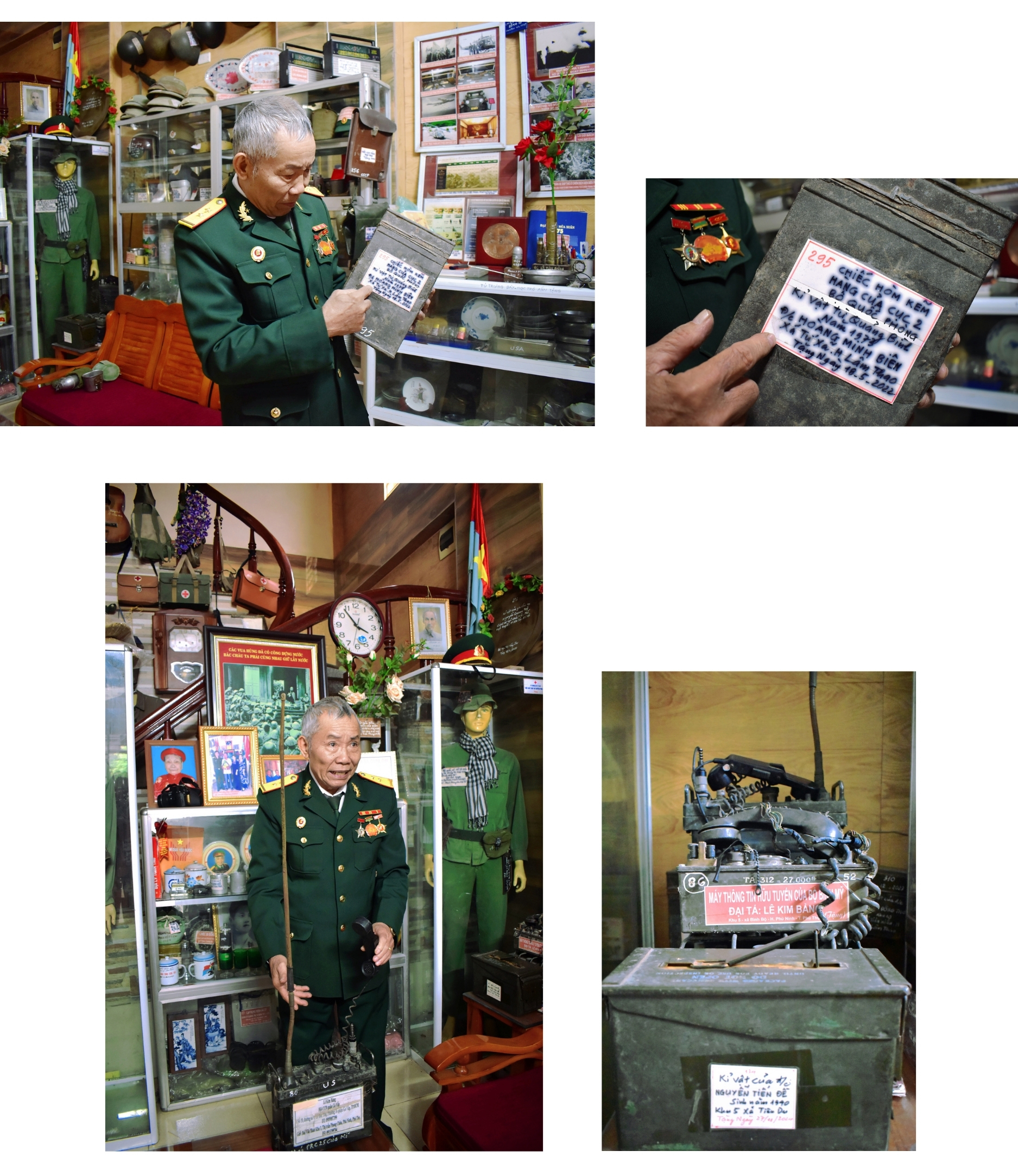
For example, the zinc box – memento number 295, used in 1973 by the General Department 2, Ministry of National Defense, donated by Mr. Hoang Minh Bien from Tu Xa commune, Lam Thao district. This box was used by our intelligence forces to store money to send to the South. The PRC-25 transceiver, a small radio communication device manufactured by the US, was a war trophy captured on the Southern battlefield and used by our communications soldiers during the anti-American war... Mr. Binh always carefully preserves it and enthusiastically explains its history whenever visitors or comrades come to see it.
In recent years, his "museum" has become well-known, a destination for those wishing to reminisce about the past, and a significant site contributing to the education of historical traditions for youth union members and children in the area. This is especially true on occasions commemorating the Liberation of the South and National Reunification Day (April 30th), the Dien Bien Phu Victory (May 7th), National Day (September 2nd), and the founding day of the Vietnam People's Army (December 22nd)...
Ha Trang
Source: https://baophutho.vn/bao-tang-ong-binh-224873.htm
![[Photo] Solemn bathing ceremony and Buddha procession in Hue](https://vphoto.vietnam.vn/thumb/1200x675/vietnam/resource/IMAGE/2026/05/31/1780228263543_1-jpg.webp)
![[Image] Hanoi Police officially crowned champions of V-League 2025/2026](https://vphoto.vietnam.vn/thumb/1200x675/vietnam/resource/IMAGE/2026/05/31/1780244769054_ndo_br_039d561b692be875b13a-jpg.webp)
![[Photo] Admire the coral "masterpiece" amidst the million-year-old heritage of Dak Lak province.](https://vphoto.vietnam.vn/thumb/1200x675/vietnam/resource/IMAGE/2026/05/31/1780221235105_anh-man-hinh-2026-05-31-luc-16-53-27.png)
![[Photo] The General Secretary, President and his wife begin their state visit to the Philippines.](https://vphoto.vietnam.vn/thumb/1200x675/vietnam/resource/IMAGE/2026/05/31/1780230559452_anh-man-hinh-2026-05-31-luc-19-28-11.png)












![[Video] Sunset at Lap An Lagoon – Where the sun sets over the fishing nets](https://vphoto.vietnam.vn/thumb/340x192/vietnam/resource/IMAGE/2026/05/31/1780192137701_beach-landscape-sea-water-nature-grass-745871-pxhere-com.jpeg)





























![[Photo] Admire the coral "masterpiece" amidst the million-year-old heritage of Dak Lak province.](https://vphoto.vietnam.vn/thumb/402x226/vietnam/resource/IMAGE/2026/05/31/1780221235105_anh-man-hinh-2026-05-31-luc-16-53-27.png)































Comment (0)