

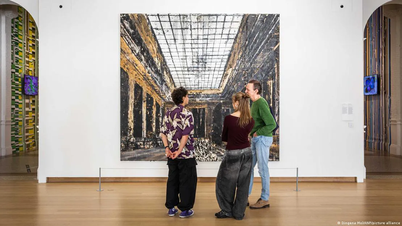
This was a fact highlighted at the conference "Current Situation and Solutions for Building and Developing the Museum System in Ho Chi Minh City," recently organized by the Ho Chi Minh City Department of Culture and Sports.

The museum system lacks connectivity.
According to Dr. Nguyen Thi Hau, Secretary General of the Ho Chi Minh City Historical Science Association, Ho Chi Minh City is entering a new phase of development with a multi-centered urban character, expanding regionally and integrating deeply with the region and the world. In this context, the preservation and promotion of cultural heritage values are becoming increasingly urgent, and the museum system plays a particularly important role.
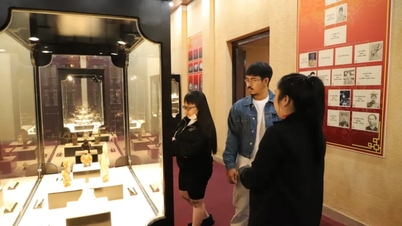
According to Dr. Hau, although the museum system in Ho Chi Minh City, along with Binh Duong and Ba Ria-Vung Tau, has achieved many positive results, there are still many limitations. Most noticeably, museums lack appeal to the public, exhibit overlapping types of artifacts and content, while the approach still focuses more on introducing artifacts than on explaining, storytelling, and creating experiences. "Many museums still operate on a traditional, closed model, prioritizing the display of artifacts over storytelling and interpretation, leading to a disjointed approach to historical reenactment," Dr. Hau observed.
One notable gap is that Ho Chi Minh City still lacks a proper city museum capable of fully reflecting the city's formation, development, and identity as the largest economic and cultural center in the country. Furthermore, the current museum system lacks a coherent content axis to help viewers visualize Ho Chi Minh City as a continuous and multifaceted historical and cultural entity. The connection between public museums, and between public and private museums, is limited, resulting in a fragmented and undirected public experience.
According to Mr. Nguyen Minh Nhut, Deputy Director of the Department of Culture and Sports of Ho Chi Minh City, the city currently has 25 museums, including 14 public museums and 11 private museums. Of the 14 public museums, 9 are under the direct management of the Department of Culture and Sports of Ho Chi Minh City, and 5 belong to central ministries and agencies located in the city. During the period 2021-2025, despite being heavily impacted by the Covid-19 pandemic for about two years, the city's museum system still welcomed approximately 13.5 million visitors, including nearly 4 million international visitors.
Ho Chi Minh City currently houses nearly 700,000 artifacts and documents, including nearly 300,000 original items and 25 national treasures. Of the museums under the Department of Culture, 7 out of 9 are ranked Grade I and are members of the International Council of Museums (ICOM). Several museums have gradually built their own brands, establishing a position within the national museum system, contributing to increased professionalism and competitiveness in the fields of culture and tourism .
However, despite the achievements, the museum system still faces many difficulties such as inconsistent infrastructure, lack of standard exhibition and storage spaces, limited specialized personnel, uneven progress in digital transformation, and a failure to create many distinctive products with widespread appeal.
International cooperation to elevate the museum system.
Mr. Lam Ngo Hoang Anh, Deputy Director in charge of managing and operating the War Remnants Museum, believes that international cooperation through joint projects is one of the important directions to improve the quality of museum operations. According to him, Ho Chi Minh City needs to quickly develop a plan for international cooperation in the museum sector with specific goals, roadmaps, and strategic partners. At the same time, each museum needs to proactively establish a specialized department for international cooperation, capable of developing projects, seeking funding, and developing partnerships.
He also emphasized the need to upgrade the website to a bilingual format, standardize data, build partner profiles in both Vietnamese and English, and focus on training a workforce with foreign language skills, international project management, digital communication, and fundraising capabilities. “In particular, museums need to be recognized as unique cultural products of the city. Accordingly, the museum system must be more deeply integrated into tourism programs, linked with the aviation, hotel, travel, and digital platforms to create highly attractive cultural tourism products,” Mr. Hoang Anh proposed.
According to Dr. Nguyen Thi Hau, most museums are not yet closely connected to community life. The link between artifacts, historical figures, and events with the contemporary context has not been clearly defined, diminishing the perception of a living heritage belonging to the community. Based on this situation, she proposed developing a strategy for preserving and promoting the value of cultural heritage across Ho Chi Minh City, clearly defining the role of each area within the museum system.
At the same time, it is necessary to develop regional experiential routes, connecting museums with community heritage spaces such as traditional markets, craft villages, distinctive residential areas, and cultural destinations. She proposed that the museum system be organized into four components: central museums, thematic museums, community heritage spaces, and digital museums.
In this system, the central museum acts as the "brain" of the entire system; thematic museums focus on specific themes such as art, war, migration, or urban economics; community heritage spaces include markets, craft villages, and distinctive residential areas; and the digital museum connects the entire ecosystem through open data, virtual reality, and digital platforms.
"The important thing is not to increase the number of museums, but to be able to organize them into a smarter, more interconnected system that can tell a compelling story," emphasized Dr. Nguyen Thi Hau.
We need to tell the "story of our heritage."
According to Pham Dinh Phong, Deputy Director of the Department of Cultural Heritage (Ministry of Culture, Sports and Tourism), the trend in museum development worldwide is changing dramatically. Museums are no longer just places to preserve artifacts but are strongly shifting towards an open museum model, centered on the public, enhancing experiences, interaction, and community connection.
According to Mr. Phong, modern museums around the world are focusing on five major trends: applying digital technology and artificial intelligence; developing museums into creative and community spaces; expanding accessibility through digital platforms; linking with the development of cultural tourism and cultural industries; and aiming for green and sustainable development. To integrate with international museum trends, museums need to drastically change their operational mindset.
“Museums need to shift from a ‘managing artifacts’ mindset to a ‘serving the public’ mindset; from simply providing information to telling the story of heritage; from a space for visiting to a space for experience and creativity. This is the core trend of modern museums in the world today,” Mr. Phong suggested.
According to Tran The Thuan, Director of the Ho Chi Minh City Department of Culture and Sports, in the period 2026-2030, Ho Chi Minh City will focus on innovating the content and methods of museum exhibitions in the direction of storytelling about heritage, developing museums into community education spaces, cultural creativity spaces, and attractive tourist destinations. Accordingly, museums are urged to proactively develop plans to enhance valuable collections, increase the exchange of artifacts, and coordinate the organization of thematic exhibitions to avoid duplication and waste of resources.
"We must research and expand activities related to tourism to attract visitors. That is a matter of survival for the museum system today," Mr. Thuan emphasized.
Source: https://baovanhoa.vn/van-hoa/bao-tang-voi-nhiem-vu-song-con-233224.html
















![[Photo] Reception to welcome General Secretary and President To Lam and his wife on their State visit to the Philippines](https://vphoto.vietnam.vn/thumb/1200x675/vietnam/resource/IMAGE/2026/06/01/1780295488620_vna-potal-chieu-dai-chao-mung-tong-bi-thu-chu-tich-nuoc-to-lam-va-phu-nhan-tham-cap-nha-nuoc-toi-philippines-8798060-7855-jpg.webp)




































Comment (0)