

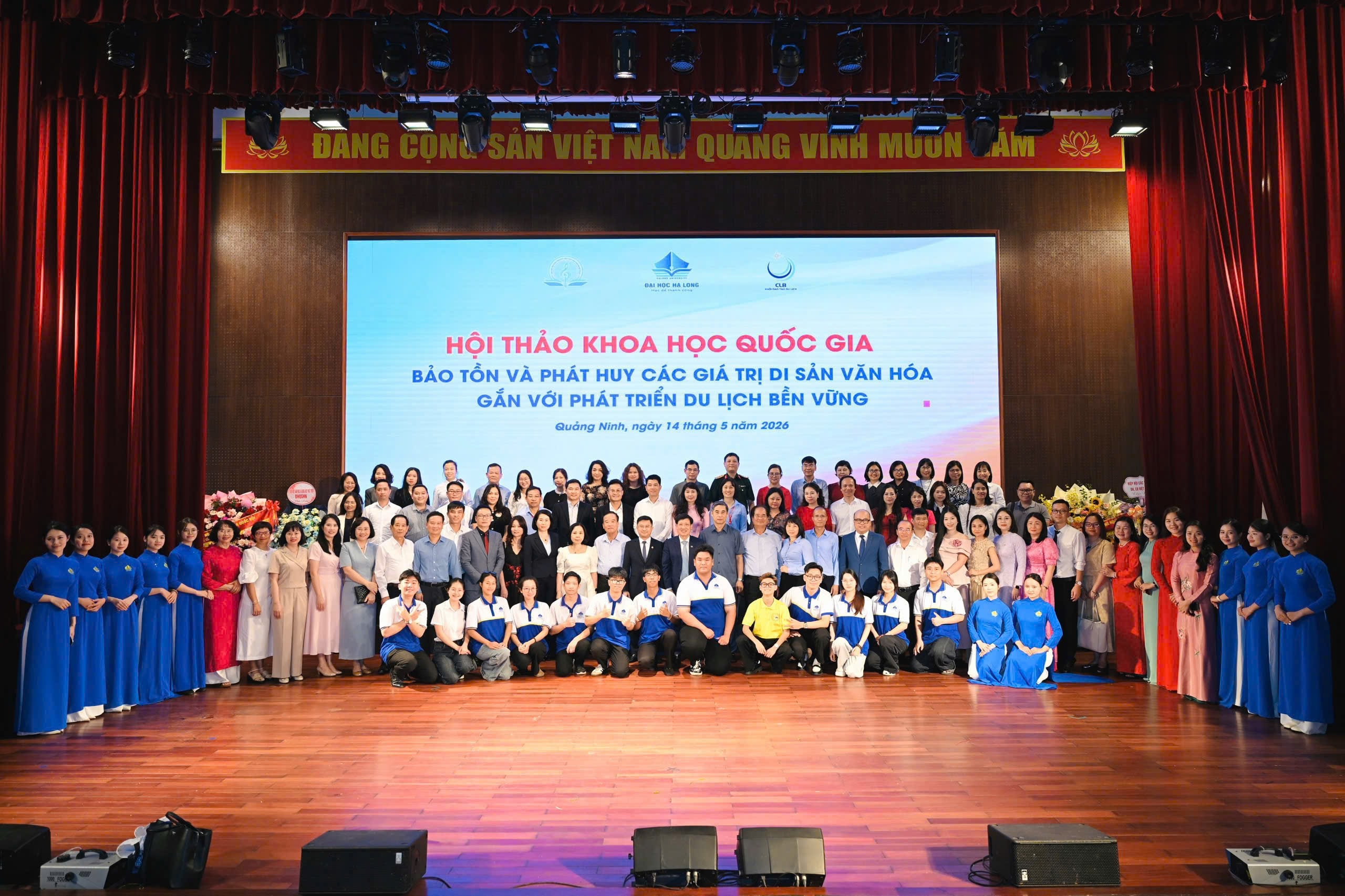
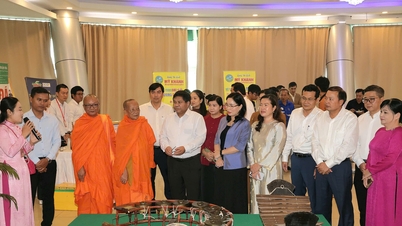
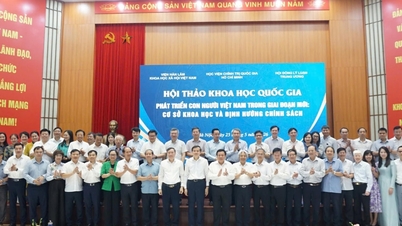
The workshop was chaired by Ha Long University, in collaboration with the Club of Tourism Training Schools and the Club of Culture and Arts Training Schools, under the Association of Vietnamese Universities and Colleges.
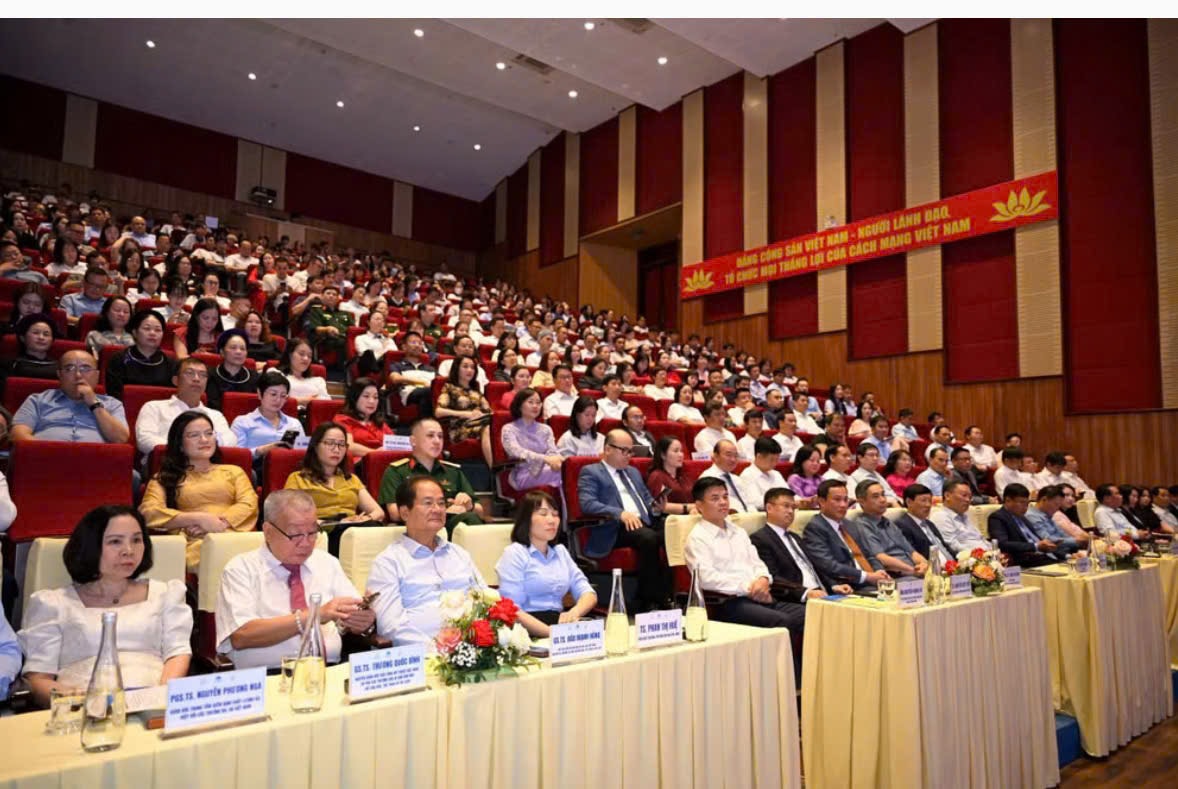
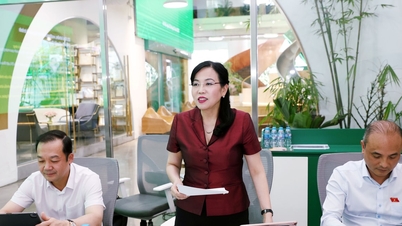
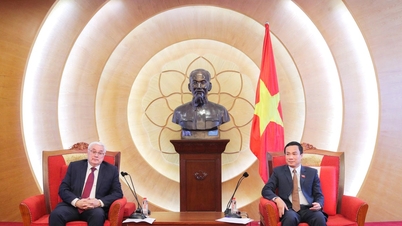
Attending the workshop were leaders of the National Assembly's Committee on Culture and Society; leaders of Quang Ninh province; the Association of Vietnamese Universities and Colleges; and a large number of researchers, officials, and lecturers from universities and colleges nationwide.
"Conservation for development, development for conservation"
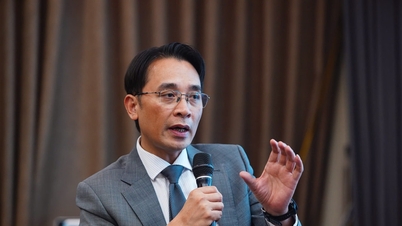
In his opening remarks, Assoc. Prof. Dr. Trieu The Hung - Vice Chairman of the Committee on Culture and Society, emphasized that the workshop is of great importance in providing a scientific and practical basis for perfecting policies and laws on the preservation and promotion of cultural heritage associated with sustainable tourism development; he also highly appreciated the proactive and responsible efforts of the organizing units in connecting research, training, and management practice.
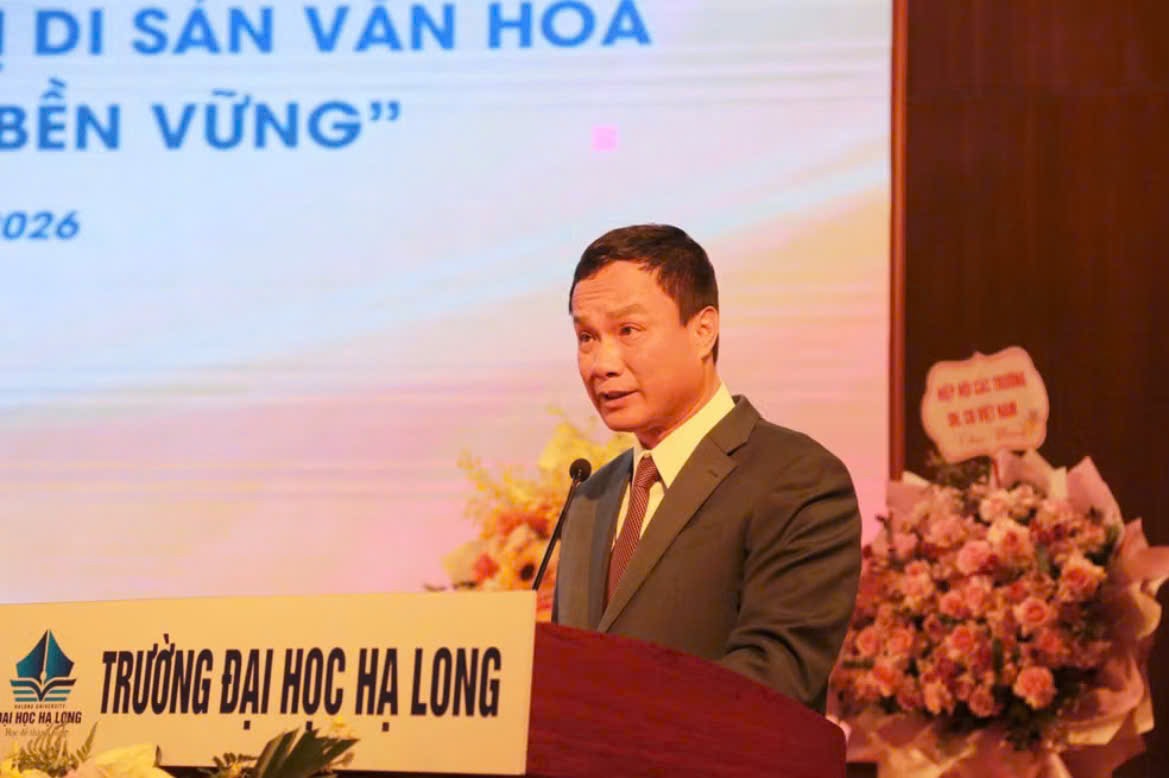
In his opening remarks, Associate Professor Dr. Dao Dang Phuong, Secretary of the Party Committee of the Central University of Arts Education, President of the Club of Cultural and Arts Training Schools, and Head of the Organizing Committee of the conference, stated that, in the context of globalization and deep international integration, cultural heritage is not only an object that needs to be preserved but has also become an important endogenous resource, contributing to promoting sustainable socio-economic development, enhancing soft power and national standing.
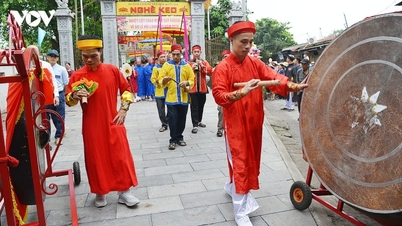
Vietnam currently possesses a rich heritage system with 8 World Cultural and Natural Heritage sites, 15 representative intangible cultural heritage sites of humanity, and thousands of historical sites and scenic spots of special value. This is an important foundation for developing cultural tourism, cultural industries, and the creative economy in the new era.
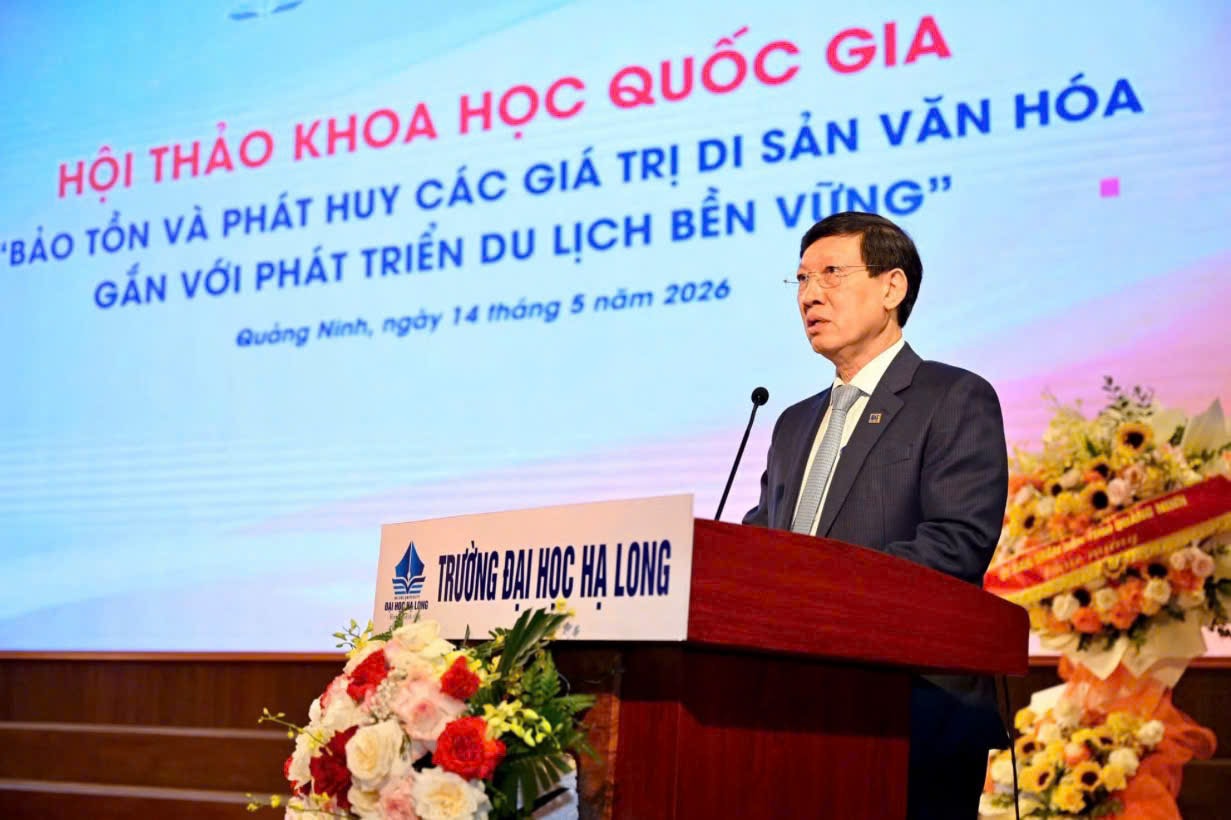
However, practice also presents challenges such as the risk of commercialization of heritage, overexploitation, and a lack of connection between conservation and development. Therefore, an approach of "conservation for development, development for conservation" is needed, ensuring harmony between cultural values, economic benefits, and social responsibility.
Tourism - a growth engine from heritage.
The workshop consisted of two main sessions. In the plenary session, delegates presented key reports and engaged in multi-faceted discussions on strategic solutions to promote cultural heritage values in conjunction with sustainable tourism development. The thematic session focused on: Preserving and promoting cultural heritage values in connection with tourism development; Sustainable tourism and the role of digital transformation in cultural heritage.
Professor Truong Quoc Binh, from the Vietnam National Institute of Culture, Arts, Sports and Tourism, believes that Vietnam possesses a dense system of heritage sites, fully reflecting the depth of its history and national identity. From ancient times, our ancestors established regulations for the protection of historical sites through the Hong Duc Law and community customs.
In the current context, there is a need for a comprehensive, integrated, and interdisciplinary master plan to ensure both effective preservation and rational exploitation of heritage values for development.
Many presentations emphasized the role of digital transformation in heritage preservation and promotion. Mr. Nguyen Ngoc Lang from Yesin University in Da Lat proposed developing a "digital map of living heritage" to help tourists access urban memories and cultural depth more deeply. Assoc. Prof. Dr. Nguyen Thi Phuong Thao from the Central University of Arts Education stressed the need to place the community at the center of the heritage digitization process.
Meanwhile, Mr. Nguyen Thanh Nam from Hanoi University of Culture cited the case of the music video "Bac Bling," demonstrating the effectiveness of combining traditional art and digital technology to create innovative tourism products that attract the public, especially young people.
Vietnam's tourism industry is recovering strongly. Effectively exploiting cultural heritage will continue to be key to enhancing competitiveness and realizing the goal of making culture an endogenous resource and driving force for national development.
However, Associate Professor Dr. Nguyen Thi Phuong Cham, Director of the Institute of Cultural Studies under the Vietnam Academy of Social Sciences, noted that in exploiting heritage for tourism, it is necessary to be flexible between authenticity and creativity, with the public and community as the central recipients. At the same time, a balance must be ensured between economic benefits, the carrying capacity of the site, and the level of acceptance by the local community.
Source: https://daibieunhandan.vn/bao-ton-di-san-van-hoa-de-phat-trien-du-lich-ben-vung-10417005.html
![[Image] Hanoi's urban life under the challenge of a "scorching hot" environment](https://vphoto.vietnam.vn/thumb/1200x675/vietnam/resource/IMAGE/2026/05/25/1779706979265_nang-nong-t5-2026-minh-duy-7-4636-jpg.webp)


![[Image] Close-up view of the interchange connecting the two expressways and Long Thanh Airport.](https://vphoto.vietnam.vn/thumb/1200x675/vietnam/resource/IMAGE/2026/05/25/1779703378210_ndo_br_z7863716673926-224453a31600126cce10622af6290afd-4549-jpg.webp)

































































Comment (0)