

Data is an asset, and information security is key.
At the recent Digital Transformation Competition of the Banking Industry, Mr. Pham Anh Tuan emphasized that the banking industry always links digital transformation with customer protection, risk prevention, and system security.
Accordingly, the State Bank of Vietnam (SBV) has implemented the Information System for Supporting Risk Management, Monitoring, and Prevention for Customers (SIMO). As of May 17th, more than 4 million customers have received alerts, of which more than 1.3 million customers have temporarily suspended/canceled transactions after receiving the alerts, with a total transaction amount of VND 4.4 trillion.
"This is clear evidence that digital transformation not only aims to enhance convenience but also contributes to protecting the legitimate rights of customers and strengthening security in banking operations," a representative from the Payment Department of the State Bank of Vietnam stated.
According to many banking experts, data is an asset, and information security is key; therefore, the banking industry has adhered to the principle that data must be "accurate, complete, clean, and active." "The successful biometric verification of over 163.39 million customer records (including 161.2 million individual records and 2.19 million organizational records) through chip-embedded citizen identification cards (CCCD) and the Electronic Identification and Authentication Application - VNeID) is a significant step forward, helping to eliminate fake accounts and create a transparent and fair financial ecosystem."
This effort has had a significant ripple effect as all 154 million accounts and 36 million records in the anti-money laundering and anti-proliferation weapons financing database have been thoroughly cleaned. Simultaneously, the completion of the cleaning of nearly 44.5 million customer records by the Vietnam National Credit Information Center has firmly reinforced public confidence in the accuracy and security of the system.
In addition, the State Bank of Vietnam has completed the early synchronization of four specialized databases according to Resolution No. 71/NQ-CP and Resolution No. 11/NQ-CP to the National Data Center, further enriching the data resources serving socio-economic development.
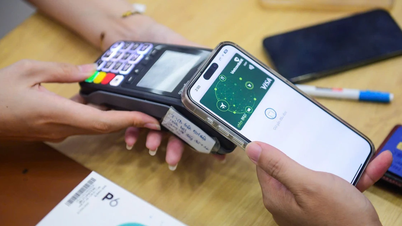
From a tap of your phone to a "highway" of cross-border payments.

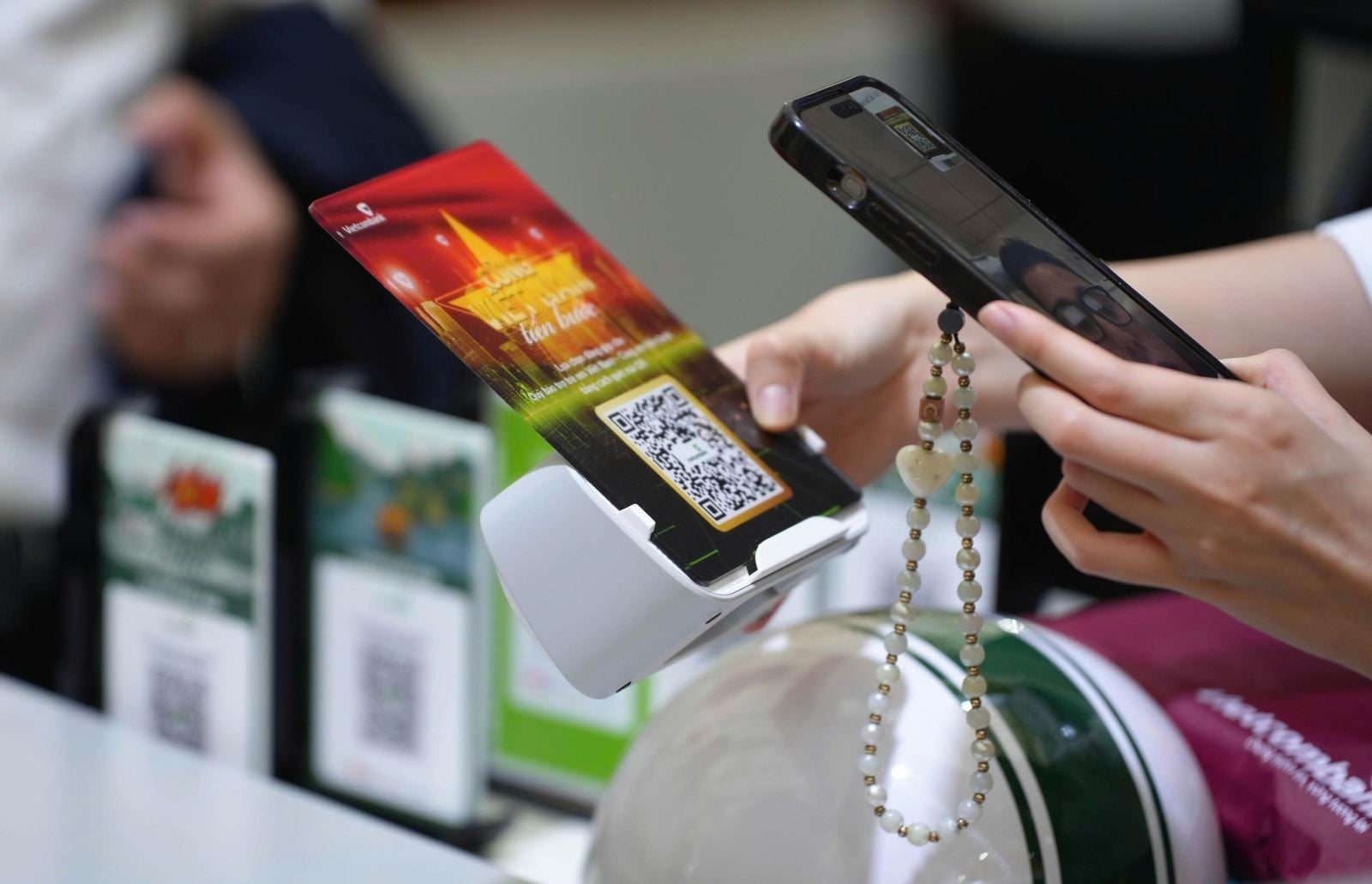
"Phones replacing wallets," digital banking is gradually becoming a familiar part of daily life for Vietnamese people. In Asia, QR codes (quick response codes) are becoming one of the fastest-growing payment methods. In Vietnam, Vietcombank is also joining this wave through OneQR (a service that allows stores/sellers to simply affix a single QR code). (to receive money from any domestic banking app) and QR Outbound, which allows customers to scan codes directly from their domestic accounts at many acceptance points abroad.
Nowadays, from cafes and convenience stores to local markets, QR codes are becoming a familiar payment method for Vietnamese people. Financial transactions are therefore becoming more natural and seamless in daily life.
During his recent trip to China, Hong Quang, a tourist from Hanoi, hardly used any cash. What impressed Hong Quang was being able to pay directly with VCB Digibank at local shops without having to exchange Chinese Yuan beforehand.
“I went to China but didn't have time to exchange money for Yuan, so I opened VCB Digibank and scanned the QR code to pay directly from my account in Vietnam. The transaction was processed quickly, and I didn't have to carry cash or worry about exchanging foreign currency,” Mr. Quang shared. According to some tourists, scanning the QR code directly is quite convenient, and many stores even offer discounts for first-time transactions, similar to the digital payment experience that is becoming popular in Vietnam.
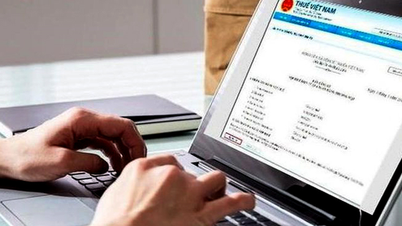
While QR codes are changing payment habits, VNeID and electronic identification are ushering in a new era for digital banking. A representative from Vietcombank stated that they recently completed a large number of online loans using VNeID authentication and remote digital signatures, eliminating the need for customers to meet with bank staff in person. Procedures that previously required numerous documents and in-person signatures have been streamlined to just a few electronic authentication steps on the application.
In recent years, Vietcombank has been one of the pioneering banks in implementing biometric authentication via chip-embedded citizen identification cards (CCCD), integrating VNeID, remote digital signatures, and advanced authentication solutions such as SoftOTP (one-time authentication code). By the end of 2025, the bank had collected biometric data for over 15 million customers, approximately 2.5 million social security linked accounts via VNeID, and disbursed approximately VND 8,350 billion through personal digital signatures.
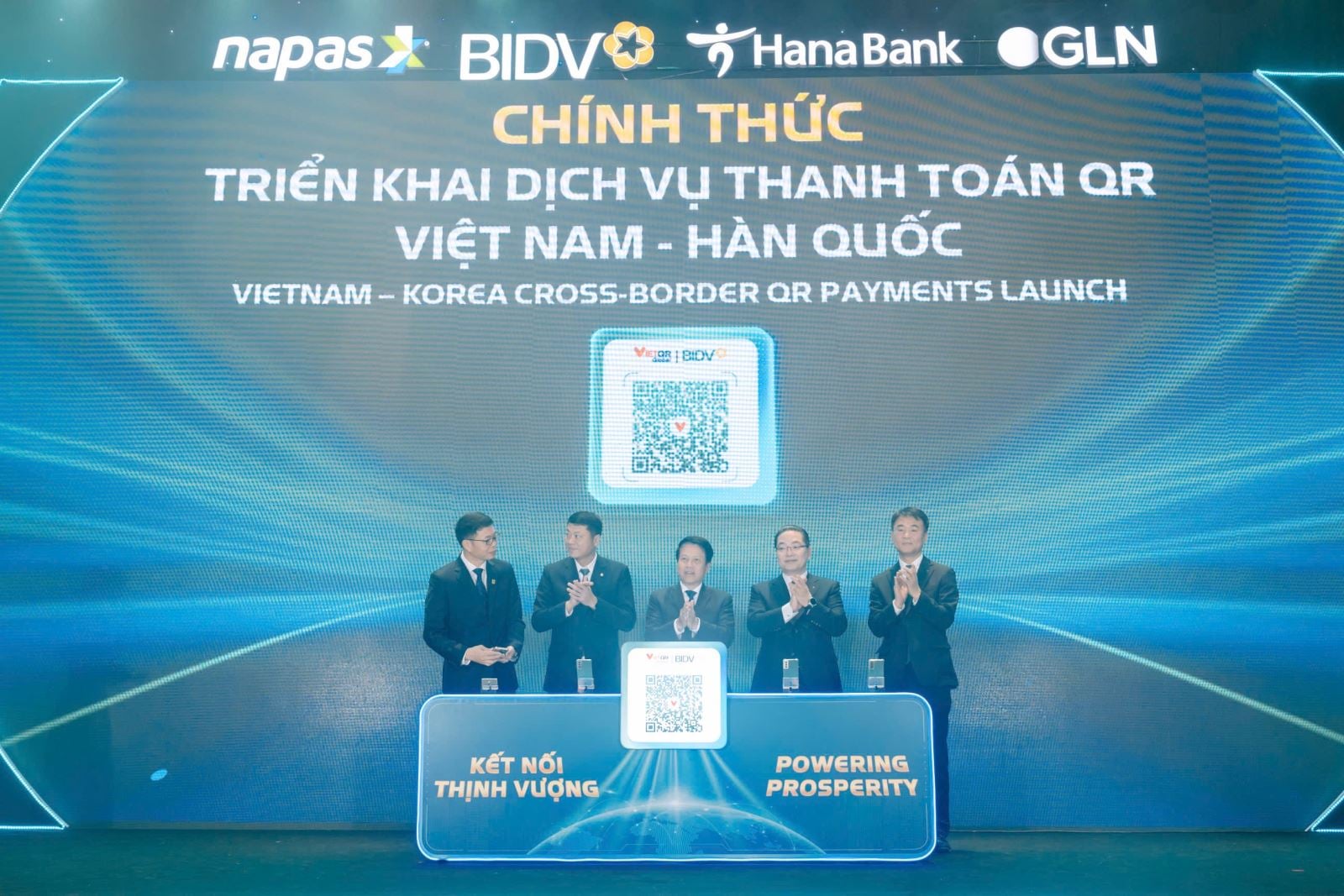
Recently, the Vietnam National Payment Corporation (NAPAS), in collaboration with GLN International and two settlement banks, BIDV and Hana Bank, announced the launch of cross-border QR payment services between Vietnam and South Korea. Accordingly, over 115 million South Korean users can use e-wallets and banking applications within the GLN International network to scan VIETQRGlobal codes at hundreds of thousands of payment acceptance points nationwide.
Transactions are processed in real time, quickly and securely, just like domestic payments in South Korea. In particular, the system allows direct payments between the Korean Won (KRW) and the Vietnamese Dong (VND) through the settlement infrastructure of Hana Bank and BIDV, reducing reliance on intermediary currencies and optimizing transaction costs.
Mr. Nguyen Quang Minh, General Director of NAPAS, stated that this result is the fruit of "a serious, persistent, and responsible cooperation process" between the parties to successfully connect the two payment ecosystems of Vietnam and South Korea. Beyond providing a convenient payment experience, the service is also seen as infrastructure supporting the rapidly growing cross-border digital economy in Asia.
According to Mr. Pham Anh Tuan, a representative of the State Bank of Vietnam, the rate of cashless payments in Vietnam in the first five months of 2026 increased by approximately 38% compared to the end of 2025. Specifically, online transactions increased by 66%, and mobile transactions increased by 33%. Notably, payments via QR code increased by over 50%. In addition, the banking sector has implemented bilateral payments with several countries. Since the beginning of 2026, Vietnam has deployed QR payment connections with China and South Korea. It is expected that by the end of the year, the system will continue to expand to Singapore, Taiwan (China), and India.
However, representatives from the Payment Department (State Bank of Vietnam) stated that the rapid development of digital services also brings with it the risk of increased fraud and financial deception. The State Bank of Vietnam has proactively introduced policies, regulations, and legal documents to provide payment service providers and payment intermediaries with a legal framework to address security and safety issues.
The head of the Payment Department believes that, in digital transformation, the most important factor remains the people involved in operating and using that technology to provide products and services to citizens and businesses.
According to a representative from the State Bank of Vietnam, digital transformation in the banking sector has been implemented synchronously across multiple pillars. This includes the continued improvement of the legal framework with a series of important documents such as the Law on Anti-Money Laundering, the Law on Credit Institutions, the Decree on Non-Cash Payments, and especially Decree 94/2025/ND-CP on the controlled testing mechanism (Sandbox) in the banking sector.
This is the first time Vietnam has had a flexible legal framework for new financial technologies. Simultaneously, in its guidance and direction, the Governor of the State Bank of Vietnam (SBV) has directed the strengthening of the Steering Committee and the supporting team of the banking sector, focusing on five pillars: scientific and technological development, innovation, digital transformation, data, and Project 06. The SBV has issued the Banking Sector Action Plan to implement Resolution No. 57-NQ/TW; and also issued Directive No. 02/CT-NHNN dated January 9th on promoting digital transformation and ensuring information security and safety in banking operations in 2026.
The State Bank of Vietnam has just issued Decision No. 1039/QD-BCĐ on the promulgation of the 2026 Action Plan of the Steering Committee of the Banking Sector on the development of science, technology, innovation, digital transformation, data and Project 06.
According to the Plan, the value of cashless payments is targeted to reach 27 times GDP; the percentage of the population aged 15 and above with transaction accounts at banks or other authorized institutions is targeted to reach 87% or higher. The State Bank of Vietnam also aims for 100% of work documents to be processed electronically and using specialized digital signatures for official use; and 100% of documents and work files to be processed electronically throughout the entire process.
At the same time, at least 80% of eligible administrative procedures will be provided as full-process online public services; 100% of eligible business-related administrative procedures will be implemented online, smoothly and seamlessly.
Source: https://baotintuc.vn/kinh-te/bao-ve-khach-hang-truoc-hanh-vi-lua-dao-tren-moi-truong-so-20260524155257537.htm



![[Image] Pleasant weather helps students enter the 10th grade entrance exam with confidence.](https://vphoto.vietnam.vn/thumb/1200x675/vietnam/resource/IMAGE/2026/05/29/1780034401612_ngay-1-thi-lop-10-minh-duy-8-5009-jpg.webp)

![[Photo] Ba Lang An Lighthouse - the "eye of the sea" amidst the "rock museum" of Quang Ngai province.](https://vphoto.vietnam.vn/thumb/1200x675/vietnam/resource/IMAGE/2026/05/29/1780038698840_anh-man-hinh-2026-05-29-luc-14-10-42.png)


























































































Comment (0)