

Major challenges include personnel, organizational structure, infrastructure, etc.
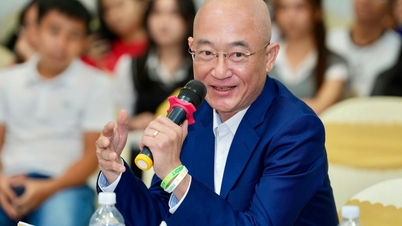
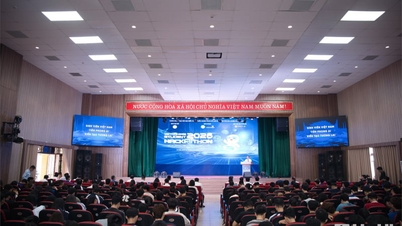
On May 29th, Khanh Hoa Newspaper and Radio & Television organized a seminar on the topic "Improving the quality of operations of local media agencies after mergers". Leaders from 12 central and local media agencies attended the seminar.
At the seminar, leaders of press management agencies and experts focused on discussing several key issues such as: governance; content production organization; digital transformation and the development of journalism in the modern media environment. The issue of financial autonomy and the development of the journalism economy was also discussed by many delegates, aiming to further refine the autonomy mechanism to suit the specific characteristics of journalistic activities; creating conditions for press agencies to improve the quality of their operations, invest in technology, and enhance the quality of journalistic products to serve the public.
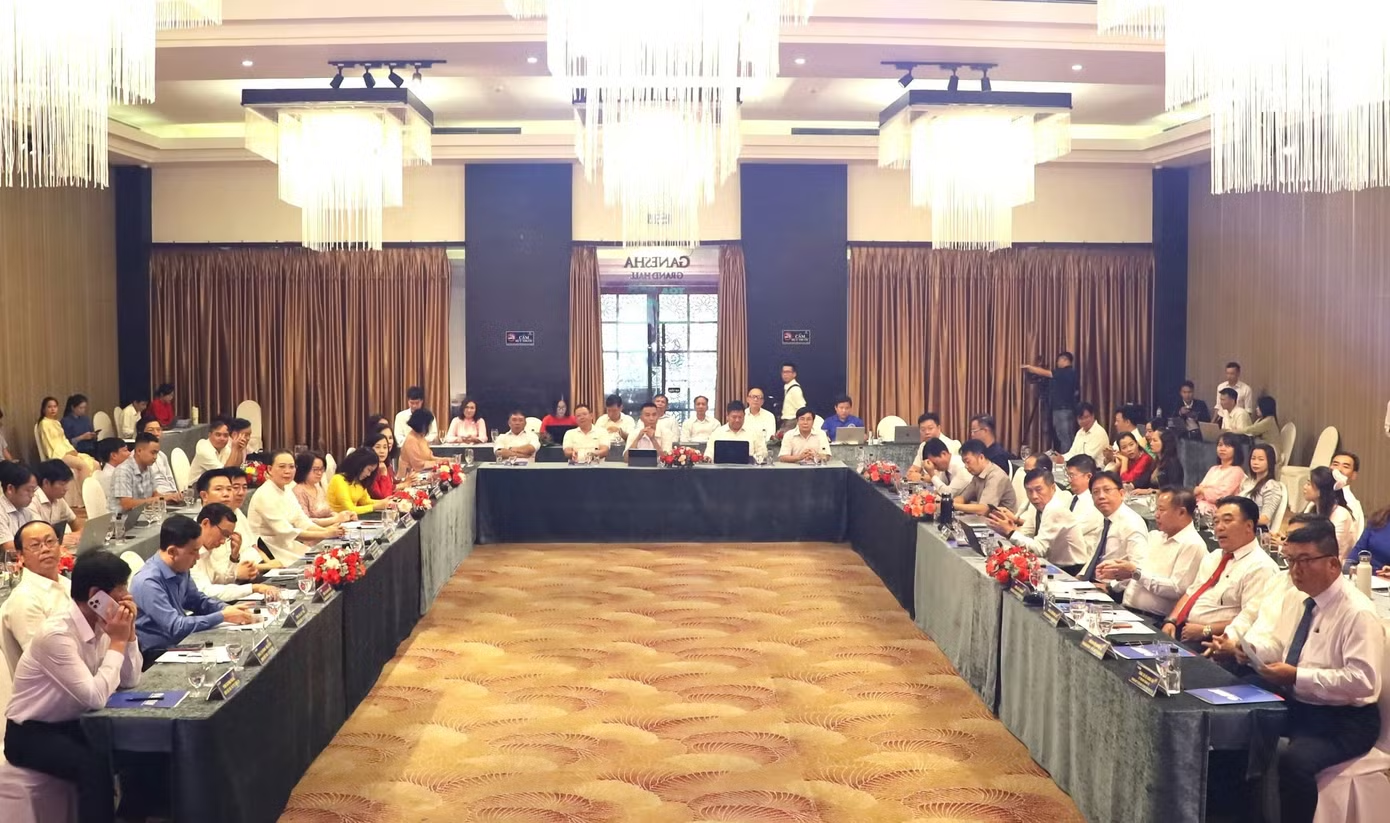
The first major challenge after a year of operating the merged model was the disruption to personnel and operational thinking. Merging agencies from many localities with different characteristics required a great deal of integration. "Therefore, it required the unit to base its operations on discipline and order, with the motto of unity, discipline, compassion, and responsibility," shared Mr. Le Huy Toan, Director of Lam Dong Newspaper, Radio, and Television.
Meanwhile, Mr. Hoang Dang Khoa, Director of Hue Newspaper, Radio, and Television, frankly pointed out three major difficulties: human resources, infrastructure, and finance. Regarding personnel, newsrooms are facing a surplus of traditional specialists but a shortage of technology and digital transformation skills. From this pressure, Ms. Nguyen Thi Thanh Hai, Deputy Director of Son La Newspaper, Radio, and Television, suggested that reporters from all media outlets must proactively learn from each other to move towards a situation where one reporter can simultaneously handle four different media types for a single event.
Another major bottleneck analyzed by delegates was the lack of synchronization in the multimedia journalism process. Mr. Pham Van Bau, Director of Thanh Hoa Newspaper, Radio, and Television, observed: Faced with strong competition from social media, local newspapers are forced to change their approach to news reporting and production thinking. Digital transformation is not just about technological and technical changes, but more importantly, about transforming digital content. If they cannot create outstanding, fresh, and engaging content, local newspapers are very likely to fall behind and lose their competitive advantage.
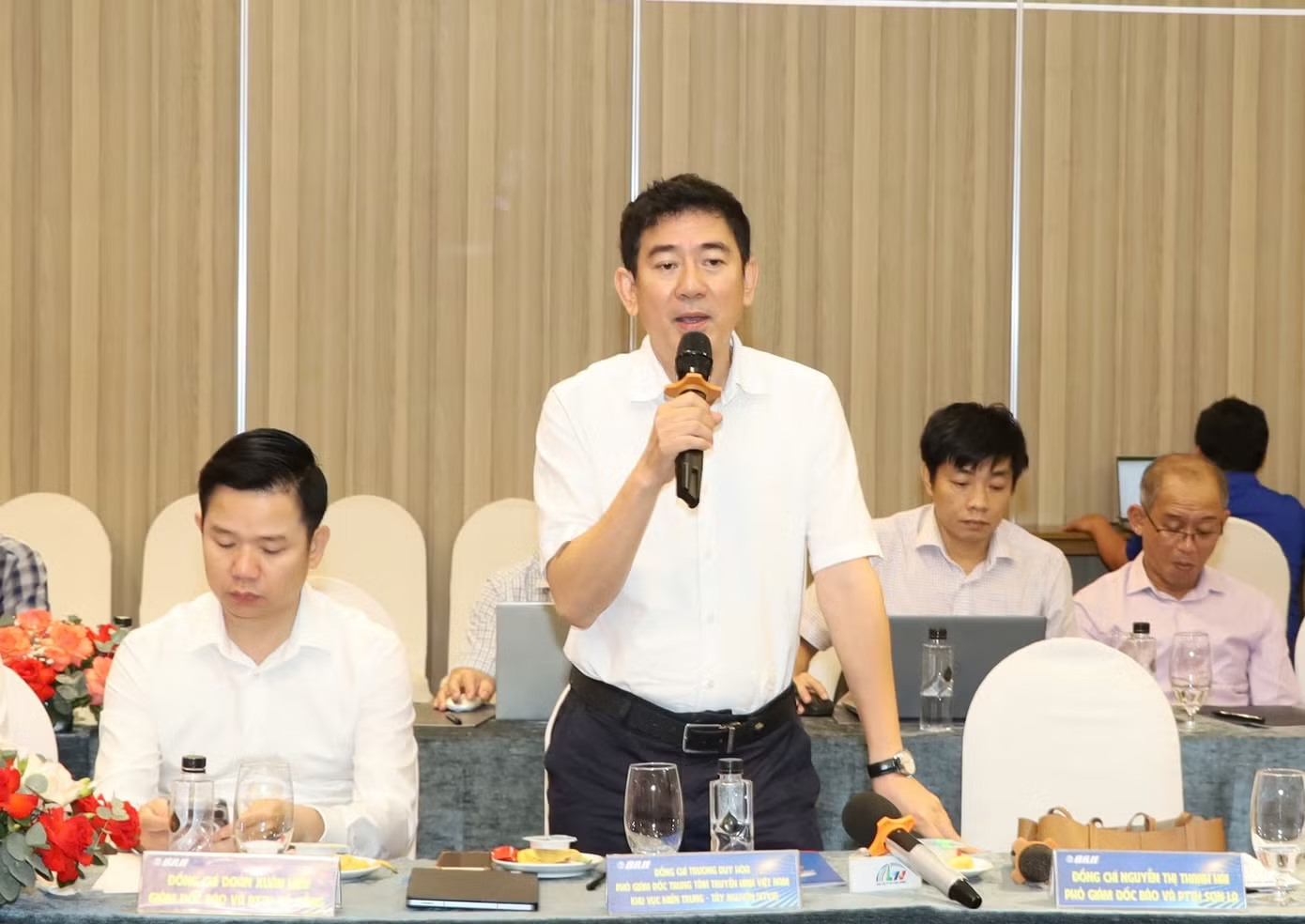
From a broader perspective, Mr. Truong Duy Hoa, Deputy Director of VTV8, believes that data sharing and inter-regional cooperation is a worthwhile approach. Although not merging according to a local model, Vietnam Television has merged channels, eliminated regional stations, and transformed VTV8 into a national channel focusing on culture and tourism. This trend necessitates cooperation with local stations and data sharing with other television channels for mutual development in the new context.
There are still many bottlenecks in the financial and economic mechanisms of journalism.
According to the participants in the seminar, the biggest obstacle directly affecting the stability of newsrooms after mergers is the financial mechanism. The existence of two parallel financial mechanisms—one for print media, which is assigned tasks and funded by the State, and the other for television, which is primarily self-sufficient—has created significant inconsistencies.
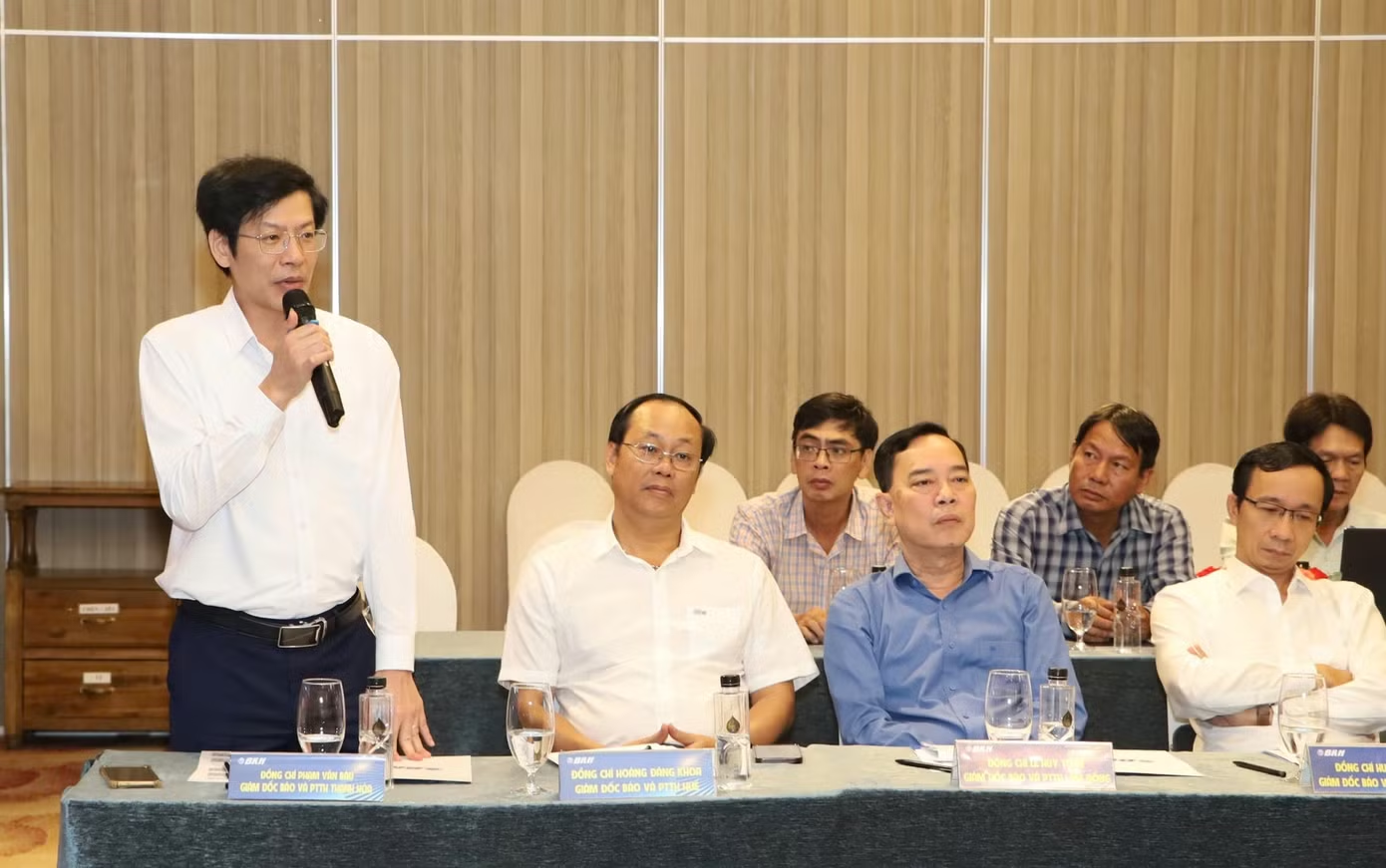
Mr. Pham Van Bau, Director of Thanh Hoa Newspaper, Radio, and Television, shared: "The income disparity has affected the morale of workers, making it difficult to achieve consensus. When the Central Government issued new regulations, the need to temporarily suspend the financial plan for review caused confusion and a reactive approach within the unit. A large portion of the budget had to be prioritized for television, thus narrowing investment in other areas. Therefore, it is necessary to quickly resolve the obstacles, adjust the royalty policy accordingly, and accelerate the roadmap for financial autonomy linked to the State-ordered mechanism to ensure stable operations for the agencies."
Sharing the same view, Mr. Doan Xuan Hieu, Director of Da Nang Newspaper and Radio-Television, affirmed: After one year of operating the new system, agencies need to clearly identify the key pillars: content, finance, and digital transformation. Currently, the income disparity and the way the four types of media are combined still exist, causing debate during operation. To resolve this, attention should be paid to developing the economic aspects of journalism to ensure stable revenue, thereby increasing royalties, building investment funds for development, and creating motivation for staff to stay committed to the profession. Regarding policy communication, departments, sectors, and localities need to proactively develop annual budget estimates to coordinate with media agencies for more effective implementation.
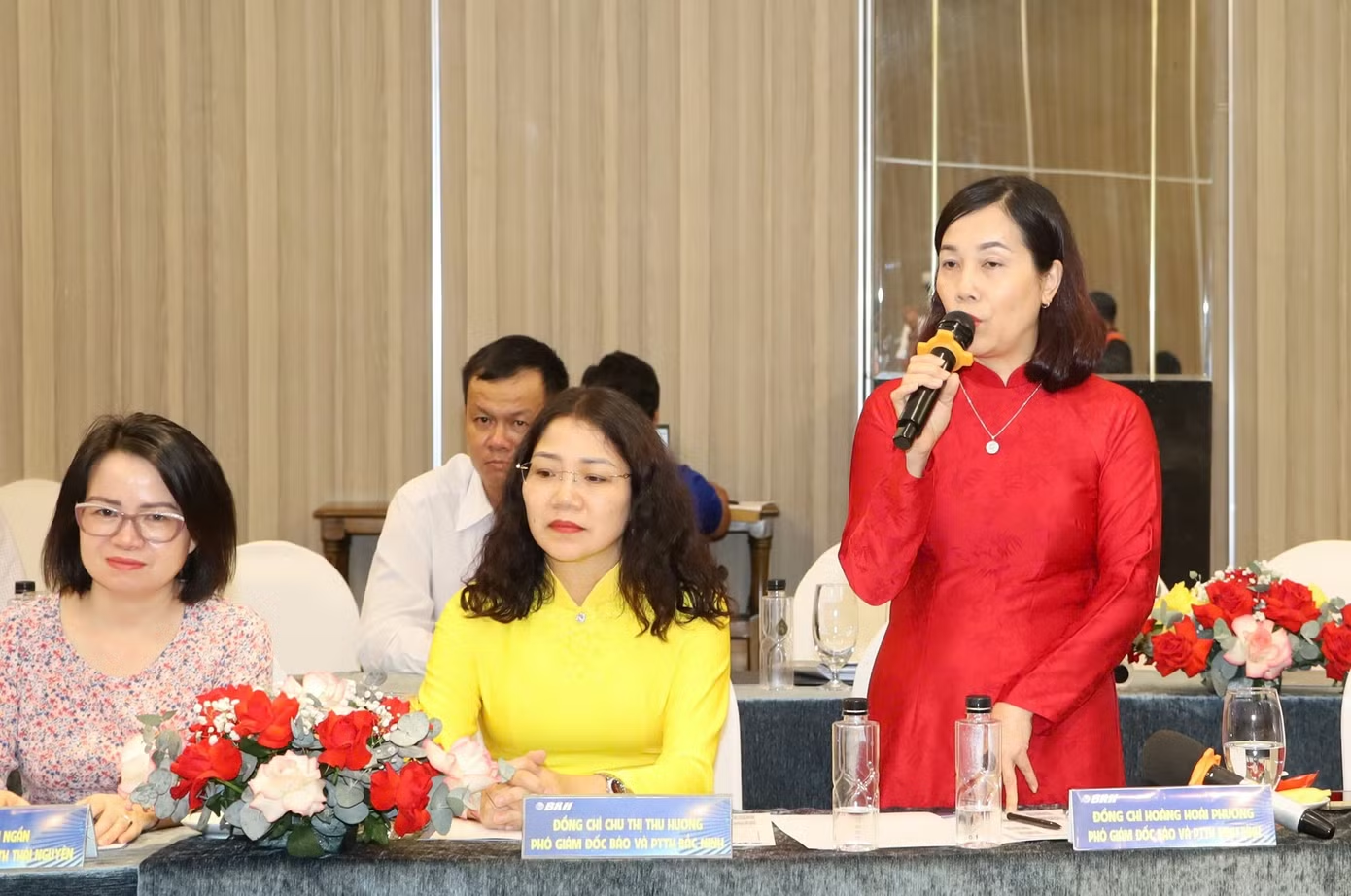
Meanwhile, Ms. Hoang Hoai Phuong, Deputy Director of Ninh Binh Newspaper, Radio, and Television, shared: Ninh Binh is a locality formed from the merger of three former provinces. When six agencies were combined into one, the number of key officials and staff was very large, exceeding 400 people. Therefore, the unit had to spend a very difficult year rebuilding the mechanism, structure, and common remuneration framework to create harmony among different types of media.
Concluding the seminar, Deputy Director of Khanh Hoa Province's Newspaper, Radio, and Television Department, Le Hoang Trieu, assessed that the seminar had received many valuable contributions from the delegates. Through the seminar, the organizers realized that to improve quality, it is necessary to address the issue of personnel; training reporters to meet the requirements of all four types of journalism. Along with that, solutions are needed regarding budget revenue; in addition to state-assigned tasks, a mechanism for commissioned work should be pursued to ensure that revenue is sufficient to cover expenses.
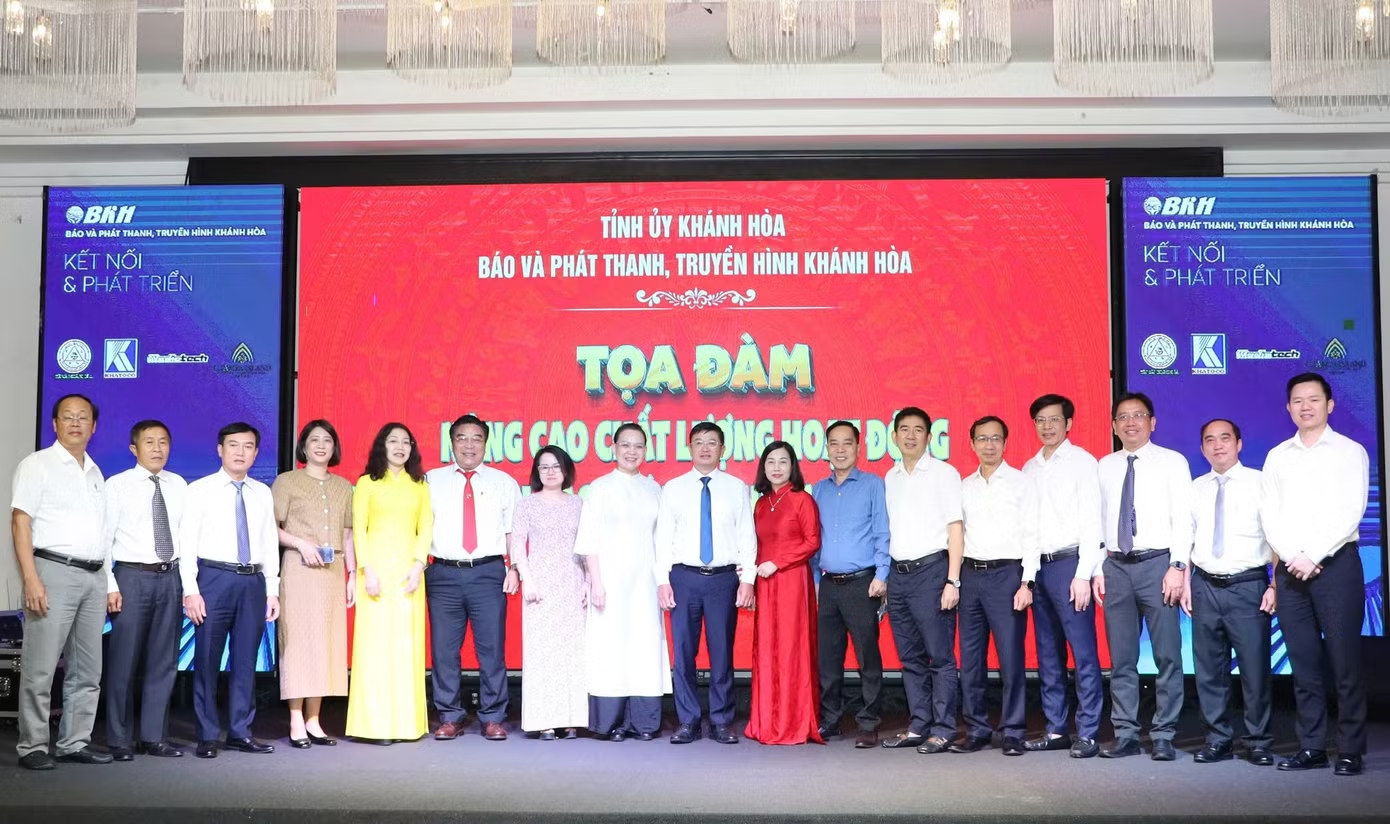
According to Mr. Le Hoang Trieu, to overcome the immediate difficulties, a spirit of solidarity, sharing, and understanding within the agency is needed. "Through this, the organizing committee hopes that the relevant authorities will propose appropriate solutions to the central government to address the difficulties after the merger; and that local media agencies will consider organizing annual thematic seminars to further improve the quality of journalism," Mr. Le Hoang Trieu suggested.
Source: https://tienphong.vn/thach-thuc-lon-cho-bao-chi-dia-phuong-sau-1-nam-sap-nhap-post1847414.tpo
![[Photo] Ba Lang An Lighthouse - the "eye of the sea" amidst the "rock museum" of Quang Ngai province.](https://vphoto.vietnam.vn/thumb/1200x675/vietnam/resource/IMAGE/2026/05/29/1780038698840_anh-man-hinh-2026-05-29-luc-14-10-42.png)
![[Image] Pleasant weather helps students enter the 10th grade entrance exam with confidence.](https://vphoto.vietnam.vn/thumb/1200x675/vietnam/resource/IMAGE/2026/05/29/1780034401612_ngay-1-thi-lop-10-minh-duy-8-5009-jpg.webp)





































































Comment (0)