

In Hanoi, after returning home to take traditional medicine following a course of chemotherapy, 40-year-old Ms. Ngan had to rush back to the hospital for emergency treatment due to a ruptured tumor and cancerous cells metastasizing throughout her body.
A year ago, the woman received a diagnosis of stage two breast cancer, with a tumor in her right breast measuring approximately two centimeters, and was advised to undergo chemotherapy to destroy the tumor.
After the first round of chemotherapy, the patient experienced hair loss, poor appetite, and excruciating pain that left her exhausted and weak. Thinking her body was already weakened and that further chemotherapy would worsen her condition, she requested to be discharged to treat herself with traditional medicine. About a few months later, the tumor swelled and became so painful that she couldn't lie on her side. Two days before hospitalization, the tumor ruptured, releasing a foul-smelling yellow fluid due to necrosis, and blood spurted out uncontrollably.
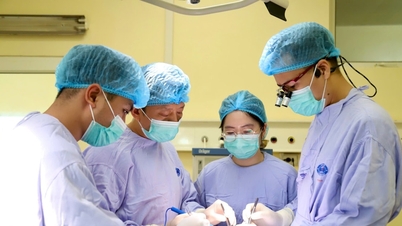
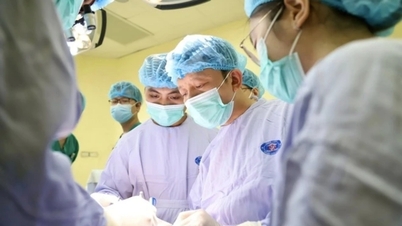
Dr. Ngo Van Ty, from the Oncology Department of Hanoi Medical University Hospital, stated that this was a very rare case of a patient with a large tumor that had ruptured, ulcerated, and severely necrotic. Normally, breast cancer tumors are only about 1 to 4 cm in size and must be removed. However, in this case, the tumor measured 20 cm, a tenfold increase compared to a year prior.
"At this point, the patient cannot undergo chemotherapy; only temporary treatment of the tumor is possible. A biopsy will be performed to assess the stage of the disease, after which a new treatment plan will be devised," the doctor said. However, due to the large size of the tumor, its invasion of multiple organs, and the wide resection area (20 cm long), it could not be closed with sutures. The doctor had to surgically graft skin from the thigh onto the damaged chest area.
In another case, a 50-year-old man with a stomach tumor, unable to eat or drink, adamantly refused chemotherapy because he believed "chemotherapy feeds cancer cells." The patient decided against chemotherapy and surgery, requesting to go home and self-medicate to boost his immune system.
These are two of many cases of people "fleeing" cancer due to fear of chemotherapy, then gambling on traditional medicine hoping for a gentler recovery. Many patients who respond well to medication or whose health improves remain skeptical about modern treatment methods, only to return to the hospital when there is no longer any chance of recovery, and only palliative care is available.
Explaining this situation, Dr. Ty said that most patients are haunted by the side effects of chemotherapy. Previously, patients experienced shock upon learning they had the disease, followed by fear of chemotherapy treatment and its side effects such as hair loss, weight loss, and bruising. "Many people face stigma and ridicule due to changes after chemotherapy, leading to feelings of inferiority and depression; or they are afraid to face the machines and radiation, distrust the treatment protocol, and give up on treatment," the doctor said.
Currently, cancer treatment protocols include immunotherapy, targeted therapy, chemotherapy, and palliative care. Of these, chemotherapy, radiation therapy, and surgery are the three pillars of cancer treatment. Depending on the patient's condition, stage of the disease, and tumor characteristics, doctors will prescribe appropriate treatments for each individual, combining multiple methods for the best results.
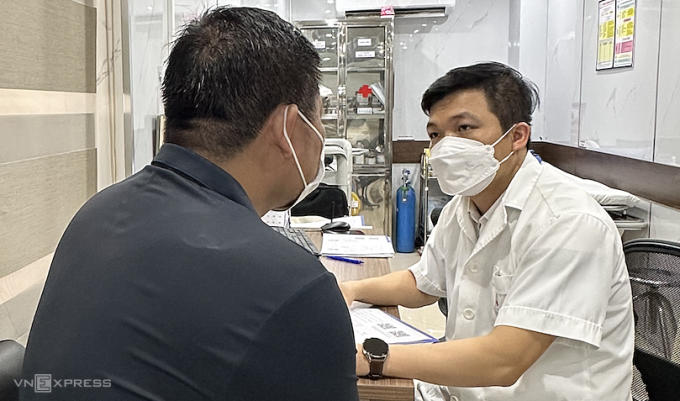
Doctor Ty examines and advises patients on their health. Photo: Thuy An
The second reason is that patients lack understanding, always thinking that cancer is a death sentence, and that "the more they try to intervene in the tumor, the worse the disease becomes." At this point, they cling to traditional medicine, family remedies, and advertisements from quacks to treat their illness. Vietnam is one of the countries with a high cancer incidence rate globally, with over 300,000 people diagnosed each year, nearly 165,000 new cases, and 115,000 deaths. Of these, over 30% of patients abandon treatment.
Furthermore, cancer treatment is very expensive, especially when using new drugs like targeted therapy and immunotherapy, while traditional medicine is cheaper and more convenient, costing only a few hundred thousand dong for a month's supply. Most traditional cancer treatments, such as chemotherapy, are currently covered by health insurance. However, these drugs have limited effectiveness and many side effects. Immunotherapy, in particular, is not covered, and only about 10% of cases have access to it due to its high cost.
A 2015 survey conducted by the George Institute for Global Health in eight countries with nearly 10,000 cancer patients, 20% of whom were in Vietnam, showed that 55% experienced financial "disaster" and died within a year of diagnosis. After 12 months of treatment, 66% of patients had to borrow money for treatment, 34% could not afford medication, and 24% were financially ruined.
"With the mindset that treatment is only expensive, more and more people give up halfway through, which makes death come faster," the doctor said.
In addition, Associate Professor Dr. Le Van Quang, Director of K Hospital, believes that this disease contains many mysteries that need to be explored, and many new treatment methods need to be researched. "This seems to be the reason for the misinformation and unscientific claims about cancer, leading to many patients being exploited," said Dr. Quang.
Doctors warn that patients abandoning treatment on their own is a major risk, increasing the likelihood of death. Furthermore, most patients who discontinue treatment return at a later stage, leading to increased financial costs and mental exhaustion. In fact, medical science has not recorded any cases of cancer being cured solely through herbal remedies or traditional medicine.
Dr. Ty hopes patients will listen to their bodies and trust healthcare professionals. "Cancer is a malignant disease, but treatment methods are constantly improving, helping patients improve and prolong their lives, or even achieve a cure," the doctor said.
Thuy An
Source link

![[Photo] The General Secretary, President and his wife begin their state visit to the Philippines.](https://vphoto.vietnam.vn/thumb/1200x675/vietnam/resource/IMAGE/2026/05/31/1780230559452_anh-man-hinh-2026-05-31-luc-19-28-11.png)

![[Photo] Admire the coral "masterpiece" amidst the million-year-old heritage of Dak Lak province.](https://vphoto.vietnam.vn/thumb/1200x675/vietnam/resource/IMAGE/2026/05/31/1780221235105_anh-man-hinh-2026-05-31-luc-16-53-27.png)
![[Photo] Solemn bathing ceremony and Buddha procession in Hue](https://vphoto.vietnam.vn/thumb/1200x675/vietnam/resource/IMAGE/2026/05/31/1780228263543_1-jpg.webp)














![[Video] Sunset at Lap An Lagoon – Where the sun sets over the fishing nets](https://vphoto.vietnam.vn/thumb/340x192/vietnam/resource/IMAGE/2026/05/31/1780192137701_beach-landscape-sea-water-nature-grass-745871-pxhere-com.jpeg)

























![[Photo] Admire the coral "masterpiece" amidst the million-year-old heritage of Dak Lak province.](https://vphoto.vietnam.vn/thumb/402x226/vietnam/resource/IMAGE/2026/05/31/1780221235105_anh-man-hinh-2026-05-31-luc-16-53-27.png)

































Comment (0)