

On May 29th, the Department of Agriculture and Environment of Ca Mau province worked with a delegation from the Fisheries and Aquaculture Inspection Department ( Ministry of Agriculture and Environment ) to survey the current state of tilapia production and consumption, in order to develop a value chain for this industry.
Attending the working session were Mr. To Hoai Phuong, Director of the Department of Agriculture and Environment of Ca Mau province; Mr. Nhu Van Can, Deputy Director of the Fisheries and Fisheries Inspection Department, along with scientists, experts and business representatives.
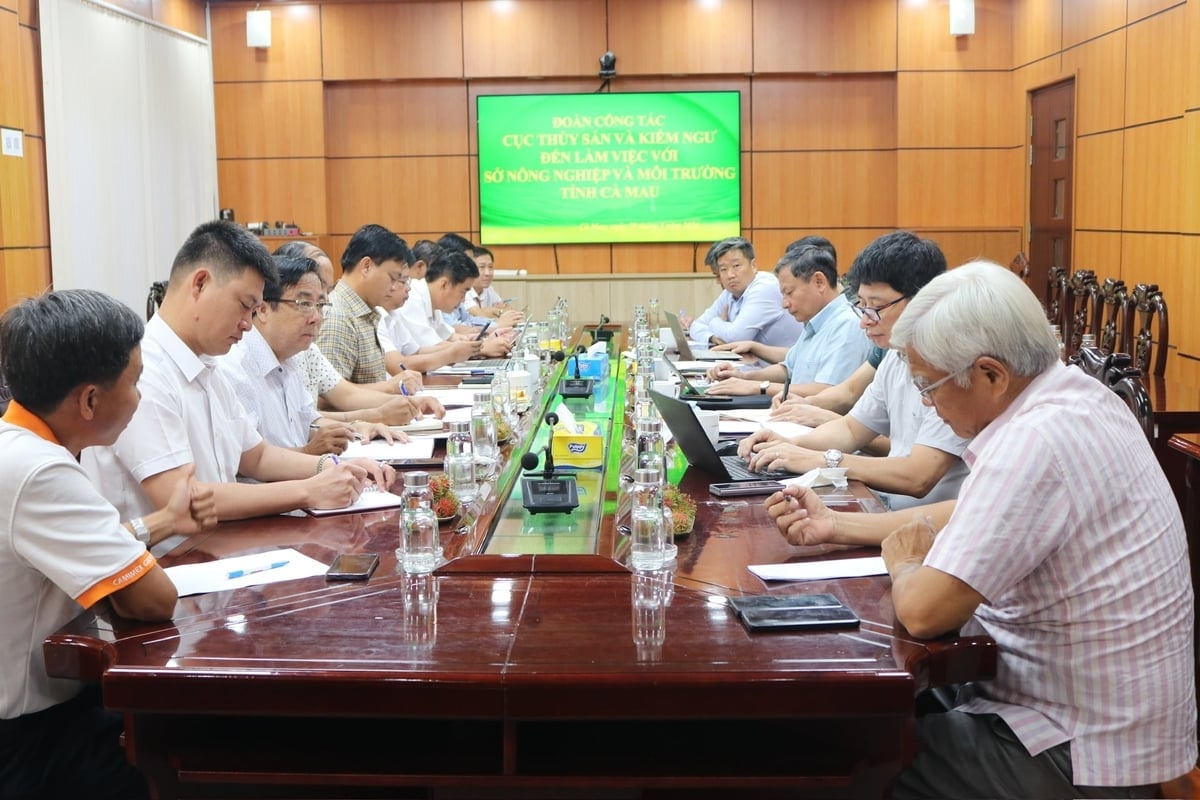
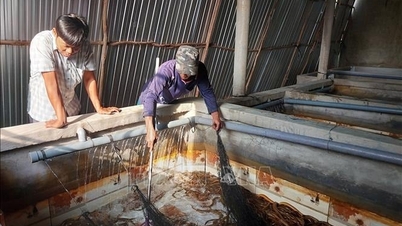
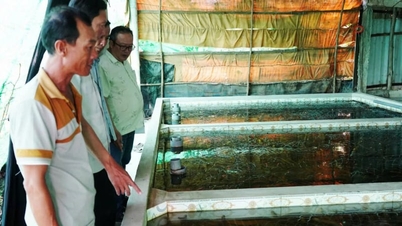
The Department of Agriculture and Environment of Ca Mau province worked with the delegation from the Fisheries and Fisheries Inspection Department (Ministry of Agriculture and Environment) to survey the current situation of tilapia production and consumption, serving the development of a value chain for this industry. Photo: Trong Linh.
Great potential from the integrated farming model.
According to a report by the Department of Agriculture and Environment of Ca Mau province, tilapia is currently mainly farmed in shrimp-mangrove, shrimp-rice, extensive, and improved extensive farming models, covering an area of nearly 395,300 hectares, with an estimated production of about 20,000 tons per year. Several businesses are also researching and investing in models for farming monosex tilapia in a chain-linked manner for processing and export.
During the meeting, delegates focused on discussing the potential for developing the tilapia industry, the advantages and disadvantages in production, processing, and consumption. They also proposed solutions for forming a sustainable value chain from breeding, feed production, commercial farming to processing and product consumption.
Many opinions suggest that sustainable development of the tilapia industry requires focusing on improving the quality of broodstock, proactively securing feed sources, building a stable consumer market, and strengthening linkages between businesses and farmers. Delegates also proposed researching the development of a unique brand for Ca Mau tilapia products, with the aim of registering intellectual property rights to enhance the value and competitiveness of the product in the market.
In addition, delegates assessed that the model of tilapia farming combined with super-intensive shrimp farming has great potential. Tilapia has the ability to contribute to stabilizing the water environment, reducing water treatment costs in shrimp farming, thereby improving production efficiency and moving towards sustainable aquaculture development.

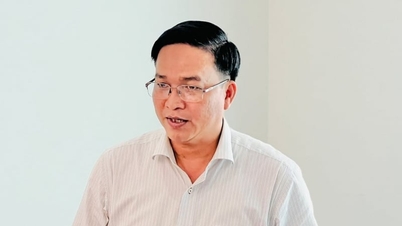
Mr. To Hoai Phuong, Director of the Department of Agriculture and Environment of Ca Mau province, speaks at the working session. Photo: Trong Linh.
Proposals for scientific research to support industry development.
Mr. To Hoai Phuong, Director of the Department of Agriculture and Environment of Ca Mau province, believes that the development of the tilapia industry needs to be implemented according to a suitable roadmap, with careful evaluation of effectiveness before scaling up to ensure good control of the environment, diseases, consumer markets, and economic efficiency.
The Director of the Department of Agriculture and Environment requested the Fisheries and Fisheries Inspection Department to continue strengthening information and communication efforts to ensure that people understand the objectives, significance, and benefits of the tilapia value chain development project; and to promptly inform the public about new policies and mechanisms so that localities can proactively implement them effectively.
Dr. Tran Huu Loc from the Ho Chi Minh City University of Agriculture and Forestry proposed conducting provincial-level scientific research projects to comprehensively evaluate tilapia farming models in Ca Mau, as a basis for selecting suitable broodstock for the local natural conditions. Simultaneously, the research would optimize feed quantities at different stocking densities to reduce production costs, increase productivity, and improve economic efficiency.

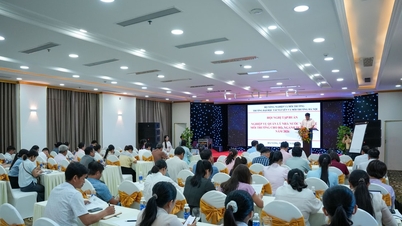
Ca Mau aims to build a sustainable tilapia value chain. Photo: Trong Linh.
This proposal has been approved in principle by the Director of the Department of Agriculture and Environment of Ca Mau province for further research and refinement in the future.
The meeting provided an opportunity for management agencies, scientists, businesses, and local authorities to exchange ideas and assess the potential and development direction of the tilapia industry in Ca Mau, contributing to the refinement of content for building a sustainable and efficient tilapia value chain development project that is appropriate to the local conditions.
Source: https://nongnghiepmoitruong.vn/ca-mau-xay-dung-chuoi-gia-tri-ca-ro-phi-ben-vung-d813827.html
![[Photo] Ba Lang An Lighthouse - the "eye of the sea" amidst the "rock museum" of Quang Ngai province.](https://vphoto.vietnam.vn/thumb/1200x675/vietnam/resource/IMAGE/2026/05/29/1780038698840_anh-man-hinh-2026-05-29-luc-14-10-42.png)

![[Image] Pleasant weather helps students enter the 10th grade entrance exam with confidence.](https://vphoto.vietnam.vn/thumb/1200x675/vietnam/resource/IMAGE/2026/05/29/1780034401612_ngay-1-thi-lop-10-minh-duy-8-5009-jpg.webp)




















































Comment (0)