

The earthquake that struck Japan today caused damage to several tourist spots, including some structures that are 1,000 years old.
Five prefectures—Ishikawa, Niigata, Fukui, Toyama, and Gifu—were affected by the earthquake on January 1st. In Ishikawa Prefecture, a popular tourist destination in central Japan, several tourist spots were impacted. Some areas were burned down by aftershocks, while others were damaged by the tremors. The extent of damage in some locations is yet to be determined. Below are four frequently visited tourist spots in Ishikawa that were affected by the earthquake.
Keto Shrine, Hakui Beach
A video circulating on social media shows Keta Shrine shaking during a strong earthquake in central Japan on New Year's Day 2024. The video shows locals and tourists leaving the shrine and gathering outside. The earthquake caused the wooden shrine to creak and shake violently, and surrounding trees swayed uncontrollably.
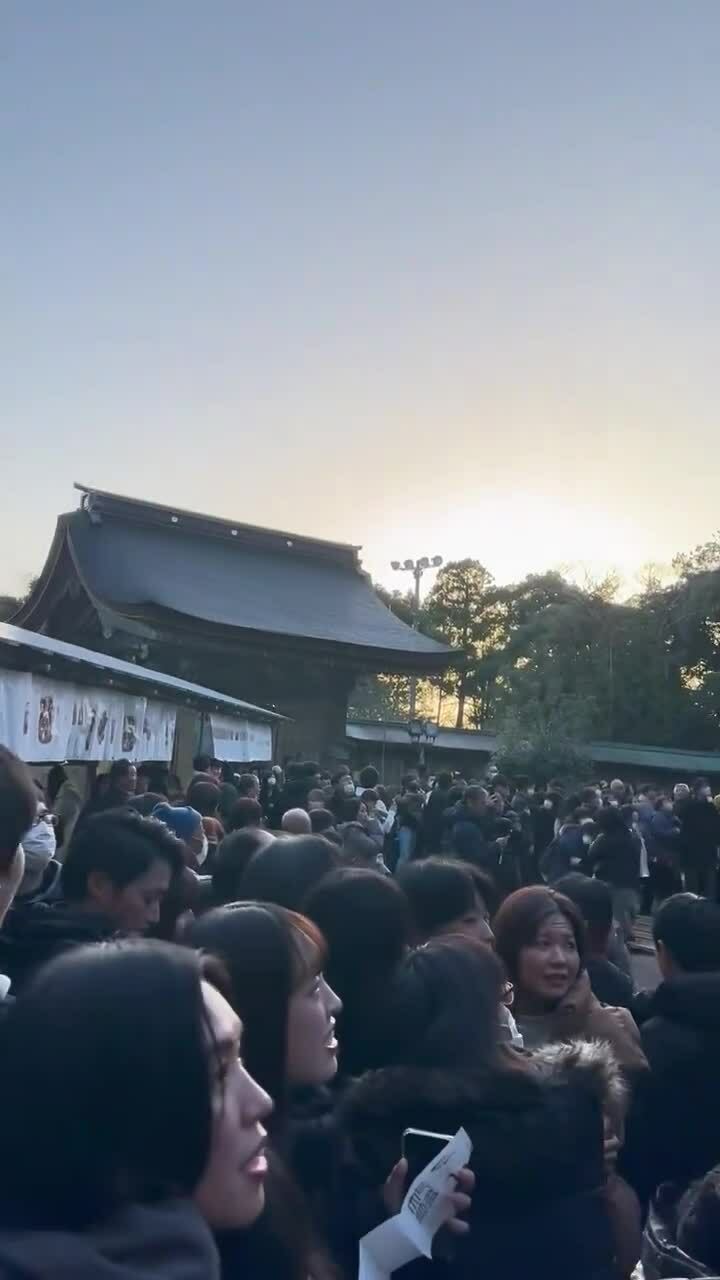
Many tourists witnessed the Keto Shrine shaking violently. Video: Seka00soli
Keta Shrine is located near the Hakui coast in Ishikawa Prefecture. It is dedicated to Otomi Takamikoto, from Izumo, the "land of the gods," along with other deities. Otomi Takamikoto is believed to have subdued monsters and giant snakes, protecting the people of the central Japanese coast. There are currently no updates on the extent of damage at the shrine.
Onohiyoshi Shrine, Kanazawa City
Another famous shrine in Ishikawa that was affected by the 7.6 magnitude earthquake is Onohiyoshi. The shrine's torii gate collapsed on January 1st in front of locals and tourists. Onohiyoshi is a popular destination where people come to pray for good fortune and peace at the beginning of the new year. The shrine is believed to have been built in 733 and is dedicated to the deities Oyamakui no Kami and Omononush.
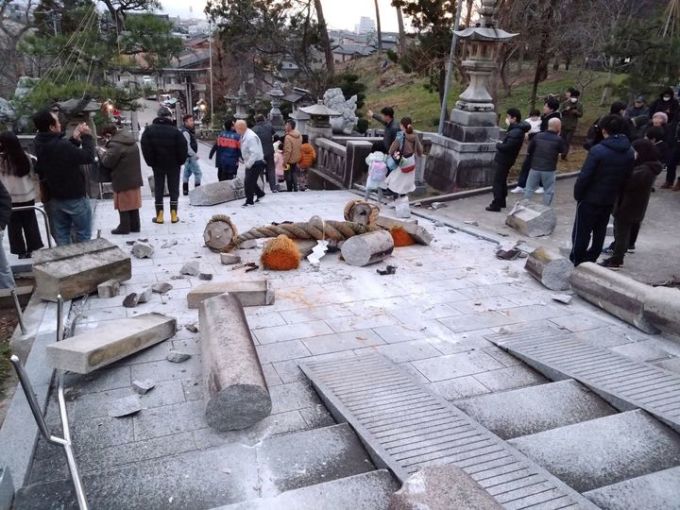
The torii gate collapsed at Onohiyoshi Shrine on January 1. Photo: Reuters
Wajima Morning Market, Wajima City
According to Kyodo News , continuous aftershocks following the January 1st earthquake caused fires in several locations in Wajima City. One of the structures destroyed by the fire was the 1,000-year-old Wajima morning market.
A large fire broke out in the Wajima market on the afternoon of January 1st, shortly after the earthquake at 4:50 PM. On the morning of January 2nd, video footage from NHK television showed a seven-story building tilted and smoke rising from the central area of the market.
According to JNTO, the Wajima morning market has over 300 stalls, making it one of the three largest morning markets in Japan, operating for over 1,000 years. Often recommended to foreign visitors as a famous shopping destination for traditional lacquerware, it's also a haven for fresh and dried seafood. The market is typically open from 8:00 AM to 12:00 PM and closes on the second Wednesday of the fourth week of the month.
The market is currently temporarily closed to allow for repairs following the fire.
Higashi Chayagai Old Town, Kanazawa
Higashi Chayagai district is located in the Higashiyama area of Kanazawa City, near the Asano River. It is the largest of the three well-preserved historical geisha districts in Kanazawa, along with Nishichayagai and Kazuemachi. Today, geisha still perform singing and dancing there.
According to an update from Japanese travel blogger Ikimashou Japan & World, no tourists or residents in the Higashi Chayagai old town area were injured. The wooden houses were mostly intact, with only minor damage to a few street corners and residential buildings. On January 3rd, Ikimashou Japan & World posted a video showing the Higashi Chayagai old town in sunny weather, with few tourists walking on the streets.
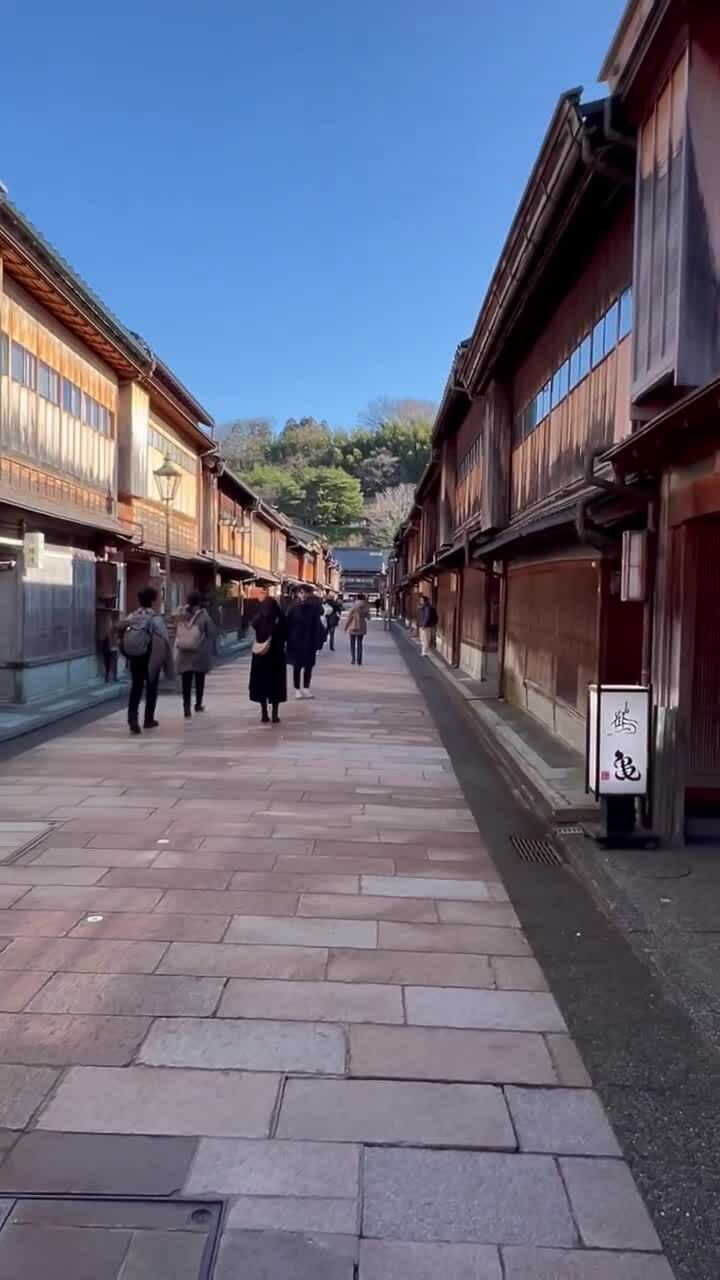
Higashi Chayagai neighborhood on the morning of January 3rd. Video: Ikimashou Japan & World
Bich Phuong
Source link


![[Photo] Prime Minister Pham Minh Chinh attends the Conference on the Implementation of Tasks for 2026 of the Industry and Trade Sector](/_next/image?url=https%3A%2F%2Fvphoto.vietnam.vn%2Fthumb%2F1200x675%2Fvietnam%2Fresource%2FIMAGE%2F2025%2F12%2F19%2F1766159500458_ndo_br_shared31-jpg.webp&w=3840&q=75)




















































































Comment (0)