

Binh Phuoc serves as a gateway and bridge connecting the Central Highlands with the Mekong Delta and Cambodia. Located within the Southern Key Economic Zone, it borders Lam Dong and Dak Nong provinces to the east, Tay Ninh to the west, Binh Duong and Dong Nai to the south, and Cambodia to the north and northwest.
The climate in Binh Phuoc is divided into two distinct seasons: the rainy season from May to October and the dry season from November to April of the following year. Binh Phuoc is at its most beautiful in spring, from around the end of December to January of the following year. At this time, the sun shines brightly, and the rubber forests turn a golden-orange color. Interspersed among the golden rubber forests are the vibrant cashew orchards. In March and early April, the coffee flowers begin to bloom white.
Move
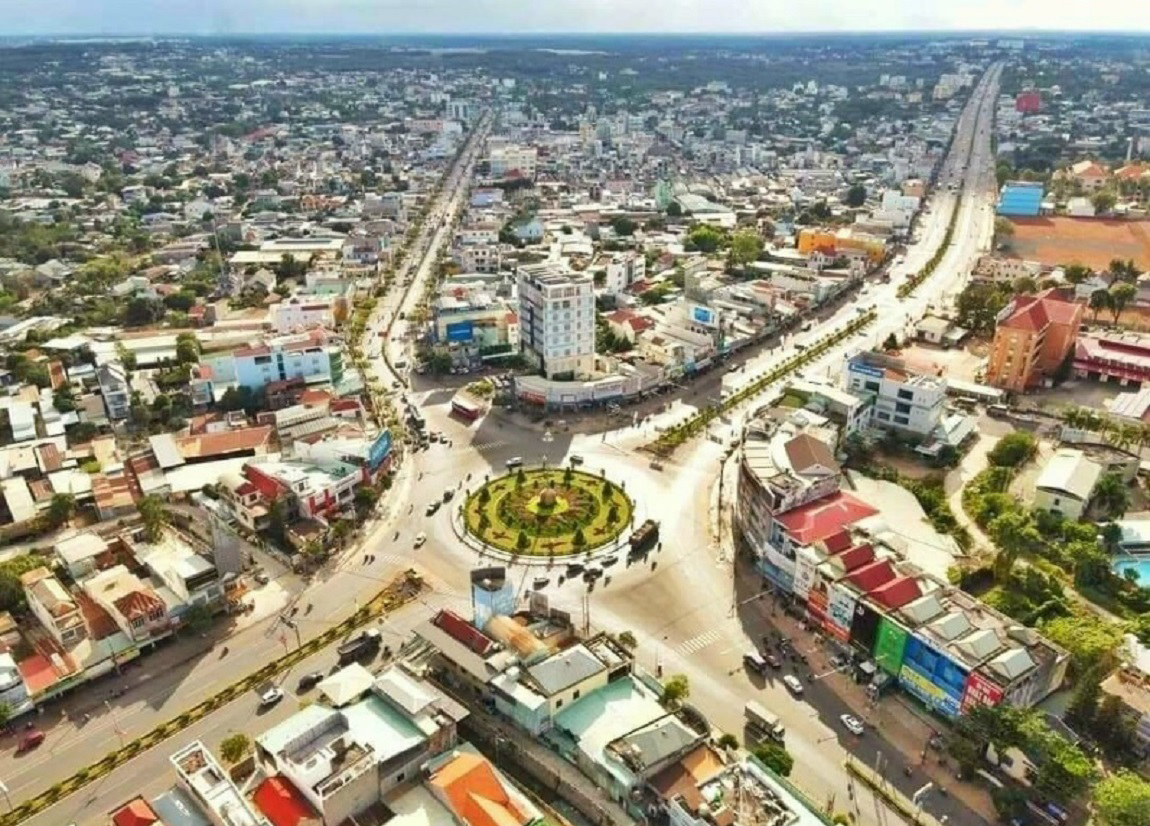
The central hub of Binh Phuoc province is Dong Xoai city, located approximately 120 km from Ho Chi Minh City. Binh Phuoc is traversed by National Highways 13 and 14 in both directions, so to travel to Binh Phuoc, you can choose from various means of transportation such as cars, buses, or motorbikes, depending on your starting and destination points.
Bus tickets from Ho Chi Minh City to Binh Phuoc, departing from the Eastern Bus Station to Dong Xoai City, Phu Rieng District, Bu Dang District, Phuoc Long Town, and Bu Gia Map District, are offered by bus companies such as Thanh Cong, Kim Manh Hung, Mai Huy Thanh, and Petro Binh Phuoc. For Loc Ninh District, Binh Long Town, Chon Thanh Town, Hon Quan District, and Bu Dop District, you can choose from bus companies like Hoang Yen, Ut Linh, Thien Bao Phuc, and Nhat Truong. Bus ticket prices range from 100,000 to 180,000 VND per person, with a travel time of approximately 3-4 hours.
For those who want more control over their time and freedom to stop and rest, it's recommended to travel by private car, motorbike, or rental vehicle from Ho Chi Minh City via National Highway 14 to Dong Xoai, or via National Highway 13 to Loc Ninh, Binh Long, or Hon Quan. The routes are convenient.
Accommodation
There are quite a few accommodation options in Binh Phuoc. Bom Bo Hotel, An Loc Spa & Hotel, and My Le are highly rated establishments. Room rates range from 550,000 to approximately 3.4 million VND per night. Some guesthouses or 1-2 star hotels in Dong Xoai city have prices ranging from 150,000 to 500,000 VND per night.
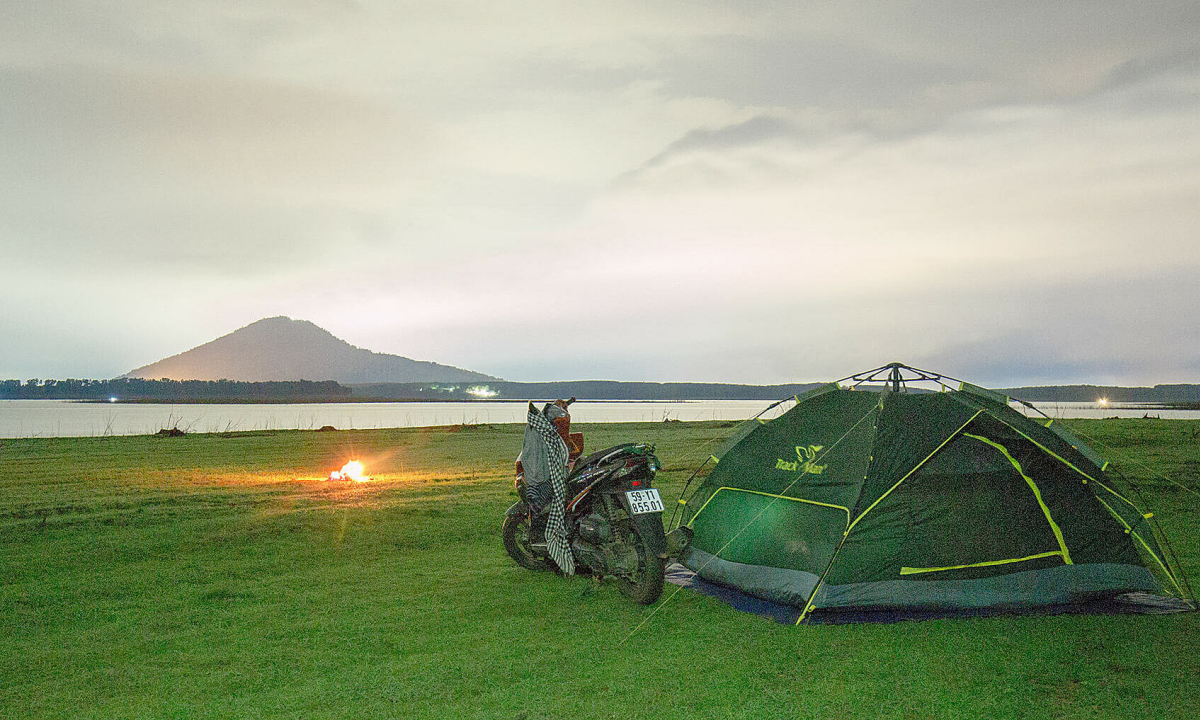
If you want to immerse yourself in nature, you can contact the Bu Gia Map National Park Conservation, Tourism and Rescue Center to book accommodation (rooms or camping in the forest), the price is 100,000 VND per person per night.
Where to play
From the center of Dong Xoai city, within a radius of about 80 km, Binh Phuoc has many places to explore . The natural beauty here includes numerous waterfalls, national parks, diverse local cultures, and historical sites. Therefore, it's recommended to divide the tour into approximately 3 days and 2 nights, or longer, to fully explore the area.
Bu Gia Map National Park
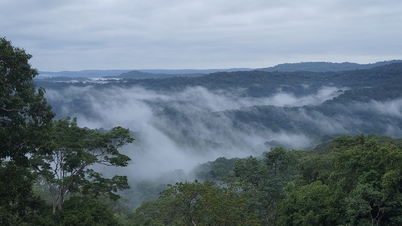
Bu Gia Map National Park (Bu Gia Map District) is located in the northeast of Binh Phuoc Province, about 90 km from Dong Xoai City via National Highway 741. Bu Gia Map is situated in the lowlands of the southern Central Highlands, with its highest peak reaching 700 meters above sea level. Besides preserving many rare genetic resources and boasting a rich flora and fauna, it is also a suitable destination for adventure seekers and nature lovers.
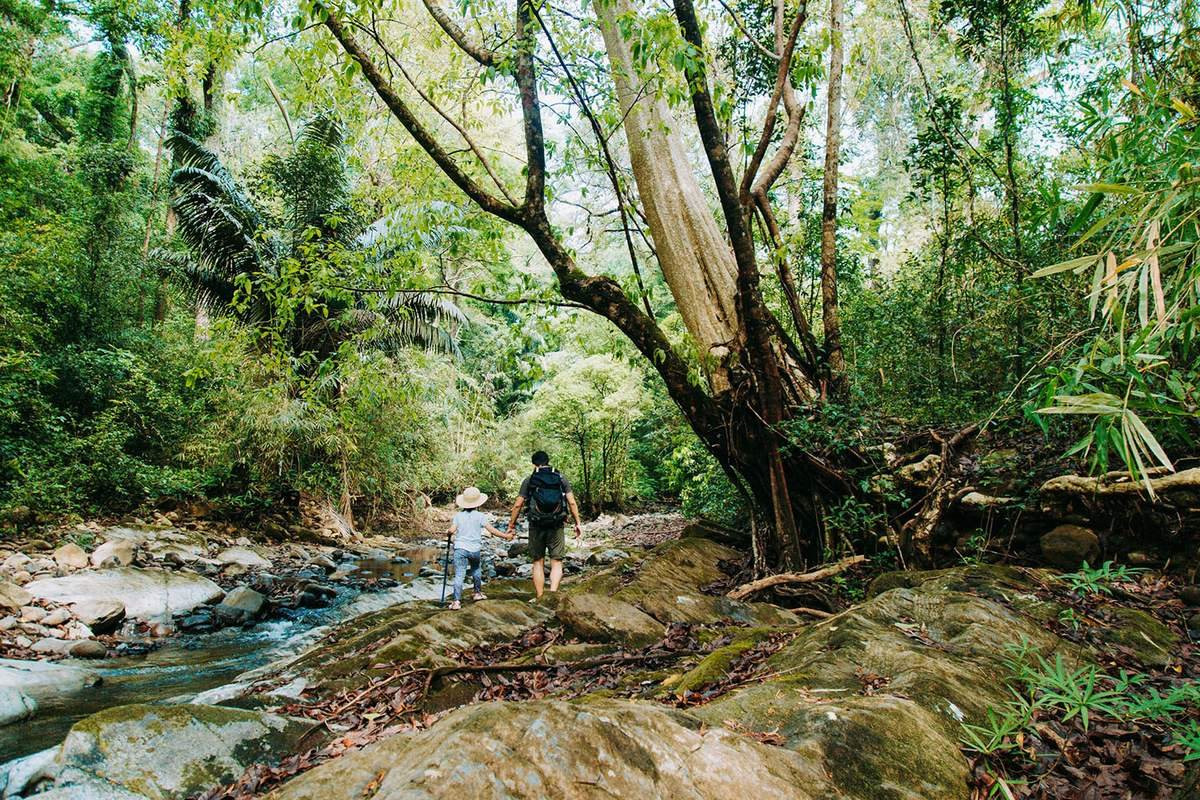
To explore the national park, you need at least two days and one night. This amount of time is sufficient to experience many attractions such as Dak Mai Waterfall, Hoa Mai Lake, visit heritage trees, immerse yourself in nature, and explore the historical site marking the end of the North-South oil pipeline. Evenings are ideal for cultural exchanges, enjoying unique dishes of the S'tieng people, and going night hunting in the forest.
>> See also: Two-day, one-night trekking trip in Bu Gia Map
Ba Ra Mountain
Located at an altitude of 730 meters above sea level, Mount Ba Ra is considered the third highest mountain in Southern Vietnam, after Ba Den (Tay Ninh) and Chua Chan (Gia Lao Mountain, Dong Nai). Situated in Son Giang ward, Phuoc Long town, about 50 km from Dong Xoai city, Ba Ra is a popular trekking destination. The S'tieng people call this mountain "Bonom Brah," meaning "Mountain of the Gods." The air here is fresh and the scenery is beautiful. From the summit, one can see the surrounding areas and Thac Mo Lake at the foot of the mountain.
Rubber forest
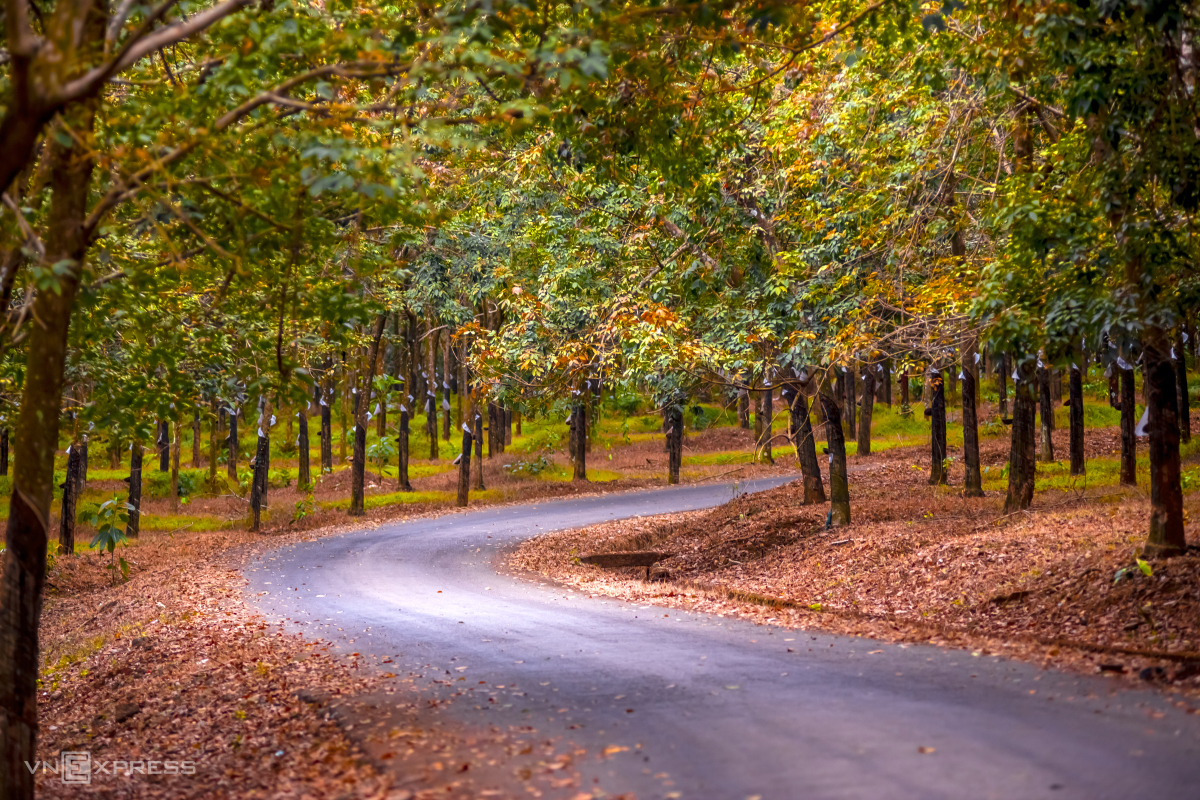
Binh Phuoc is known as the rubber capital, so visitors can find rubber plantations everywhere. Rubber trees are planted interspersed among young and old trees, creating a vast expanse of land like an oil painting with a full spectrum of colors from light green and dark green to yellow. Towards the end of the year, visitors can come here for picnics, sit on thick, soft carpets of dry leaves, watch the golden leaves fall, and take beautiful photos.
Soc Lon Pagoda
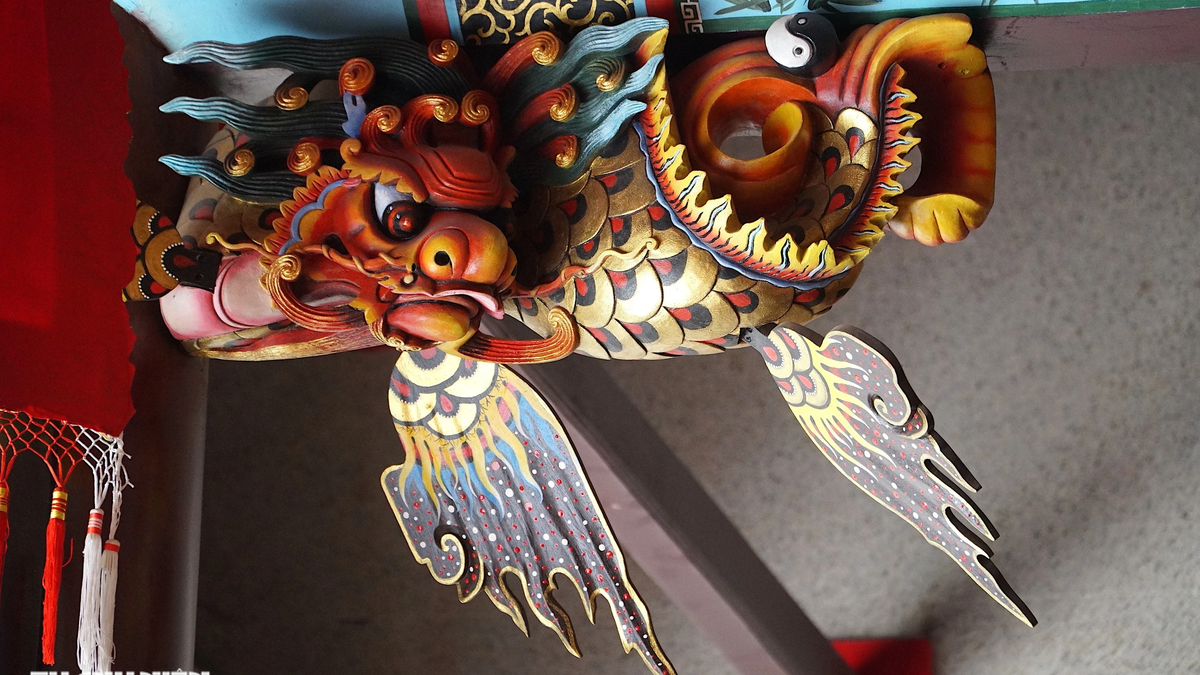
Soc Lon Pagoda is located in Soc Lon hamlet, Loc Khanh commune, Loc Ninh district, about 10 km from the center of Loc Ninh town. It is the oldest Khmer pagoda in Binh Phuoc province, built in 1931, covering an area of over 1,200 m2. At the pagoda, visitors will have the opportunity to learn about the spiritual life of the local people and experience many cultural activities and traditional festivals of the Khmer people. The pagoda is considered a "museum" that provides a comprehensive view of the customs, traditions, religion, and rich cultural history of the Khmer people.
Soc Bom Bo
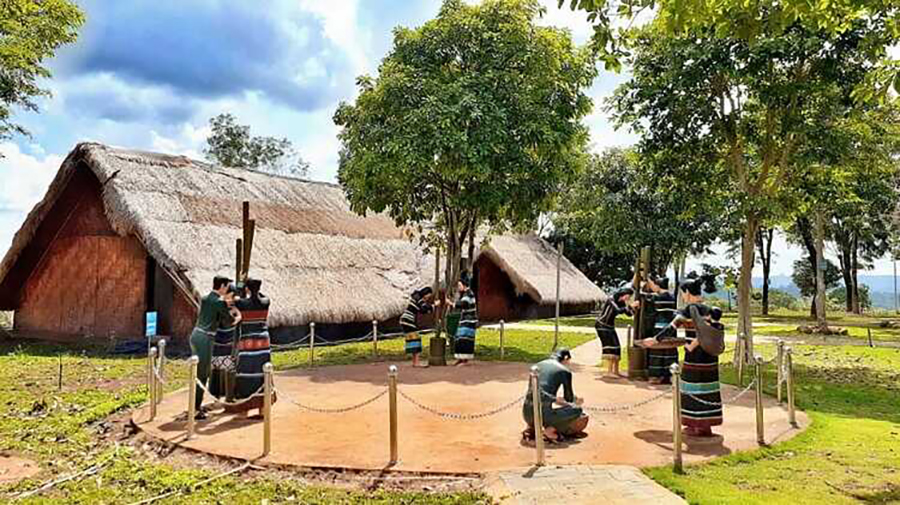
Soc Bom Bo (Binh Minh commune, Bu Dang district) is well-known thanks to the famous song "The Sound of the Pestle in Soc Bom Bo" by the late musician Xuan Hong. From Dong Xoai city, tourists can follow National Highway 14 towards Bu Dang for about 50 km. Soc Bom Bo, with the rhythmic pounding of rice by the S'tieng people, has become a part of poetry and history. Here, you will learn more about the life of the S'tieng people and reminisce about the old days with the sounds of gongs and drums, the pounding of rice by the firelight, traditional longhouses, reconstructed village areas, and characteristic dishes.
Ta Thiet Base
Ta Thiet Base (Headquarters of the South Vietnam Liberation Army) is a national historical site located in Loc Thanh commune, Loc Ninh district, covering an area of 3,500 hectares. During the resistance wars against France and the United States, the base was built on a large scale, with a solid system of tunnels, trenches, workshops, and schools, ensuring effective training and combat. The base served as the largest troop assembly point from the North to the South in preparation for the Ho Chi Minh Campaign. Ta Thiet is considered a revolutionary historical site and a destination for historical tourism for cadres, soldiers, and people of Binh Phuoc province in particular, and tourists nationwide in general.
My Le Forest Park
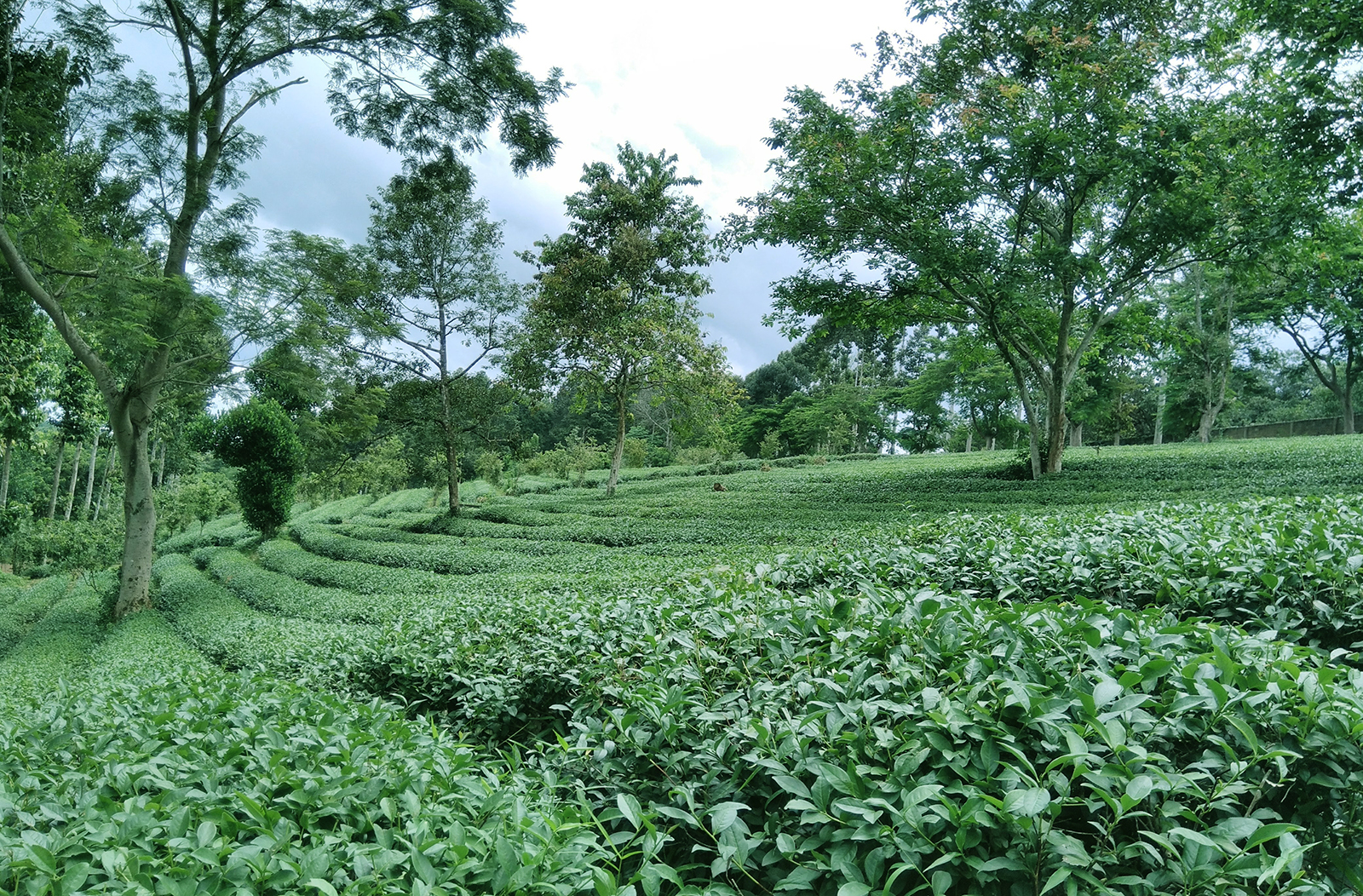
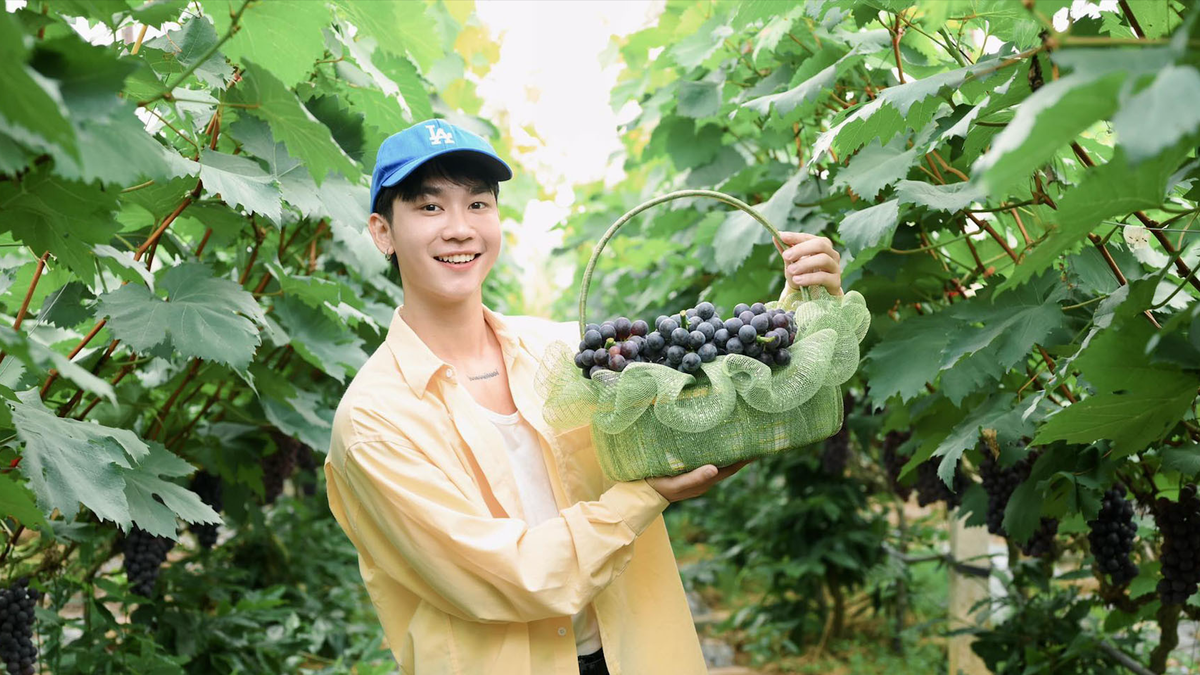
Spanning approximately 50 hectares, My Le Forest Park (Long Hung commune, Phu Rieng district) boasts a landscape where mountains and lakes intertwine, conveniently located just 30 km from Dong Xoai city. Here, visitors can experience firsthand the orchards and oolong tea plantations. Especially during harvest season, you can pick rambutan, pomelo, mangosteen, and other fruits yourself. Visitors can also enjoy electric train rides to admire the tea hills, or cycle, ride ox carts, and savor the fresh fruit while admiring the diverse selection of animal-shaped cakes.
Bu Lach grassland
Located in Dong Nai commune, Bu Dang district, the grassland is nestled amidst mountains, forests, waterfalls, and streams, covering an area of approximately 500 hectares. In the center of the grassland is a large lake, surrounded by vast primeval forest. Locally, the word "lạch" in the M'nong language means grassland, and since there is a pond within the grassland, it is called Bau Lach, or sometimes Bu Lach. Visitors can admire the lush green grasslands interspersed with the purple of rhododendron flowers. The tranquil atmosphere, along with the rustling wind and the sounds of forest birds, will help you relax and unwind. In the near future, Bu Lach grassland will be developed into an ecotourism area.
Can Don hydroelectric reservoir
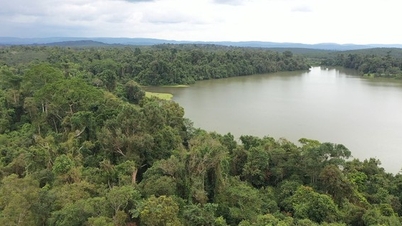
Located in Bu Dop district, the power plant has a reservoir area of nearly 36 square kilometers. Viewed from above, the Can Don reservoir resembles a winding dragon. The Can Don hydroelectric project features a 44-meter-high dam blocking the river flow, spanning 1,130 meters in length and 7 meters in width. The spillway is constructed of reinforced concrete and has five spillway bays. The Can Don hydroelectric plant is a water storage and power generation facility on the Be River system, primarily upstream from the Thac Mo hydroelectric plant. The large reservoir area, along with the beautiful mangrove forest landscape, has led to the development of lake tourism and fishing activities.
Yen Son Ha Island Tourist Area


Yen Son Ha Island (Tan Phu town, Dong Phu district) is an eco-tourism area covering approximately 10 hectares, covered in lush green forests creating a cool atmosphere. Besides its natural beauty, the island offers many activities suitable for tourists, including bringing children along for fun and experiences such as swimming pools, visiting the swiftlet farm, exploring the animal enclosures and lotus ponds upstream by canoe, boating and pedal boating, visiting the sculpture garden, and exploring the cultural heritage exhibition hall.
Waterfalls
Elephant Waterfall is located within the Bu Lach grassland ecological complex. According to long-time residents, this area used to be home to many dead elephants, their bones piled up to form hills, hence the name Elephant Waterfall. With a height of about 15 meters, the waterfall is likened to a fairy with long flowing hair. The road to Elephant Waterfall is quite narrow and rugged, winding through the hills. However, upon reaching the waterfall, you will be able to admire its dreamy and romantic beauty.
Dak Mai Waterfall is one of the relatively unspoiled attractions in Bu Gia Map, adjacent to the National Park. The waterfall is approximately 50 meters wide and 12 meters high. To reach it, you have to navigate steep, hilly terrain. Above the water's surface is a layer of rocks of varying shapes and sizes, fairly flat due to erosion by the waterfall's water. Stepping on these rocks feels like you have to carefully feel your way step by step.
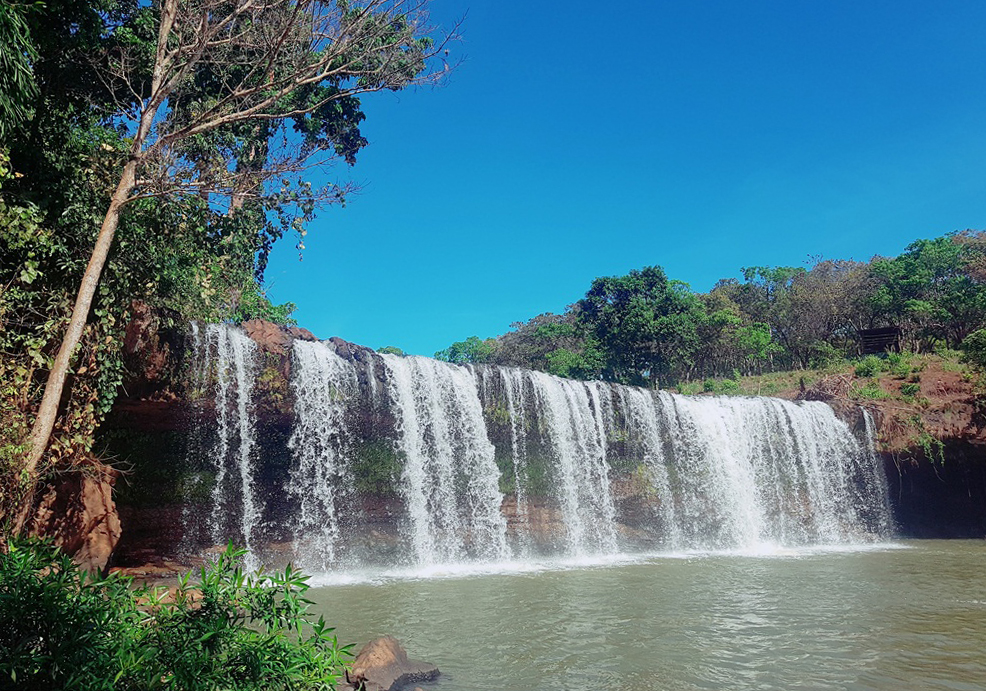
Standing Waterfall boasts unique natural formations and is considered one of the most beautiful waterfalls in the province. The waterfall is about 5-6 meters high and 10 meters wide, yet it flows swiftly and powerfully down the rocks, creating a white spray of foam. Below the waterfall are many large rocks, and the banks are covered with grass and trees. These rocks are arranged in a continuous sequence, forming a path that allows visitors to walk between the banks on rainy days when the water flow is gentle.
Quang Minh Pagoda
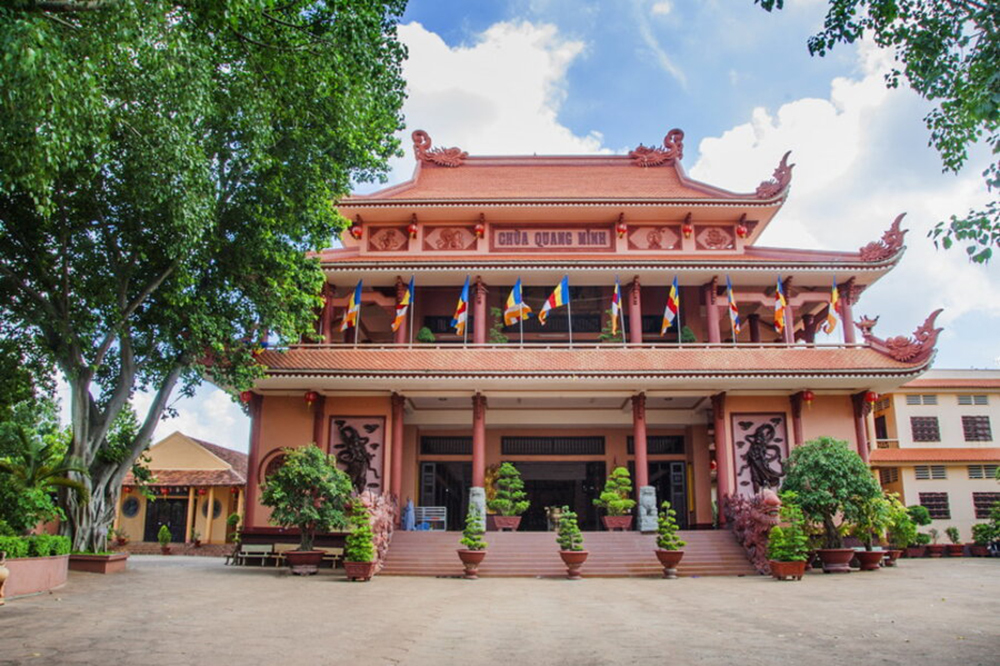
Quang Minh Pagoda is situated on a high mound with a large, neoclassical-style gate, right on National Highway 14, in Tan Dong Ward, Dong Xoai City. Construction of the pagoda began around 1950 and was renovated in 1990. The pagoda impresses with its ancient appearance, featuring distinctive red tiled roofs. A large bronze bell hangs atop the pagoda's tower, symbolizing peace and tranquility.
Eat and drink
Binh Phuoc is home to many different ethnic groups, resulting in a diverse range of traditional dishes that combine various ingredients, reflecting community solidarity.
Free-range pork
This is a specialty of Bom Bo hamlet (Bu Dang district). These pigs are free-range, raised without processed feed, so the meat is almost fat-free, sweet, and tender. They are typically raised by the S'tieng people. The meat can be prepared in many ways, such as grilled, stewed, or steamed. Grilled pork is served with unripe bananas, raw vegetables, especially wild herbs.
Cashew nut salad
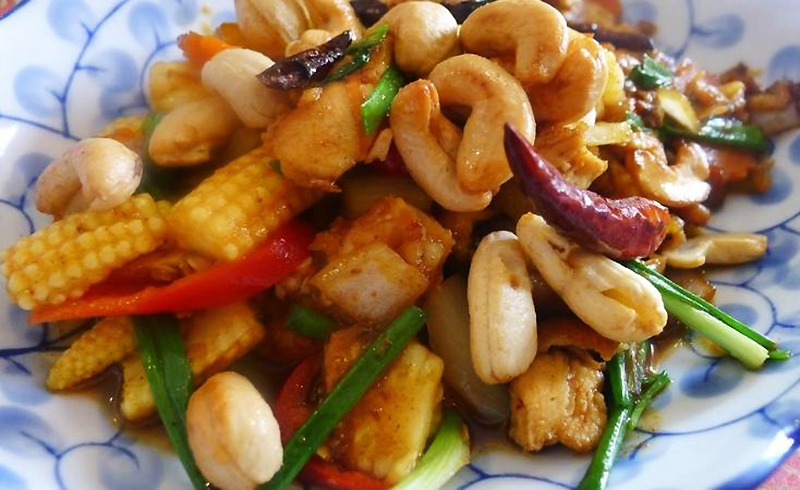
One dish you absolutely must try when visiting Binh Phuoc is cashew nut salad. Cashew nuts replace peanuts and are combined with pork belly, prawns, and herbs to create a salad with a balanced, delicious, and refreshing flavor. This is also an affordable dish, with each serving ranging from 30,000 to 50,000 VND depending on the restaurant.
Bamboo rice
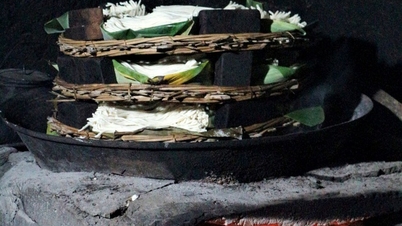
This is a popular dish among most ethnic groups living in Binh Phuoc. Rice (either white or glutinous) is placed in bamboo tubes and mixed with various beans to enhance the flavor. The bamboo tubes chosen for cooking are neither too young nor too old. After the rice is cooked and cooled, diners peel off some of the outer layer, preserving the "bamboo coating." When eating, simply cut it into small pieces and dip it in peanut salt or sesame salt. The rice cooked in bamboo tubes has a natural sweetness from the rice combined with the fragrant aroma of bamboo.
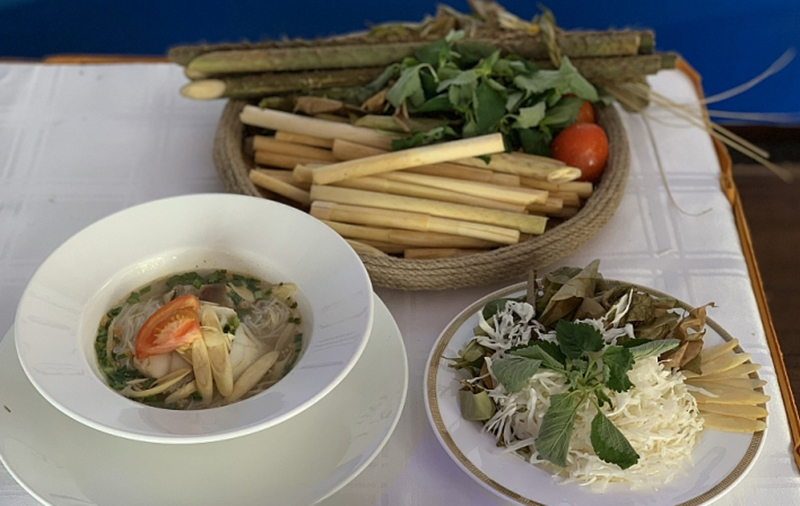
Fish noodle soup with bamboo shoots
This dish showcases a harmonious blend of natural flavors, but the slight bitterness of the young bamboo shoots stands out. Specifically, it's best enjoyed with water spinach and cabbage, along with a touch of green chili peppers to complement the richness of the catfish, the nutty flavor of the water spinach, and the crispness of the fresh cabbage, reducing the greasiness.
Milkweed
This is considered a rare delicacy, harvested and prepared by locals to serve to guests. In the summer, cicadas live in abundance on cashew and rambutan trees. As dusk falls, the cicadas molt from larvae to adults, a process that is very short. About 30 minutes after molting, their wings dry and harden, making them unappetizing. These molted cicadas are called "milk cicadas." Milk cicadas can be cooked in porridge, battered and fried, or stir-fried with onions, but the best way to enjoy them is deep-fried until crispy.
Specialty
Binh Phuoc is famous for its specialty gifts from the red basalt soil region, and is known to visitors as the cashew nut capital with a large area and export volume. This is also a product worth buying as a gift.
Coffee is not only famous in the Central Highlands, but in Binh Phuoc, this product is also highly valued for its distinctive aroma and rich flavor. Customers can buy civet coffee, ground coffee, or whole coffee beans.
Tan Thanh mandarin oranges have a sweet and slightly sour taste. They are advertised as being grown using high-quality processes, with minimal use of fertilizers or pesticides, making them a suitable gift.
Binh Phuoc is also famous for its jackfruit, especially the "jackfruit with yellow flesh" variety in Loc Ninh district, due to its high yield, thick segments, and fragrant aroma.
Nguyen Nam
Source link

![[Photo] General Secretary and President To Lam presides over a meeting on preparations for the review of one year of operation of the three-tiered government system.](https://vphoto.vietnam.vn/thumb/1200x675/vietnam/resource/IMAGE/2026/06/02/1780391821195_a1-bnd-4595-9717-jpg.webp)
















![[Image] Affirming the aspirations and new standards of the Vietnamese real estate market in the new era.](https://vphoto.vietnam.vn/thumb/1200x675/vietnam/resource/IMAGE/2026/06/03/1780441948766_giai-thuong-bat-dong-san-2026-minh-duy-6-7364-jpg.webp)














































Comment (0)