

Binh Phuoc is a destination with diverse cultures, many pristine natural landscapes, well-preserved ecosystems, and convenient transportation.
Located approximately 120 km from Ho Chi Minh City, Binh Phuoc lies in the transitional zone between the South Central Highlands and the Mekong Delta, with Dong Xoai city as its capital. Life here is peaceful and tranquil, with many unique cultural features. Binh Phuoc also attracts tourists with its natural landscapes and the well-preserved ecosystem of Bu Gia Map National Park.
This trip to explore Binh Phuoc was suggested by Ms. Pham Kha, a specialist in the Tourism Management Department of the Binh Phuoc Provincial Department of Culture , Sports and Tourism, along with a group of tourists from Ho Chi Minh City.
Day 1
Morning
Have breakfast in Dong Xoai city with dishes from various regions such as snakehead fish noodle soup at Cay Xoai, Hue beef noodle soup at Phuong Linh, Quang noodle soup at Huong Que, eel porridge, squid noodle soup at Nang Kieu, and Lucky beef. These breakfast spots are located on major roads in the city center such as Hung Vuong, Nguyen Hue, and Phu Rieng Do. Prices for each dish range from 30,000 to 60,000 VND.
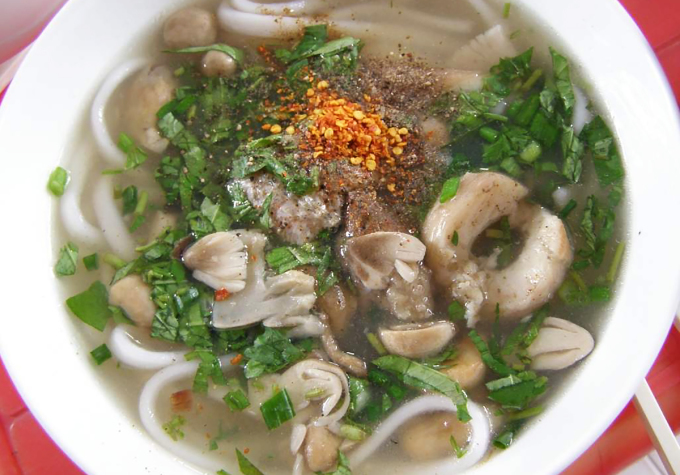
Snakehead fish noodle soup. Photo: Nguyen Nam
After breakfast, depart for Vinh Phuc Eco- tourism Garden (Dong Tam commune, Dong Phu district), about 18 km from Dong Xoai city. Here, you can immerse yourself in nature and experience fruit picking, and check in at the wooden bridge with a tiled roof and a 15.3 m long, 1.26 m diameter wooden beam (the load-bearing structure supporting the entire bridge). From the 33 m high Son Dang tower, you can admire the panoramic view of the regenerated forest characteristic of the Southeast region within the 300-hectare area.
Afterward, visitors travel to Standing Waterfall (Doan Ket commune, Bu Dang district), about 70 km from Dong Xoai city. The waterfall is about 6 meters high and 15 meters wide, with many large rock columns forming a cliff face. The rocks are naturally joined together, creating a unique feature. According to Ms. Kha, during the rainy season, the waterfall's flow has a distinctive yellow color characteristic of the red basalt soil. At the end of the rainy season and the beginning of the dry season, the waterfall's water is clear blue.
Above the waterfall, there are many green trees, providing a resting place where you can camp for the day.
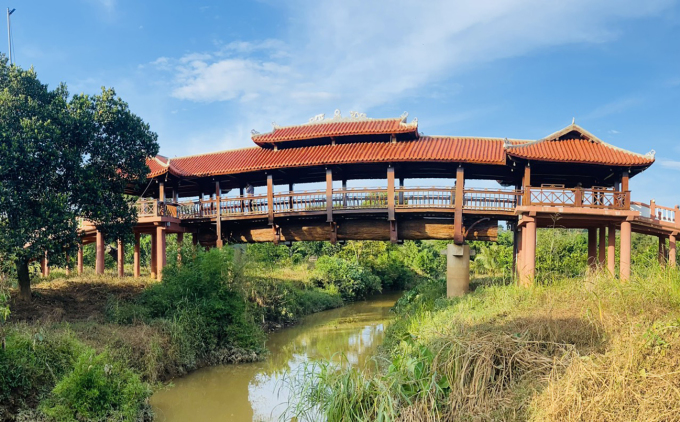
The wooden bridge with a tiled roof has a bridge girder made from a single piece of wood. Photo: Nguyen Nam
Noon
After exploring and experiencing nature, you should visit the S'tieng ethnic cultural reserve in Bom Bo hamlet (Binh Minh commune, Bu Dang district) for lunch and rest. Lunch includes typical dishes such as grilled meat, bamboo rice, stewed soup, and wild vegetables.
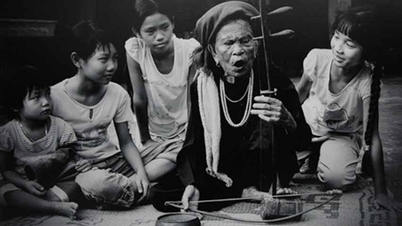
"If you come to Binh Phuoc and don't visit Bom Bo village, famous in the song 'The Sound of the Pestle in Bom Bo Village,' it's a missed opportunity," Ms. Kha said. Here, you'll learn more about the life of the S'tieng people, with their traditional longhouses and reconstructed village areas. The simple yet sturdy rice pestle, the spike traps, and the gourds used to hold water are handcrafted products that make up the material culture of the S'tieng community.
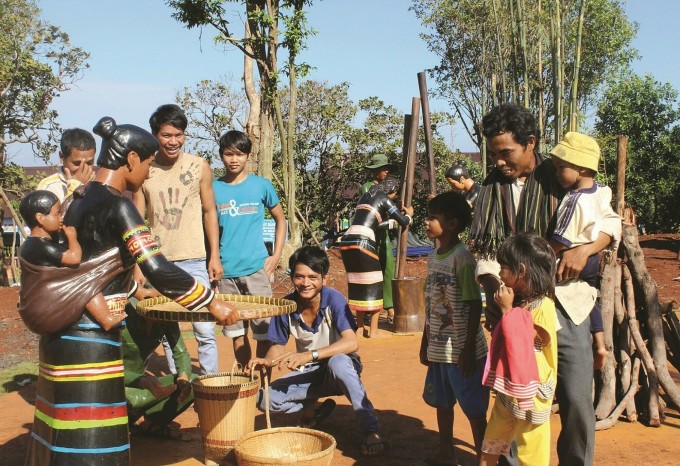
Inside the S'tiêng ethnic cultural conservation area in Bom Bo village. Photo: Minh An
Afternoon
After lunch, the next destination is Bu Gia Map National Park via the DT760 road. The first experience is trekking, which takes about 90 minutes. This is when you can enjoy the wild natural scenery and explore the flora and fauna on Vietnam's special list. You can also watch the sunset filtering through the forest leaves.
Enjoy dinner in the Garden with a variety of local specialties, each set meal starting from 60,000 VND. Experience a cultural exchange with the S'tieng and M'nong people, featuring their gong music. Overnight stay in the Garden.
According to Mr. Le Quang Hoi, Director of the Propaganda, Tourism and Conservation Rescue Center of Bu Gia Map National Park, the center has 8 rooms and a longhouse, each room can accommodate 6 people, and the maximum number of guests the center can serve at the same time is about 90 people. The accommodation price is 100,000 VND per person per night. You can also camp in the forest. It is recommended to consult the Center for a suitable location.
Following Mr. Hoi's suggestion, after dinner, a worthwhile experience is going nocturnal wildlife viewing in the forest. "This is a rather interesting nighttime activity. However, for safety, tourists should not go on their own but must be guided by the center's staff," Mr. Hoi said.
Day 2
Morning
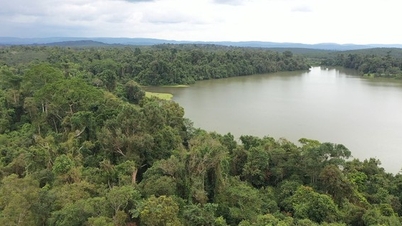
Have breakfast and then travel to Ranger Station No. 2. This is the highest point of Bu Gia Map National Park, so you can see the entire park. From this vantage point, you'll take in the green of the forest blending with the white of the clouds against the blue sky.
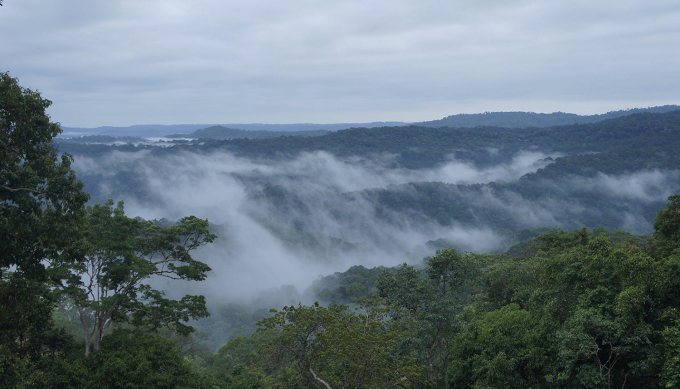
The view from the highest point of Bu Gia Map National Park. Photo: Nguyen Nam
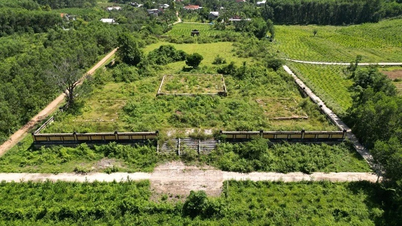
On your trekking trip through the National Park, you will visit the historical site marking the end of the North-South oil pipeline and rest on the grassy area amidst the pine forest, often described as the "miniature Da Lat" of the Southeast region. The route also includes the Dak Mai waterfall, approximately 50 meters wide and 12 meters high.
Noon
Return to Phuoc Long town for lunch at My Le restaurant, enjoying signature dishes such as sticky rice with cashews and catfish (grilled or in hot pot), before heading to the spiritual and cultural complex of Ba Ra Mountain, the third highest mountain in Southern Vietnam (723 m). The air here is fresh and the scenery is beautiful.
Standing on the summit of Ba Ra Mountain, you can see the center of Phuoc Long town, Thac Mo town, and the 12,000-hectare Thac Mo hydroelectric power plant, immersing yourself in the natural atmosphere and feeling the cool breeze from Thac Mo Lake.
At the mountaintop stands the 48-meter-high antenna of Binh Phuoc Radio and Television Station. There is also a shrine dedicated to Thien Hau Thanh Mau and the Lady of the Land (Ba Ra Mountain), and a Buddhist spiritual area.
Evening
On your way back to Dong Xoai city, stop by My Le Forest Park tourist area to visit tea hills, crape myrtle trees, banyan trees, breadfruit orchards, participate in thrilling games like roller coasters, flying saucer rides, bumper cars, or swim in the pool and go fishing.
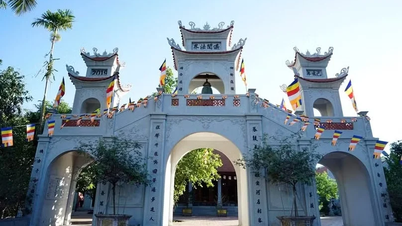
"When you're in Dong Xoai city, if you have time, be sure to visit Quang Minh Pagoda. The pagoda has a unique architecture with its main entrance and windows alternating," Ms. Kha said.
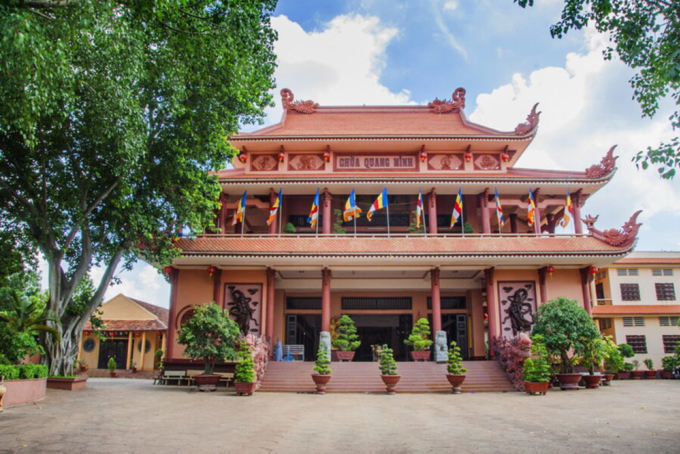
Quang Minh Pagoda. Photo: Huynh Tan
At the top of Quang Minh Pagoda's tower hangs a large bronze bell, symbolizing the idea that its sound brings peace to all. Inside, the pagoda is solemnly decorated, with the central altar dedicated to the Buddha Shakyamuni and the statue of the Thousand-Eyed, Thousand-Armed Bodhisattva.
Some places for dinner include: Anh Em Clay Pot Rice Restaurant, Chinh Seafood Restaurant, Sau Bang Restaurant, and Minh Tuan Clubhouse, offering a variety of traditional dishes such as hot pot, grilled food, and soup, with prices ranging from tens of thousands to hundreds of thousands of dong.
Nguyen Nam
Source link






































































Comment (0)