

Vietnam is placing high hopes on AI, semiconductors, and digital transformation, but in secondary education , students still primarily choose social science subjects to study and take exams in, instead of natural sciences and foreign languages.
The gap between national strategy and educational choices is posing a major challenge regarding the future workforce.
Choosing subjects that reflect a "safe logic"
Starting from the 2025 high school graduation exam, candidates will take four subjects: Mathematics, Literature, and two elective subjects from the remaining subjects. The elective subjects are divided into three groups: social sciences - History, Geography, Education, Technology & Law; natural sciences - technology - Physics, Chemistry, Biology, Informatics, Technology; and Foreign Language.
This selection structure quite clearly reflects the trend of students leaning towards social sciences, STEM, or foreign languages, and will directly impact the structure of Vietnam's human resources in the next 5-10 years.
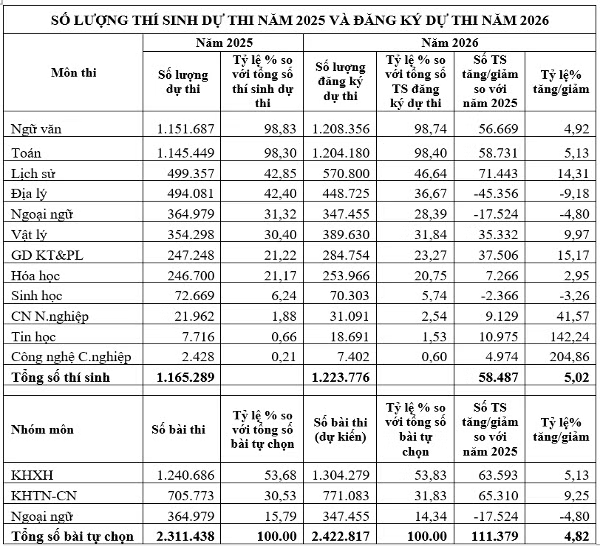
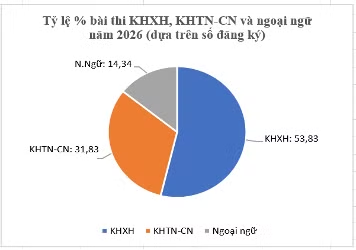
Data from 2026 shows that the natural science and technology (NS&T) group is showing positive growth. The total number of exams in this group is expected to increase from 705,773 to 771,083, a 9.25% increase, significantly higher than the 4.82% increase in the total number of elective exams. The proportion of NS&T exams in this group also increased from 30.53% to 31.83% of the total number of elective exams.
In STEM subjects, Physics saw an increase of nearly 10% compared to the previous year, while Chemistry increased by almost 3%. Notably, technology subjects experienced significant growth despite their relatively small scale: Computer Science increased by over 142%, Industrial Technology by over 204%, and Agricultural Technology by over 41%. This indicates that students are beginning to show greater interest in STEM fields, particularly those related to AI, semiconductors, digital transformation, and high-tech engineering.
However, this trend has not yet created a major shift. The Social Sciences group still dominates with 53.83% of the total elective subjects. Notably, Biology is projected to decrease by another 3.26% in 2026 compared to 2025, highlighting a paradox: biotechnology, considered a strategic field for the 21st century, has yet to attract many students.
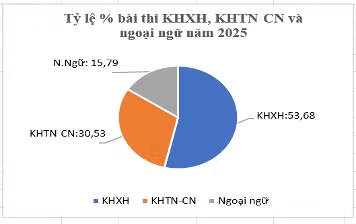
Most notably, the number of foreign language candidates has decreased significantly. In 2026, only 347,455 candidates registered, a decrease of 17,524 compared to the previous year; the proportion of the exam decreased from 15.79% to 14.34%. This is a noteworthy sign, because foreign languages – especially English – are key to accessing global STEM knowledge. If students are more interested in technology but invest less in foreign languages, then their ability to integrate and access modern science will be a major challenge.
Overall, the distribution of the three subject groups in the total number of elective exams shows that students still lean towards "safety and low risk," with the proportion of social science exams remaining above 50%. The number of natural science and technology exams in 2026 increased but not significantly, while foreign language exams decreased noticeably.
The paradox of a nation that wants to advance through technology.
It is noteworthy that while students' choices are shifting towards social sciences, the national development orientation is moving in the opposite direction: accelerating into high technology, AI, big data, semiconductors, new materials, quantum biology, innovation, and digital transformation.
These two currents—one flowing downwards and one flowing upwards—are not yet meeting at the same point.
A nation that wants to develop its technology cannot rely solely on research centers or strong universities. The real foundation must be built from primary and secondary education, where scientific thinking, foreign language skills, and a determination to acquire knowledge are formed.
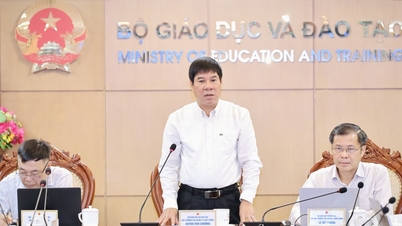
And recently, on April 10, 2026, during discussions in the National Assembly, Minister of Education and Training Hoang Minh Son emphasized that if we want high-quality human resources in universities and vocational fields, the foundation remains general education.
If students increasingly shy away from Physics, Chemistry, Biology, Technology, Computer Science, and English, the gap between national goals and societal capabilities will widen. This is not just a story about education, but a story about the future workforce.
In fact, Vietnam has no shortage of outstanding students in international competitions in fields such as Mathematics, Physics, Chemistry, Biology, and Computer Science.
At the same time, there is no shortage of students who achieve high scores in foreign languages or win national and international academic awards. But these are achievements of the elite group, not a common foundation.
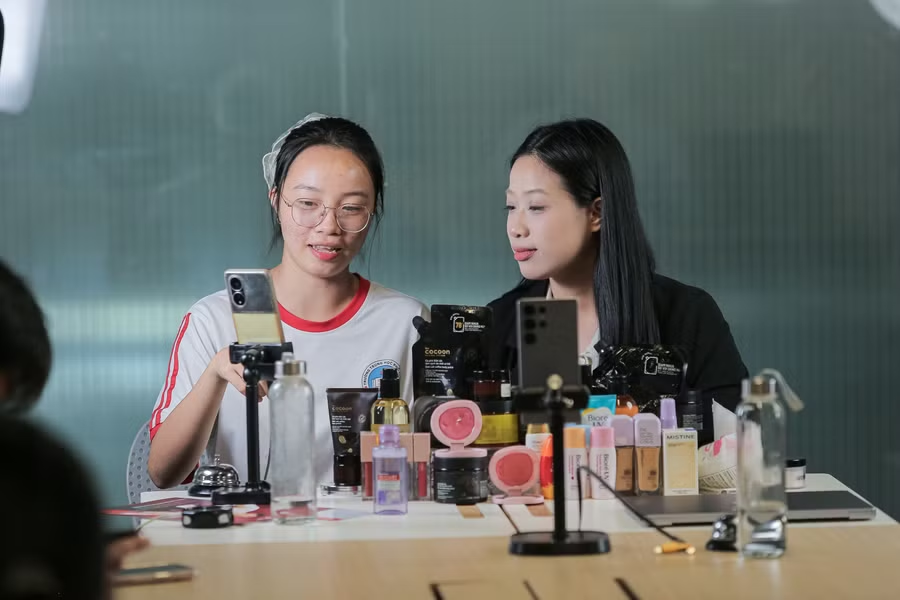
The problem lies in the fact that a strong education system cannot rely solely on elites; it must combine "the entire population and the elite," as Resolution No. 71 on breakthroughs in education and training development affirms. A sufficiently broad, deep, and solid foundation of general education is necessary.
Particularly at the lower secondary level, science is an integrated subject. Due to a shortage of integrated science teachers, many schools have to have three teachers—Physics, Chemistry, and Biology—teach and assess students together, which limits their interest in science.
In many places, access to laboratory work, practical science exercises, or in-depth English-language reading remains limited, making STEM and foreign languages a challenging field for the few. This creates significant disparities between different regions.
In 2025, Ho Chi Minh City (formerly) stood out with 44% of students choosing Physics, 28% choosing Chemistry, and 50% choosing English, while History and Geography only accounted for about 25-26%.
Conversely, a central province has a very high percentage of students choosing social sciences: History 44.83%, Geography 38.63%, Education, Technology & Law 29.07%, while English only reaches 24.67%.
The structure of the examination system shapes students' choices.
This trend cannot be viewed solely as a personal choice by students. The structure of the university examination and admissions system also plays a significant role.
The high school entrance exam is very important, focusing mainly on three subjects: Mathematics, Literature, and Foreign Language, leading students to not invest much time in natural sciences and technology.
While the high school graduation exam is designed to reduce pressure and increase subject choices, students will naturally choose subjects with less risk. As university admission methods become more diverse, and many majors no longer have strict requirements for science subject combinations, but instead feature many "unusual combinations," the motivation to study STEM further decreases.
In that logic, learning to "get good grades" gradually replaced learning to "build a long-term career foundation." And while the system encourages flexibility, it also inadvertently creates a fragmentation in subject choices.
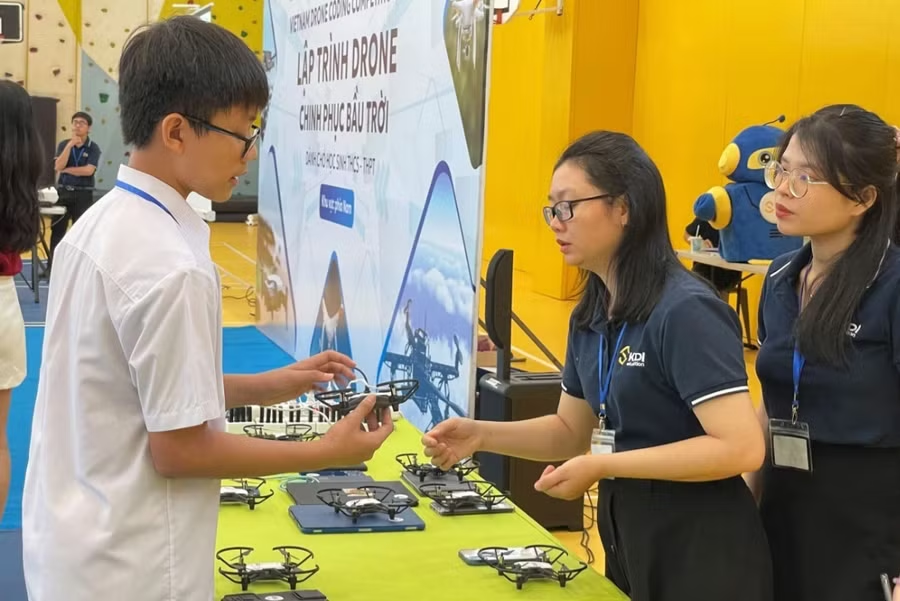
The story of South Korea illustrates a very clear reality: it is impossible to become a technological powerhouse if STEM education is not at the center of general education. Behind the development of technology corporations like Samsung, SK Hynix, LG, and Hyundai Motor Group... lies an education system that values mathematics, science, and English from the primary school level.
In South Korea, excelling in STEM fields is almost synonymous with more opportunities to attend prestigious universities, access high-paying jobs, and participate in cutting-edge technology sectors.
However, South Korea's success isn't limited to technology. The country has also created cultural achievements with global influence, such as the Oscar-winning film Parasite in 2020, the internationally acclaimed Squid Game series, and the K-pop group BTS becoming a global cultural icon. Korean literature has also made its mark, with author Han Kang winning the Nobel Prize in Literature in 2024.
This shows that the more rapidly a society modernizes, the more it needs a solid cultural and humanistic foundation. Technology can create economic power, but it is culture and the ability to tell a nation's story that create soft power and national identity.
Solutions to help students choose subjects and take exams in a way that harmonizes human resources.
The current issue is not that more students are choosing social sciences over STEM, but rather how to create a reasonable balance between these subject groups to meet the requirements of national development in the new era.
In the long term, the Ministry of Education and Training needs to develop a strategy to regulate the subject structure. Besides the four compulsory subjects—Mathematics, Literature, Foreign Language, and History—students should choose more harmonious combinations of subjects that align with the country's development direction. For example, nationwide, approximately 40-50% of subjects should be in Social Sciences, and 50-60% in Natural Sciences and Technology. This is not just a matter of choosing subject combinations and exams, but also a strategic direction for national human resources over the next 10-15 years.
To achieve this, the Ministry of Education and Training needs to continue reforming the curriculum, testing, and admissions process for grade 10, focusing on increasing the practical value of STEM and foreign languages, while ensuring the foundational role of social sciences in shaping thinking, culture, and civic responsibility.
Departments of Education and Training need to invest more evenly in schools in terms of qualified teachers, laboratories, practical training, foreign language teaching, and digital transformation, especially in rural and mountainous areas, so that students have more equitable opportunities to access STEM education.
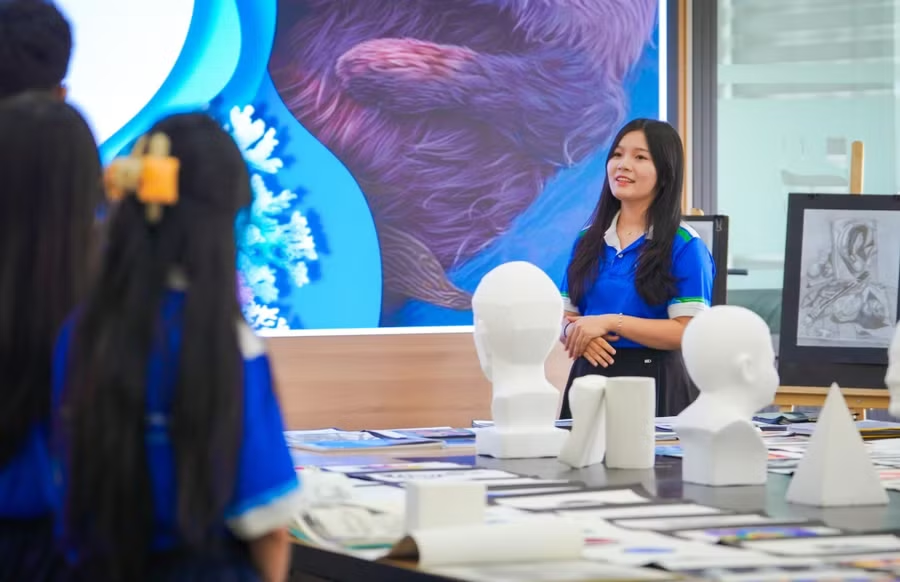
Most importantly, at the lower and upper secondary levels, where students' choices are directly shaped, schools need to strengthen early career guidance, advising students on subject choices based on their abilities, strengths, and the country's development needs, rather than simply following the mentality of "easy to learn, easy to pass exams."
STEM education must also be linked to experiences, scientific research, technology, and innovation to create genuine interest for students. At the same time, social science education needs to be reformed in a modern direction, rich in critical thinking and humanistic values, helping students understand history, culture, society, and civic responsibility in the digital age.
A nation aspiring to become a science and technology powerhouse cannot rely solely on a small group of STEM talents; it needs to popularize scientific thinking, digital skills, and foreign languages among a large number of students. However, a society that is strong only in technology but lacks a humanistic foundation will also struggle to achieve sustainable development.
Therefore, the goal of Vietnamese general education is not to choose STEM or social sciences, but to build a generation of citizens who are both scientifically and technologically competent, culturally profound, socially responsible, and capable of integration in the era of national development.
Source: https://giaoducthoidai.vn/can-can-bang-giua-stem-va-khoa-hoc-xa-hoi-nhan-van-post778185.html



![[Photo] Ba Lang An Lighthouse - the "eye of the sea" amidst the "rock museum" of Quang Ngai province.](https://vphoto.vietnam.vn/thumb/1200x675/vietnam/resource/IMAGE/2026/05/29/1780038698840_anh-man-hinh-2026-05-29-luc-14-10-42.png)
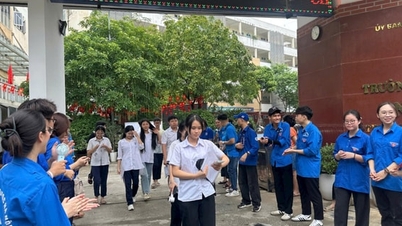
![[Image] Pleasant weather helps students enter the 10th grade entrance exam with confidence.](https://vphoto.vietnam.vn/thumb/1200x675/vietnam/resource/IMAGE/2026/05/29/1780034401612_ngay-1-thi-lop-10-minh-duy-8-5009-jpg.webp)







































































Comment (0)