

Technological risks and supply chain dependencies
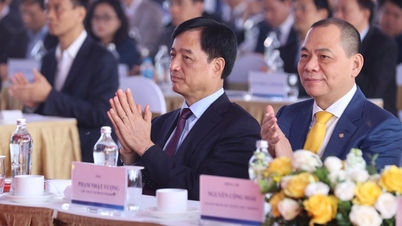
Speaking at the "International Economic Cooperation on Energy and Free Trade" conference on December 16th in Hanoi, Dr. Nguyen Anh Tuan, Vice President of the Vietnam Energy Association (VEA), stated that energy and free trade have now merged into one, becoming a dual driving force shaping the 21st-century economy.
Vietnam is a highly open economy, deeply involved in new-generation free trade agreements (CPTPP, EVFTA). However, as traditional tariff barriers are removed, Vietnamese businesses face more robust "green technical barriers." Typical examples include the EU's Carbon Border Adjustment Mechanism (CBAM) and similar laws in the US.
"If Vietnamese products – from shoes and shirts to electronic chips – are manufactured using 'brown' energy sources, they will lose their competitive advantage even with zero import tariffs. Therefore, energy transition is a matter of survival for national competitiveness," Mr. Tuan emphasized.
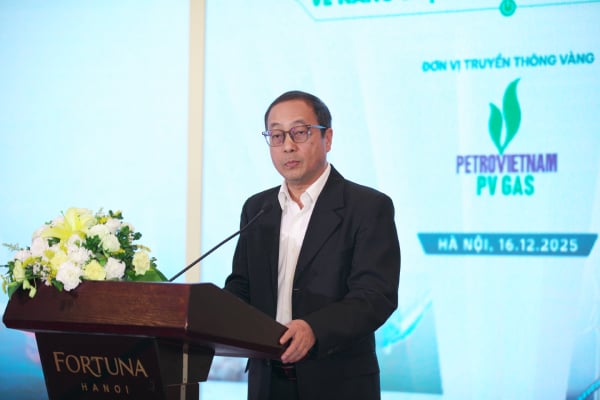
Sharing the same view, Mr. Dang Huy Dong - Director of the Institute for Planning and Development Research (formerly Deputy Minister of Planning and Investment) - believes that to attract capital into strategic sectors such as artificial intelligence (AI), digital transformation, or logistics, a prerequisite is a stable, reliable, and "clean" electricity supply. By solving the energy problem, Vietnam will be able to take advantage of opportunities from the shift in global supply chains.
From the perspective of the science and technology business community, the biggest challenge in the energy transition lies not only in finance but also in technology. Dr. Nguyen Anh Tuan frankly pointed out the major technological risks that Vietnam is facing.
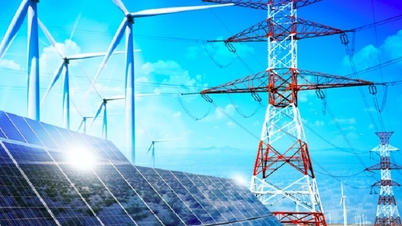
The massive integration of renewable energy sources (wind, solar) is putting pressure on the traditional power grid, which is not yet "smart" enough and lacks large-scale energy storage systems (BESS). Without addressing the challenges of storage technology and frequency regulation, investing in additional power generation will become wasteful because the full capacity cannot be utilized.
Energy technology is changing at a dizzying pace. Investing too early in unfinished technologies (such as green hydrogen or large-scale green ammonia production) exposes businesses to high capital costs and operational risks. Conversely, clinging to outdated technologies risks owning "stuck assets" as environmental standards tighten. Choosing the right technology at the right time is a challenging task.
In addition, there is a dependence on foreign supply chains. Despite its great potential, Vietnam still has to import most of its core technology equipment.
"Energy security in the new era is about the ability to master or securely access the technology supply chain. Any disruption will slow down our progress," warned the Vice President of VEA.
The core solution?
To address these challenges, technology will play a key role.
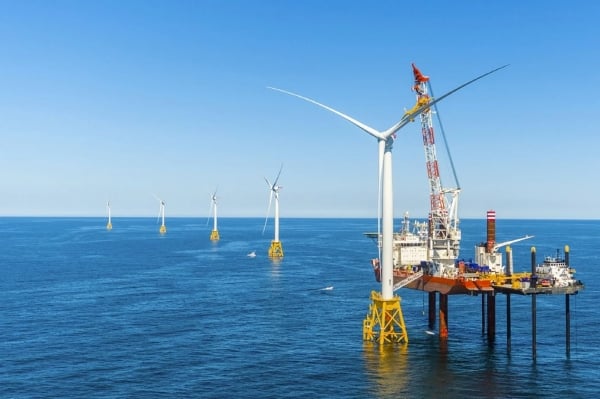
Associate Professor, Dr. Pham Hoang Luong - Head of the Thermal Energy Systems chuyên môn group, School of Mechanical Engineering, Hanoi University of Science and Technology, and Vice President of the Vietnam Clean Energy Association, analyzed the energy transition problem based on the "energy triangle": ensuring social needs; energy security - economic efficiency; and environmental sustainability.
"To achieve these three goals simultaneously, technology plays a crucial role. Unlike other sectors that can rely on policy changes, energy requires a solid technological foundation to resolve the conflicts within this triangle," asserted Associate Professor Pham Hoang Luong. He also emphasized the importance of multilateral cooperation, including cooperation among developing countries, to promote appropriate technological solutions.
Based on that reality, Dr. Nguyen Anh Tuan proposed that the international cooperation strategy needs to shift strongly from the "equipment buying and selling" model to "cooperation in development and technology transfer".
Vietnam needs to encourage global energy corporations to establish R&D centers in Vietnam, cooperating with domestic universities and science and technology enterprises to localize equipment, especially smart grid and energy storage technologies.
Arguing that technology cannot precede institutions and that advanced technological solutions need to be effective, Dr. Nguyen Ngoc Hung - Head of the Energy Economics Department (Institute of Energy, Ministry of Industry and Trade) proposed the need to quickly complete a transparent and competitive electricity market.
Mr. Hung suggested the need for flexible financial mechanisms, research into government guarantees for key projects, and removal of obstacles to facilitate the flow of private capital and FDI. For state-owned enterprises, resources should be focused on strategic infrastructure such as electricity transmission and national fuel reserves.
Source: https://doanhnghiepvn.vn/doanh-nghiep/can-trong-voi-bay-cong-nghe-trong-chuyen-dich-nang-luong/20251216094656758

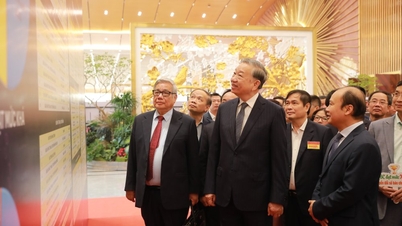
![[Photo] General Secretary To Lam visits the exhibition space showcasing books, photo exhibitions, and achievements of digital transformation in journalism.](/_next/image?url=https%3A%2F%2Fvphoto.vietnam.vn%2Fthumb%2F1200x675%2Fvietnam%2Fresource%2FIMAGE%2F2025%2F12%2F19%2F1766110879215_1766110240024-jpg.webp&w=3840&q=75)
![[Photo] Enchanting ancient rose garden on the mountainside in Nghe An](/_next/image?url=https%3A%2F%2Fvphoto.vietnam.vn%2Fthumb%2F1200x675%2Fvietnam%2Fresource%2FIMAGE%2F2025%2F12%2F19%2F1766109900916_vuon-hong-chin-do-thu-hut-du-khach-toi-check-in-o-ha-noi-3-20162778-1671624890024-1671624890104198100259.jpeg&w=3840&q=75)










































![[INFOGRAPHIC] Overview of the Hoa Phat Dung Quat Rail and Special Steel Production Plant Project](https://vphoto.vietnam.vn/thumb/402x226/vietnam/resource/IMAGE/2025/12/19/1766111183203_z7339170069817-126a3e5a095f62e606a0be41015c1b80.jpeg)































Comment (0)