

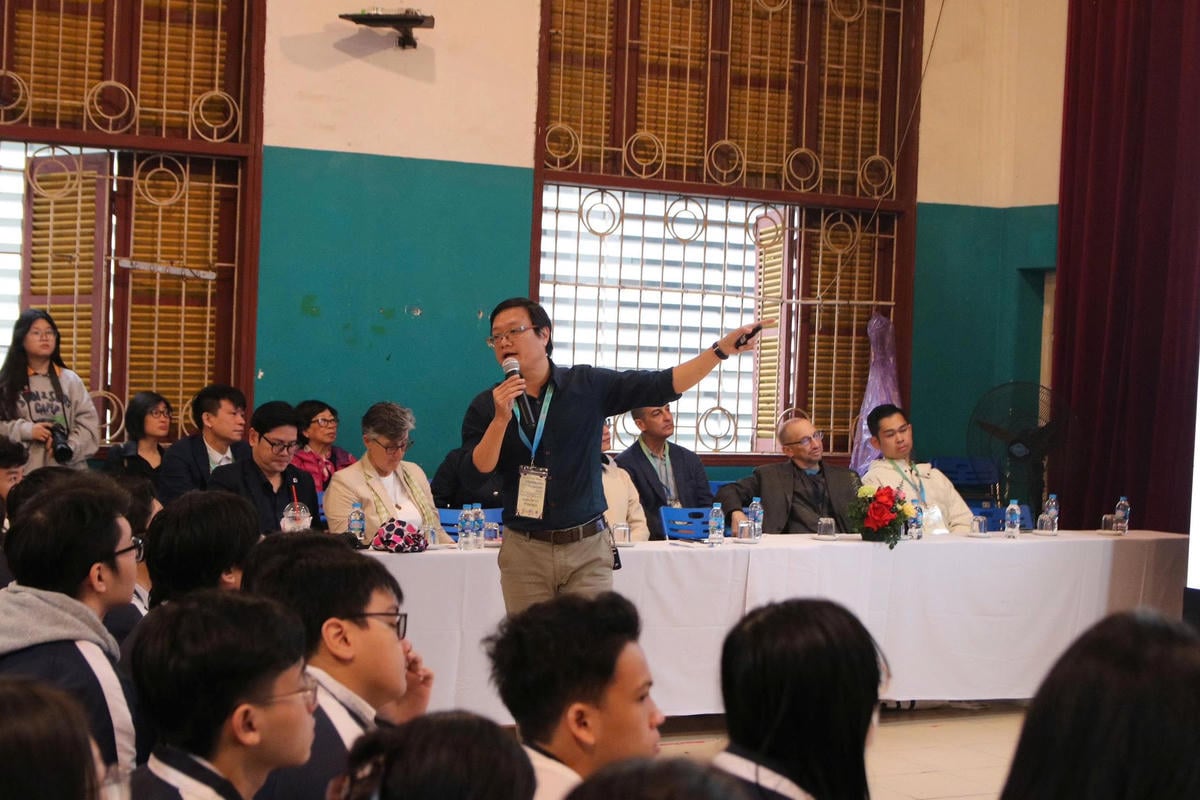
Knowledge, culture, and creativity – key factors determining national competitiveness.
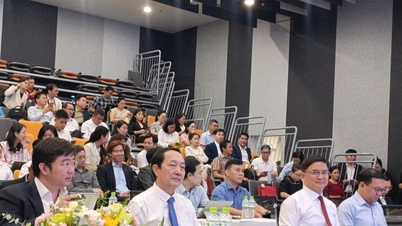
Nearly 200 papers from 280 scholars, experts, and policymakers from Vietnam and abroad converged in Hanoi at the 15th International Conference "Engaging with Vietnam," which took place over four days in mid-December at Vietnam National University, Hanoi (VNU). The conference included 10 plenary sessions and 40 parallel sessions, all of which delved deeply into the topic.
The presentations demonstrated efforts to clarify many important topics, including: the current state and challenges in knowledge building in the AI era; new growth drivers for Vietnam based on the cultural industry; design, digital content and the creative economy ; the future of Vietnamese higher education in the context of institutional and technological innovation; culture, heritage and identity in the digital environment; and discussions on development policies and international integration in the cultural industry.
According to Associate Professor Dr. Dao Thanh Truong, Vice Director of Vietnam National University, Hanoi, humanity is in the midst of historical transformations as artificial intelligence not only supports but is reshaping many areas of social life. Vietnam National University, Hanoi, with its orientation towards becoming an elite multidisciplinary university, recognizes the need to create a knowledge ecosystem where science and technology, culture, art, and creative industries are closely connected and mutually supportive to promote innovation.
This also serves as a foundation for training human resources with interdisciplinary thinking, professional ethics, cultural aesthetics, and creative abilities—qualities that AI can hardly replace.
According to Deputy Minister of Foreign Affairs Nguyen Minh Vu, knowledge, culture, technology, and innovation are becoming key factors determining national competitiveness. He believes that culture has long been the spiritual foundation of society, and also a soft power that helps connect nations, enhance cooperation, and promote the image of Vietnam to the world.
In the context of AI dramatically changing how humans learn, research, and create, culture plays an increasingly important role in guiding technology development towards a humane direction, respecting identity and maintaining diversity.
Education and Culture in the AI Age: Redefining Learning and Innovation Models
Associate Professor Dr. Nguyen Van Hieu, Rector of the School of Interdisciplinary Sciences and Arts (SIS, Vietnam National University, Hanoi), affirmed that AI is forcing us to redefine how we learn and create. Traditional linear learning models are being replaced by open, networked, interdisciplinary models that require learners to have the capacity to integrate knowledge, critical thinking, ethics, artistic creativity, and high adaptability in a digitized environment.
He pointed out the challenges facing the creative industry: intellectual property rights when AI participates in creation; the risk of aesthetic homogenization; the loss of identity in the face of global data models; and ethical issues when AI can create fake images, mimic artists' voices, or recreate deceased figures without consent.
These issues require new institutions to protect cultural diversity and ensure that technology serves humanity.
"Today, nations compete not only with material resources but also with their ability to create new value from knowledge, design, technology, and cultural identity. However, this also necessitates a redefinition of how we learn and create, especially in the context of the digital age," Associate Professor Dr. Nguyen Van Hieu expressed.
In particular, the development of AI in the last few years has not only changed the nature of work and the future of creative activities, but has also re-examined human nature, the creative subject, intellectual property rights, technological ethics, and the role of art in the age of machine learning.
According to Associate Professor Dr. Nguyen Van Hieu, in this context, a thorough analysis of the relationship between education, knowledge, technology, creativity, and culture is of particular importance to Vietnam.
The cultural industry, aiming to contribute 7% of GDP by 2030, is becoming a new growth engine thanks to a combination of rich cultural heritage, a young workforce, and rapid adaptability to technology. AI is opening up new avenues of creativity: automating content production, design, film, games, virtual exhibitions, digital museums, etc., while also helping Vietnamese creative products access the global market.
However, to capitalize on this opportunity, according to Deputy Minister of Culture, Sports and Tourism Ta Quang Dong, Vietnam needs to build a strong interdisciplinary ecosystem combining culture, art, technology, economics, and media; reform education creatively in an open direction; and promote international cooperation in the cultural industry.
The discussions and recommendations at the workshop are expected to make a practical contribution to policy planning, the development of the creative industry, the enhancement of higher education capacity, and the building of Vietnam's knowledge ecosystem in the AI era.
Source: https://daidoanket.vn/kien-tao-tri-thuc-van-hoa-va-giao-duc-trong-ky-nguyen-ai.html

![[Photo] Prime Minister Pham Minh Chinh receives Lao Minister of Education and Sports Thongsalith Mangnormek](/_next/image?url=https%3A%2F%2Fvphoto.vietnam.vn%2Fthumb%2F1200x675%2Fvietnam%2Fresource%2FIMAGE%2F2025%2F12%2F16%2F1765876834721_dsc-7519-jpg.webp&w=3840&q=75)
![[Live] 2025 Community Action Awards Gala](/_next/image?url=https%3A%2F%2Fvphoto.vietnam.vn%2Fthumb%2F1200x675%2Fvietnam%2Fresource%2FIMAGE%2F2025%2F12%2F16%2F1765899631650_ndo_tr_z7334013144784-9f9fe10a6d63584c85aff40f2957c250-jpg.webp&w=3840&q=75)

![[Photo] Prime Minister Pham Minh Chinh receives the Governor of Tochigi Province (Japan)](/_next/image?url=https%3A%2F%2Fvphoto.vietnam.vn%2Fthumb%2F1200x675%2Fvietnam%2Fresource%2FIMAGE%2F2025%2F12%2F16%2F1765892133176_dsc-8082-6425-jpg.webp&w=3840&q=75)
![[Image] Leaked images ahead of the 2025 Community Action Awards gala.](/_next/image?url=https%3A%2F%2Fvphoto.vietnam.vn%2Fthumb%2F1200x675%2Fvietnam%2Fresource%2FIMAGE%2F2025%2F12%2F16%2F1765882828720_ndo_br_thiet-ke-chua-co-ten-45-png.webp&w=3840&q=75)


























































Comment (0)