

Students can choose elective courses with AI education content.
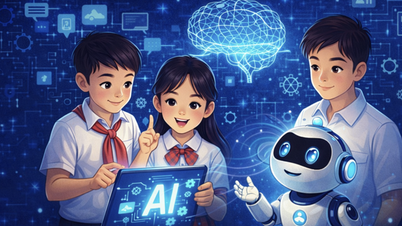
According to the Ministry of Education and Training, the AI education content framework for students is developed based on four main knowledge strands, corresponding to four competency domains, which are intertwined and complementary: human-centered thinking, AI ethics, AI techniques and applications, and AI system design.
The curriculum framework is designed to correspond to two educational stages: the basic education stage (including primary and lower secondary levels) and the vocational orientation education stage (upper secondary level).
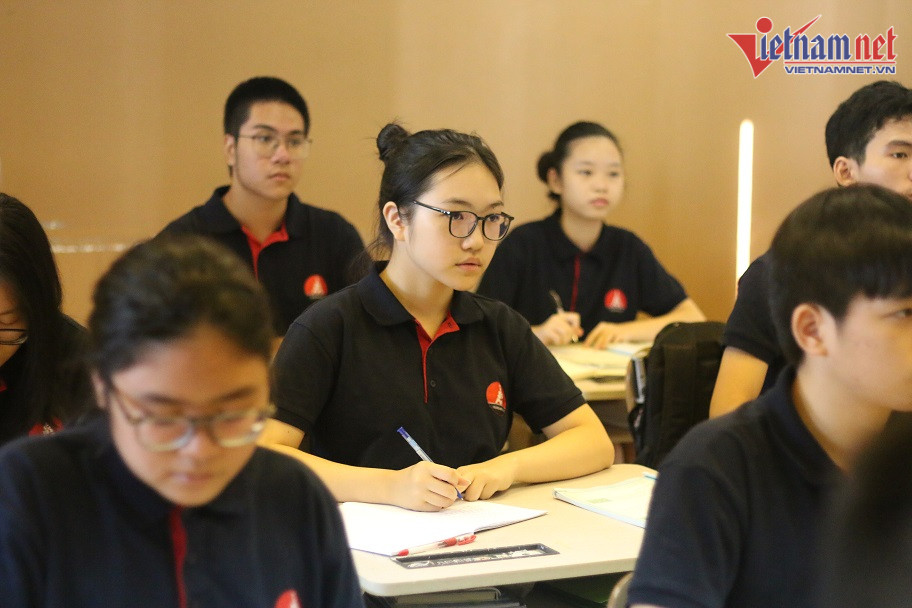
At the primary school level, students primarily experience simple, intuitive AI applications to form initial concepts and recognize the role of AI in their lives.
At the middle school level, students learn how to use AI tools to create digital products and solve academic problems.
At the high school level, students are encouraged to explore, design, and improve simple AI tools through science projects.
In addition to core educational content, students can choose elective courses to enhance practical skills, gain deeper insights into AI application areas, or learn programming techniques and AI system development.
Flexible organization, creating enthusiasm for students.
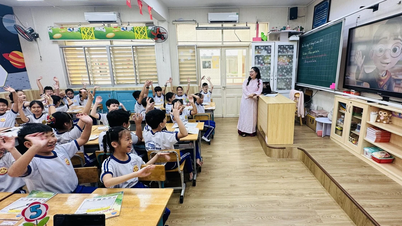
According to the AI education framework, teachers should apply active teaching methods during the teaching process, focusing on experience, practice, and projects.
Project-based learning should be encouraged to foster collaboration, self-learning, and creativity. Lessons should be organized flexibly, engaging students while ensuring safety and effectiveness.
In addition, teachers choose teaching methods that are appropriate to the lesson content. Some topics, such as AI ethics, risk identification, and policy analysis, can be taught through discussion, debate, and case studies without the need for computers.
Simultaneously, connect and integrate AI knowledge with practical problems in learning, daily life, production, and public services. Students should not only propose solutions but also be able to verify and evaluate the effectiveness and ethical and humanistic aspects of those solutions. Differentiated and individualized teaching should be implemented.
The AI education framework also sets out assessment criteria. These include both regular and periodic assessments that closely adhere to AI competency components and core content areas, while also being based on the manifestation of the five key qualities and three general competencies identified in the overall curriculum.
Teachers need to create learning profiles to store and regularly update each student's learning progress throughout the course.
Source: https://vietnamnet.vn/bo-gd-dt-ban-hanh-khung-noi-dung-thi-diem-giao-duc-ai-cho-hoc-sinh-2473186.html


![[Photo] Prime Minister Pham Minh Chinh receives Lao Minister of Education and Sports Thongsalith Mangnormek](/_next/image?url=https%3A%2F%2Fvphoto.vietnam.vn%2Fthumb%2F1200x675%2Fvietnam%2Fresource%2FIMAGE%2F2025%2F12%2F16%2F1765876834721_dsc-7519-jpg.webp&w=3840&q=75)
![[Image] Leaked images ahead of the 2025 Community Action Awards gala.](/_next/image?url=https%3A%2F%2Fvphoto.vietnam.vn%2Fthumb%2F1200x675%2Fvietnam%2Fresource%2FIMAGE%2F2025%2F12%2F16%2F1765882828720_ndo_br_thiet-ke-chua-co-ten-45-png.webp&w=3840&q=75)
![[Photo] Prime Minister Pham Minh Chinh receives the Governor of Tochigi Province (Japan)](/_next/image?url=https%3A%2F%2Fvphoto.vietnam.vn%2Fthumb%2F1200x675%2Fvietnam%2Fresource%2FIMAGE%2F2025%2F12%2F16%2F1765892133176_dsc-8082-6425-jpg.webp&w=3840&q=75)












































![[Photo] Prime Minister Pham Minh Chinh attends the Vietnam Economic Forum 2025](https://vphoto.vietnam.vn/thumb/402x226/vietnam/resource/IMAGE/2025/12/16/1765893035503_ndo_br_dsc-8043-jpg.webp)



























Comment (0)