

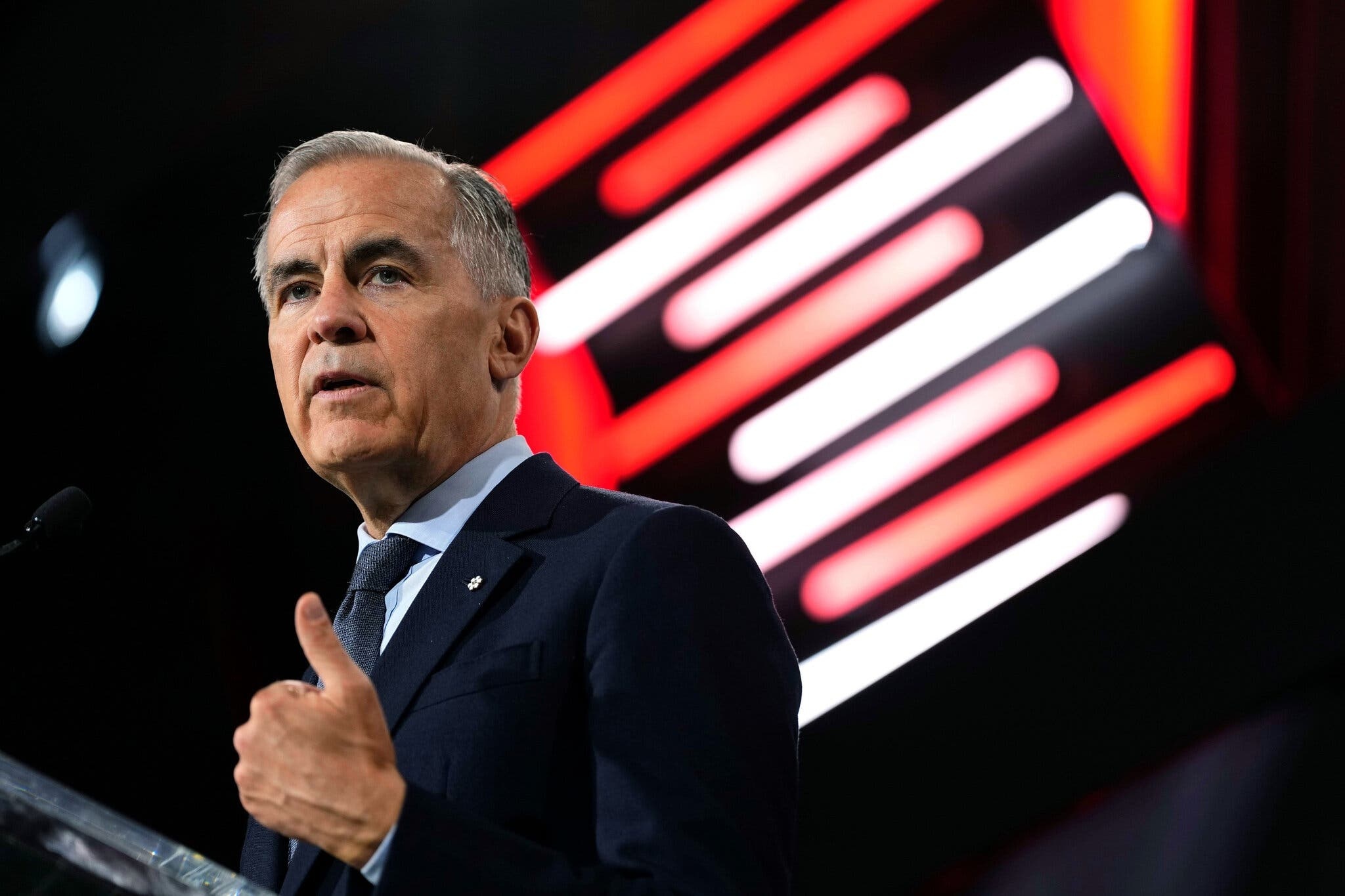
On May 27, Canadian Prime Minister Mark Carney announced that the Canadian Air Force would purchase a squadron of military surveillance aircraft from Sweden.
Last year, Carney declared that Canada had become too dependent on the United States for defense and would push for increased military spending to its highest level in decades.
This move helps Ottawa end years of failing to meet NATO's minimum defense spending target of 2% of GDP.
Since becoming prime minister , Carney has repeatedly stated that the proportion of Canada's defense budget allocated to American companies will decrease compared to before.
"The era when our military sent 70 cents per dollar to America is over," Carney said in Montreal last month.
Why did Canada reject the American contractor?
The GlobalEye surveillance aircraft was developed by the Swedish defense group Saab. Canada chose GlobalEye over two surveillance aircraft models offered by American contractors, one of which was manufactured by Boeing.
The deal comes as Canada is reconsidering its purchase of up to 88 F-35 fighter jets from the US, opting instead to buy Gripen fighter jets from contractor Saab.
Canada has now purchased the first batch of 16 F-35 fighter jets from the United States. However, Canadian Industry Minister Melanie Joly is calling for an increase in the proportion of fighters manufactured in Canada. Saab has now committed to operating a Gripen fighter jet manufacturing facility in Canada.
 |
A model of the GlobalEye surveillance aircraft from the Swedish defense group Saab. Photo: Reuters . |
Speaking at the defense industry exhibition in Ottawa on May 27, Carney said that approximately 3,000 Canadian workers would be involved in the production of the GlobalEye surveillance aircraft right here in Canada.
“This is an example of how Canada’s defense and industrial strategy is being implemented. This will help build Canada’s strategic economy , create jobs for Canadians, and strengthen Canada’s position as one of the world’s leading nations,” Carney said.
The Canadian government has not yet announced the number of GlobalEye aircraft it will purchase from Saab, nor the total cost of the deal. However, an updated document from the Canadian Ministry of Defence in December 2025 indicates that more than 5 billion Canadian dollars (approximately 3.6 billion US dollars) has been allocated to the project.
Despite Carney's commitment to raising Canada's defense spending to 3.5% of GDP by 2035, the Trump administration remains unsatisfied.
Last week, US Deputy Secretary of Defense Elbridge Colby announced that Washington had suspended the activities of the Standing Council for Defense Coordination. This cooperation mechanism between the two countries, which had existed since 1940, typically met once or twice a year to discuss common military issues between the US and Canada.
"Unfortunately, Canada has not made credible progress on its defense commitments," Colby wrote on social media.
Mr. Carney then sought to downplay the significance of the move, stating that the council had not actually met since 2024.
"I won't overstate the importance of this. We still have many areas of very close defense cooperation with the United States," Carney said.
Canada "distances itself" from the US so that both can become stronger.
Last year, Trump made statements expressing anger towards the Canadian government, speaking about Canada's annexation as the 51st state of the United States.
Later, Mr. Carney also made strong statements at the World Economic Forum in Davos, Switzerland, in January.
In his speech, Carney referred to "American hegemony," while also calling for middle powers to cooperate and warning that "if we are not at the negotiating table, we will be on the menu."
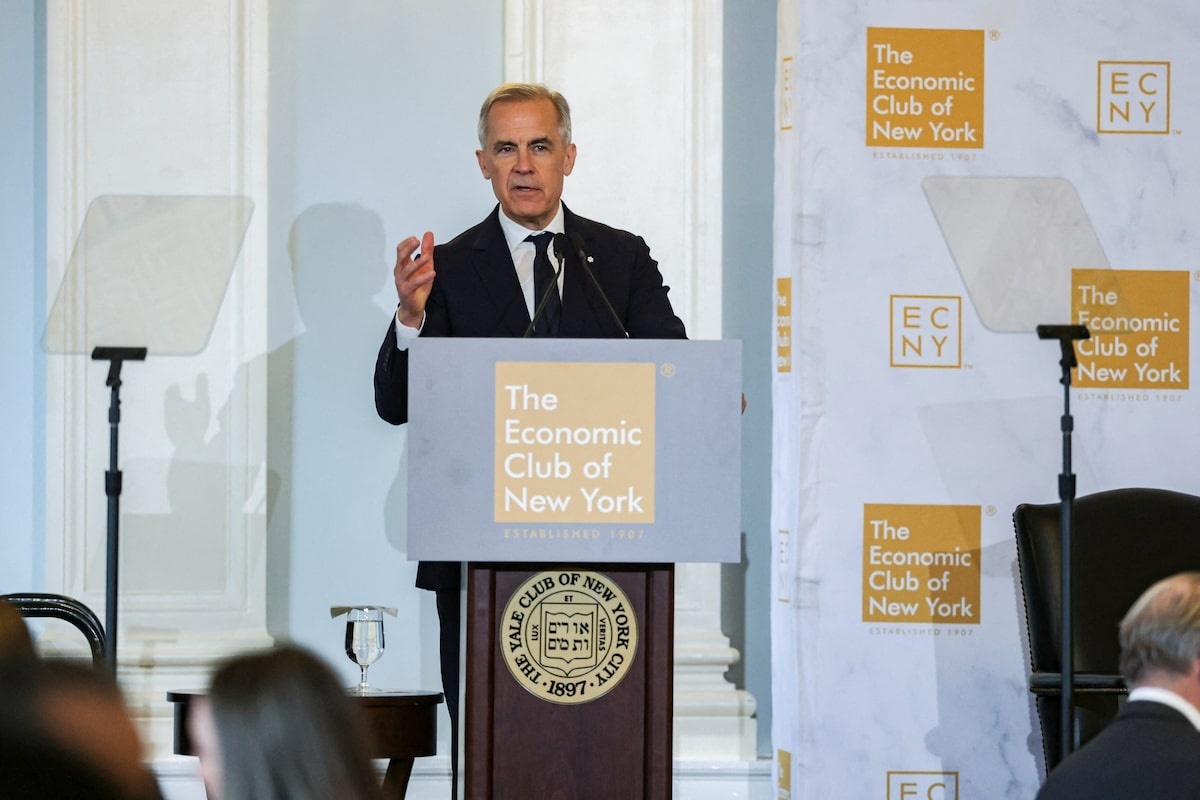 |
Mr. Carney speaks at the New York Economic Club on May 28. Photo: New York Times. |
During his visit to New York City this week, Mr. Carney adopted a much more conciliatory tone. He described the relationship between Ottawa and Washington as having "weaknesses that need to be addressed."
Speaking at the New York Economic Club on May 28, Carney argued that Ottawa's efforts to become more independent, in order to reduce its dependence on the US, would benefit the US.
“This is good for Canada, and it’s also good for the United States, because when Canada is stronger, Canada will be a better ally. We know that throughout the centuries, despite our differences, Canada and the United States have always found a way to overcome them because we share deep common values and interests,” Carney said.
Combining Trump's campaign slogan with his own message, Carney declared: "A strong Canada will make America great again."
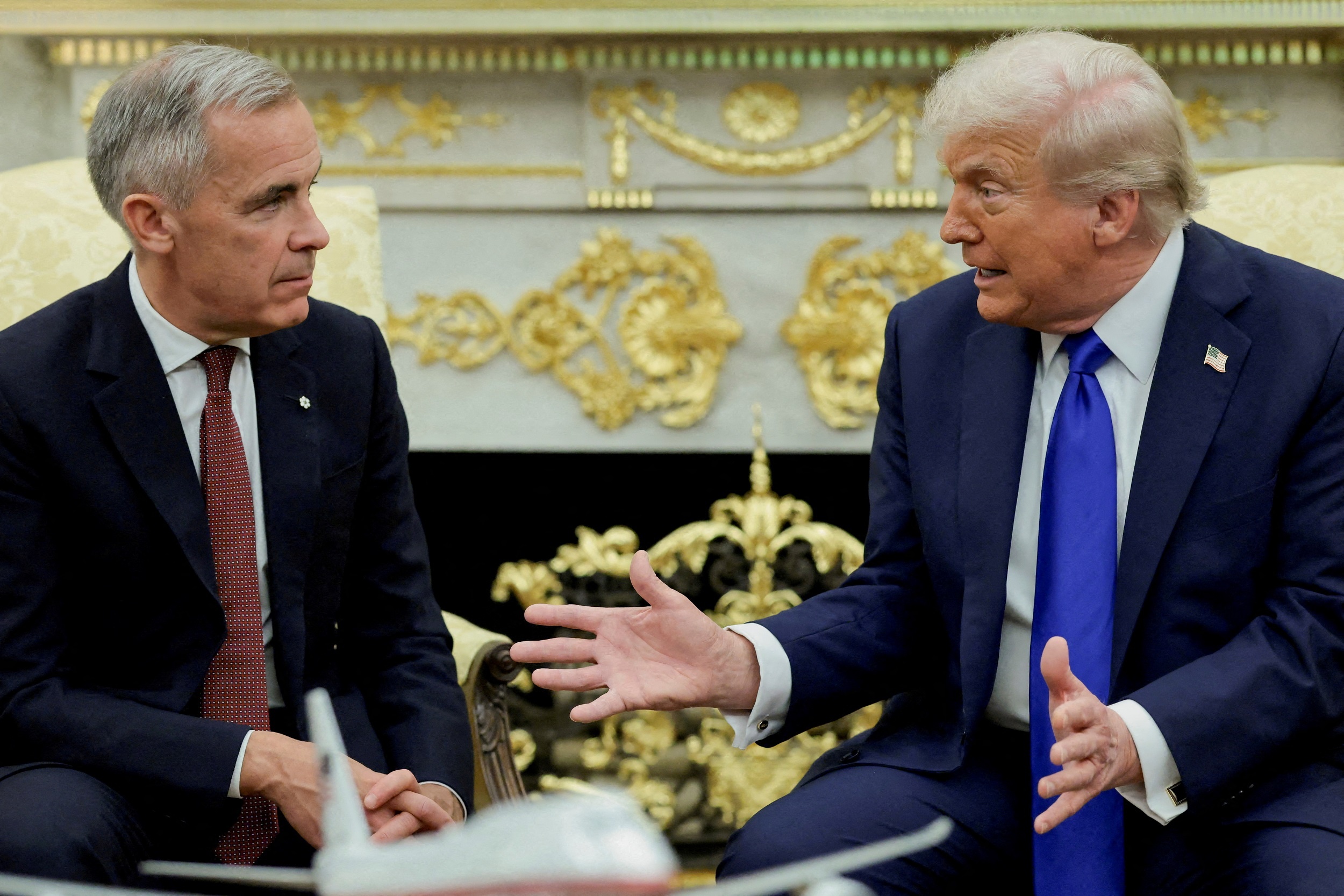 |
Mr. Carney during a meeting with Mr. Trump at the White House in October 2025. Photo: Reuters . |
However, the Canadian Prime Minister also mentioned the global upheavals created by the Trump administration.
“The world is experiencing a breakdown. Under American leadership, technological change is accelerating at an unprecedented pace. The U.S. is reshaping entire trade relations, which it has the right to do. But the world is also becoming more divided and more dangerous,” Carney emphasized.
According to Carney, Canada has responded quickly to these changes by “diversifying its partnerships abroad.” “We have to look after ourselves and be true to ourselves,” he said.
The Canadian Prime Minister also directly criticized the tariffs that Trump imposed on Canada's steel, aluminum, and automotive industries.
He argued that returning to tariff-free car trade "is the best and most sustainable way for both sides to address increasingly fierce global competition."
He also reiterated Canada's role as the largest supplier of oil, natural gas, electricity, and potassium to the United States. Canada also exports many other important minerals to the US, such as nickel, copper, and uranium.
"During a time of global energy crisis, Canada provides the United States with a stable source of energy and strategic minerals that help fuel American growth," Carney emphasized.
Despite criticizing some of Trump's policies, Carney did not forget to praise the United States. He said that America is approaching its 250th anniversary as "the most dynamic, resilient, and innovative nation the world has ever known."
“The fundamental values of America—freedom, democracy, justice, and openness—should continue to guide the future of America and the world. That future should include a new partnership with Canada. A genuine partnership that reshapes cooperation in areas facing intense global competition,” Carney suggested.
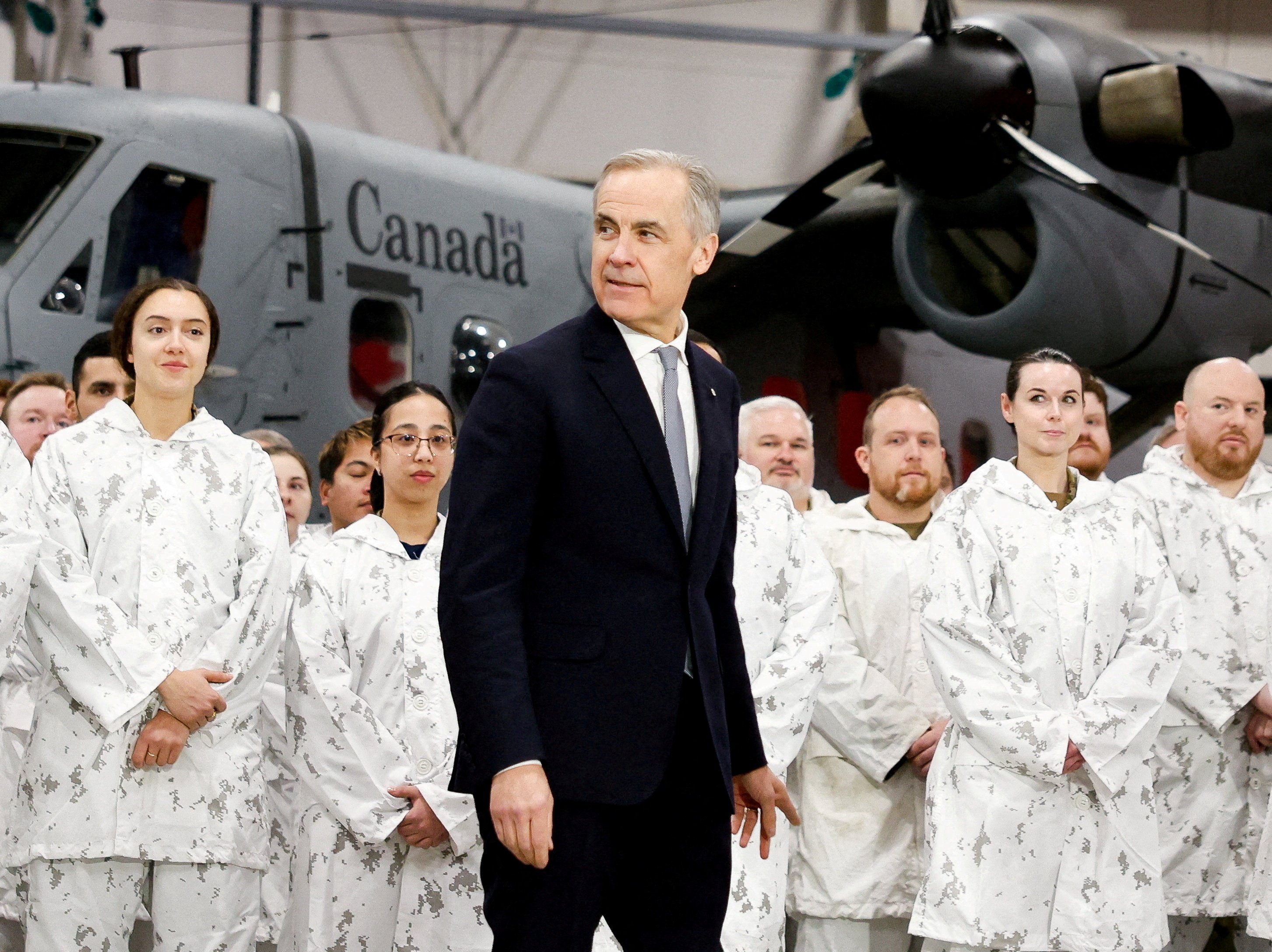 |
Mr. Carney visits the 440th Transport Squadron of the Royal Canadian Air Force (RCAF) in Yellowknife, Canada. Photo: Reuters . |
Earlier this month, Mr. Carney left open the possibility that Canada could join some of the Trump administration's protectionist trade policies if it helped maintain the free trade provisions in the U.S.-Mexico-Canada Agreement (USMCA), which is currently under review by the U.S. due to disagreements.
"Canada is open to the possibility of deeper integration, including building a North American stronghold in certain specific areas," Carney said.
Lori Turnbull, a political science expert at Dalhousie University (Canada), argues that the statement reflects a reality: the role of the United States as a crucial partner in Canada's trade and economic activities is very difficult to change.
"Canada will have to find a way to adapt, the U.S. will still impose tariffs. We are still in a weak position, and the Americans have the power to decide the game," said Turnbull.
Source: https://znews.vn/canada-ly-giai-nguyen-nhan-can-xa-cach-my-post1655406.html

![[Photo] Admire the coral "masterpiece" amidst the million-year-old heritage of Dak Lak province.](https://vphoto.vietnam.vn/thumb/1200x675/vietnam/resource/IMAGE/2026/05/31/1780221235105_anh-man-hinh-2026-05-31-luc-16-53-27.png)
![[Photo] The General Secretary, President and his wife begin their state visit to the Philippines.](https://vphoto.vietnam.vn/thumb/1200x675/vietnam/resource/IMAGE/2026/05/31/1780230559452_anh-man-hinh-2026-05-31-luc-19-28-11.png)
![[Photo] Solemn bathing ceremony and Buddha procession in Hue](https://vphoto.vietnam.vn/thumb/1200x675/vietnam/resource/IMAGE/2026/05/31/1780228263543_1-jpg.webp)








![[Video] Sunset at Lap An Lagoon – Where the sun sets over the fishing nets](https://vphoto.vietnam.vn/thumb/340x192/vietnam/resource/IMAGE/2026/05/31/1780192137701_beach-landscape-sea-water-nature-grass-745871-pxhere-com.jpeg)

































![[Photo] Admire the coral "masterpiece" amidst the million-year-old heritage of Dak Lak province.](https://vphoto.vietnam.vn/thumb/402x226/vietnam/resource/IMAGE/2026/05/31/1780221235105_anh-man-hinh-2026-05-31-luc-16-53-27.png)





























Comment (0)