

Vietnam's evolving strategic narrative, as presented by General Secretary and President To Lam, reflects a nation facing crossroads amidst volatile global issues.
In an analysis published in The Diplomat on October 12th, Dr. Vu Le Thai Hoang and Dr. Ngo Di Lan (Institute for Strategic Studies, Diplomatic Academy of Vietnam) assert that, from ancient empires to modern nations, leaders have long relied on strategic narratives to shape their perception of the country and determine its stance on the most important issues of the era. Vietnam, an emerging middle power, has maintained a coherent and consistent strategic narrative since the end of the Cold War. Now, under the leadership of General Secretary and President To Lam, the evolution of this narrative is subtly changing.
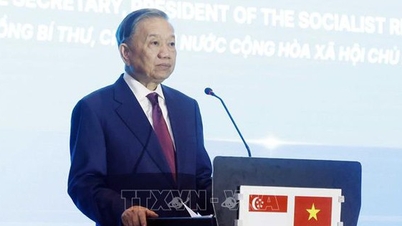
In a recent speech at Columbia University, USA, General Secretary and President To Lam emphasized that "Vietnam is standing at a new historical moment, a new era - the era of national resurgence." This new perspective reflects Vietnam's proactive efforts to adapt to a rapidly changing strategic environment and demonstrates its aspiration to participate more actively and extensively in international affairs.
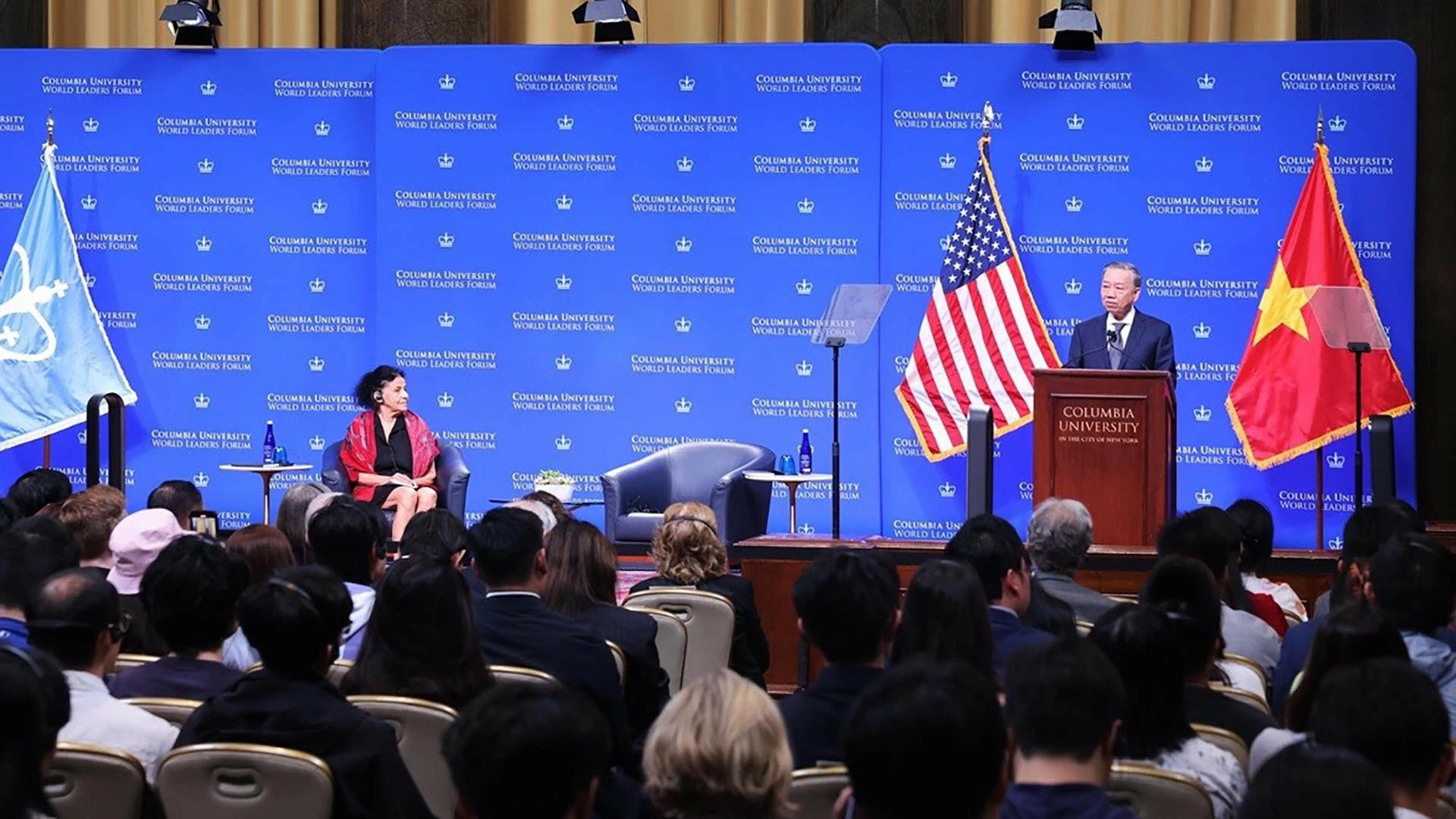 |
| General Secretary and President To Lam delivered a policy speech at Columbia University, USA, on September 23. (Source: VNA) |
The main components
According to the author, strategic narratives contain compelling “stories” that allow leaders to share with the world their nation’s identity, interests, and vision for the international order. These stories often include key elements such as historical context, core values, aspirations, and a nation’s approach to international relations, providing a framework for explaining the nation’s past, justifying current actions, and outlining its future aspirations.
The story of Vietnam is steeped in its history of struggle for independence and national reunification, focusing on portraying a nation that bravely overcame centuries under colonial rule and numerous brutal wars to rise and become a dynamic, rapidly developing country.
Therefore, Vietnam's post-war story emphasizes a commitment to healing and diplomacy for the future, guided by the principle of "making more friends and fewer enemies." This approach is vividly illustrated by Vietnam's commendable efforts to transform challenging relationships with former adversaries into constructive partnerships. Countries that once fought wars with Vietnam, including China, the United States, Japan, and France, have all upgraded their relations to Comprehensive Strategic Partnerships.
It is noteworthy that Vietnam's ability to overcome historical disagreements to move towards mutually beneficial cooperation is partly a result of its stance upholding values such as justice and humanity in international relations. For example, the recently stated ethical principle of "replacing violence with benevolence" is evidence of Vietnam's long-standing commitment to peaceful and ethical conduct in global affairs.
Another prominent feature in Vietnam's strategic narrative, the authors point out, is its inherent optimism. Since the end of the Cold War, numerous resolutions from Party Congresses have maintained the view that "peace, cooperation, and development continue to be the major trends in the world." This perspective has been upheld, despite the conflicts and increased nationalism in recent years, reflecting Vietnam's firm belief in the overall positive trend of international affairs. Based on this positive worldview, the narrative portrays a vision of Vietnam as a modern, industrialized society, aiming to achieve upper-middle income status by 2030 and become a high-income country by 2045.
In its foreign policy approach, Vietnam consistently emphasizes core principles of independence, multilateralism, diversification, the importance of political trust, international integration, and support for multilateral institutions. Vietnam recognizes the importance of maintaining a balance among major powers while pursuing strategic autonomy and deepening political trust with all friends and partners.
ASEAN and the United Nations are prominent elements in this narrative, serving as crucial platforms for Vietnam's engagement on the international stage. This approach reflects a delicate blend of realist and neoliberal ideology – acknowledging the realities of power and interest calculations while simultaneously advocating international law and multilateral cooperation to mitigate the harsh realities of global politics and create an environment where all nations can thrive.
The authors argue that, underlying Vietnam's consistent strategic narrative, lies a theory of success: that through developing diverse and profound diplomatic relations and continuing to be a responsible member of the international community, Vietnam can achieve rapid and sustainable development while ensuring peace, security, and independence. In other words, Vietnam has long bet that becoming "an exemplary international citizen" is the most stable path to ensuring security and prosperity in an increasingly unstable and complex world.
A journey
While maintaining the core of Vietnam's long-standing strategic narrative, General Secretary and President To Lam has made subtle adjustments reflecting the country's entry into a "new era." This is evident in the recent speeches and diplomatic activities of the Party and State leader, emphasizing the country's transformation and readiness to adapt to a rapidly changing global context.
For example, at the 79th session of the United Nations General Assembly, General Secretary and President To Lam emphasized the complex and dangerous international environment, characterized by a particular kind of self-centered nationalism, coupled with increasingly limited space for survival and development, as well as the rise of non-traditional security challenges. More importantly, "the risk of nuclear war, or even a third world war, cannot be ruled out."
The speech contained many relatively new expressions, reflecting a more serious and up-to-date assessment of global risks and highlighting Vietnam's growing awareness of the precarious nature of international issues following recent regional conflicts and its belief in the necessity of proactive diplomacy and enhanced multilateral cooperation to mitigate these risks.
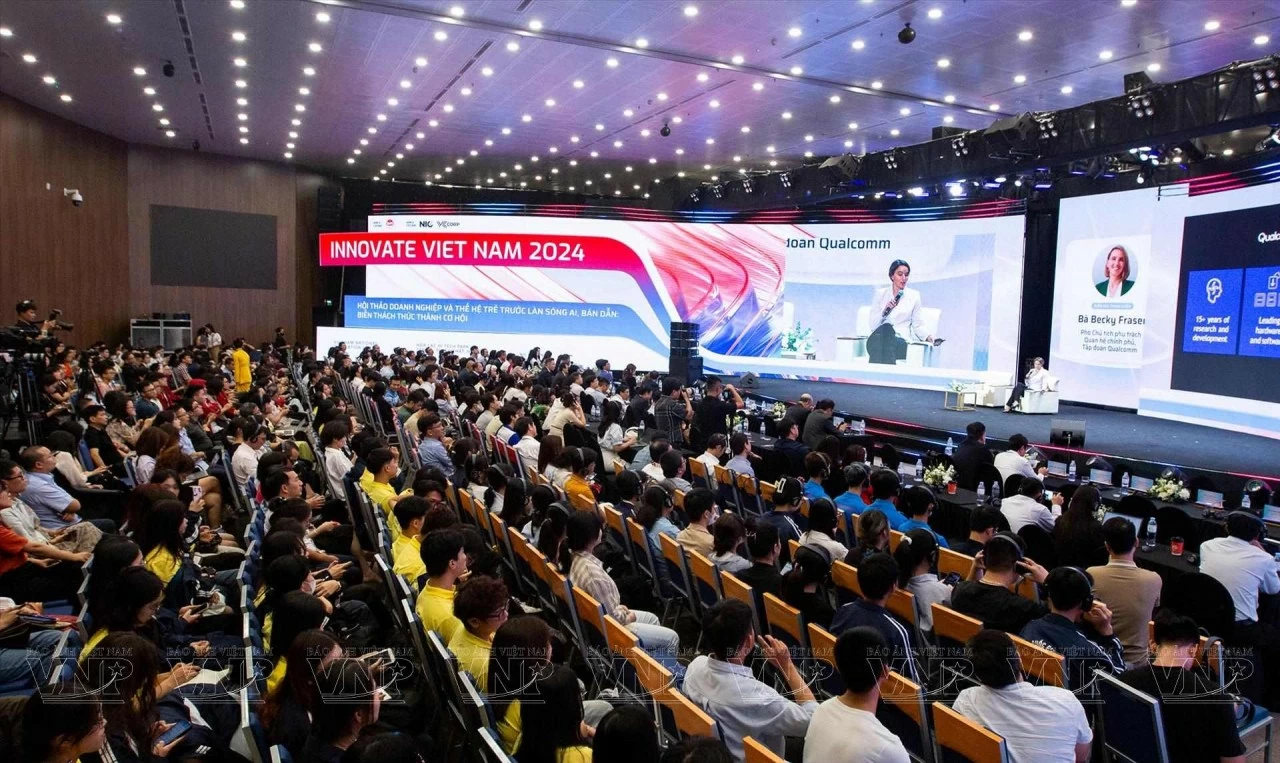 |
| Delegates attend a workshop as part of the program celebrating the 5th anniversary of the National Innovation Center (NIC) and Vietnam Innovation Day 2024 at Hoa Lac High-Tech Park, Hanoi on October 1st. (Source: VNA) |
Another crucial element in Vietnam's development trajectory is its focus on science, technology, and innovation, which are vital drivers for Vietnam's 2030 and 2045 development goals, recognizing that the opportunity to escape the "middle-income trap" is only 10 to 15 years away. Therefore, General Secretary and President To Lam frequently emphasizes the role of scientific and technological progress in achieving sustainable growth and improving people's living standards. This focus on advanced technologies, particularly artificial intelligence (AI), reflects Vietnam's desire to leverage innovation as a means to promote development and enhance global competitiveness.
Finally, the Vietnamese leader also adjusted the relationship between national interests and international engagement, reflecting a more harmonious theory of success in the strategic narrative of the S-shaped country. At Columbia University, he affirmed: “We cannot achieve these lofty goals without genuine international solidarity, invaluable support, and effective cooperation from the international community. Our success is your success.”
The development narrative continues to follow current events but also places greater emphasis on Vietnam's potential contributions to global progress and underscores Vietnam's commitment not only as a subject of international cooperation, but also as an active participant in addressing global challenges in this new era.
The road ahead
According to the head of Vietnam's Party and State, Vietnam's evolving strategic narrative reflects a nation facing a crossroads in global affairs. This subtly told story not only demonstrates growing self-confidence but also highlights the country's deep understanding of an increasingly unstable international landscape. By emphasizing independence, multilateralism, and technological innovation, Vietnam seeks to chart a dynamic balance among major powers while aligning with pressing global priorities such as sustainable development and climate change mitigation. This approach can enhance Vietnam's soft power and influence in international forums, positioning it as a responsible partner in the global community.
However, the road ahead may be challenging. As competition among major powers intensifies and global issues become increasingly complex, Vietnam's ability to maintain a carefully balanced approach will be tested. The effectiveness of this narrative will depend on Vietnam's ability to translate thinking into concrete action – a task complicated by domestic demands and the unpredictable nature of international relations.
In summary, the authors conclude that Vietnam's evolving strategic narrative undeniably represents a balanced and nuanced response to a changing world. It intertwines national ambitions with pragmatic assessments of global realities, offering a vision of Vietnam as both a beneficiary and a contributor to international cooperation. As this narrative continues to evolve and manifest itself in policy decisions, Vietnam has the potential to reshape its position and influence globally.
The coming years will show whether this story can withstand the pressures of an ever-changing global order and whether it will truly usher in the “new era” that General Secretary and President To Lam envisions for Vietnam.
Source: https://baoquocte.vn/cau-chuyen-chien-luoc-cua-viet-nam-la-gi-290000.html

![[Photo] Ba Lang An Lighthouse - the "eye of the sea" amidst the "rock museum" of Quang Ngai province.](https://vphoto.vietnam.vn/thumb/1200x675/vietnam/resource/IMAGE/2026/05/29/1780038698840_anh-man-hinh-2026-05-29-luc-14-10-42.png)
![[Image] Pleasant weather helps students enter the 10th grade entrance exam with confidence.](https://vphoto.vietnam.vn/thumb/1200x675/vietnam/resource/IMAGE/2026/05/29/1780034401612_ngay-1-thi-lop-10-minh-duy-8-5009-jpg.webp)

























































Comment (0)