

Tighten control over food supplies.
In late March, the Hanoi City Police Investigation Agency issued a decision to initiate criminal proceedings against eight defendants involved in a ring that slaughtered and sold nearly 300 tons of diseased pork, including some that was supplied to school cafeterias. This information caused considerable concern among parents in Da Nang whose children eat school meals daily.
Upon reading the news about the incident, Ms. Nguyen Thi Huong (whose son attends a primary school in Son Tra ward) was very worried because: “My son eats school lunch every day, so I am very concerned about the food source for school meals. I only hope that the school and relevant authorities will strictly control the food supply from the initial stages to ensure the safety of students.”
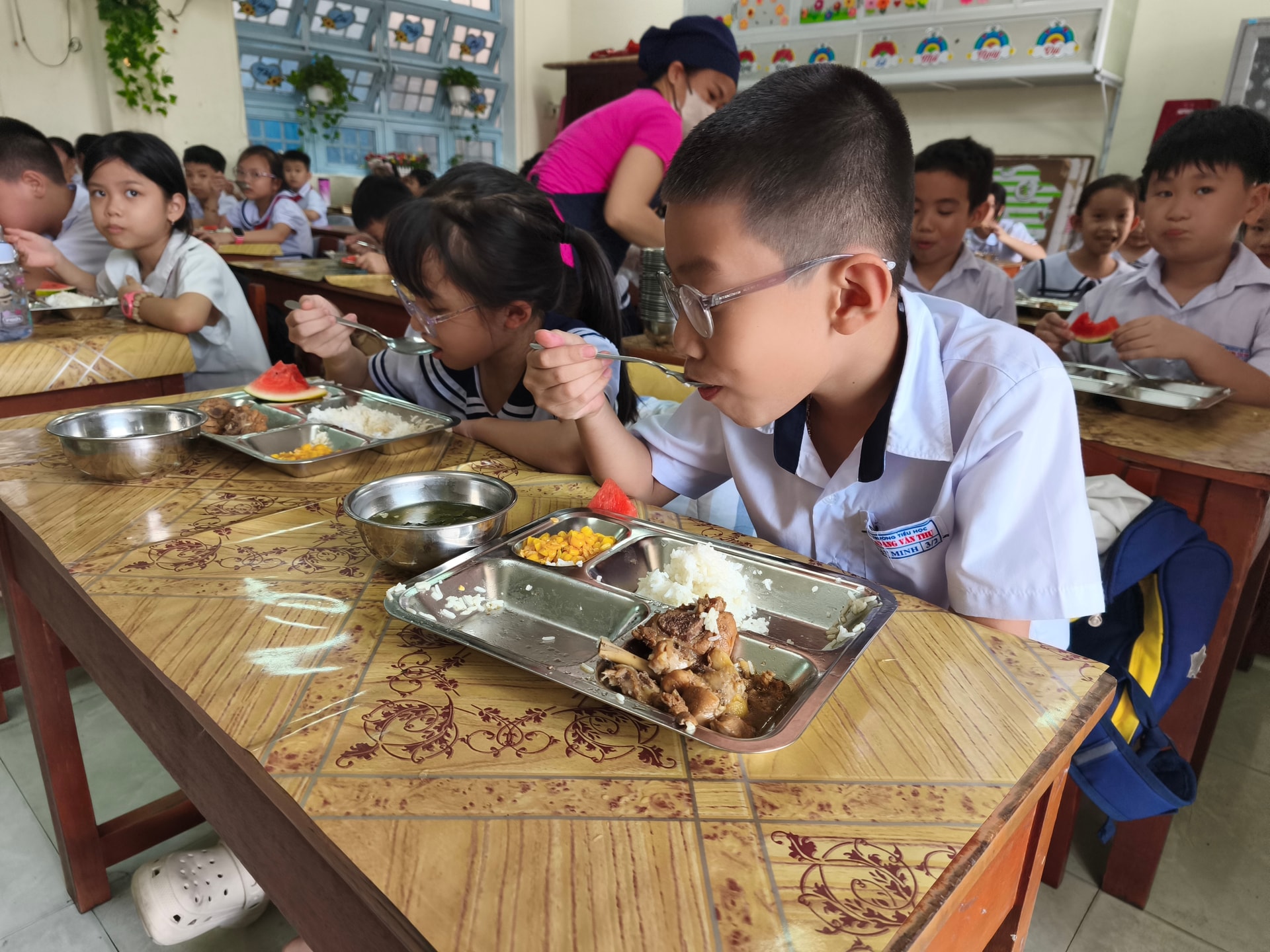
To better understand how food control is implemented in school meals, a reporter observed the situation firsthand at the canteen of Hoang Van Thu Primary School (Hai Chau Ward). From approximately 5:45 to 6:00 AM, the school's food inspection team, consisting of the school's management board and teachers assigned to shifts, were present to receive and inspect incoming ingredients. All food items were thoroughly inspected, photographed, and documented before being brought into the kitchen.
Inside the kitchen, the food processing is organized according to a one-way kitchen model, from food receiving, preparation, processing to serving. This organization helps to minimize the risk of cross-contamination and ensure hygiene throughout the entire processing process.
At exactly 10:30 a.m., the bell signaling the end of class rang, and students settled into their seats to begin their lunch break. The homeroom teacher and the dorm supervisor had prepared trays of hot rice, with portions neatly divided among the classes.
According to Ms. Truong Thi Nha Truc, the school principal, to ensure the safety of school lunches, the school places special emphasis on controlling the food source. The school has a food supply contract with a company that has complete legal documentation and a food safety assurance plan. In addition to direct daily inspections, there are also regular and surprise inspections to ensure that the process is always carried out rigorously. The school has also installed a camera system in the food receiving and processing areas to monitor all kitchen activities.
“Every day, there is a sample meal with the correct portion sizes for comparison. The meals in each class must be similar to this sample, avoiding situations where some places have more and others less. The menu is publicly displayed daily at the school and sent to parents through Zalo groups with actual photos or videos . This not only helps parents know what their children eat at school so they can proactively balance their nutrition, but also creates transparency in the school lunch program,” Ms. Truc explained.
Multi-floor monitoring
Currently, Hoang Van Thu Primary School provides lunch for approximately 850 students. With this number, ensuring uniform and appropriately sized meals is a top priority for the school. Operating the lunch program requires a significant workforce and seamless coordination between various departments. The menu is developed weekly, balancing dishes to ensure both nutritional value and affordability (approximately 22,000 VND per meal per student).
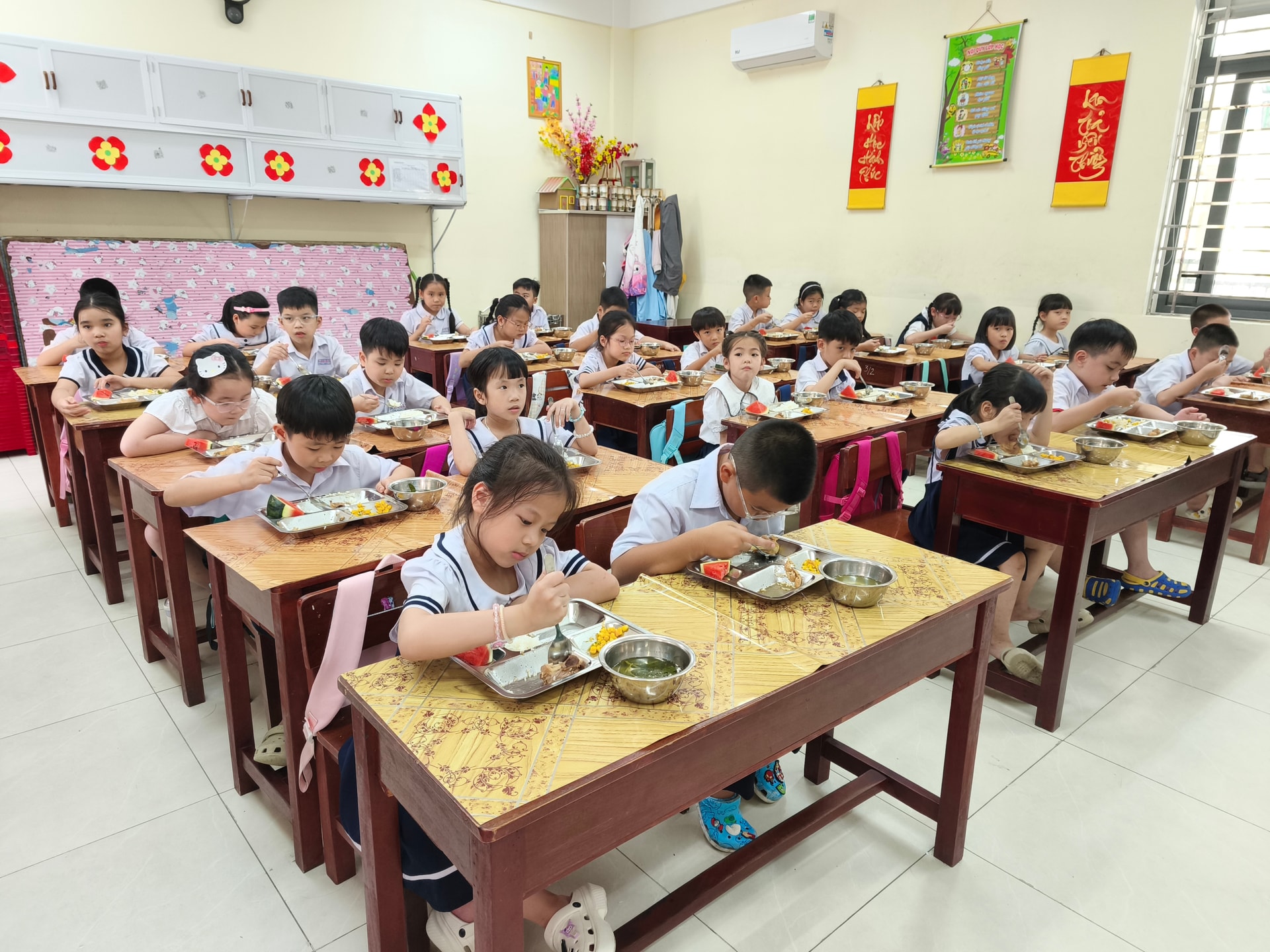
Ms. Truc said: "The school also regularly surveys students' opinions to adjust the way dishes are prepared to suit their tastes."
In Hoa Cuong ward, Mr. Nguyen Duc Tu Anh, Head of the Culture and Social Affairs Department of the ward, informed that to ensure absolute safety for school lunch programs, the ward People's Committee has implemented a multi-tiered management and monitoring system, handling the enormous workload from 15 public schools with nearly 17,500 students in the area.
The local authorities have tightened the three-step food inspection process and retained food samples for 24 hours in accordance with specialized regulations. Besides strengthening the role of state management through surprise inspections, the ward has also promoted the application of technology with the "DaNang City Food" traceability system to closely monitor each food supplier.
“In particular, social monitoring is emphasized as the school publicly discloses the menu and the origin of ingredients so that parents can participate in verifying them. Not stopping at prevention, a detailed response plan for food poisoning incidents has been developed, ready to activate the local health network and inter-agency forces to provide first aid, investigate, and strictly handle any violations, determined to protect school health sustainably,” Mr. Tú Anh emphasized.
According to Mr. Nguyen Tan Hai, Deputy Director of the City's Department of Health, school kitchen management now focuses not only on inspection frequency but has shifted to a risk-based management approach across the entire food chain. According to the city and Department of Health's plan, schools are identified as key areas, and control is implemented throughout the entire process, from raw material supply and intermediate stages to processing and consumption within the school.
At the same time, the health sector is organizing specialized inspections at collective kitchens, focusing on food origin, processing, preservation, and distribution procedures, food sample retention, and legal compliance, expanding supervision to include meal suppliers and canteens. "This approach aims to prevent risks from the outset, ensuring the sustainable safety of school meals," Mr. Hai said.
Source: https://baodanang.vn/cham-chut-cho-bua-an-ban-tru-3331017.html


![[Photo] The General Secretary, President and his wife lay flowers at the Ho Chi Minh Monument in Manila.](https://vphoto.vietnam.vn/thumb/1200x675/vietnam/resource/IMAGE/2026/05/31/1780219759477_anh-man-hinh-2026-05-31-luc-16-29-07.png)












![[Video] Sunset at Lap An Lagoon – Where the sun sets over the fishing nets](https://vphoto.vietnam.vn/thumb/340x192/vietnam/resource/IMAGE/2026/05/31/1780192137701_beach-landscape-sea-water-nature-grass-745871-pxhere-com.jpeg)









































































Comment (0)