

Recent developments in the international market, particularly changes in US trade policy, are creating significant challenges for the Vietnamese economy . News of President Donald Trump's decision to impose retaliatory tariffs on a number of countries, including Vietnam, even after a 90-day suspension and a reduction in the expected tariff rate to 10%, still raises concerns about potential negative impacts.
The risk of "double taxation" in the context of economic instability.
Concerns about the impact of US tariffs on the Vietnamese economy are not unfounded. Recently, UOB Bank revised its forecast for Vietnam's GDP growth this year down to 6%, instead of the previously projected 7%, mainly due to the risks and pressures from US tariff policies. This shows that international financial institutions have also begun to consider the negative effects of this factor.
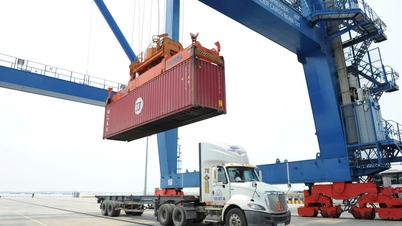
If this happens, Vietnamese export businesses will face double tariff pressure: they will have to pay both import duties from the United States and domestic excise taxes if this policy is adjusted upwards. This "double taxation" situation could have serious consequences.
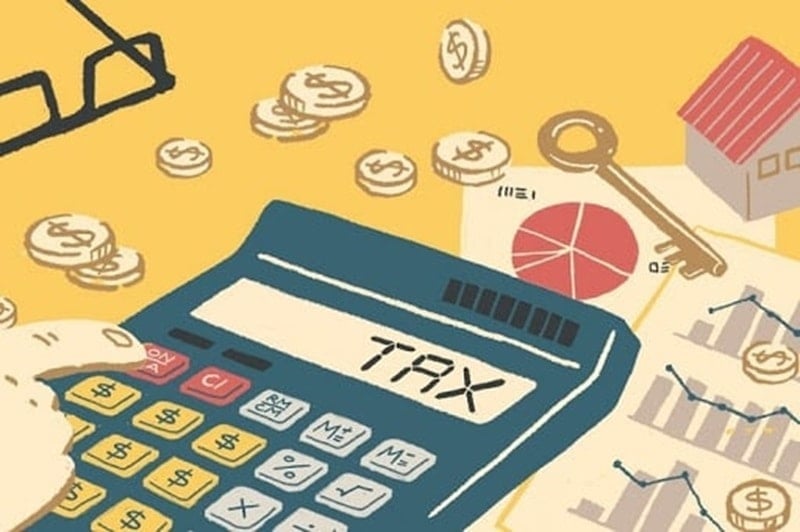
First, it will reduce the competitiveness of Vietnamese goods in the international market. As production costs increase due to both import duties and excise taxes, businesses are forced to raise product prices to maintain profitability. This makes Vietnamese goods more expensive compared to goods from other countries, leading to a decrease in orders and market share.
Secondly, "double taxation" will create an additional burden for domestic businesses, especially those producing goods subject to excise tax such as alcoholic beverages, tobacco, and automobiles. When businesses are already struggling to cope with difficulties in the export market, increasing domestic taxes will put them in a dilemma, even risking bankruptcy.
Thirdly, "tax upon tax" will negatively impact people's income and purchasing power. When factories close and workers lose their jobs, the economy's aggregate demand will decline, leading to a decrease in consumption and investment.
Caution is needed when adjusting excise tax.
In the context of an economy facing external challenges, increasing domestic excise taxes, especially with a steep increase and phased pace, could create a "double shock," exacerbating existing difficulties.
At a recent seminar on excise tax, experts stated that achieving a GDP growth target of 8% or higher, creating a solid foundation for double-digit growth in the following years, is becoming challenging and requires ministries, sectors, and localities to implement many synchronized solutions. Among these, enhancing the endogenous capacity of the economy through supporting production and business, helping enterprises recover and develop sustainably, is becoming an urgent requirement.
Meanwhile, for alcoholic beverages, increasing taxes could reduce the competitiveness of domestic businesses compared to imported goods, as well as affect tourism and related services.
For pickup trucks, these vehicles serve many different economic sectors, especially in rural areas and the construction and transportation industries. Increasing taxes could raise input costs for these sectors, affecting the overall competitiveness of the economy.
Similarly to tobacco products, the excessively high and sudden increase in excise tax as proposed in the current draft of the amended Special Consumption Tax Law, coupled with the trend of tightening consumer spending due to the impact of US tariffs as analyzed above, will further push consumers towards smuggled products, strongly stimulating the illegal tobacco trade, which is already a pressing issue in Vietnam.
Smuggled cigarettes not only cause revenue losses for the State budget but also fail to meet quality standards, posing far greater harm to consumer health and creating difficulties for legitimate cigarette manufacturers.
A sudden and excessively high increase in excise tax would also widen the price gap between legal and smuggled cigarettes, creating huge profits for smugglers and causing far-reaching consequences for social security and order.
Simultaneously, as the production of legal tobacco decreases due to taxes and smuggling, the demand for tobacco leaves also declines. This leads to a decrease in both the quantity and price of tobacco leaves. The livelihoods of tens of thousands of farming households in many tobacco-growing regions across the country are negatively affected, threatening the stability of these specialized economic zones, impacting social welfare, and hindering rural development programs.
Meanwhile, legal tobacco manufacturers and distributors are subject to numerous stringent regulations regarding production, business operations, quality control, and contributions to the state budget. Increasing excise tax will raise production costs and selling prices, making it difficult for legal products to compete with smuggled cigarettes, which are significantly cheaper due to tax evasion and non-compliance with regulations. Businesses may face reduced sales, scaled-down production, or even bankruptcy, impacting over 1.1 million direct and indirect jobs throughout the industry's value chain.
A solution that harmonizes budgetary goals and economic growth.
To avoid double taxation and ensure stable economic growth, Vietnam needs solutions that harmonize the goals of increasing budget revenue and promoting production and business.
At the May 2025 session, the National Assembly will pass the Law on Special Consumption Tax. If the Law on Special Consumption Tax still approves the current proposals for the alcohol, tobacco, sugary soft drink, and automobile industries, it will create a severe blow to the manufacturing industries producing these taxable goods (the current tax increase options for these industries are all Option 2, with high increases and a drastic increase schedule). Therefore, the tax rates and the schedule for increasing special consumption tax need to be carefully considered to ensure a reasonable increase and schedule, avoiding a "double shock" for businesses and affecting the economic development plan of the Party and the State.
Many experts and economic organizations have recommended that Vietnam should gradually adjust the excise tax, rather than increasing it abruptly. In a letter sent to the National Assembly's Economic and Financial Committee on the draft Law on Excise Tax on March 19, 2025, the Vietnam Chamber of Commerce and Industry (VCCI) proposed a reasonable tax adjustment roadmap instead of a sudden increase.
For alcoholic beverages: It is proposed that the tax increase begin in 2028 and be implemented by 5% annually according to Option 1. For tobacco products: The absolute tax rate will increase by 2,000 VND/pack every two years starting in 2026 and reach a maximum of 6,000 VND/pack in 2030.
National Assembly Chairman Tran Thanh Man also emphasized at the 43rd session, held on March 10, 2025, that it is necessary to carefully listen to the opinions of associations and businesses in industries affected by excise tax such as tobacco, alcoholic beverages, sugary soft drinks, pickup trucks, etc., and to calculate and plan the tax rate increase appropriately, limiting negative impacts on people in raw material growing areas, supporting businesses, and workers in enterprises, avoiding creating opportunities for the development of smuggled alcohol, beer, and tobacco.
Furthermore, Vietnam needs to proactively respond to external fluctuations by supporting businesses in enhancing their competitiveness, diversifying export markets, and strengthening international negotiations.
In summary, increasing excise tax needs to be considered within the overall macroeconomic context, especially in the context of Vietnam facing numerous external challenges. The situation of "double taxation" should be avoided to prevent further pressure on the economy and to ensure sustainable growth.
Source: https://baodaknong.vn/chinh-sach-thue-ttdb-can-dat-trong-tong-the-thuc-day-noi-luc-doanh-nghiep-va-on-dinh-kinh-te-xa-hoi-250876.html


![[Image] Central Party Office summarizes work in 2025](/_next/image?url=https%3A%2F%2Fvphoto.vietnam.vn%2Fthumb%2F1200x675%2Fvietnam%2Fresource%2FIMAGE%2F2025%2F12%2F18%2F1766065572073_vptw-hoi-nghi-tong-ket-89-1204-jpg.webp&w=3840&q=75)


















































































Comment (0)