

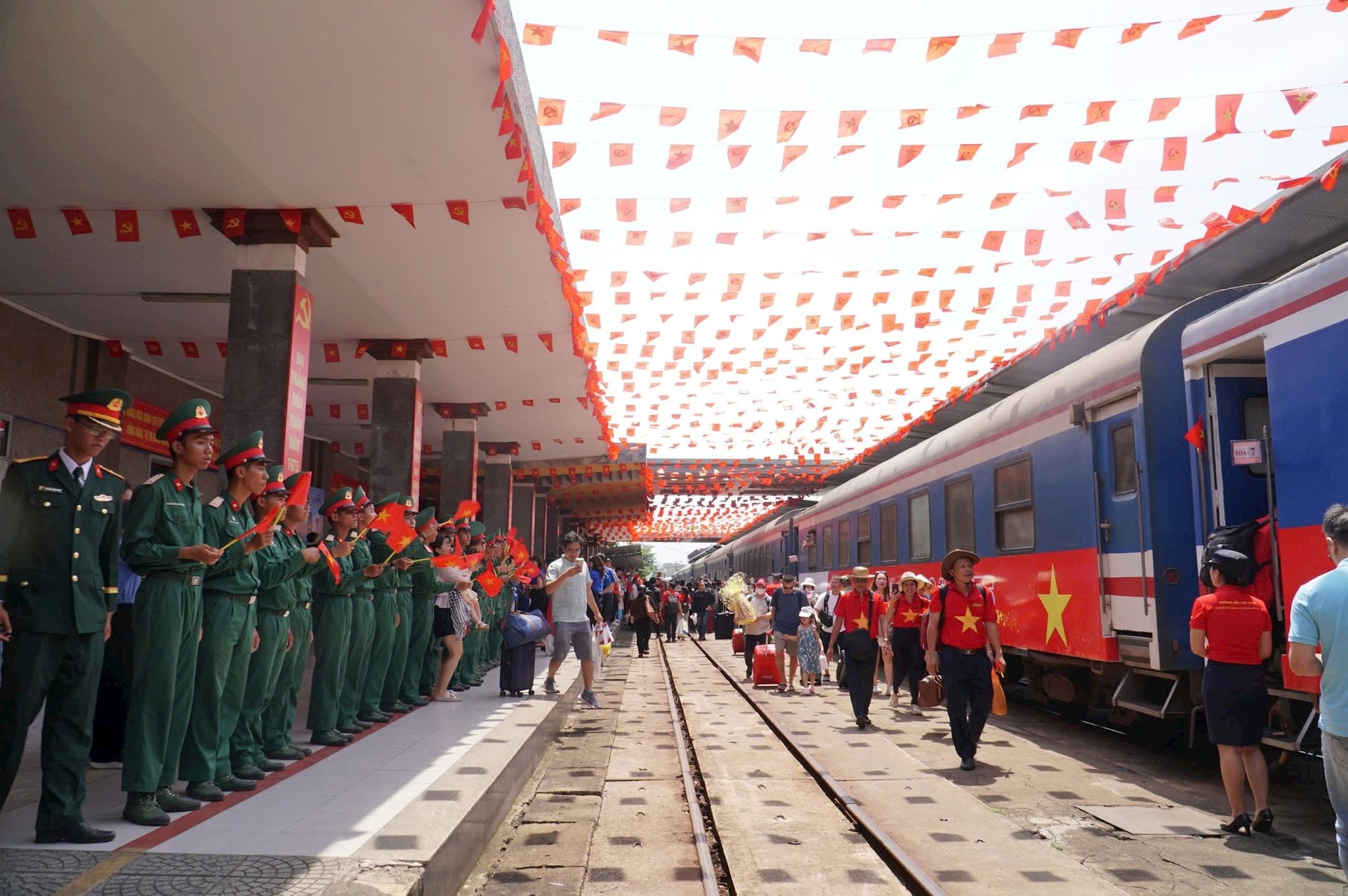
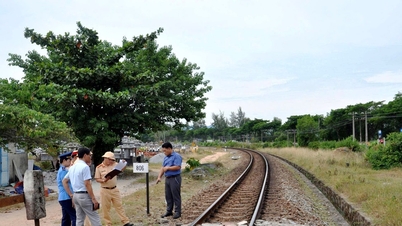
It's a railway line running along the Han River, passing through Han Market station and then crossing the river on the De Lattre De Tassigny bridge (locals in Quang Nam province often call it the De-Lat bridge - PV) to reach Tien Sa port.
The train whistle travels through time.
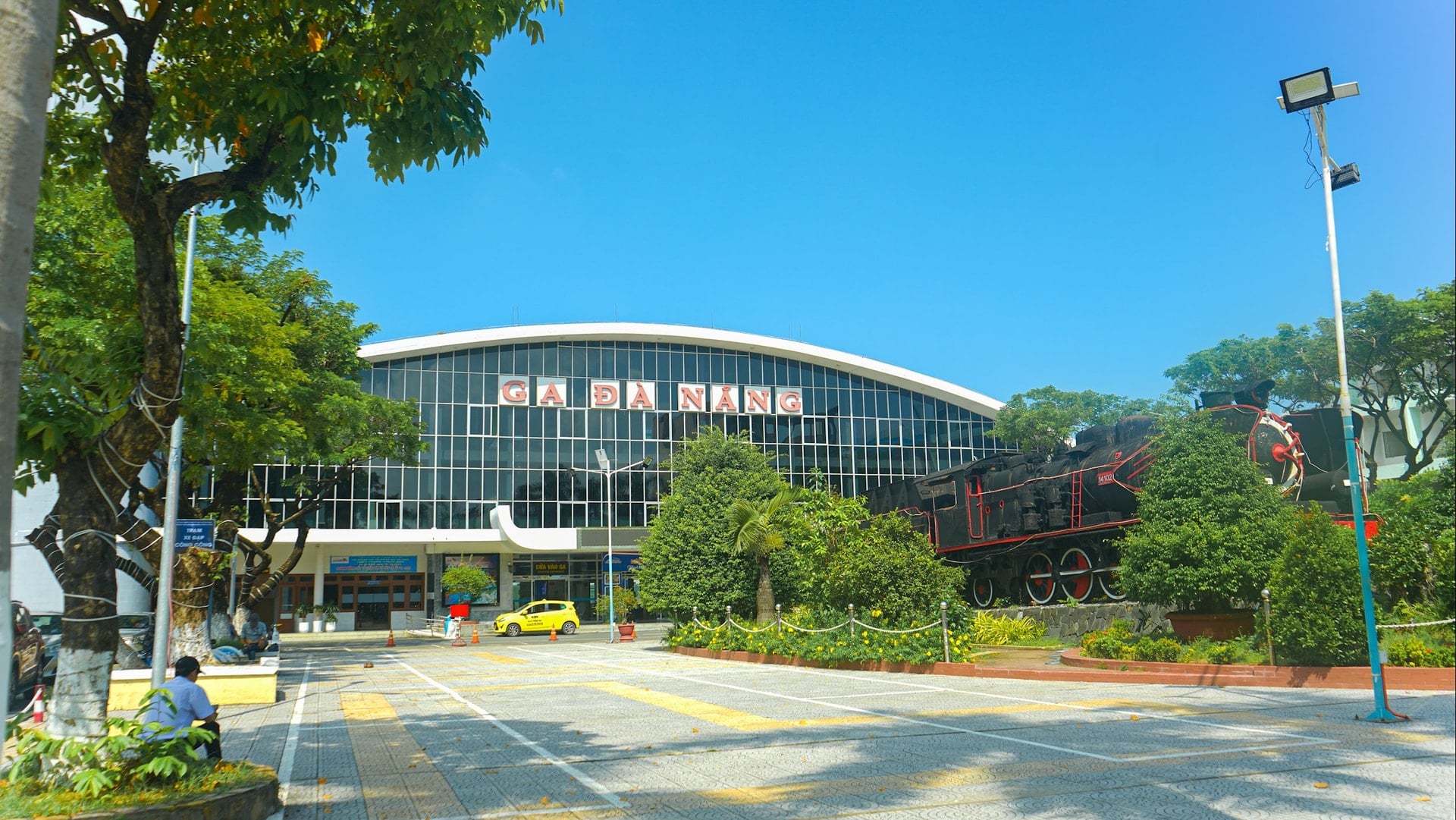
Researcher Ho Xuan Tinh shared that, in the early days of railway development in Vietnam, railway station systems were mainly developed in urban areas such as Hanoi , Saigon, Hai Phong, Quang Ninh, and Da Nang. Historical data suggests that Da Nang station, built in 1902 in Central Vietnam, may have been the first station, connecting the North-South unified railway and serving as an urban railway.
The remnants of the old Tourane urban railway network have faded with time. The foundations of Han Market station have been expanded into the modern Bach Dang road, and where the De Lattre bridge once stood is now the Tran Thi Ly bridge. Only Da Nang station remains in the city center as a historical witness to a prosperous era of railways, despite its original architecture having been renovated several times.
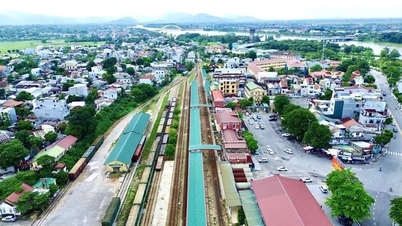
By the end of 2025, Da Nang station will have existed for 123 years at kilometer marker 791+400 on the North-South railway line – more than a lifetime. This is long enough for many generations living along the 4km urban railway line from Da Nang station to the Hue Junction overpass to become familiar with the sound of train whistles, the clatter of train wheels, and the loudspeakers announcing train departures…
Under the streetlights at the intersection of Hai Phong and Hoang Hoa Tham streets stands Mrs. X's family shop; she says the shop's predecessor was a pushcart selling tea, cakes, cigarettes, and more. Her family has been connected to this area in front of Da Nang train station since the days when this street corner was still relatively quiet, perhaps more than 30 years. This shop has lived alongside the rhythm of life at Da Nang train station, its lights shining for all those years, waiting to welcome the customers passing by each day.
Ms. X, 60 years old, has spent half her life earning a living at this train station. She says that cigarettes, water bottles, coffee, raincoats, loaves of bread… and countless other items have sustained her family through difficult times and will continue to do so as long as Da Nang train station remains there.
The shape of the future
Mr. Phan Phuoc Hung, administrator of the "Small Station" page - a community sharing stories and images about trains and stations across the country - has visited Da Nang station on many occasions.
He said that each visit evokes a different layer of memories. It's the simple, unpretentious Quang Nam accent of the announcer as the train slowly pulls into the station, the feeling that Da Nang station is transforming day by day with the meticulously upgraded waiting areas and platforms, and the dedication of the staff before, during, and after each train journey.
However, the current space at Da Nang railway station still has some shortcomings due to the pressures of urbanization. And compared to Da Lat or Hue railway stations, Da Nang station does not yet truly stand out as a tourist destination.
According to assessments by city authorities, the railway line through the city center intersects with many busy roads such as Le Do, Ha Huy Tap, and Tran Cao Van. This has been the cause of traffic congestion on these roads in Thanh Khe ward for many years.
Meanwhile, the area around Hai Phong and Hoang Hoa Tham streets frequently experiences a high volume of traffic entering and exiting the station, affecting traffic flow during peak hours. This area is also prone to flooding during heavy rains.
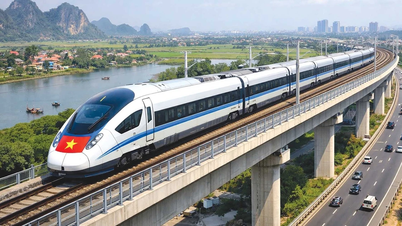
Therefore, in the Railway Network Planning for the period 2021-2030, with a vision to 2050, Da Nang advocates relocating Da Nang station from the city center to the west of the current station; and upgrading the existing railway line to run parallel to the east of the expressway, within the same corridor as the high-speed railway. This relocation will provide the city with more land for urban redevelopment and socio-economic development.
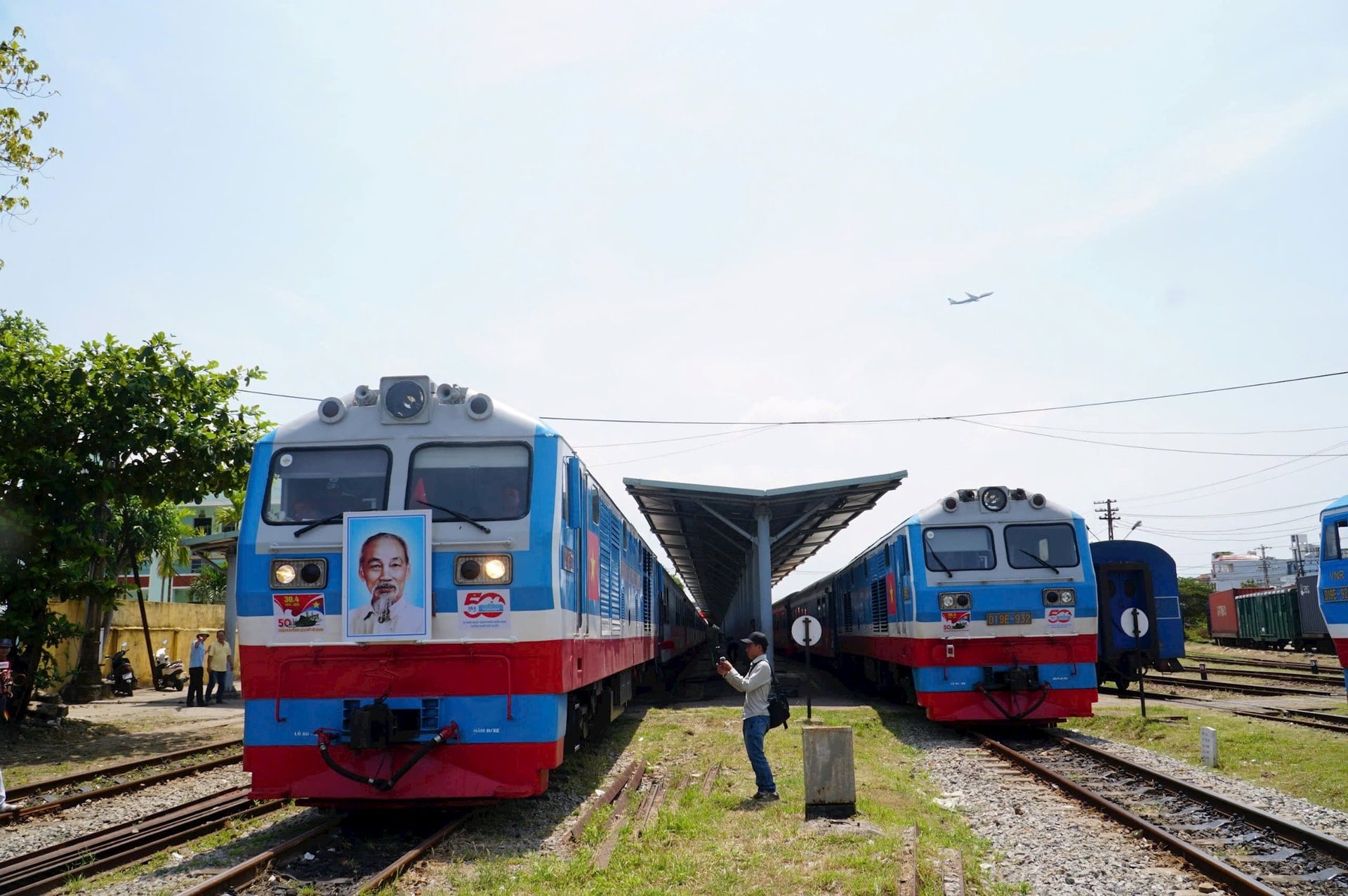
According to the plan, in phase 1, the passenger station will be moved to the Trung Nghia Lake area (Hoa Khanh ward) and the cargo station will be moved to Kim Lien station (Hai Van ward). In the future, the new passenger station will be approximately 3,000 square meters, 10 stories high, serving passengers, and will include a new station plaza combined with a park, connecting to nearby streets. The new station will still be located on the existing North-South railway line. The current railway alignment within the city will remain unchanged.
For the residents living along the Le Do - Hai Phong railway line, while they will more or less miss the trains, the relocation of the station and the "new home" of Da Nang station is something they have been waiting for for many years and is very welcome as it will make the urban space more open and airy.
Mr. Ho Xuan Tinh suggested that once the city has developed a new station space, the current Da Nang station could be considered for tourism purposes, based on restoring the architectural features of the old station. At that time, this space would serve as an exhibition area, telling tourists the complete story of Da Nang station's development from the ancient Tourane trading port to the present day.
Source: https://baodanang.vn/cho-dien-mao-san-ga-da-nang-3318443.html






























































































Comment (0)