

.jpg)
The risk of water shortage is ever-present.
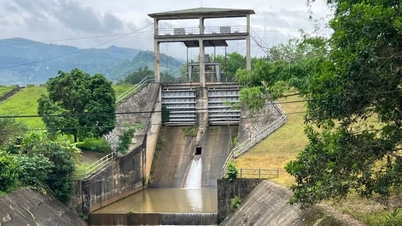
In the Nguyen Trai, Tran Nhan Tong, and Tran Hung Dao wards, there are 68 irrigation reservoirs. Of these, 8 reservoirs are directly managed by the Chi Linh Irrigation Works Exploitation Enterprise, including: Ben Tam Ngoai, Phu Loi, Suoi Gang, Lang Tre, Chin Thuong, Chop Soi, Ho Ven, and Trai Sen. The remaining 60 reservoirs are smaller in scale and are managed by agricultural service cooperatives in the wards.
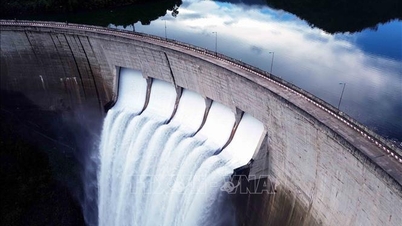
Eight reservoirs managed by the enterprise alone are responsible for regulating irrigation water for over 543 hectares of agricultural land in Nguyen Trai and Tran Nhan Tong wards. Because the irrigation water source depends entirely on the reservoir and dam system, during the spring crop season, if there is little rain, prolonged hot weather, and no supplementary source, the risk of water shortage for rice and vegetable crops will be very high.
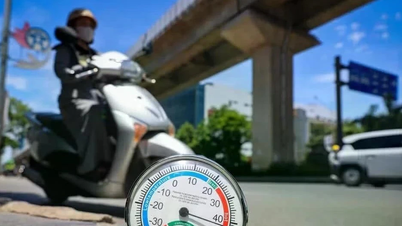
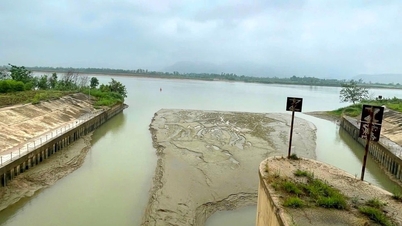
Recently, rainfall has been low, while water reserves in reservoirs have been used for irrigation, causing water levels in some reservoirs to drop significantly. Forecasts indicate that April will see early heatwaves, higher temperatures, and lower-than-average rainfall. Therefore, the risk of water shortages for agricultural production is very clear.
Mr. Mac Trung Nghia, Deputy Director of the Chi Linh Irrigation Works Exploitation Enterprise, said that in recent years, the irrigation reservoirs managed by the unit have been invested in for renovation and upgrading, ensuring the safety of the structures and improving their regulation capacity. However, due to unpredictable weather changes, the amount of water replenished into the reservoirs is very limited. Some reservoirs only meet the irrigation needs at the beginning of the season. Without timely drought prevention measures, this will affect agricultural production in the localities.
.jpg)
Ready to combat drought
Given the current situation and forecasts of unfavorable weather conditions, the Chi Linh Irrigation Works Exploitation Enterprise has proactively reviewed the entire reservoir and dam system, calculating and balancing water resources according to each growth stage of crops. Water regulation is carried out flexibly, prioritizing concentrated production areas, high-altitude areas with difficult water supply, and areas at risk of early water shortages. The unit is strengthening monitoring of water levels in reservoirs, promptly adjusting operating plans when the weather changes. The canal system is inspected and cleared to minimize water loss during water distribution.
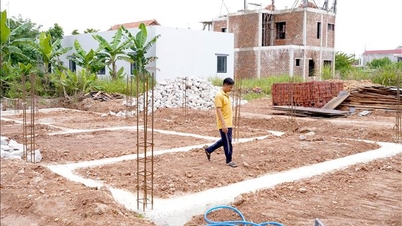
Mr. Doan Trung Luyen, Deputy Director of Hoang Tien Agricultural Service Cooperative, Tran Nhan Tong Ward, said: “Lang Che Lake provides irrigation water for 180 hectares of spring rice managed by the cooperative. In recent years, farmers' planting practices have changed, shifting to broadcast sowing, requiring more irrigation water and more frequent irrigation sessions. Therefore, the pressure on irrigation water is very high. To use water economically and efficiently, the cooperative has organized the dredging of internal irrigation canals and assigned specific irrigation schedules for each field to avoid concentrated and excessive water extraction that causes waste. At the same time, the cooperative has propagated and encouraged farmers to use water economically, in accordance with the actual water supply capacity.”
.jpg)
Based on practical experience and data from previous years, the Chi Linh Irrigation Works Exploitation Enterprise, in addition to developing a general drought prevention plan for the reservoir area, has also formulated response scenarios for four reservoirs at high risk of water shortage. These are Suoi Gang and Ben Tam Ngoai reservoirs in Tran Nhan Tong ward, and Ho Vien and Chop Soi reservoirs in Tran Hung Dao ward. Specific drought prevention plans have been developed for these reservoirs using pumping to replenish water sources. Equipment, materials, and power supply arrangements for the pumps have also been carefully prepared, ready to respond when drought occurs.
Thanks to proactive measures taken early and from afar, drought prevention and control efforts in reservoir and dam areas have been implemented decisively and synchronously. This is a crucial solution to stabilize agricultural production, minimize damage from natural disasters, and aim for sustainable development in the context of increasingly unpredictable weather patterns.
NGUYEN MOSource: https://baohaiphong.vn/chu-dong-chong-han-vung-ho-dap-o-dia-ban-dac-thu-539904.html
























![[Photo] Reception to welcome General Secretary and President To Lam and his wife on their State visit to the Philippines](https://vphoto.vietnam.vn/thumb/1200x675/vietnam/resource/IMAGE/2026/06/01/1780295488620_vna-potal-chieu-dai-chao-mung-tong-bi-thu-chu-tich-nuoc-to-lam-va-phu-nhan-tham-cap-nha-nuoc-toi-philippines-8798060-7855-jpg.webp)




























































Comment (0)