

Proactively deal with weeds at the beginning of the season.
The Mekong Delta is entering the peak season for the summer-autumn rice crop amidst unpredictable weather patterns. The frequent early-season rains following a prolonged period of hot weather have created favorable conditions for the proliferation of various weeds such as sedges, knotgrass, pigweed, and other similar species. This poses a significant challenge for farmers right from the start of the season.

Weed management has always been a challenge for rice farmers. Photo: Minh Sáng.
According to experts, weeds directly compete with rice plants for nutrients, sunlight, and water, especially during the young, vulnerable stage. If not treated promptly, rapid weed growth will lead to poor tillering, uneven growth, increased pest and disease risks, and significantly higher production costs.
In Dong Thap , a province with a large rice-producing area in the Mekong Delta, weed management has always been a difficult problem for rice farmers. Many households have to increase the frequency of spraying, incurring additional labor costs, but the effectiveness of weed control is still not as desired.
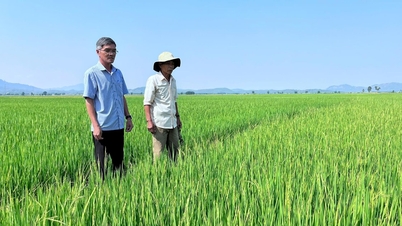
Leading us on a tour of his 5-hectare glutinous rice field in Long An, which had just undergone weed control at the beginning of the season, Mr. Mai Van Hai, a farmer from Phu Loi hamlet, An Long commune (Dong Thap province), said that in previous years, his family often had to spray herbicides 2-3 times, but the weeds still grew back quite quickly. “This season, thanks to the technical staff’s guidance on using the Betazol and Vitanil combination, we only needed one application, and the weeds were significantly reduced. The field is weed-free, and the rice is growing evenly and covering the entire field,” Mr. Hai shared.
According to Mr. Hai, this year's prolonged hot weather followed by heavy early-season rains caused difficult-to-control weeds like sedges and pigweed to proliferate more than in previous years. However, thanks to early treatment, the rice fields are growing well, are well-ventilated, and have strong tillering, reducing the pressure of pests and diseases later on.

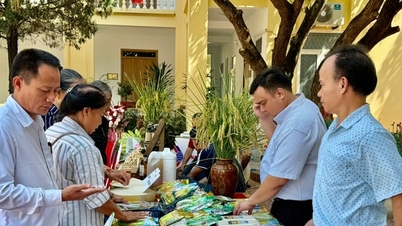
Vipesco's technical staff instruct farmers on using the Betazol and Vitanil combination for a single treatment to keep fields free of weeds, promote even rice growth, and ensure complete coverage of the field. Photo: Minh Sang.
Not only in An Long, but many farmers in Tan Hong commune also reported thick weed growth after the first rains of the season. Mr. Ngo Van An, a farmer in Hamlet 3, Tan Hong commune, said that early-season weeds such as sedge, pigweed, and rushes grow very quickly; if not treated promptly, they will cover the entire field in just a few days. "Previously, I used many types of herbicides, but the effectiveness against difficult-to-control weeds was not high. This season, thanks to the thorough advice from Vipesco's technical staff, I tried using the Vitanil and Betazol product line to treat early-season weeds, and I saw a clear improvement," Mr. An said.
According to Mr. An, just a few days after treatment, the weeds in the rice field were significantly reduced, especially the hardy weeds like sedges and sedges. Weed-free fields help rice plants grow more uniformly, develop stronger roots, and produce better tillers.
Integrated solutions help reduce production costs.
According to many farmers, early-season weed management is not only a technical solution but also a decisive factor in the economic efficiency of the entire rice crop. Mr. Nguyen Phuong, a farmer from An Hoa commune, said that if weeds are allowed to grow vigorously in the early stages, the rice plants will weaken and grow unevenly. Later, even with increased fertilizer, it will be difficult to restore them to their original state, while the cost of care will increase significantly.
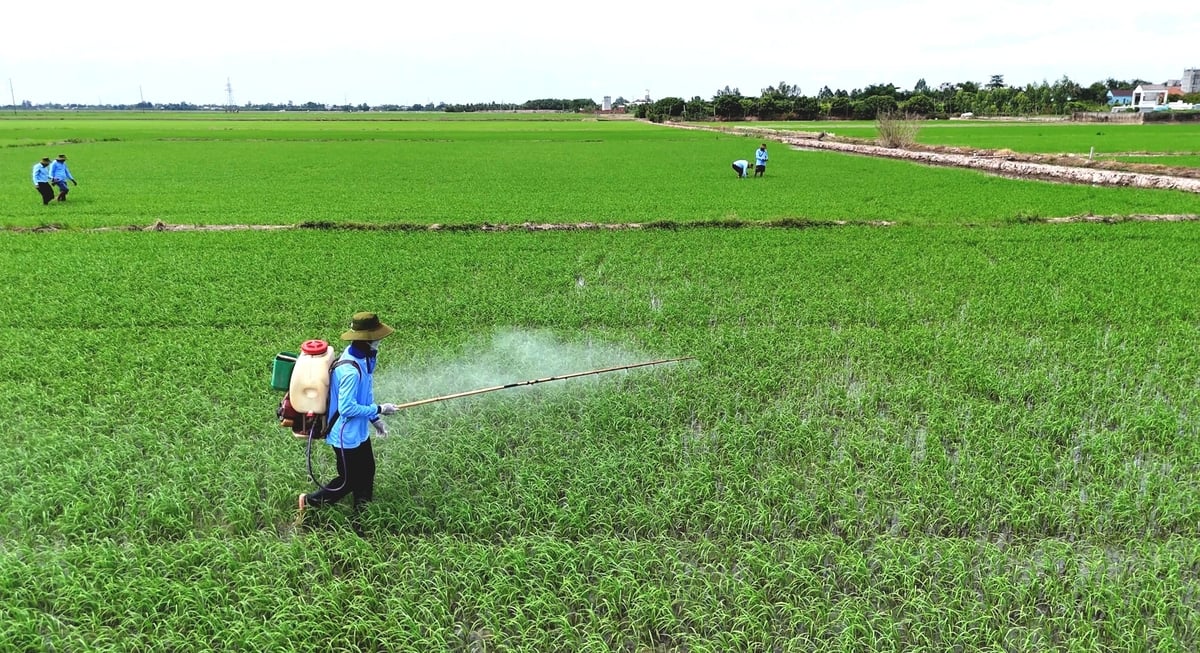
Early weed management is not only a technical solution but also a decisive factor in the economic efficiency of the entire rice crop. Photo: Minh Sang.
Based on observations at numerous demonstration fields, Mr. Phuong assessed that early weed control solutions yielded quite noticeable results. Weed-free fields helped rice grow healthier, reduced pest and disease pressure, and significantly minimized manual weeding labor.
According to the Southern Center for Crop Production and Plant Protection (Department of Crop Production and Plant Protection), from June to August each year is the period when many pests and diseases are likely to spread widely. Besides weeds, farmers also face pests such as brown planthoppers, leaf-rolling caterpillars, blast disease, and bacterial diseases. Therefore, the professional sector recommends that farmers combine many solutions such as thorough soil preparation, early weed control, proper water management, balanced fertilization, and regular field inspections to detect pests and diseases early.
According to Mr. Nguyen Thanh Phong, a technical officer at Vietnam Pesticide Joint Stock Company (Vipesco) in the Dong Thap Muoi region, this year's alternating hot and dry weather with early season rains has created a favorable environment for the strong growth of difficult-to-control weeds. "In high-lying fields where water retention is difficult, if farmers don't treat the weeds from the beginning of the season, they will grow very quickly, strongly competing with rice plants and directly affecting their tillering ability," Mr. Phong explained.
According to Mr. Phong, based on field visits, the technical team is recommending that farmers use the Vitanil and Betazol combination to manage difficult-to-control weeds such as sedges, knotgrass, and other similar species. The advantage of this solution is that it effectively controls weeds from the beginning of the season, keeping the field well-ventilated, promoting uniform rice plant growth, increasing effective tillering, and boosting yield.

To achieve high effectiveness, Vipesco's technical team guides farmers on the right time to treat weeds when they are still small, using the correct dosage and managing water properly after spraying. Photo: Minh Sang.
For optimal results, farmers are advised to treat weeds at the right time when they are still small, use the correct dosage, and manage water properly after spraying. For rice fields 10-15 days old, farmers should use approximately 120ml of Vitanil combined with 120ml of Betazol per 25 liters of water. After spraying, the field should be flooded with water about 24 hours later to increase the weed control effectiveness.
Based on observations at numerous demonstration plots in Dong Thap Muoi, weed management efficiency reached 95-100%, especially for difficult-to-control weed groups. When fields are weed-free early, rice plants tiller vigorously, reducing labor and minimizing the need for multiple supplementary treatments later on.
Towards sustainable rice production
According to observations in the Dong Thap Muoi region, this year's summer-autumn crop is facing many difficulties due to intense heat, unstable water sources at the beginning of the season, and many fields drying up and cracking, leading to a stronger weed growth than in previous years.

In elevated rice fields where water retention is difficult, if farmers do not address the issue at the beginning of the season, weeds will grow very quickly, strongly competing with the rice plants and directly affecting their tillering ability. Photo: Minh Sang.
Mr. Nguyen Duc Trong, Head of the Dong Thap Muoi area - Vietnam Pesticide Joint Stock Company, analyzed: "If weeds are not managed at the beginning of the season, they will compete with rice plants for nutrients, sunlight, and water, causing poor rice growth, weak tillering, and directly affecting yield. In addition, weeds are also breeding grounds for pests and diseases such as brown planthoppers, leaf rollers, blast disease, or harmful bacteria."
According to Mr. Trong, early weed control helps farmers save significant costs compared to letting weeds grow vigorously before treatment. In parallel with providing technical solutions, Vipesco's technical team also regularly visits the fields to monitor each stage of rice growth and provide appropriate advice to farmers.
In the context of rising input costs and agricultural production being heavily impacted by climate change, effective weed management solutions that reduce labor and the number of spray applications are becoming an urgent requirement.

Vipesco's technical staff regularly visit the fields, monitoring each stage of rice growth to advise and provide appropriate technical solutions to farmers. Photo: Minh Sang.
Early weed management not only helps reduce production costs but also contributes to building healthy fields, limiting pests and diseases, improving farming efficiency, and moving towards more sustainable agriculture in the Mekong Delta region.
In Dong Thap province, when farmers proactively manage weeds early, combine this with the synchronized application of technical measures, and strengthen linkages with businesses, rice production efficiency improves significantly. This is an important direction to help the Mekong Delta rice industry better adapt to climate change, reduce costs, and increase production value.
Source: https://nongnghiepmoitruong.vn/chu-dong-quan-ly-co-dau-vu-bao-ve-nang-suat-lua-he-thu-d814403.html
![[Photo] First session of the 14th Congress of the Vietnam Trade Union](https://vphoto.vietnam.vn/thumb/1200x675/vietnam/resource/IMAGE/2026/06/03/1780465947883_ndo_br_img-3852-jpg.webp)
![[Photo] General Secretary and President To Lam presides over a meeting with the Central Organizing Committee.](https://vphoto.vietnam.vn/thumb/1200x675/vietnam/resource/IMAGE/2026/06/03/1780482764658_a1-bnd-4741-3342-jpg.webp)

![[Photo] Secretary of the National Assembly Party Committee, Chairman of the National Assembly presides over the meeting of the Standing Committee and Executive Committee of the National Assembly Party Committee.](https://vphoto.vietnam.vn/thumb/1200x675/vietnam/resource/IMAGE/2026/06/03/1780480353201_ndo_br_bnd-2585-jpg.webp)







![Transforming from Resolution 57: [Part 3] High-tech agricultural center](https://vphoto.vietnam.vn/thumb/402x226/vietnam/resource/IMAGE/2026/06/03/1780491765550_2928-4922-img_7193-010813_454-010814.jpeg)





























![[Video] Sunset at Lap An Lagoon – Where the sun sets over the fishing nets](https://vphoto.vietnam.vn/thumb/1200x675/vietnam/resource/IMAGE/2026/05/31/1780192137701_beach-landscape-sea-water-nature-grass-745871-pxhere-com.jpeg)






























Comment (0)