

German Chancellor Olaf Scholz visited India from October 24-26 to co-chair the Intergovernmental Consultative Group (IGC) – a key biennial mechanism – with Indian Prime Minister Narendra Modi.
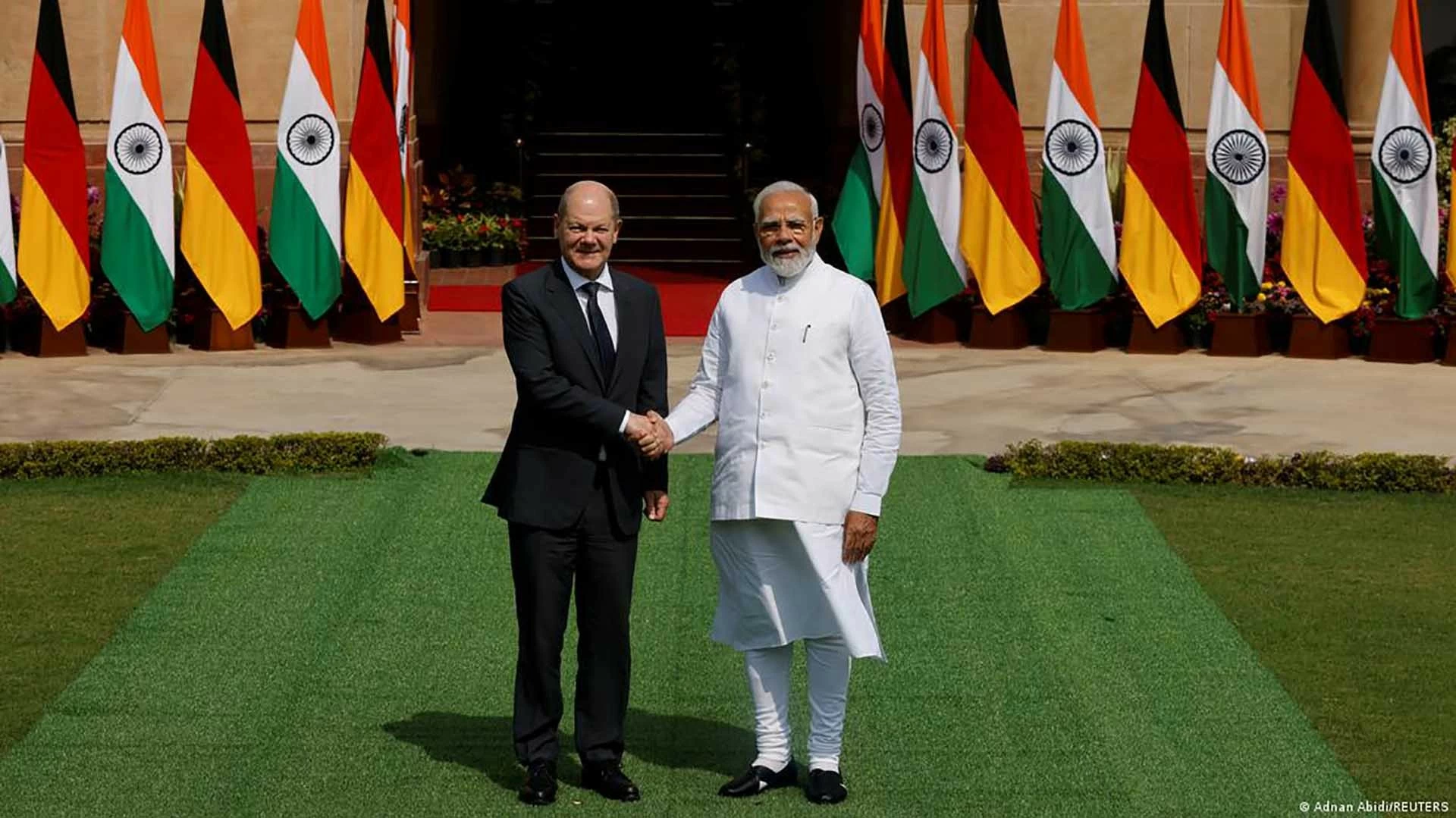 |
| Indian Prime Minister Narendra Modi (right) and his German counterpart Olaf Scholz at a welcoming ceremony in New Delhi on February 25, 2023. (Source: Reuters) |
Setting up a new platform
The visit takes place against the backdrop of the German Cabinet's approval on October 16th of the strategic document "Focus on India," aimed at elevating the strategic partnership between the two countries to a new level.
This decision stems from Germany's recognition of the increasingly important role of India – the world's most populous country, the world's fifth-largest economy , and a significant voice in important multilateral forums such as the G20, the expanded BRICS, and the Shanghai Cooperation Organization (SCO).
Accordingly, the document states that India is not only an important partner of Germany but also a key factor in shaping the world order. This document was adopted as the two countries prepare to celebrate the 25th anniversary of the establishment of their Strategic Partnership in 2025 and just before Prime Minister Olaf Scholz's visit to India.
Berlin's "Focus on India" strategic document outlines priority areas for comprehensive cooperation between the two countries. In the political-security field, both sides will expand high-level dialogue between the foreign and defense ministries, strengthen defense cooperation, and broaden expert dialogue on regional issues, cybersecurity, and counter-terrorism.
In terms of economic and trade relations, Germany is committed to removing barriers that hinder German businesses from accessing the Indian market and to strengthening cooperation in renewable energy and green hydrogen.
In terms of science and technology, Germany will expand cooperation in the fields of science and technology, environmental protection, and combating climate change. In particular, Germany plans to significantly increase the quota for work visas issued to Indian citizens from 20,000 to 90,000 per year. Germany also commits to promoting cooperation in combating climate change by fostering dialogue between the EU and India on the Carbon Border Adjustment Mechanism (CBAM).
Cooperation based on shared values
Since succeeding Angela Merkel in December 2021, Chancellor Scholz has consistently demonstrated efforts to build new relationships with the rising power in Asia. He visited India twice last year, with a state visit in February and attending the G20 Summit in New Delhi in September.
Prior to his first visit to India in February 2022 after becoming Prime Minister, Scholz emphasized: “India and Germany have a very good relationship, and I want to deepen this relationship even further.” In May 2022, Indian Prime Minister Narendra Modi also paid an official visit to Germany. During that visit, the two Prime Ministers held talks, co-chaired the 6th India-Germany Intergovernmental Consultations, and signed several cooperation agreements.
During this visit, according to the German Chancellor's Office, "the two leaders will discuss strengthening security and defense cooperation, expanding opportunities for the exchange of high-quality personnel, deeper economic cooperation, sustainable development, and cooperation in emerging and strategic technological fields."
In New Delhi, Prime Minister Scholz will co-chair the 7th Intergovernmental Consultations with Prime Minister Modi, focusing on assessing the progress of cooperation since the two countries signed the Memorandum of Understanding two years ago in key areas, particularly defense.
Besides his talks with his Indian counterpart, Mr. Scholz also attended and spoke at the Asia Pacific Business Conference (APK 2024), which was attended by approximately 650 leading business leaders from both countries. The large turnout of business leaders from both sides demonstrates the determination to promote bilateral economic cooperation amidst strong trade growth between the two countries, with trade reaching US$26 billion in 2023.
Germany is currently India's largest trading partner in the EU and one of India's leading partners worldwide. There are approximately 2,000 German companies operating in India, with direct investment reaching €25 billion in 2022. German companies see bright economic prospects in India, with 82% expecting their revenue to increase over the next five years and 59% planning to expand their investments.
During the visit, Prime Minister Scholz also visited the state of Goa, where the German destroyer Baden-Wuerttemberg and the combat support ship Frankfurt am Main will dock as part of Berlin's deployment of forces in the Indo-Pacific region to participate in exercises with the Indian Navy.
Against the backdrop of both New Delhi and Berlin's desire for closer ties and mutual need, Chancellor Scholz's visit is expected to be more than just a biennial diplomatic event; more importantly, it demonstrates the commitment and determination of the leader of Asia's rising economy to Europe's economic powerhouse, especially in a world witnessing changes with many hotspots showing no signs of abating.
Source: https://baoquocte.vn/thu-tuong-duc-tham-an-do-chuan-bi-cho-ky-nguyen-moi-291232.html
![[Image] Pleasant weather helps students enter the 10th grade entrance exam with confidence.](https://vphoto.vietnam.vn/thumb/1200x675/vietnam/resource/IMAGE/2026/05/29/1780034401612_ngay-1-thi-lop-10-minh-duy-8-5009-jpg.webp)
![[Photo] Ba Lang An Lighthouse - the "eye of the sea" amidst the "rock museum" of Quang Ngai province.](https://vphoto.vietnam.vn/thumb/1200x675/vietnam/resource/IMAGE/2026/05/29/1780038698840_anh-man-hinh-2026-05-29-luc-14-10-42.png)












































































Comment (0)