

| Baltimore Bridge Collapse: Insurance Companies Could Pay Up to $4 Billion in Compensation. Baltimore Bridge Collapse Raises Concerns About Global Supply Chains. |
The Dali was en route to Colombo when the disaster struck. Initial fears were confirmed that half a dozen people had died in the accident. Baltimore's port was closed, leaving millions of tons of coal, hundreds of cars, and shipments of lumber and gypsum stranded. Approximately 40 ships were ready to depart on March 26th, and a large number of ships arriving from the Atlantic were unable to dock “until further notice.”
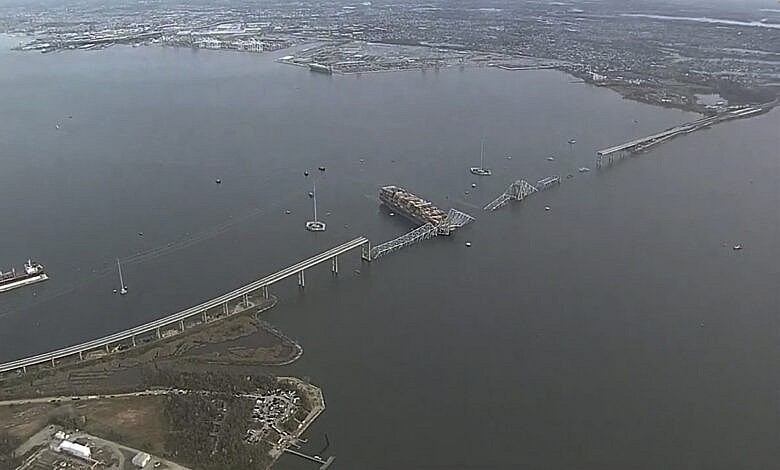 |
| The Singapore-flagged Dali, carrying 5,000 containers, crashed into Baltimore's Francis Scott Key Bridge, causing the 2.5-kilometer bridge to collapse in seconds. Photo: AP |
Financial markets reacted quickly to the bridge collapse, with shares of global shipping giant Maersk plunging 2.6% in Copenhagen on March 27. However, an analyst from online brokerage Nordnet suggested that, in the long term, this event would not be a major catalyst for stock prices unless something unsettling happened, such as evidence of serious negligence behind the accident.
U.S. Transportation Secretary Pete Buttigieg warned of “major and long-lasting impacts on the supply chain” following the closure of the Port of Baltimore. It is too early to estimate what will need to be done to reopen the port. The bridge is one of the “sacred sites of American infrastructure,” so rebuilding it will take time. The road back to normal will not be easy and will not be quick.
US President Joe Biden called the bridge collapse a "terrible accident" and pledged to reopen the port and rebuild the bridge, with the federal government planning to cover all reconstruction costs.
The estimated cost to rebuild the bridge is between $500 million and $1.2 billion, with construction expected to take at least two years. The Port of Baltimore is particularly important for the import and export of automobiles and light trucks. Approximately 850,000 vehicles are transported there annually, supporting around 15,000 jobs. Additionally, the Francis Scott Key Bridge is a vital artery on the East Coast, with approximately 30,000 vehicles crossing it daily.
European automakers, including Mercedes, Volkswagen, and BMW, maintain extensive infrastructure in the Baltimore area for transporting vehicles. A spokesperson for the German luxury carmaker BMW said the company did not expect any immediate impact beyond short-term traffic congestion. The company uses the Port of Baltimore to import cars, but the car terminal is located at the port entrance, ahead of the bridge, and remains accessible.
However, the American automotive giant Ford will have to "move parts to other ports," which will impact the company's supply chain. Ford's chief financial officer, John Lawler, said that when short-term alternatives are needed, the team has secured shipping alternatives.
Ryan Peterson, founder and CEO of logistics platform Flexport, said that with Baltimore handling only 1.1 million containers in 2023, any impact on container prices and shipping costs due to disruption would be far less than the increase caused by goods being diverted due to the Houthi rebel group's attack in the Red Sea. Shipping volumes on the East Coast are declining, and those ports have the flexibility to handle this.
However, there have been warnings about traffic congestion and delays because a sudden increase in port traffic of 10% to 20% could cause various types of delays.
Source

![[Photo] Prime Minister Pham Minh Chinh presides over a meeting on private sector economic development.](/_next/image?url=https%3A%2F%2Fvphoto.vietnam.vn%2Fthumb%2F1200x675%2Fvietnam%2Fresource%2FIMAGE%2F2025%2F12%2F20%2F1766237501876_thiet-ke-chua-co-ten-40-png.webp&w=3840&q=75)












































































Comment (0)