

According to a resolution recently passed by the National Assembly, from 2026, people converting agricultural land, garden land, or pond land within the same plot as residential land to residential land will only have to pay 30-50% of the difference in land use fees, instead of 100% as currently.
Lawyer Pham Thanh Tuan from the Hanoi Bar Association assessed that the new regulations have helped reduce financial obligations by up to 70% when changing land use purposes within the permitted limit, thereby significantly reducing the financial burden on people.
He cited an example: if the land price according to the local land price list is 2,000,000 VND/m2, while the residential land price is 10,000,000 VND/m2, then according to the current Land Law 2024, people must pay the entire difference of 8,000,000 VND/m2 when changing the land use purpose.
However, according to new regulations effective from January 1, 2026, in cases of changing the land use purpose within the local land allocation limit for residential purposes, the amount of financial obligation to be collected will change significantly.
For example, with a local land allocation limit of 200 m2, when changing the land use purpose within this area, people only have to pay 30% of the difference. Thus, instead of paying 8,000,000 VND/m2, people only have to pay 2,400,000 VND/m2.
" The new regulations contribute to reducing the financial burden, while ensuring fairness and reasonableness in policy, demonstrating humanity in handling cases where financial obligations have been fulfilled but are not yet in line with current practices ," Mr. Tuan emphasized.
Sharing the same view, lawyer Nguyen Van Dinh also assessed that this is a reasonable and necessary adjustment in the context of the new land price list increasing in many localities, resulting in excessively high land use fees.
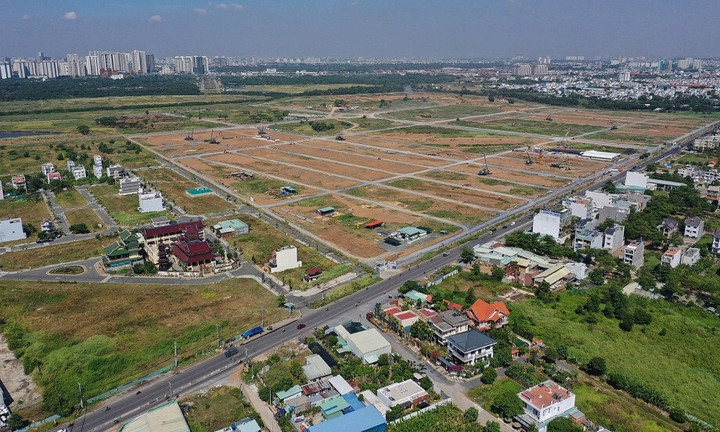
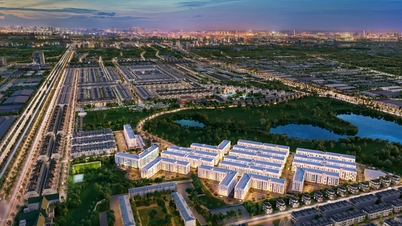
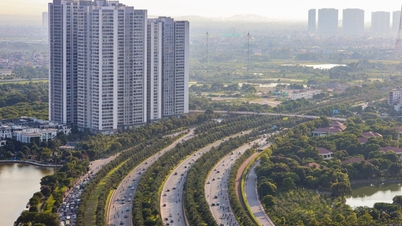
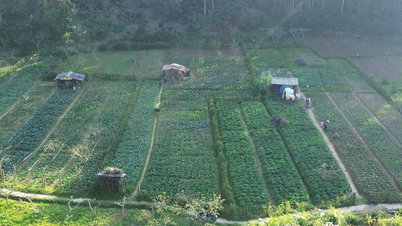
The cost of converting garden land to residential land has been reduced. (Illustrative image).
He gave an example: a resident owns 1,000 square meters of agricultural land within the same plot as residential land in a residential area and wants to change the land use purpose to residential land, but the local land allocation limit for residential land is 200 square meters.
According to the new regulations, for the first 200 square meters, people only have to pay 30% of the difference between the land use fee calculated based on residential land prices and agricultural land prices; for the next 200 square meters, they pay 50% of the difference; and for the remaining 600 square meters, they have to pay 100% of the difference.
The new calculation method significantly reduces costs for people compared to before, especially for those with large plots of land or households in suburban and rural areas.
“ The regulation stipulating that preferential land use fees apply only once to a household or individual and to a single plot of land, and that the reduction is limited to a maximum of two times the land allocation limit for residential purposes, will ensure strict control, prevent policy abuse, and avoid situations where people exploit the policy to ‘hoard land,’ change its purpose, and then resell it for profit,” Mr. Dinh said.
According to lawyer Dinh, the transitional provision is also very reasonable. Accordingly, if a household or individual has already had their land use purpose changed from the time the 2024 Land Law came into effect (August 1, 2024) until before the new regulation comes into effect (January 1, 2026), then it is allowed to apply the "retroactive" effect in a way that is beneficial and ensures fairness between those who have paid and those who have not yet paid the land use purpose change fee.
There are still unresolved issues.
According to Mr. Le Hoang Chau, Chairman of the Ho Chi Minh City Real Estate Association (HoREA), land price lists in many localities have been adjusted upwards significantly. For example, Ho Chi Minh City has raised prices very high, from 2.56 times to 38 times compared to the 2020 land price list. Even with the method of collecting fees by subtracting the price of agricultural land from the price of residential land and multiplying by 30% (within the limit) and 50% (outside the limit), the amount people pay remains high.
He cited an example: a land price list of 10 million VND/m2, agricultural land price of 300,000 VND/m2, a residential land allocation limit of 200 m2, and a land price adjustment coefficient of 1.5.
In that case, if a household applies to convert 50 m2 of agricultural land into residential land, the land use fee would be 70.9% lower, amounting to 218.25 million VND.
" If the fee is reduced to 20%, this household will only pay 80.6% less for land use fees, equivalent to only having to pay 145.5 million VND ," Mr. Chau said.
Furthermore, according to Mr. Chau, this regulation does not truly reflect the actual land use of the people. In many families, garden land has been accumulated over many periods, or the need for conversion arises at different times, depending on the financial capacity and housing needs of different generations.
He argued that allowing only one-time benefits meant the policy hadn't fully addressed the difficulties, especially for households with many children who needed to divide land to secure long-term housing.
Sharing the same view, independent financial and real estate consultant Le Quoc Kien also said that although the policy has significantly reduced the collection rate, the total amount people have to pay remains high due to the new land price list increasing many times. For those who do not have sufficient financial capacity at the time of applying for conversion, being forced to pay the full amount at once may continue to deter them.
Therefore, Mr. Kien suggested that a mechanism should be studied to allow people to defer or delay payment of land use fees, fulfilling their financial obligations only upon transferring or gifting the land, thereby increasing the feasibility of the policy.
Source: https://baolangson.vn/chuyen-dat-vuon-sang-dat-o-chi-phi-da-giam-vuong-mac-van-con-5068720.html


![[Photo] General Secretary To Lam visits the exhibition space showcasing books, photo exhibitions, and achievements of digital transformation in journalism.](/_next/image?url=https%3A%2F%2Fvphoto.vietnam.vn%2Fthumb%2F1200x675%2Fvietnam%2Fresource%2FIMAGE%2F2025%2F12%2F19%2F1766110879215_1766110240024-jpg.webp&w=3840&q=75)
![[Photo] Enchanting ancient rose garden on the mountainside in Nghe An](/_next/image?url=https%3A%2F%2Fvphoto.vietnam.vn%2Fthumb%2F1200x675%2Fvietnam%2Fresource%2FIMAGE%2F2025%2F12%2F19%2F1766109900916_vuon-hong-chin-do-thu-hut-du-khach-toi-check-in-o-ha-noi-3-20162778-1671624890024-1671624890104198100259.jpeg&w=3840&q=75)





























































Comment (0)