

Poet Nguyen Duc Son, often called Son Nui by literary circles, also used the pen name Sao Tren Rung (Star in the Forest). His talent and unconventional life attracted attention, closely linked to the woman who remained faithfully by his side throughout his life: Mrs. Nguyen Thi Phuong, who accompanied the poet as he left the city for the forest.

Mrs. Nguyen Thi Phuong, wife of poet Nguyen Duc Son, in her youth. Family photo.
In an article by journalist Nguyen Lam Dien published in Tuoi Tre newspaper, it was once stated: "Nguyen Duc Son emerged as a poet with a strong personality in Saigon with his poetry collection 'Bot Nuoc' (Water Bubbles ) published in 1965. Afterward, his name resonated throughout the South as a talented writer, not only for the ideas in both his poetry and stories, but also for his playful use of the Vietnamese language, his conscious use of vulgar discourse to convey philosophical insights into human life, his lamentations about the times, and his attitude towards human relationships and life itself..." Poet Nguyen Duc Son suffered from a serious illness and passed away in 2020.
Nguyen Duc Son was originally an English professor. By chance, he fell in love with his "muse," Nguyen Thi Phuong, when she was only 17 years old. Nguyen Thi Phuong was born into a very unique situation of the past: her father was a French official, and her mother was a member of the Viet Minh. Phuong was the niece of Venerable Thich Tri Bon, and therefore, from a young age, she attended the Bodhi School of the Tibetan temple.
The whirlwind romance and passionate love between poet and English professor Nguyen Duc Son and his muse Nguyen Thi Phuong culminated in a wedding in 1967. The wedding was held at the Tibetan Temple (Thu Dau Mot - formerly Binh Duong).

One of the poems that poet Nguyen Duc Son wrote as a wedding gift for his wife is included in the collection "Nguyet Dong Tho" (Moonlight Poetry).
In 1975, poet Nguyen Duc Son moved with his wife and children to live in the mountains of Bao Loc, despite numerous warnings from family and friends. Back then, living in the middle of the forest was fraught with hardship and deprivation – no electricity, insufficient water, a desolate place to live. Many friends said Nguyen Duc Son's choice had caused his wife and children immense suffering. The family survived by gathering firewood to trade for a little rice. They picked wild vegetables from around their house.
A major tragedy struck the couple when their 12-year-old son ate poisonous mushrooms in the forest and died. Despite this, the poet Nguyen Duc Son decided to stay in the forest with his wife and son, creating their own trails and living a life closely connected to nature.
In the past, this place was Phuong Boi Am, built by Zen Master Thich Nhat Hanh as a place for meditation and quiet contemplation. Later, Phuong Boi Am gradually fell into disrepair due to the changing times.
Since the family of poet Nguyen Duc Son came to live here, reclaiming land and replanting pine forests, for decades the locals have known this place as "Son Nui Pine Hill," associated with the nickname Son Nui of the poet Nguyen Duc Son.
Around 2014, when poet Nguyen Duc Son was old and his health was failing, his son, Thich Ngo Chanh, returned from school to help his parents manage the hill. Wishing to connect the legacy of his predecessor, Zen Master Thich Nhat Hanh, with the succeeding generation, poet Nguyen Duc Son, he named the place "Phuong Boi Pine Hill".
The name both preserves the memory of "Phuong Boi" - a place associated with the life and work of Zen Master Thich Nhat Hanh - and evokes the image of the pine forest that the family of poet Nguyen Duc Son has painstakingly preserved for many years.
Since then, "Phuong Boi Pine Hill" has not only been the name of a hill, but has also become a symbol of the spirit of nature conservation, cultural memory, and spiritual heritage of this land.

Her love story with her poet husband, when they lived together in the forest, became a special tale among the Southern Vietnamese literary community.
When Mrs. Nguyen Thi Phuong followed her husband to Phuong Boi Pine Hill, she was only in her early twenties. She raised her children, worked in the fields, carried water, and cared for her husband amidst the harsh conditions of the mountains and forests.
In the eyes of her children, she was a gentle, patient, self-sacrificing mother who devoted herself entirely to her family. Their son, the monk Thich Ngo Chanh, said that while the poet Nguyen Duc Son was somewhat fierce and rebellious, Mrs. Phuong was the one who quietly maintained peace and stability for the family throughout the difficult years.

Mrs. Phuong still lives with her children at Phuong Boi Pine Hill to welcome writers and poets who come to visit.
Life gradually became more stable later on, and Phuong Boi Pine Hill became well-known, with people contributing to road construction and development. However, Mrs. Phuong still maintained her simple and quiet lifestyle. She and her children are all vegetarians.
When asked about it, she didn't mention any regrets about leaving behind all her material possessions in the city to follow her husband and live in the vast jungle. Her children said that her lifelong commitment to Dong Thong Phuong Boi, despite all the hardships and losses, was perhaps the clearest answer to her choice.
Recounting stories about their mother, her children said that what they learned most from her was compassion. Thich Ngo Chanh recounted that when he was a child, accompanying his mother to sell tea and go to the market, he saw disabled people begging for food. His mother gave him some money and told him, "You must share with them."
Poet Nguyen Duc Son and his wife had nine children, seven sons and two daughters; their son passed away at the age of 12, and the remaining eight children all have stable lives, residing in Ho Chi Minh City and around Phuong Boi Pine Hill, Bao Loc, Lam Dong .
Most of Nguyen Duc Son's works were published before 1975. His poetry includes: *Foam of Water* (1965), *Lonely Flower* (1965), *Lullaby* (1966), *Moonlit Night* (1967), *Echo* (1972), *Sleepwalking on the Spring Peak* (1972), *Silent Mouth* (1973), *Traveler's Song* (1973), and three collections of short stories: *Tired Dust* (1968), *The Monkey Cage* (1969), and *Horse Stable Village* (1971); along with numerous unpublished manuscripts including essays, poems, short stories, novels, and prose. His poetry collection *A Little Word of Vastness* ( Da Nang Publishing House, 2020) is considered the poet's last publication.
Source: https://phunuvietnam.vn/chuyen-doi-nang-tho-cua-thi-si-nguyen-duc-son-238260519160252277.htm

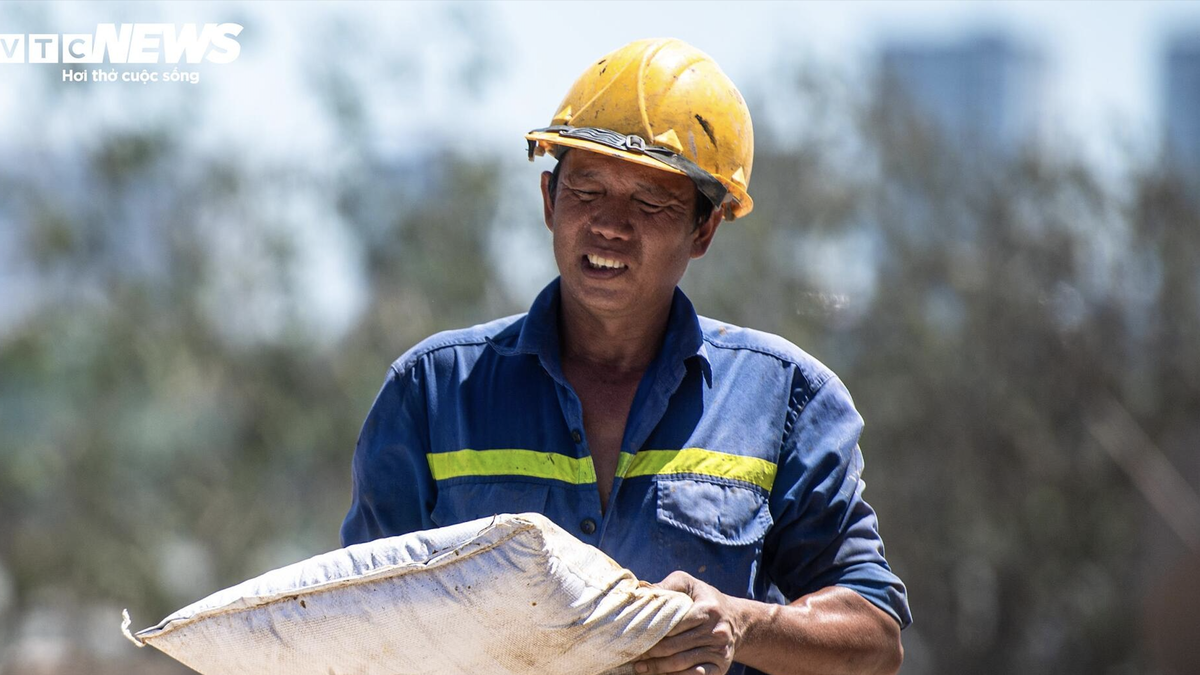
![[Image] Hanoi's urban life under the challenge of a "scorching hot" environment](https://vphoto.vietnam.vn/thumb/1200x675/vietnam/resource/IMAGE/2026/05/25/1779706979265_nang-nong-t5-2026-minh-duy-7-4636-jpg.webp)


![[Image] Close-up view of the interchange connecting the two expressways and Long Thanh Airport.](https://vphoto.vietnam.vn/thumb/1200x675/vietnam/resource/IMAGE/2026/05/25/1779703378210_ndo_br_z7863716673926-224453a31600126cce10622af6290afd-4549-jpg.webp)




















































































Comment (0)