

Opening up many opportunities for development.
The National Assembly officially passed a historic resolution on the merger of provincial-level administrative units on the morning of June 12th. According to this resolution, the country will have 34 provinces and cities remaining, a reduction of 29 units compared to before. This not only marks a major turning point in the national administrative reform process but also demonstrates the strong political determination of the State to streamline the apparatus, save public costs, optimize resources, and improve governance efficiency.
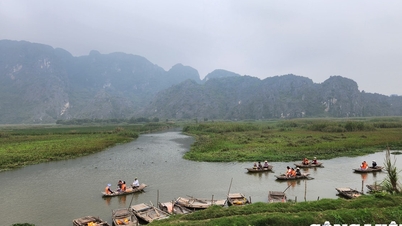
For the tourism industry, changes in administrative boundaries will open up strategic restructuring opportunities. Under the new administrative framework, localities can more easily coordinate in managing tourism resources, connecting infrastructure, and organizing synchronized tours, thereby creating a more attractive and sustainable integrated tourism value chain.
Furthermore, this is also an opportune time for the tourism industry to shift from a decentralized development model across individual provinces and cities to a regional and inter-regional approach.
Mr. Nguyen Tien Dat, Vice Chairman of the Hanoi Tourism Association, believes that the merger of provinces and cities will create many development opportunities for the tourism industry. According to Mr. Nguyen Tien Dat, this will not only help promote inter-regional tours but also create conditions for innovation and diversification of tourism products.
Sharing the same view, Mr. Nguyen Phi Hong Nguyen – Vice Chairman of the Khanh Hoa Tourism Association – commented that the merger of localities will contribute to effectively developing the region's economic potential, instead of requiring time-consuming coordination between each province individually as before. At the same time, the process of simplifying administrative procedures will also become more convenient. In terms of products, thanks to the larger scale after the merger, localities will have the conditions to develop more diverse and abundant tourism products.
According to Mr. Nguyen Phi Hong Nguyen, after the merger, Khanh Hoa and Ninh Thuan will become the provinces with the longest coastline in Vietnam. These two localities share similarities in indigenous culture, especially Cham culture, making them very favorable for developing beach and cultural tourism. In addition, the region possesses a rich mountain and forest ecosystem with diverse flora and fauna, creating great potential for ecotourism from the sea to the forests.
In particular, Khanh Hoa, with its Nha Trang tourism center and high-quality tourism human resource training system, will complement Ninh Thuan's tourism development even more strongly after the merger.
From a business perspective, many travel agencies and tourism service providers in Khanh Hoa and Ninh Thuan have established long-term cooperative relationships through tour linkages, resource sharing, and mutual support in operations. Therefore, the merger will not only avoid major disruption but also open up opportunities for these cooperative relationships to expand and be elevated.
This merger will also facilitate the implementation of joint human resource training programs, investment in inter-regional product development, and more effective connection of the tourism ecosystem. This will contribute to promoting sustainable, in-depth, and competitive tourism development in a market that increasingly demands high-quality services and visitor experiences.
Mr. Nguyen Phi Hong Nguyen, Vice Chairman of the Khanh Hoa Travel Association
Shift from local promotion to destination promotion.
Addressing concerns that the merger of provinces and cities might affect the brand positioning of tourist destinations, Lux Group Chairman Pham Ha argued that what matters is not the location of the destination, but the experience tourists receive there. “Tourists don’t choose a destination because it’s in this province or that province; they choose it because of the experience it offers, the scenery, the services, and whether it suits their preferences,” Mr. Pham Ha emphasized.
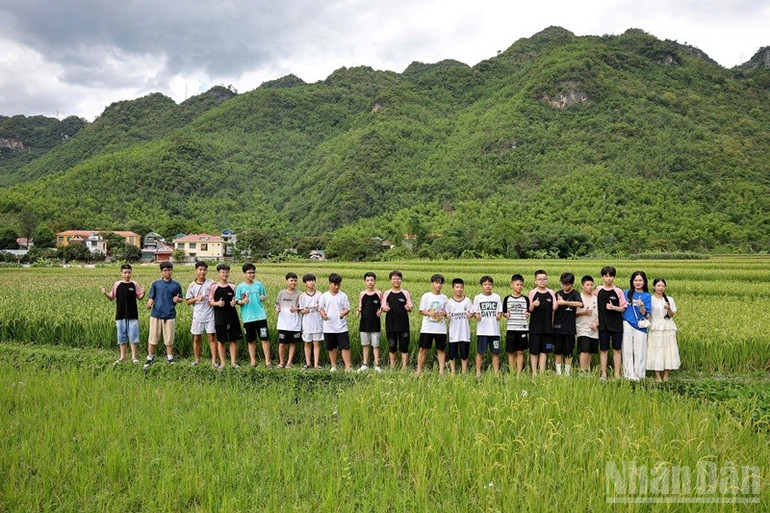
According to Mr. Pham Ha, the tourism industry has traditionally focused on promoting the name of a locality, while what truly attracts tourists is the uniqueness and distinctiveness of each destination. For example, nature and beach lovers are willing to go to Ha Long Bay for a vacation without much concern about whether it's in Quang Ninh or Hai Phong. What they need is a green, clean, and beautiful place with pristine beaches and good services, not administrative boundaries.
Therefore, he suggested that localities should shift their focus from local promotion to destination promotion.
Provinces and cities are merely administrative boundaries. Changing the name of a province does not diminish its identity or tourism value; the true tourism brand lies in the destination itself and the experiences it offers.
Mr. Pham Ha, Chairman of Lux Group
According to Mr. Nguyen Phi Hong Nguyen, the merger of administrative units does not negatively impact the tourism industry, but rather contributes to enhancing the competitiveness of localities on the national and international tourism map. Familiar names like Phan Rang and Nha Trang remain in the minds of tourists, as these are places that have been associated with long-standing tourism brands and possess profound historical and cultural value.
“In fact, the merger only affects the scale of administrative organization, not the names of tourist destinations. Famous landmarks are still preserved intact, ensuring continuity in communication, promotion, and destination recognition. Currently, Nha Trang city has been divided into administrative units such as Nha Trang ward, South Nha Trang ward, etc., similar to how Phan Rang operates. Therefore, the cultural identity and historical values associated with each area are still maintained and respected,” Mr. Nguyen affirmed.
The merger of provinces and cities is a logical and necessary step in the administrative reform process aimed at streamlining organizations, optimizing resources, and improving the efficiency of state management. In this context, the tourism industry needs to be proactive and flexible to adapt. Travel companies need to promptly grasp changes in administrative boundaries to adjust tours, itineraries, and destination presentations to suit the new administrative map.
Localities with significant tourism potential need to conduct a comprehensive review and reassessment of their tourism resource systems after mergers. This is an opportunity to restructure products, discover new destinations, or upgrade existing routes and destinations to build tourism clusters and chains with strong intra-regional and inter-regional linkages.
Furthermore, local authorities should closely coordinate with businesses in planning infrastructure, improving transportation connectivity, and promoting new inter-regional tourism products that emerge after the merger. The collaboration between the government and businesses will be key to effectively exploiting tourism potential, contributing positively to economic growth and sustainable development of the merged localities and regions.
Source: https://nhandan.vn/co-hoi-tai-cau-truc-du-lich-vung-khi-sap-nhap-tinh-thanh-post886499.html


![[Image] Central Party Office summarizes work in 2025](/_next/image?url=https%3A%2F%2Fvphoto.vietnam.vn%2Fthumb%2F1200x675%2Fvietnam%2Fresource%2FIMAGE%2F2025%2F12%2F18%2F1766065572073_vptw-hoi-nghi-tong-ket-89-1204-jpg.webp&w=3840&q=75)








![[Video] Launch of two books on history and heritage preservation](https://vphoto.vietnam.vn/thumb/402x226/vietnam/resource/IMAGE/2025/12/18/1766072185865_2663241292917005256-4230-jpg.webp)










































Comment (0)